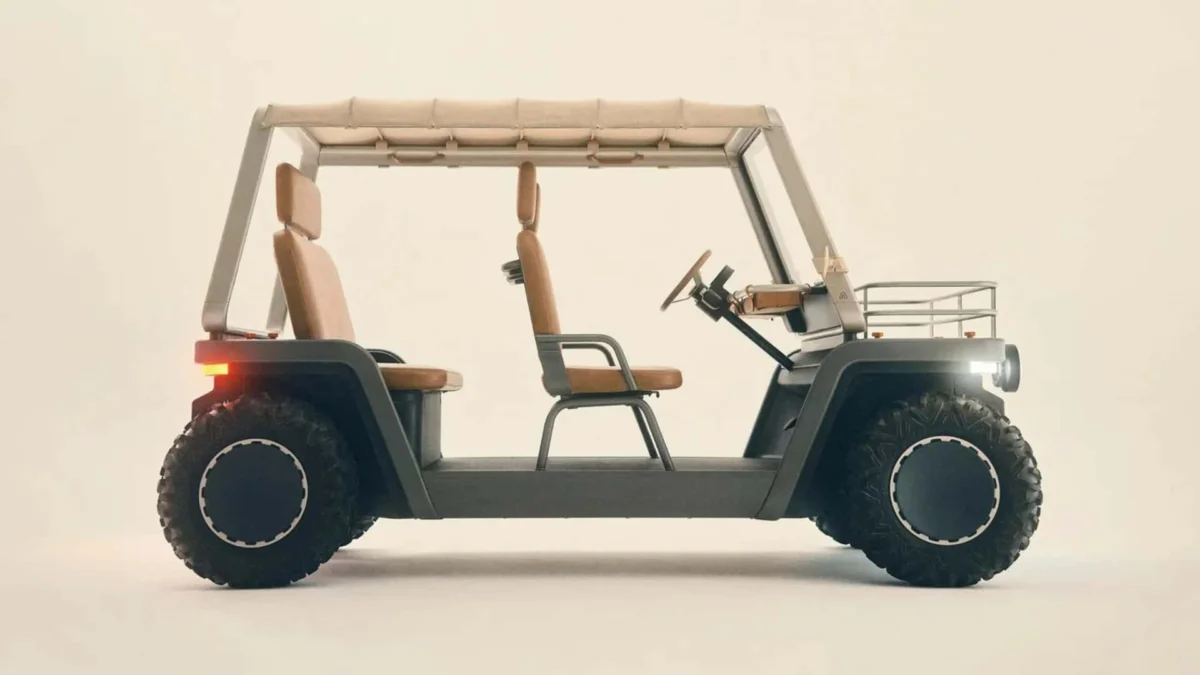
For those who live in sun-drenched coastal enclaves, gated golf communities, or high-end island resorts, the standard golf cart has long been the default mode of short-range transportation. While functional, these utilitarian vehicles often lack personality and comfort. Enter the Amble One: a charming, retro-inspired electric buggy designed to inject a dose of high-fashion utility into the low-speed vehicle (LSV) segment. With an ambitious production roadmap and a distinct aesthetic, the Amble One aims to redefine how we navigate the “last mile” of our neighborhood travels.
The Vision: Redefining Neighborhood Mobility
The Amble One is not just another golf cart; it is an attempt to merge the practicality of a neighborhood electric vehicle (NEV) with the desirability of a boutique lifestyle brand. Positioned as a direct competitor to established niche players like the Moke and the Meyers Manx, the Amble One targets consumers who prioritize style as much as function.
Constructed with an aluminum frame and a durable polymer body, the vehicle features integrated mounting points for a variety of lifestyle accessories, including storage baskets, straps, and mirrors. This modularity suggests that the manufacturer intends for the vehicle to be more than just a people-mover; it is a tool for the beach-goer, the weekend shopper, and the luxury resort guest. With seating for four and rear seats that fold down to accommodate larger items—like a surfboard or a week’s worth of groceries—the Amble One offers a level of versatility that puts standard golf carts to shame.
Chronology and Market Entry
While the buzz surrounding the Amble One is fresh, the path to the driveway is a long one. Prospective owners can currently reserve their place in line with a $100 deposit, signaling the company’s intent to gauge market interest before ramping up full-scale production. However, patience will be a prerequisite for potential buyers: deliveries are not slated to begin until 2028.
This long lead time highlights the complexities of bringing a new vehicle to market, even one that falls under the less stringent regulatory umbrella of NEVs. By opening reservations now, Amble is positioning itself within a growing, albeit fragmented, segment of the electric vehicle market, hoping to secure early adopters before the 2028 launch window.
Technical Specifications and Performance
Despite its playful appearance, the Amble One boasts respectable specifications for a vehicle of its class. The core of its performance comes from a 12.0-kilowatt-hour battery pack paired with a 20-horsepower rear-mounted electric motor.
- Range: The vehicle is expected to achieve a driving range of over 60 miles on a single charge.
- Charging: Utilizing a standard AC outlet, the battery can be fully replenished in approximately five and a half hours, making it convenient for overnight charging in a garage or resort parking stall.
- Speed: While the company’s marketing materials tout a top speed of over 40 mph, the practical application of this speed is governed by local and state regulations.
- Suspension: Moving away from the harsh ride quality of traditional golf carts, the Amble One features fully independent suspension, designed to offer a smoother, more refined experience on uneven pavement or resort pathways.
Regulatory Realities: Navigating the Law
One of the most critical aspects of the Amble One—and indeed any NEV—is the regulatory landscape. Because the vehicle lacks modern safety features such as airbags and advanced crash-protection structures, it is legally classified as a neighborhood electric vehicle.
In the United States, NEV regulations are notoriously varied. While the Amble One may be capable of hitting 40 mph, most states restrict NEVs to roadways with posted speed limits of 35 mph or lower. The United States Department of Energy provides some flexibility for specific environments; for example, medium-speed EVs are permitted on 45 mph roads in certain counties that consist of islands connected to the mainland only by ferry routes.
These limitations mean that the Amble One is not a universal replacement for a standard automobile. It is a specialized tool intended for low-speed, high-frequency trips. Potential buyers must be cognizant of the local ordinances in their specific municipality, as the legality of operating the vehicle on public roads can change from one town to the next.
Practicality vs. Style
At a price point of $25,000 (plus VAT), the Amble One occupies a premium space in the micro-mobility market. When compared to the Slate Truck—which occupies a similar price bracket—the Amble One is arguably less "practical" in a traditional sense. It lacks the heavy-duty utility of a truck, and, in its standard configuration, it is essentially an open-air vehicle.
The absence of standard doors and windows is a significant factor for buyers in climates prone to sudden weather shifts. While the company has teased accessory doors as a "weather protection" solution, these remain in the design phase, appearing only as sketches at this stage. Without a full enclosure, the Amble One is a fair-weather machine, best suited for the balmy, predictable climates of Southern California, Florida, or Mediterranean resort towns.
The Competitive Landscape
The market for stylish, small-scale electric runabouts is quietly heating up. As urban centers and planned communities seek to reduce carbon footprints and minimize congestion, vehicles like the Moke and the reborn Meyers Manx have surged in popularity. These vehicles cater to a demographic that views transportation as an extension of their personal style.
The Amble One fits neatly into this growing niche. Its aluminum-and-polymer construction suggests a focus on longevity and ease of maintenance, addressing one of the primary pain points of cheaper, mass-produced golf carts. Furthermore, its ability to carry four passengers while still offering storage space makes it a viable alternative to a second family car for short-distance commutes.
However, the lack of centralized, publicly available sales data for NEVs in the United States makes it difficult to quantify the size of the market. Industry analysts suggest that this segment is growing, driven by a combination of rising fuel costs and the increasing desire for "micro-mobility" solutions, but it remains a segment driven more by lifestyle choices than pure transportation economics.
Implications for Future Mobility
The existence of the Amble One reflects a broader shift in how we perceive personal mobility. For decades, the automotive industry was focused on speed, range, and highway safety. Today, a growing segment of the population is interested in the "right-sizing" of vehicles. Why use a 4,000-pound SUV to travel two miles to a local grocery store or a beach club when a 20-horsepower, lightweight electric buggy can do the job with significantly less environmental impact and a much higher "fun factor"?
If the Amble One succeeds, it could serve as a case study for future, specialized EV manufacturers. By focusing on a specific use case—the resort and neighborhood market—Amble avoids the direct, cutthroat competition of the mainstream EV market, where giants like Tesla and Ford dominate. Instead, they are building a brand experience.
The Road Ahead: 2028 and Beyond
The journey from a $100 reservation deposit to a finished, road-legal vehicle is fraught with challenges. Supply chain hurdles, regulatory shifts, and the inevitable engineering refinements required to move from a prototype to a production-ready model will test the resolve of the Amble team.
As we look toward 2028, the question for potential buyers is whether the charm and style of the Amble One will be enough to offset the wait times and the inherent limitations of an NEV. For the resort operator looking to upgrade their fleet or the homeowner seeking a stylish way to cruise the neighborhood, the Amble One represents a bold, if patient, bet on the future of leisure transportation.
While the market for these vehicles may be small compared to the global automotive industry, it is a passionate one. If the Amble One can deliver on its promise of a more comfortable, stylish, and adaptable electric buggy, it will likely find a loyal following among those who believe that getting there should be half the fun. Whether it can navigate the complex regulatory hurdles of the United States remains to be seen, but one thing is certain: the era of the boring golf cart is officially on notice.