In the landscape of modern existential inquiry, few cultural artifacts have resonated as deeply as the A24 film Everything Everywhere All at Once. What began as a bizarre, kaleidoscopic exploration of the multiverse has evolved into a touchstone for those grappling with the inherent anxieties of the 21st century. By blending the chaotic absurdity of quantum mechanics with the intimate, often mundane struggles of family and finance, the film challenges its audience to confront a daunting question: If life is fundamentally meaningless, how do we construct a reality worth living?
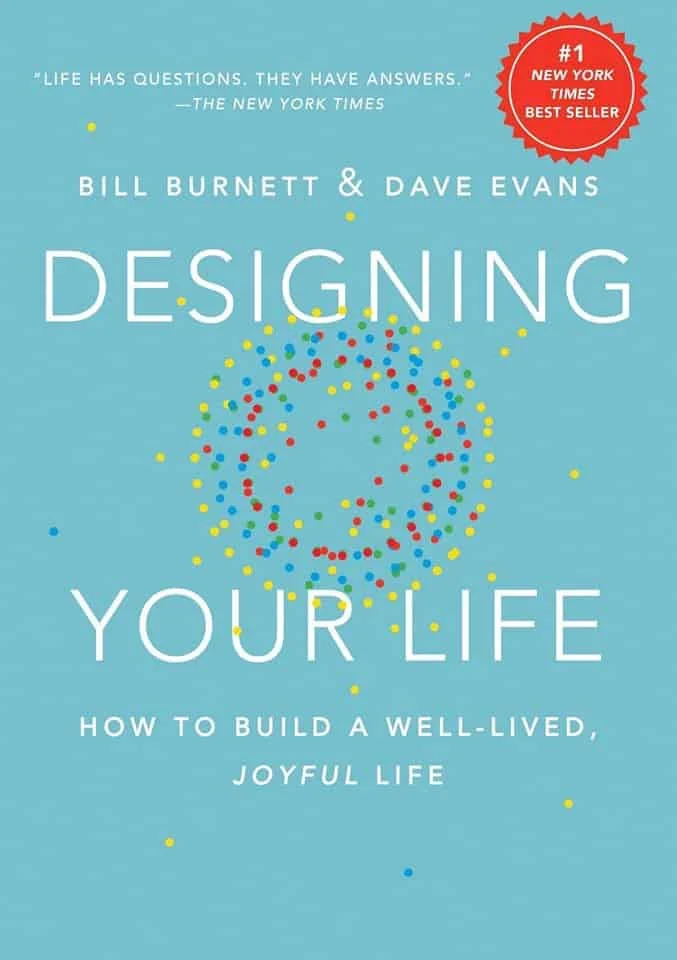
For many, the answer lies in bridging the gap between philosophical contemplation and actionable life design. By utilizing frameworks such as those found in Bill Burnett and Dave Evans’ Designing Your Life, individuals are finding that the "multiverse" is not merely a trope of science fiction—it is a functional blueprint for personal growth.
The Philosophical Core: From Nihilism to Agency
At the heart of the Everything Everywhere All at Once phenomenon is a narrative arc that mirrors the personal evolution of many viewers. The story follows Evelyn and Waymond Wang, a couple struggling with a failing laundromat, a fractured marriage, and an estranged daughter. When Evelyn is thrust into a conflict that spans parallel realities, she encounters the film’s antagonist, Jobu Tupaki—a character who represents the ultimate nihilistic conclusion: that because every choice exists simultaneously, nothing truly matters.
However, the film pivots away from this bleak conclusion. It posits that if nothing matters, we are liberated from the pressure of cosmic significance. This realization empowers the protagonist to choose kindness, presence, and intentionality. It is a transition from being a victim of circumstance to being the architect of one’s own experience. This shift reflects a profound psychological pivot: the recognition that our current timeline is not a prison, but a canvas.
Chronology of a Mindset Shift
The journey from passive observer to active designer often follows a predictable, if challenging, trajectory:
- The Recognition of Stagnation: The process typically begins with a period of "nihilistic nadir," where the individual feels trapped by the monotony of their current reality, similar to the mundanity of the Wangs’ laundromat.
- The Exposure to Alternate Realities: This is often triggered by art or literature, such as Matt Haig’s The Midnight Library, which introduces the concept of the "limbo state"—a space where one can examine the paths not taken.
- The Synthesis of Philosophy and Action: The individual realizes that simply ruminating on "what could have been" is insufficient. They seek a framework to apply this realization to their daily life.
- The Implementation of Life Design: The final stage involves the deliberate application of design principles—prototyping, iteration, and "odyssey planning"—to bridge the gap between where one is and where one wants to be.
Supporting Data: The Science of Life Design
The methodologies presented in Designing Your Life are rooted in the rigorous principles of design thinking, developed and refined at Stanford University’s Design Program. The authors, Bill Burnett and Dave Evans, bring a wealth of practical experience—Burnett from his work on Apple’s early laptop design team, and Evans from his tenure at Electronic Arts.
The core of their argument rests on the concept of coherence. A well-designed life is one where "who you are," "what you believe," and "what you do" are in alignment. When these three pillars are misaligned, the result is the existential malaise that the film Everything Everywhere All at Once so vividly portrays.
To achieve this alignment, the authors propose five specific disciplines:
- Curiosity: Asking questions and exploring without judgment.
- Bias to Action: Moving from thought to experimentation.
- Reframing: Shifting perspectives to solve problems.
- Awareness: Recognizing that the process is a journey, not a destination.
- Radical Collaboration: Seeking the support and input of others to refine your vision.
Odyssey Plans: Designing Your Alternate Realities
Perhaps the most potent tool for translating these ideas into reality is the "Odyssey Plan." In this exercise, the participant is asked to draft three distinct five-year plans, effectively mapping out potential versions of their life.
The Preferred Reality
The first plan centers on the life you are currently living. It is an exercise in optimization and expansion. For someone focused on professional endeavors, this might involve refining a business model, stripping away inefficiencies, and doubling down on core passions. The goal here is to visualize the "ideal" version of your existing path.
The "What If" Reality
The second plan explores what you would do if your current career or path were suddenly removed. This forces an exploration of secondary talents and latent interests. For many, this leads to a pivot toward service-oriented or creative roles that were previously sidelined by the demands of a primary career.
The "Wild Card" Reality
The third plan is the "pipe dream." It is the version of your life you would pursue if money were no object and the judgment of others held no weight. This plan is crucial, as it often reveals deep-seated passions—such as a desire to study art, engage in community storytelling, or pursue a long-held creative hobby—that can inform your daily life in ways you hadn’t considered.
Official Perspectives and Educational Implications
The pedagogical value of these exercises has been validated by their adoption in academic settings. By treating life as a "design problem" rather than a "destiny problem," individuals gain the agency to iterate.
However, the application of these concepts is not without its critics. Some argue that the terminology—"designing," "prototyping," "iteration"—can feel overly clinical or corporate when applied to the messy, emotional reality of human existence. Furthermore, the lack of reference tools (such as indices) in popular guidebooks can frustrate those looking to use these works as ongoing manuals for their development. Despite these critiques, the efficacy of the "design mindset" remains high, as it encourages individuals to move beyond the paralyzing fear of "making the wrong choice" in a world of infinite options.
Implications: The Multiverse as a Practical Tool
The true power of integrating these existential themes with practical life design lies in the removal of the "either/or" trap. We often view our lives as a series of mutually exclusive choices: I can be a creative or a provider; I can be a parent or a professional.
The "multiverse" perspective provided by both the film and the Designing Your Life curriculum suggests that these identities are not mutually exclusive if they are approached with coherence. By acknowledging that you have the capacity to live multiple lives within a single lifetime, you are granted the permission to experiment.
If you find yourself dissatisfied with your current timeline, the implication is clear: you are not trapped. You have the tools to prototype a new version of yourself, test those prototypes in the real world, and iterate until you find a path that aligns with your deepest values.
In conclusion, whether through the lens of a cinematic masterpiece or the practical exercises of a Stanford-based curriculum, the message remains consistent: the multiverse is not just a place where infinite versions of you exist. It is a framework for realizing that you, at any given moment, have the power to select the version of yourself you wish to become. By committing to curiosity, embracing the necessity of failure in the design process, and acting with intention, the mundane can become the magical. Message received: the timeline you want is waiting for you to build it.