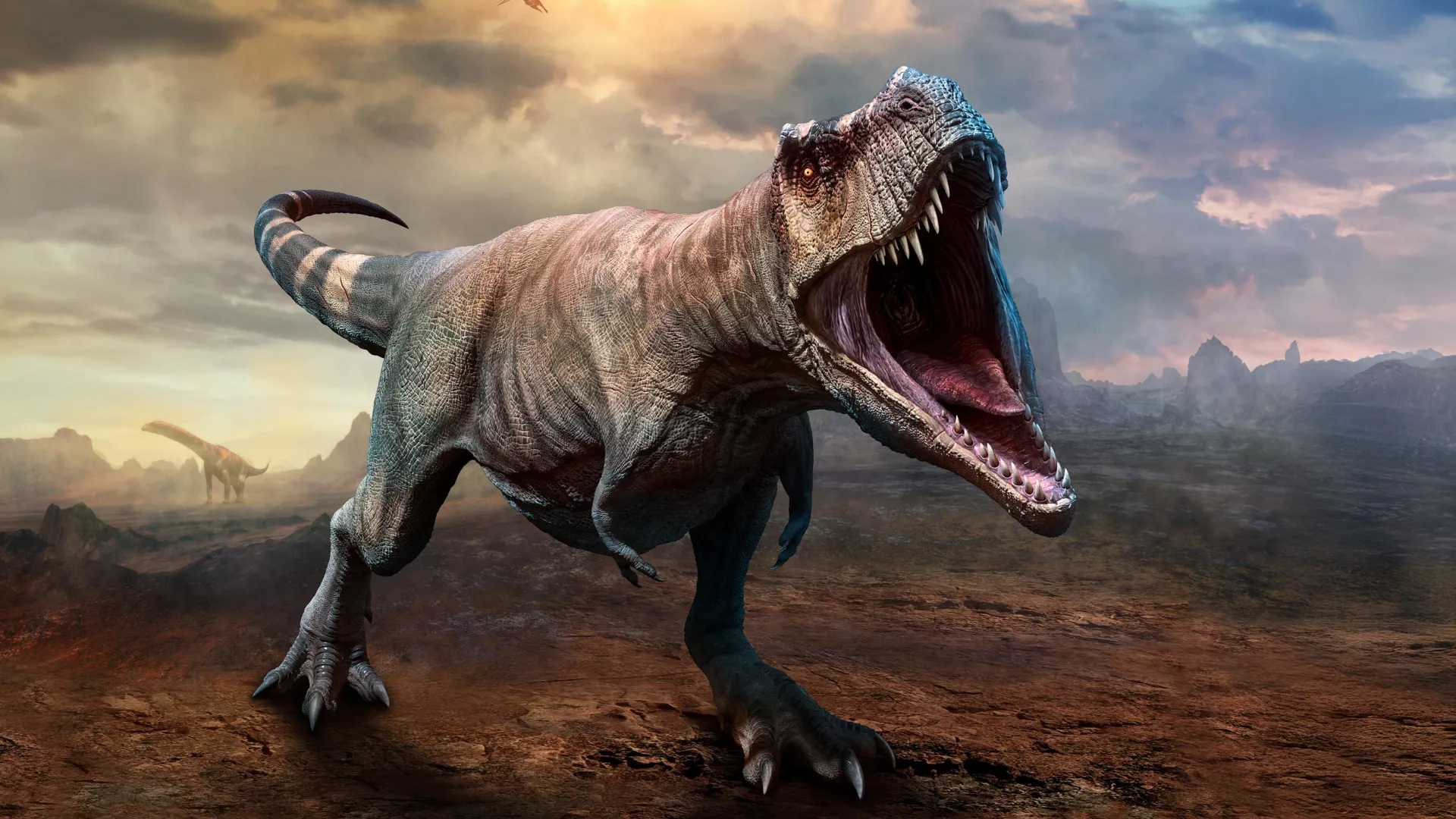
For over a century, the Tyrannosaurus rex has stood as the quintessential symbol of prehistoric power. We have envisioned it as a creature of rapid, explosive growth—a biological juggernaut that surged from a hatchling to an eight-ton apex predator in a relatively short burst of development. However, a landmark study published in the journal PeerJ is challenging these long-held assumptions. By utilizing advanced imaging and unprecedented statistical modeling, researchers have unveiled a startling reality: the "King of the Dinosaurs" may have taken significantly longer to reach its full, terrifying maturity than previously believed.
The Core Revelation: A Four-Decade Ascent
For years, the prevailing consensus among paleontologists was that T. rex reached its adult size by approximately age 25. This narrative suggested a life history characterized by a rapid, almost frantic pace of growth during its teenage years. The new research, however, paints a far more measured portrait.
According to the analysis, T. rex likely continued its growth trajectory for nearly 40 years. This discovery suggests that the transition from a fledgling predator to a massive, eight-ton titan was not a quick sprint, but a steady, deliberate marathon. By extending the growth phase by roughly 15 years, the researchers have fundamentally altered our understanding of the metabolic and developmental life of the Cretaceous’s most famous carnivore.
A Chronology of Discovery: From Fossils to Growth Rings
To understand how these scientists arrived at such a radical conclusion, one must look at the methodology. Paleontologists have long relied on "histology"—the study of fossilized bone microstructure—to estimate the age of dinosaurs. Much like the rings found in the trunk of a tree, dinosaur bones preserve growth marks that record the animal’s developmental pace and age at the time of death.
The Limitation of the Bone Record
Unlike a tree, which provides a continuous, lifelong ledger of its history, dinosaur bones offer only a fragmentary view. Because of a process known as "medullary remodeling"—where bone tissue is resorbed and replaced as the animal grows—the early years of a T. rex’s life are often erased from the inner layers of its bones. Typically, a cross-section of a mature T. rex femur or tibia only retains a clear record of the final 10 to 20 years of its existence.
The Statistical "Stitching" Method
To bridge these chronological gaps, the research team, led by Dr. Holly Woodward of Oklahoma State University, assembled the largest dataset of T. rex fossils ever compiled. By analyzing 17 specimens ranging from juveniles to massive, aged adults, the team employed a sophisticated statistical approach.
Dr. Nathan Myhrvold, a mathematician and paleobiologist who spearheaded the statistical analysis, describes the process as "stitching." By overlaying the growth records of different individuals at different life stages, the team created a "composite growth curve." This model allows scientists to interpolate the growth history of the species with a level of granular detail that was previously impossible.
Supporting Data: Advanced Imaging Techniques
The precision of this study was bolstered by technological innovation. The team utilized specialized lighting techniques—specifically, circularly polarized and cross-polarized light—to examine thin slices of fossilized bone.
These techniques act as a high-powered filter, revealing growth rings that remain invisible under standard microscopy. Often, growth rings are clustered so tightly in older specimens that they appear as a solid, indecipherable mass. The new imaging approach allowed the researchers to tease apart these markers, confirming that many specimens were significantly older than their physical size might have suggested.
The Ecological Implications of a Longer Youth
Perhaps the most intriguing aspect of the study is the ecological theory it proposes. If T. rex spent four decades growing, it implies that the species occupied a vastly different range of ecological niches throughout its lifespan.
Filling the Void
In ecology, a "niche" refers to the specific role an organism plays in its environment—what it eats, how it hunts, and what it competes with. A juvenile T. rex was a lithe, fast-moving hunter, likely targeting different prey than its massive, bone-crushing adult counterparts.
Coauthor Jack Horner, a renowned paleontologist from Chapman University, suggests that this extended growth phase was a strategic evolutionary advantage. By occupying different ecological roles as they matured, younger T. rex individuals would not have been in direct competition with their parents for resources. This flexibility may have been a critical factor that allowed the Tyrannosaurus lineage to dominate the end of the Cretaceous Period, effectively squeezing out other predators and maintaining an iron grip on the food chain for millions of years.
Official Responses and the "Species Complex" Debate
The study also wades into one of the most contentious debates in modern paleontology: the "Nanotyrannus" controversy. For years, researchers have argued whether smaller, slender fossils labeled as T. rex represent young individuals or a completely separate, smaller genus of tyrannosaur known as Nanotyrannus.
The Case of "Jane" and "Petey"
Within the study, two famous specimens—"Jane" and "Petey"—demonstrated growth patterns that deviated sharply from the standard T. rex curve. These outliers suggest that either our understanding of T. rex growth plasticity is incomplete, or that these individuals belong to a distinct species entirely.
The researchers opted to classify their subjects as part of the "Tyrannosaurus rex species complex," a term that acknowledges the possibility of multiple related species living in the same environment. This cautious language highlights the ongoing complexity of the fossil record and the difficulty of defining species boundaries millions of years after the fact.
Implications for Future Research
The findings presented in PeerJ serve as a clarion call for a revision of paleontological protocols. The discovery of hidden growth markers, coupled with the success of the statistical stitching method, suggests that many previous studies may have underestimated the ages of various dinosaur species.
"We found strong evidence that the protocols typically used in growth studies may need to be revised," says Dr. Myhrvold. This means that the entire field of dinosaur paleontology may be on the verge of a "re-dating" era. As researchers begin to apply these high-resolution imaging and statistical modeling techniques to other dinosaur families—such as the massive sauropods or the nimble dromaeosaurids—we may find that the growth strategies of the Mesozoic were far more diverse and complex than the current textbooks suggest.
Conclusion: A New Portrait of the King
More than 100 years after Tyrannosaurus rex was first formally described, the beast remains a source of endless fascination. This new study proves that even our most familiar icons can still surprise us.
By shifting our perception of T. rex from a creature of rapid, reckless growth to one of long-term, calculated development, we gain a deeper appreciation for its evolutionary success. The king did not just reach the throne through brute force; it reached it through a sophisticated, multi-decade maturation process that allowed it to adapt to its environment at every stage of its life.
As we continue to refine our tools and expand our datasets, the life of the T. rex becomes clearer, revealing a animal that was, in its own way, as complex and resilient as any modern creature. The "King of the Dinosaurs" remains, as ever, a testament to the incredible history of life on Earth—a story that, despite the millions of years of silence, is still being written.