Welcome back to TechCrunch Mobility, your definitive hub for the rapidly evolving landscape of transportation and the increasingly critical role artificial intelligence plays in shaping the future of how we move.
Note to readers: Please be advised that we will be taking a brief hiatus for the July 4th holiday. We will return with our next deep dive into the mobility sector the following week.
The Escalating Scrutiny of Tesla’s FSD
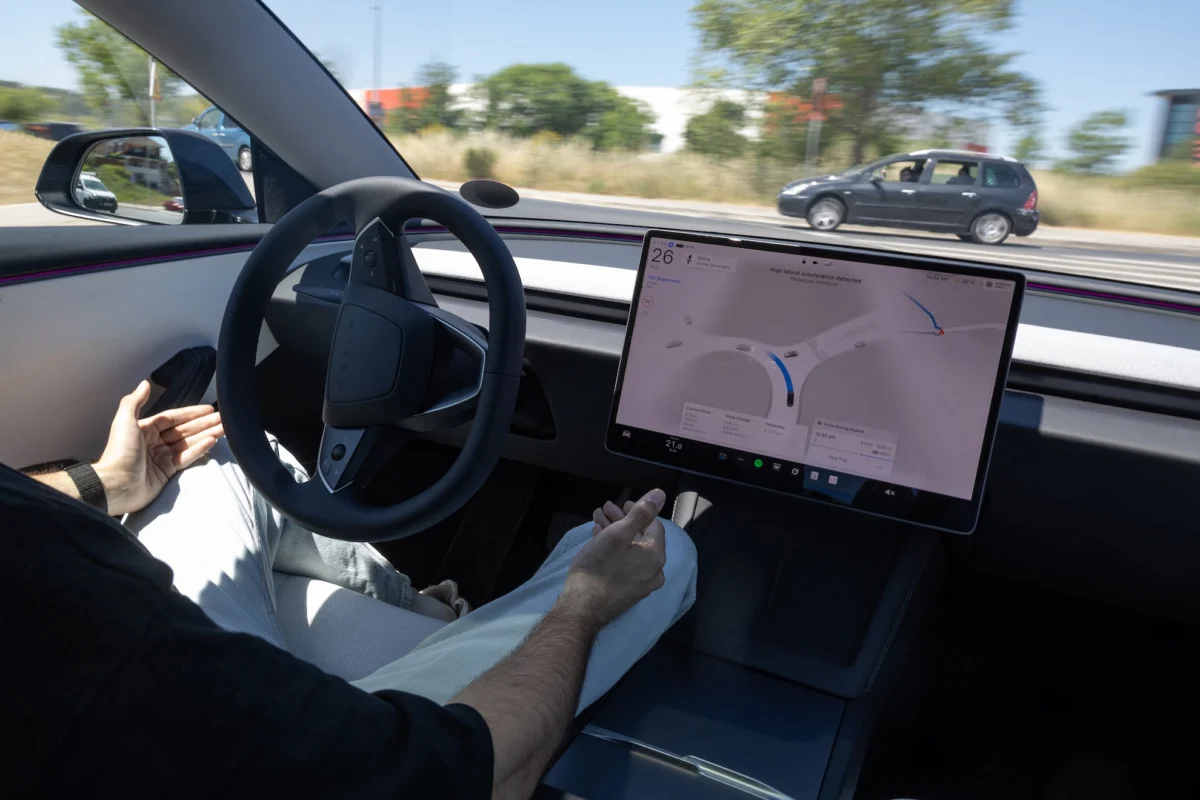
The mobility industry is currently fixated on a singular, high-tension narrative: the intensifying regulatory and public scrutiny surrounding Tesla’s "Full Self-Driving (Supervised)" (FSD) system. As Tesla pivots aggressively to position itself as a premier AI and robotics powerhouse, its automated driving technology has become both its most visible asset and its most significant liability.
A Fatal Collision and Conflicting Accounts
The national conversation was reignited this week following a tragic fatal accident in Texas, where a Tesla vehicle struck a private residence, resulting in the death of a 76-year-old woman. Initial reports, citing the driver’s statements to local law enforcement, suggested that the vehicle’s "Autopilot" system was engaged at the time of the impact.
However, the narrative quickly became a point of contention. Ashok Elluswamy, Tesla’s vice president of AI software, took to the social media platform X to challenge the initial account. Elluswamy claimed that the vehicle was not operating under the basic Autopilot system—which has since been discontinued—but rather FSD (Supervised). He further alleged that the driver had manually overridden the system by "pressing the accelerator all the way to 100%," effectively forcing the vehicle into a residential area at high speed.

Without an independent forensic investigation into the vehicle’s telemetry data, the exact sequence of events remains a subject of debate. Nevertheless, the severity of the incident has triggered formal probes by the National Highway Traffic Safety Administration (NHTSA) and the National Transportation Safety Board (NTSB), ensuring that the technical and human factors of this crash will undergo rigorous federal examination.
Legal and Regulatory Headwinds
This incident is not an isolated concern. Tesla recently reached a settlement in a separate lawsuit involving a fatal 2023 crash linked to FSD (Supervised). That specific case is currently tied to a broader, ongoing NHTSA investigation examining whether Tesla’s sensor suite and software architecture can reliably detect and respond to compromised visibility conditions, such as dense fog, sun glare, or airborne dust—environmental factors that have long challenged camera-only vision systems.
Waymo’s Strategic Expansion: The Ojai Program
While Tesla faces regulatory fire, Waymo is executing a massive logistics operation to scale its commercial robotaxi fleet. Industry analysts and eagle-eyed observers have been tracking Waymo’s "Ojai" robotaxi project, a collaboration with Zeekr, the premium EV brand under China’s Geely Holding Group.
Data-Driven Scaling
Research firm MoffettNathanson recently performed an exhaustive analysis of U.S. Bill of Lading documents, providing a rare glimpse into the sheer volume of Waymo’s expansion. The firm tracked imports of Zeekr vehicles labeled as "CM1e" or "CME"—the internal designations for the Waymo-bound chassis.
The findings are striking: Waymo is currently on track to import approximately 3,156 vehicles into the United States this year, averaging roughly 300 units per month. This infrastructure expansion is critical to Waymo’s ambitions. The Ojai vehicles are designed as purpose-built robotaxis, featuring a sixth-generation sensor suite that includes 13 cameras, four lidar sensors, six radar units, and an advanced external audio system. Crucially, these vehicles comply with strict U.S. policy mandates: they are imported without the "connected vehicle" modules that would trigger current federal bans on Chinese-linked communications technology.

Market Shifts: Deals, Partnerships, and Capital Flow
The ecosystem surrounding autonomous driving is maturing, with a wave of capital flowing into the supporting infrastructure—from charging depots to maintenance robotics.
Strategic Capital and Mergers
- Aseon Labs: The Silicon Valley-based startup raised $10 million in a seed round led by Crane Venture Partners. Aseon is building autonomous "mobile pods" designed to inspect, clean, and charge robotaxis, essentially creating automated pitstops for the autonomous age.
- Elroy Air: In a massive consolidation move, the autonomous heavy-cargo drone developer is set to go public via a merger with the blank-check firm Columbus Circle Capital Corp II. The deal places an estimated $1 billion valuation on the company.
- Strategic Alliances: CaoCao and May Mobility have announced a strategic partnership to commercialize robotaxi services, with an immediate focus on expansion into European markets.
- Infrastructure Debt: Terawatt Infrastructure has secured a $300 million senior secured credit facility. This capital will be deployed toward the acquisition and development of charging depots, essential for maintaining the fleets operated by firms like Waymo.
Notable Tidbits: Regulation, Labor, and Industry Moves
The broader mobility sector is seeing significant volatility, marked by both optimistic regulatory shifts and sobering corporate contractions.
Regulatory Tailwinds
The U.S. Department of Transportation has proposed a significant change in federal safety regulations that could remove the requirement for physical brake pedals in vehicles specifically designed for autonomous operation. This shift acts as a major tailwind for manufacturers like Tesla and Zoox, which are aiming to produce cabin-centric designs that prioritize passenger experience over manual control.
Corporate Restructuring
Conversely, the industry is witnessing significant belt-tightening. Lucid Motors is undergoing a major workforce reduction, cutting 18% of its staff (approximately 1,500 employees) and shuttering the second shift at its Arizona manufacturing facility. This move, the second significant layoff in four months, reflects a strategic shift by CEO Silvio Napoli to "simplify" the company and focus on immediate competitiveness.
The Sensor Debate
A major shift in the ride-hailing space occurred this week when Lyft CEO David Risher established a new "multi-sensor safety standard" for the Lyft network. The policy effectively disqualifies autonomous vehicles that rely solely on camera-based vision systems. This implies that vehicles like the Tesla Cybercab, which eschew lidar in favor of a vision-only approach, will not be permitted on the platform. The standard, however, does not affect human-driven vehicles, ensuring that current Tesla drivers using the app remain unaffected.

Global Movements
- OpenAI’s Expansion: The AI giant has poached Uber India president Prabhjeet Singh, tasking him with leading its operations in its most significant market outside the United States.
- Waymo’s International Ambitions: Having registered a new entity in Germany, Waymo is clearly laying the groundwork for a European launch, though insiders note that a commercial debut remains on the horizon rather than in the immediate future. Simultaneously, the company has officially dropped its waitlist in Nashville, allowing for broader public adoption.
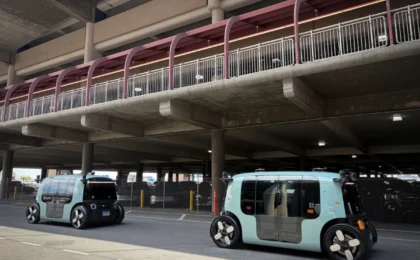
- Zoox’s Makeover: As it ramps up production at its Hayward, California facility, Zoox has unveiled a design refresh for its purpose-built robotaxis, signaling it is nearly ready for large-scale commercial deployment.
Implications: The Road Ahead
The divide between the "vision-only" approach championed by Tesla and the "sensor-fusion" approach adopted by Waymo, Zoox, and other industry players is widening. As regulators grapple with how to evaluate these systems, the industry is entering a high-stakes phase of "show, don’t tell."
The influx of capital into infrastructure startups—such as Aseon Labs and Terawatt—suggests that the market is finally moving beyond the "software-only" hype of the previous decade. We are now entering an era of tangible, physical integration, where the success of autonomy will depend as much on the ability to clean, charge, and maintain a fleet as it does on the underlying neural networks.
As we move toward the second half of the year, all eyes will remain on the NTSB and NHTSA investigations. The outcomes of these probes will likely dictate the speed at which federal regulators grant "brake-pedal-free" status to the next generation of autonomous vehicles. The promise of an autonomous future is closer than ever, but as the events of this week demonstrate, the path toward that future is fraught with both technical challenges and profound human consequences.
Got a tip for us? Email Kirsten Korosec at [email protected] or contact our Signal at kkorosec.07. You can also reach out to Sean O’Kane at [email protected].