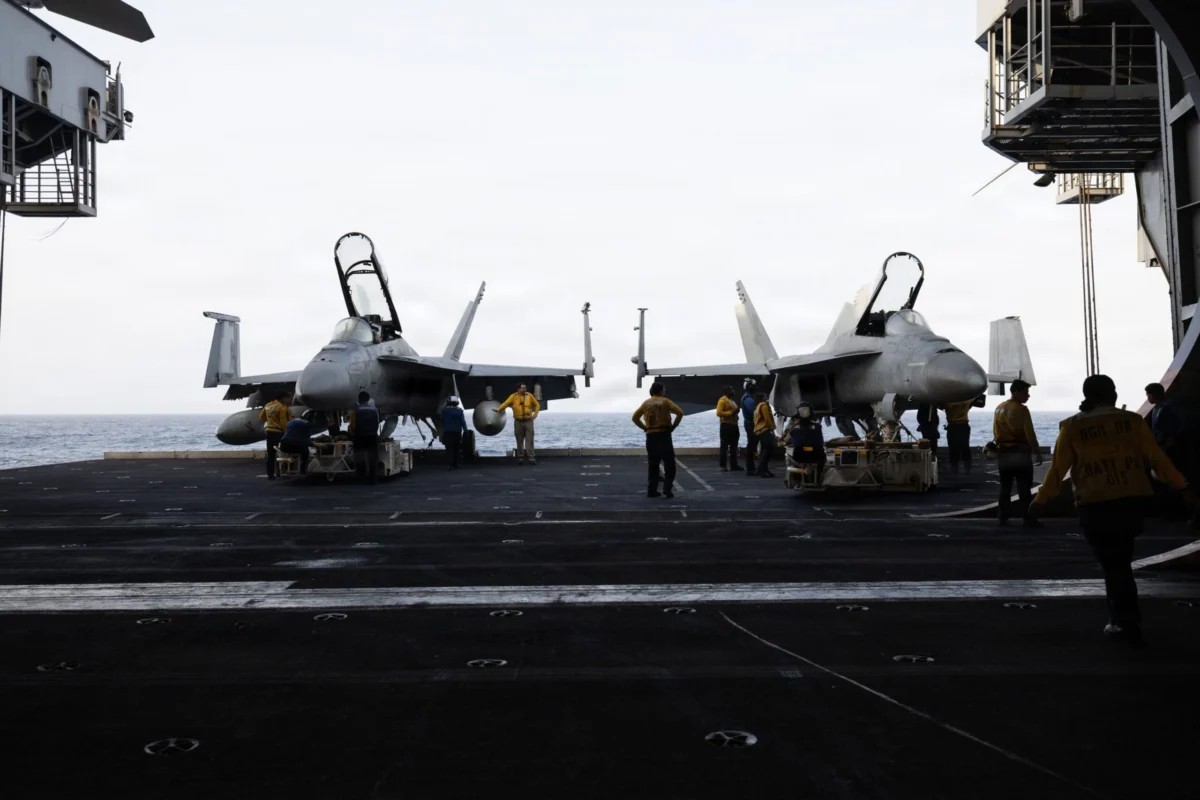
New York / Washington D.C. — Global financial markets opened the week on a note of cautious optimism as stock futures rallied late Sunday evening. The recovery follows reports that the United States and Iran have tentatively agreed to step back from a precipice of all-out conflict in the Persian Gulf. Despite a weekend defined by drone strikes, maritime threats, and apocalyptic rhetoric, both nations appear to have chosen a diplomatic off-ramp, signaling a willingness to meet in Qatar to resolve a deepening crisis over the world’s most vital energy chokepoint.
Main Facts: A Dual Narrative of Diplomacy and Volatility
As of Sunday night, futures tied to the Dow Jones Industrial Average rose 101 points, or 0.19%. The broader S&P 500 futures gained 0.45%, while the tech-heavy Nasdaq-100 futures jumped 0.64%. This upward movement suggests that investors are breathing a sigh of relief after a week of intense selling, though the underlying geopolitical tension remains far from resolved.
While equity markets found their footing, the energy sector told a more nuanced story. U.S. oil futures (WTI) climbed 1.5% to settle near $70.29 a barrel, and Brent crude rallied 1.1% to $72.80. The divergence between rising stocks and rising oil reflects a "risk-on" sentiment tempered by the reality that the Strait of Hormuz remains a flashpoint. Energy traders are pricing in the persistent threat to maritime traffic, even as the broader market bets on a successful diplomatic intervention.
The catalyst for the sudden shift in sentiment was a report from Axios, citing senior U.S. officials, which claimed that Washington and Tehran have agreed to a temporary halt in direct military strikes. The two sides are reportedly scheduled to convene in Doha, Qatar, on Tuesday. The primary objective of these high-stakes talks is to address the "Oman Route"—an alternate maritime corridor protected by the U.S. Navy—and the Iranian regime’s insistence on imposing tolls and regulatory control over all traffic passing through the Strait.
Chronology: From Ceasefire to Combat and Back Again
The path to the current stalemate has been marked by a rapid "tit-for-tat" escalation that threatened to dismantle a two-week-old ceasefire. To understand the current market volatility, one must look at the sequence of events over the last 72 hours:
The Collapse of the Initial Truce
Early last week, a fragile ceasefire appeared to be holding, providing a brief respite for global shipping. However, the peace was shattered when Iran-backed forces began targeting commercial vessels with sophisticated drone swarms. The U.S. responded with precision airstrikes against Iranian Revolutionary Guard Corps (IRGC) infrastructure, aimed at "punishing" the regime for interfering with the freedom of navigation.
Sunday’s Pre-Dawn Escalation
The situation reached a fever pitch early Sunday morning. Iran launched a series of drone and missile attacks targeting strategic assets in Kuwait and Bahrain—nations that host significant U.S. military presences. Simultaneously, Tehran issued a public ultimatum, threatening a “complete halt” to all peace negotiations if the U.S. did not withdraw its naval escorts from the region.
The Battle for the "Oman Route"
Throughout Sunday, the focus shifted to the "Oman Route." This is a U.S.-led initiative designed to bypass a Tehran-backed channel that the Islamic Republic recently designated as its sovereign territory. By moving tankers through Omani waters under heavy naval escort, the U.S. sought to demonstrate that Iran does not hold a monopoly over Gulf exits. Iran countered by attempting to militarily obstruct this alternate route, leading to the skirmishes that spooked markets late last week.
The Sunday Evening Pivot
By 6:00 PM ET Sunday, the narrative shifted from combat to communication. Following back-channel negotiations mediated by regional partners, the Axios report emerged, confirming the Tuesday summit in Qatar. This news immediately halted the slide in stock futures, as the prospect of a "hot war" was replaced by the prospect of a "managed peace."
Supporting Data: Energy Security and Economic Indicators
The economic stakes of the U.S.-Iran standoff cannot be overstated. The Strait of Hormuz facilitates the passage of roughly 20% of the world’s total petroleum consumption.
Maritime Traffic Data
Despite the threats, data from Sunday revealed a defiant stance by the U.S. Navy and commercial shipping interests. A convoy of tankers was observed transiting the Strait under heavy escort with their transponders turned on—a deliberate signal of transparency and a refusal to be intimidated by Iranian "shadow war" tactics. This "transponders-on" policy is a key metric for analysts; it indicates that shipping companies still have enough confidence in U.S. protection to operate openly rather than attempting to "go dark."
The "Escalation Trap"
Market analysts at HFI Research have warned of an "escalation trap" that continues to underpin oil prices. In a post on X (formerly Twitter), the firm noted: “For the US, the fact that the Oman route might be blocked presents it with a big ultimatum: either the US escalates or gives IRGC control of the Strait of Hormuz. Logic says there’s no way that would happen, so escalation will continue.” This structural reality explains why oil prices remain elevated despite the rally in equities.
Domestic Economic Context
The geopolitical drama coincides with a critical week for the U.S. domestic economy. Because the U.S. observes the Independence Day holiday on Friday, July 3, the Department of Labor will release its monthly non-farm payrolls report on Thursday.
Wall Street’s expectations for the June report are modest:
- Projected Job Gains: 118,000 (a significant cooling from May’s 172,000).
- Unemployment Rate: Forecast to remain steady at 4.3%.
- Market Sensitivity: Investors are looking for a "Goldilocks" number—weak enough to encourage Federal Reserve rate cuts, but strong enough to signal that the economy isn’t sliding into a recession.
Official Responses: Rhetoric vs. Reality
The public statements from leaders in Washington and Tehran highlight the vast gulf that the Qatar negotiators must bridge.
President Donald Trump’s Stance
President Trump took to Truth Social on Sunday to address the violation of the previous ceasefire. While signaling a reluctance to enter a full-scale ground war, he employed his signature "maximum pressure" rhetoric.
"There may come a point when we are no longer able to be reasonable, and will be forced to militarily complete the job that we very successfully started," the President wrote. He concluded with a stark warning: "If that happens, the Islamic Republic of Iran will no longer exist!"
White House insiders suggest this rhetoric is intended to provide leverage for the Tuesday talks, though it remains a source of extreme anxiety for international diplomats.
The Iranian Position
Tehran’s Foreign Minister, Abbas Araghchi, remained equally firm on Sunday, asserting that Iran’s legal claim to the Strait is absolute. Araghchi referenced a Memorandum of Understanding (MoU) which he claims grants Iran exclusive management rights over the waterway.
"The management and full restoration of maritime traffic in the Strait of Hormuz is Iran’s responsibility," Araghchi stated via state media. "No other country or entity has any responsibility or authority in this matter."
This statement confirms that the core of the dispute is no longer just about military positioning, but about the creation of the "Persian Gulf Strait Authority"—a new Iranian body intended to levy fees on international shipping, effectively turning the Strait into a toll road.
Implications: What Lies Ahead for Investors and Global Stability
The upcoming week is poised to be one of the most consequential of the year for both the Middle East and global financial markets.
1. The Qatar Summit as a Binary Event
The meeting on Tuesday will likely serve as a binary event for markets. If a framework for a "New Maritime Status Quo" is established, we could see a massive relief rally in equities and a cooling of oil prices. However, if the talks collapse, the "escalation trap" identified by analysts will likely snap shut, potentially leading to a closure of the Strait and a spike in oil prices toward the $100 mark.
2. The Tech Sector Rebound
Investors are specifically looking for a rebound in technology stocks, which bore the brunt of last week’s selloff. The tech sector is particularly sensitive to global supply chain disruptions. If the Qatar talks provide even a glimmer of stability, the Nasdaq could see a significant recovery as "dip-buyers" move back into the market.
3. The Federal Reserve’s Dilemma
The Labor Department’s early jobs report on Thursday adds another layer of complexity. If the geopolitical situation remains volatile, the Fed may find itself in a difficult position: facing inflationary pressures from rising energy costs while seeing a cooling labor market. A "stagflationary" signal would be the worst-case scenario for Wall Street.
4. Long-term Maritime Security
Beyond the immediate market reaction, the crisis has forced a fundamental rethinking of maritime security. The U.S. effort to establish the "Oman Route" suggests that Washington is no longer willing to accept the Strait of Hormuz as a single-point-of-failure for the global economy. Whether this alternate route becomes a permanent fixture of global trade—and whether Iran will allow it to exist—will determine the stability of energy markets for the next decade.
In conclusion, while the Sunday evening rally in stock futures offers a moment of hope, the situation remains a "shadow war" fought on two fronts: the physical waters of the Persian Gulf and the digital screens of global trading floors. The world now turns its eyes to Doha, where the next chapter of this high-stakes geopolitical drama will be written.