
By Sports Desk
June 28, 2026
The 2026 FIFA World Cup has reached its most pressurized juncture. As the tournament shifts from the sprawling, unpredictable nature of the group stage into the unforgiving reality of the knockout rounds, two nations stand on the precipice of history. On Sunday, co-hosts Canada will square off against South Africa at SoFi Stadium in Inglewood, California. For both teams, this represents uncharted territory: neither nation has ever competed in a World Cup knockout match before.
With a 3:00 p.m. ET kickoff looming, the atmosphere in Southern California is electric. The match serves as a litmus test for a Canadian side carrying the weight of a host nation’s expectations, and a South African squad that has defied every preseason projection to arrive in the Round of 16.
The Path to Inglewood: A Chronology of Chaos and Grit
Canada’s Turbulent Ascent
The journey for the Canadian men’s national team has been defined by extreme volatility. Under the stewardship of the fiery and tactically demanding Jesse Marsch, Canada entered the tournament with aspirations of dominance, only to find the reality of the group stage far more grueling.
The campaign began with a frustrating 1-1 stalemate against Bosnia. It was a match that signaled early concerns regarding Canada’s clinical efficiency, with star striker Jonathan David struggling to find his rhythm. However, the narrative shifted dramatically in the second fixture, a 6-0 demolition of Qatar. In that outing, David silenced his critics with a clinical hat trick, showcasing the lethal potential of the Canadian attack. Yet, victory came at a steep cost; midfielder Ismael Kone suffered a gruesome leg injury, creating a significant void in the center of the pitch.
The final group match against Switzerland served as a humbling reminder of the tournament’s quality. Despite a 2-1 loss, Canada secured its progression through the sheer volume of points accumulated in the previous rounds. It was a "chaotic" progression, according to pundits, leaving many to wonder if the team has the defensive discipline to survive a knockout format.
South Africa’s Measured Resistance
Conversely, South Africa’s progression has been a masterclass in adaptation. Their tournament opener against Mexico was nothing short of disastrous, leaving the Bafana Bafana facing immediate elimination. Instead of folding, the squad regrouped, grinding out a 1-1 draw against a disciplined Czechia side.
The turning point arrived in their final group match against South Korea. Playing with a defensive composure that few expected from a roster largely comprised of domestic-league talent, South Africa secured a 1-0 victory. This win served as a statement of intent: South Africa is not merely here to participate, but to disrupt the established hierarchy of international football.
Supporting Data and Betting Landscapes
As the world turns its eyes to Inglewood, the financial markets are reflecting the uncertainty of the matchup. According to FanDuel, Canada enters as the -140 favorite on the 90-minute money line. South Africa sits as the underdog at +460, while a draw is priced at +240.
Betting Odds Overview
| Market | Odds |
|---|---|
| Canada Money Line | -140 |
| South Africa Money Line | +460 |
| Draw | +240 |
| Over/Under 2.5 Goals | Over +128 / Under -158 |
The betting trends suggest a cagey affair. With the Under 2.5 goals market heavily favored at -158, oddsmakers anticipate a tactical, low-scoring battle where one mistake could prove fatal. Experts from SportsLine, including analysts like Brad Thomas and Martin Green, have highlighted the potential for value in the "Both Teams to Score" market (+104), given the defensive vulnerabilities shown by Canada and the newfound offensive confidence of South Africa.
The Tactical Chess Match: Marsch’s Mind Games
The most intriguing subplot of this fixture is the status of Canadian icon Alphonso Davies. The Bayern Munich superstar has been sidelined throughout the tournament as he navigates a complex recovery from a string of injuries.
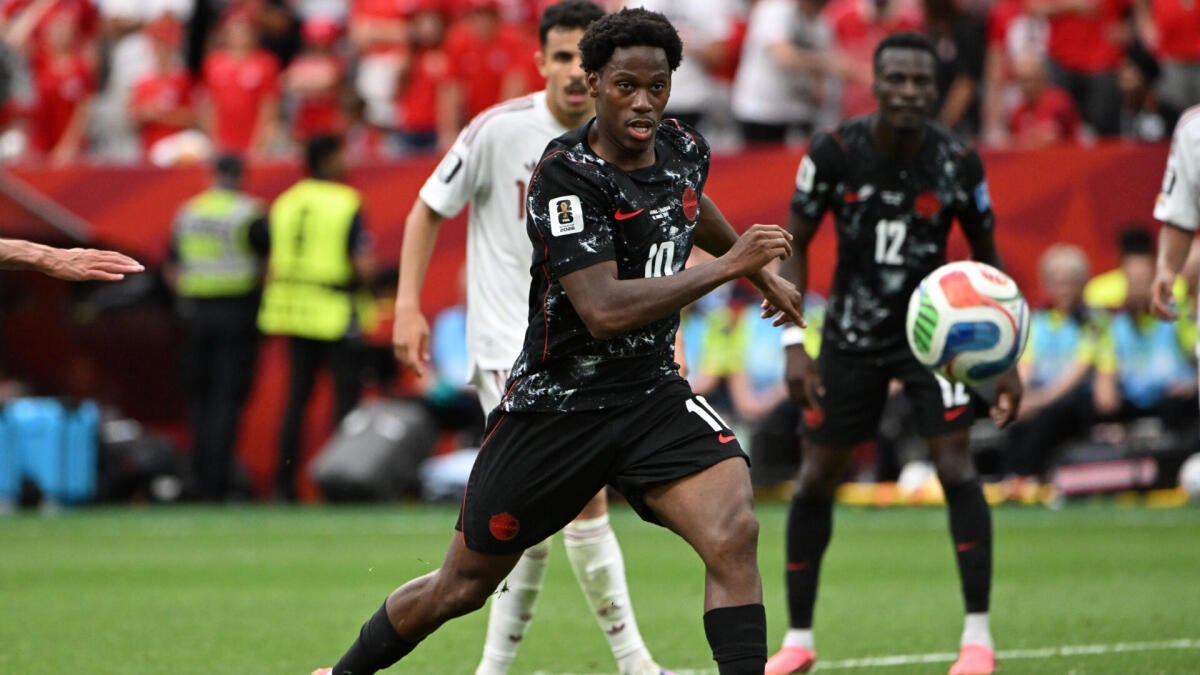
Coach Jesse Marsch has played a masterful, if controversial, game of psychological warfare. Before the Switzerland match, Marsch hinted at Davies’ potential return, only to later reveal that he had used the player as a "decoy." The tactic was designed to force the Swiss coaching staff to waste valuable preparation time accounting for a player who had no intention of taking the pitch.
Whether this is another feint or a genuine strategic shift remains to be seen. If Davies is cleared to play, it changes the geometry of the entire match. If he remains on the bench, the burden of creativity falls squarely back on Jonathan David and Cyle Larin. Larin, who has already netted twice this tournament, is currently priced at +170 to score at any time, a reflection of his status as Canada’s most reliable "big game" player.
Official Perspectives and Implications
The Weight of Expectation
For Canada, the implications of this match extend far beyond the pitch. As a co-host, the nation is looking to cement its status as a legitimate soccer power. A victory on Sunday would catapult them into the Quarterfinals, potentially sparking a nationwide fervor for the sport that could alter the landscape of Canadian athletics for a generation.
South Africa, meanwhile, carries the hopes of a continent. Following their rocky start, the team has united their domestic fans and demonstrated that the gap between international leagues and domestic development is closing. For the South African Football Association, a win would be the crowning achievement of a multi-year project to professionalize their internal scouting and development programs.
The Tactical Outlook
The key to this match will likely be found in the midfield. With the injury to Kone, Canada must find a way to control the tempo. South Africa’s strength lies in their transition play—their ability to absorb pressure and strike with surgical precision on the counter-attack, as evidenced by their performance against South Korea.
Should the game reach extra time or penalties, the pressure will shift to the respective goalkeepers. Canada’s defensive unit has looked shaky under sustained pressure, whereas the South African backline has shown an uncanny ability to maintain their shape, even when physically outmatched.
Final Analysis: What to Expect
When the whistle blows at 3:00 p.m. ET, the tactical preparation will meet the harsh reality of tournament football. Both coaches are expected to prioritize defensive stability in the opening 20 minutes, fearing the psychological blow of conceding an early goal.
For the neutral observer, this is a clash of narratives: the host nation’s quest for validation versus the underdog’s fight for respect. While Canada possesses the higher individual ceiling—particularly if David finds his scoring boots—South Africa has proven they are the more cohesive unit under duress.
Expect a tight, physical contest where the margins are razor-thin. If Canada can unlock their transition game, they should edge this out. However, if they allow the match to stagnate, the grit and resolve of Bafana Bafana could very well provide the shock of the tournament.
Regardless of the outcome, the fact that these two nations are competing for a spot in the final eight of the 2026 World Cup is a testament to the growth of the game globally. Sunday’s match is not just a game; it is the realization of a new, multipolar era in international football, where the traditional giants are no longer the only ones capable of reaching the summit.
For more in-depth betting analysis, including proprietary models and expert predictions for the remainder of the 2026 World Cup, visit SportsLine. Fans looking to engage with the action can also utilize the latest FanDuel promotional offers for bonus bets throughout the knockout phase.