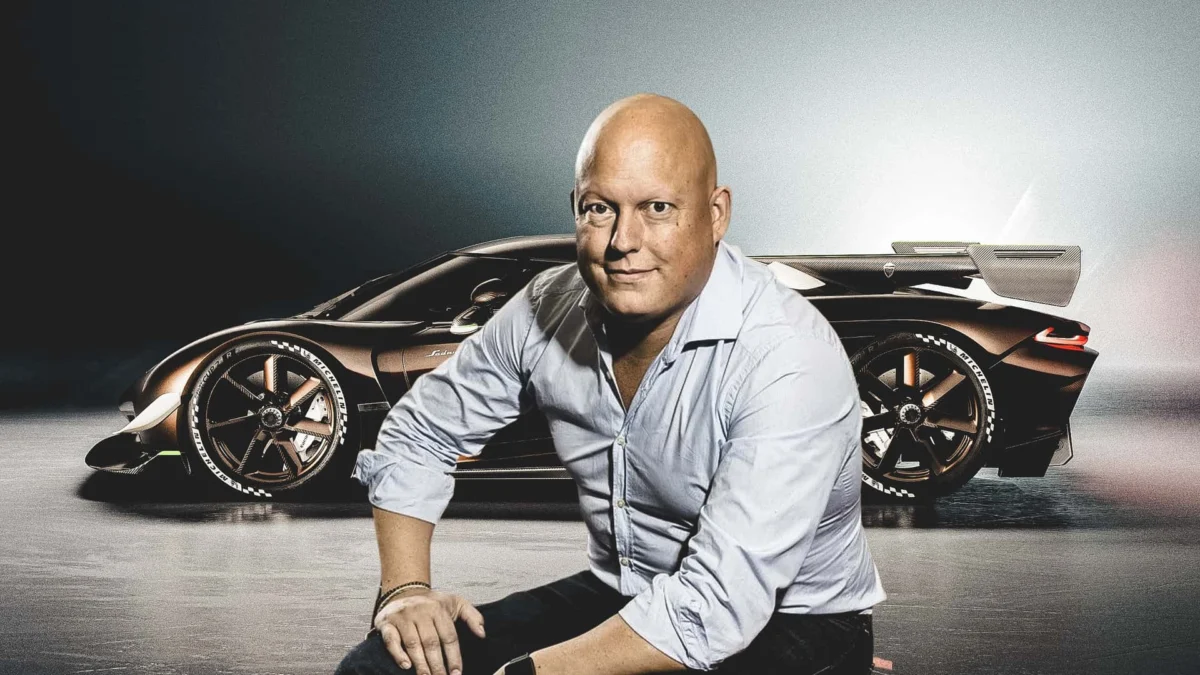
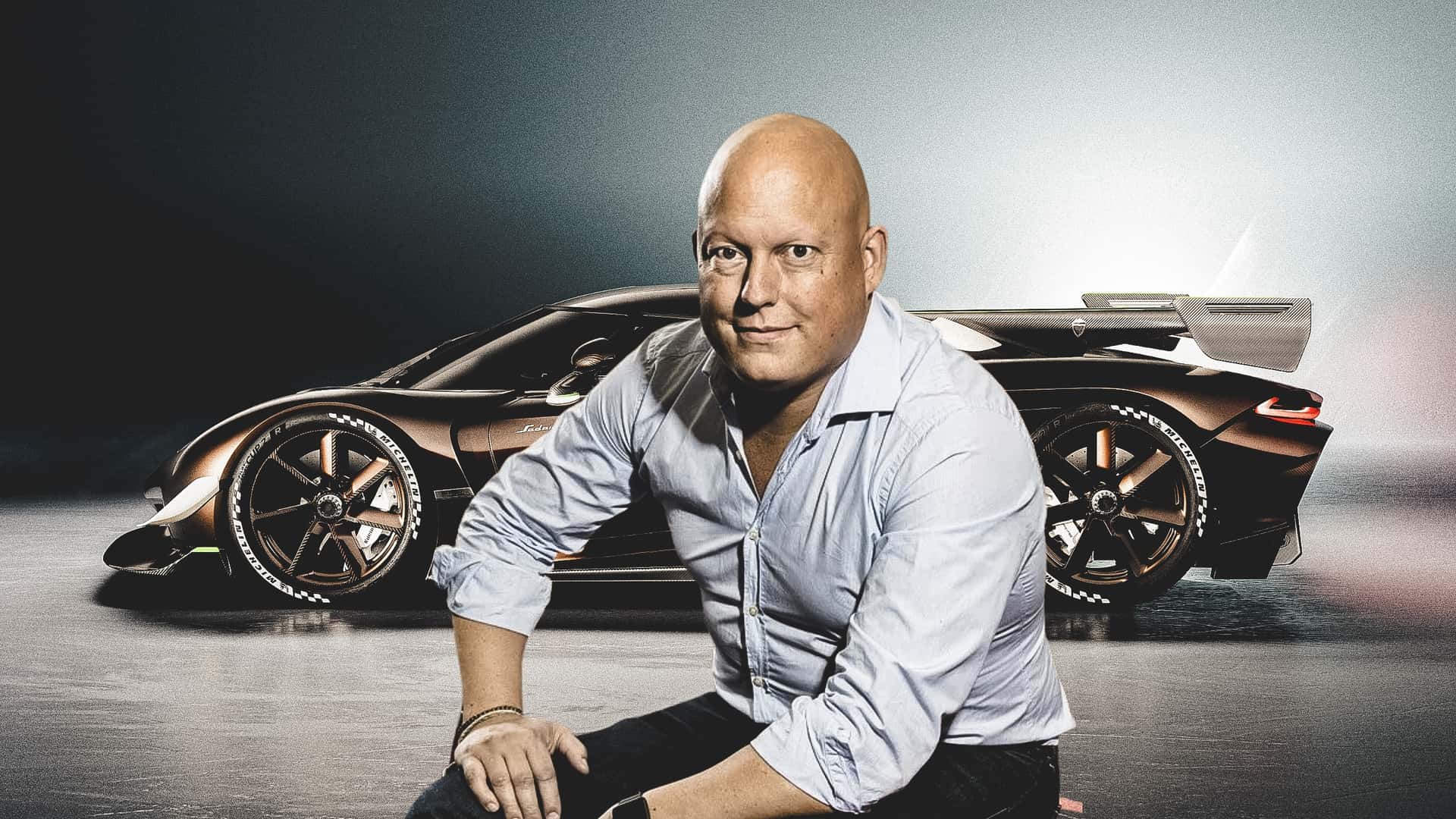
At the heart of Ängelholm, Sweden, the Koenigsegg factory functions less like a conventional automotive assembly line and more like a laboratory for the impossible. Amidst the carbon fiber dust and the meticulous assembly of multi-million dollar machines, Christian von Koenigsegg, the company’s visionary founder, remains a man caught between the industry’s inevitable shift toward electrification and his own uncompromising philosophy of what a hypercar ought to be.
During a recent visit to the facility—timed to coincide with the unveiling of a unique Lego collaboration honoring the iconic "Sadair’s Spear"—the burning question of the decade was put to the man himself: With competitors like Ferrari pivoting toward high-voltage architectures, where does Koenigsegg stand on the transition to all-electric power?
The answer is as nuanced as the engineering inside a Jesko. While Koenigsegg possesses the technical pedigree to build a world-beating electric vehicle, they have no intention of doing so in the immediate future. For the Swedish manufacturer, the combustion engine is not a relic of the past; it is the heartbeat of the machine.
A Shift in Perspective: The Decade-Long Evolution
To understand the current strategy, one must look at the trajectory of the company’s thinking. Ten years ago, the industry consensus was nearly unanimous: electricity was the logical, unavoidable destination for high-performance engineering.
"If you’d asked me 10 years ago," von Koenigsegg admits, "I probably would have thought that by 2026 we’d already have an electric Koenigsegg."
At that time, the pursuit of efficiency and raw torque figures made electrification seem like the natural endpoint. However, as the industry matured, von Koenigsegg’s internal barometer shifted. He realized that the "hypercar" experience is not defined solely by 0-60 times or theoretical efficiency. It is defined by the visceral, chaotic, and mechanical interaction between the driver and the machine.
For von Koenigsegg, an engine is not just a power plant; it is a biological entity. The vibration, the acoustic signature, the mechanical response to a gear shift, and the fluctuating power bands are all components of a sensory experience that, in his view, cannot be replicated by the binary nature of an electric motor. As he puts it bluntly, "It never becomes an animal."
Engineering the Soul: Why Combustion Remains Relevant
The philosophy at Koenigsegg is that a hypercar is not a consumer appliance. It is not designed to solve the mundane problems of urban commuting or to minimize the carbon footprint of daily logistics. While a Koenigsegg is equipped with creature comforts—air conditioning, premium infotainment, and ergonomic seats—these are secondary to the primary mission: performance-oriented art.
"The real value of a hypercar is elsewhere," von Koenigsegg explains. "It is in the design, in the engineering, in the sensations it delivers, and in the almost emotional bond between driver and machine."
This conviction dictates that the internal combustion engine is not a stopgap technology destined for extinction. Instead, it is an integral feature of the vehicle’s identity. The brand’s recent engineering efforts demonstrate this, particularly with the Gemera. The "Mega-GT" utilizes a complex hybrid system that prioritizes a compact, intelligent integration of electric power and combustion. By using a smaller battery, the car retains electric-only city driving capabilities and regenerative braking, while keeping the total vehicle mass significantly lower than a full-EV hypercar would require.
The Environmental Paradox of the Hypercar
One of the most provocative aspects of von Koenigsegg’s stance involves the environmental impact of hypercars—an area where he challenges the conventional wisdom regarding battery electric vehicles (BEVs).
The standard argument for EVs focuses on the reduction of tailpipe emissions. However, von Koenigsegg points to the environmental "debt" incurred during the manufacturing of high-capacity battery packs. For a mass-market vehicle driven daily, this debt is paid off through thousands of miles of zero-emission operation.
Hypercars, however, operate in a different reality. Many reside in climate-controlled collections, driven only a few hundred miles per year. In these cases, the environmental cost of producing a massive battery pack may never be "offset" by the car’s usage.
"With hypercars, you can’t compare EVs and combustion engines using the same criteria as mass-market cars," he argues. "A vehicle with a very large battery has to be driven a lot to ‘pay back’ the impact of producing that battery. But hypercars are driven very little—often they sit for years in collectors’ garages—and that break-even point might never come."
According to the founder’s estimates, a car with a smaller, lighter battery—or a highly efficient combustion engine—actually represents a more favorable carbon lifecycle for this specific niche. He cites a threshold of approximately 50,000 miles before an EV becomes more advantageous than a combustion-powered vehicle. When factoring in the use of renewable fuels or advanced biofuels, that threshold rises to 87,000 miles, a distance that many hypercars will never cover in their lifetime.
The Future: Synthetic Fuels and Climate-Neutral Combustion
Rather than abandoning the internal combustion engine, Koenigsegg is looking toward a future where that engine is carbon-neutral. Current models are designed to run on E85, but the long-term vision involves synthetic fuels.
Von Koenigsegg describes a potential scenario where fuels are synthesized using CO2 captured directly from the atmosphere, combined with hydrogen produced from renewable energy sources. In an ideal, highly advanced scenario, the carbon dioxide captured could be stored underground, while the fuel produced results in a net-negative climate impact.
He acknowledges the cost associated with this transition with a dry wit, referring to the investment as a "tax on nature." It is a pragmatic, albeit ambitious, approach: keep the internal combustion engine alive by reinventing the chemistry that fuels it, rather than discarding the mechanical heritage that defines the brand.
Implications for the Hypercar Market
The position of Koenigsegg is not born of ignorance or an inability to innovate. The company had already begun work on a fully electric platform, proving they have the capability to pivot if necessary. However, the decision to hold the line on combustion is a strategic one, designed to protect the "soul" of their product.
Should regulations shift or battery technology reach a point where energy density, weight, and raw material usage allow for an electric hypercar that can match the "animal" nature of their combustion counterparts, von Koenigsegg has left the door ajar. But for now, the priority remains the sensory experience.
The implications for the industry are profound. Koenigsegg is essentially betting that in a future of ubiquitous, silent, and efficient electric transportation, the "analog" experience of a high-performance combustion engine will not become obsolete—it will become a luxury, a piece of performance art for the enthusiast who craves the vibration, the sound, and the mechanical unpredictability of a true, living machine.
In a world rapidly standardizing on the electric motor, Koenigsegg remains a bastion of mechanical defiance, proving that even as the world changes, there is still a place for the roar of an engine.