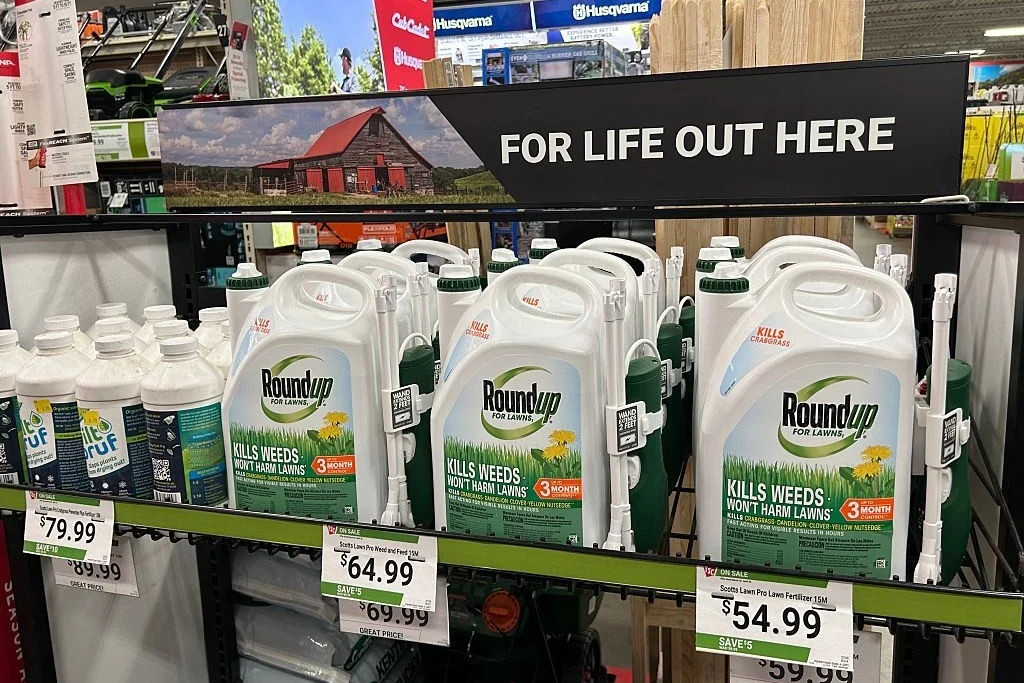
Washington D.C. – In a landmark decision with far-reaching implications for agricultural giants, consumer safety, and the balance of federal and state power, the Supreme Court on Thursday effectively blocked thousands of state-level lawsuits against Monsanto, the producer of the widely used weed killer Roundup. The 7-2 ruling determined that federal law governing pesticide labels preempts state law claims alleging that Roundup’s label failed to warn consumers about the product’s alleged cancer dangers. This pivotal judgment now casts the future of such liability disputes squarely onto the shoulders of Congress.
Main Facts
The Supreme Court’s ruling, issued in the case of Monsanto Co. v. Durnell, centered on the interpretation of the Federal Insecticide, Fungicide, and Rodenticide Act (FIFRA), first enacted in 1947. Justice Brett M. Kavanaugh, writing for the majority, asserted that FIFRA grants the Environmental Protection Agency (EPA) exclusive authority over the content of pesticide labels. Since the EPA had approved Roundup’s label without a cancer warning, Monsanto could not be held liable under state law for failing to include such a warning.
This decision directly overturns a significant victory for plaintiff John Durnell in a Missouri state court, where he had successfully sued Monsanto and its parent company, Bayer, for over $1 million. Beyond Durnell’s case, the ruling effectively nullifies a substantial portion of the thousands of similar state law claims pending against the pesticide manufacturer across the nation. The majority opinion underscored Congress’s original intent for uniformity in the labeling of such products, thereby precluding states from imposing additional or different warning requirements.
The judgment represents a considerable legal victory for Bayer, which acquired Monsanto in 2018 and subsequently inherited a deluge of litigation concerning Roundup. While the company has faced billions in settlements for other types of claims, this ruling specifically addresses the "failure to warn" claims related to product labeling, providing a crucial layer of protection against state-mandated warnings that deviate from federal approval.
Chronology: A Decade of Litigation and Regulatory Scrutiny
The Supreme Court’s decision is the culmination of years of scientific debate, legal battles, and public concern surrounding glyphosate, the active ingredient in Roundup.
1947: Enactment of FIFRA
The Federal Insecticide, Fungicide, and Rodenticide Act (FIFRA) is passed by Congress. Its primary purpose is to provide federal control over pesticide distribution, sale, and use. FIFRA mandates that all pesticides sold or distributed in the United States must be registered by the EPA. This registration process includes a thorough review of the pesticide’s ingredients, proposed uses, and labeling to ensure it can be used without "unreasonable adverse effects on the environment." From its inception, FIFRA established the EPA (and its predecessors) as the primary arbiter of pesticide safety and labeling.
1970s: Introduction and Rise of Roundup
Monsanto introduces glyphosate, marketed as Roundup, in the 1970s. Its effectiveness as a broad-spectrum herbicide, coupled with the later development of "Roundup Ready" genetically modified crops resistant to glyphosate, led to its widespread adoption in agriculture globally. By the early 21st century, Roundup had become one of the most commonly used herbicides in the world, applied in agriculture, landscaping, and residential settings.
2015: IARC Classification Ignites Controversy
The controversy surrounding Roundup intensifies dramatically in March 2015 when the International Agency for Research on Cancer (IARC), a specialized cancer agency of the World Health Organization (WHO), classifies glyphosate as "probably carcinogenic to humans" (Group 2A). This classification, based on "limited evidence of carcinogenicity in humans" and "sufficient evidence of carcinogenicity in experimental animals," immediately spurred a wave of concern among public health advocates, environmental groups, and consumers.
Post-2015: Surge in Lawsuits
Following the IARC classification, thousands of individuals, primarily agricultural workers, gardeners, and others with prolonged exposure to Roundup, began filing lawsuits against Monsanto. These plaintiffs alleged that exposure to Roundup caused them to develop non-Hodgkin lymphoma and that Monsanto failed to adequately warn them about these risks. The lawsuits were filed under state tort laws, primarily alleging product liability claims such as "failure to warn."
2018: Bayer Acquires Monsanto
German pharmaceutical and life sciences company Bayer completes its acquisition of Monsanto for approximately $63 billion. With the acquisition, Bayer inherited the burgeoning legal liabilities related to Roundup. The company’s stock value subsequently faced significant pressure due to the mounting legal challenges.
2018-2020: Initial Verdicts and Settlements
Several high-profile state court trials resulted in massive verdicts against Monsanto, often totaling tens of millions or even billions of dollars in damages. While many of these were later reduced on appeal, they signaled the significant legal jeopardy Bayer faced. In response, Bayer initiated settlement efforts, ultimately agreeing to pay billions of dollars to resolve a substantial portion of the existing Roundup claims, though many cases remained unresolved or outside the scope of these settlements. These settlements, however, largely addressed claims of negligence or design defect rather than solely "failure to warn" claims based on labeling.
The John Durnell Case and Appeal to the Supreme Court
Among the thousands of lawsuits, John Durnell’s case proceeded through the Missouri state courts. Durnell successfully argued that Monsanto failed to warn him about the cancer risks associated with Roundup, leading to a substantial award in his favor. Monsanto and Bayer subsequently appealed this decision, arguing that federal law (FIFRA) preempted state law claims regarding labeling, given that the EPA had approved Roundup’s label. The appellate process eventually led the case to the U.S. Supreme Court, which agreed to hear arguments on the critical issue of federal preemption.
Thursday’s Supreme Court Decision
The Supreme Court’s 7-2 ruling on Thursday, in Monsanto Co. v. Durnell, definitively sided with Monsanto, asserting that FIFRA’s comprehensive federal regulatory scheme for pesticide labeling supersedes any state-level requirements for additional warnings.
Supporting Data: The Preemption Doctrine, Scientific Divide, and Scope of Litigation
The Supreme Court’s decision hinges on the legal doctrine of federal preemption, a constitutional principle derived from the Supremacy Clause, which holds that federal laws can supersede state laws. In this context, the Court determined that Congress, through FIFRA, intended to create a uniform national standard for pesticide labeling, leaving no room for states to impose their own, potentially conflicting, warning requirements. This interpretation reinforces the notion that once the EPA has approved a pesticide label, that label becomes the authoritative statement of warnings required by law.
The Scientific Divide:
Central to the entire Roundup controversy is the enduring scientific disagreement regarding glyphosate’s carcinogenicity.
- EPA’s Stance: The U.S. Environmental Protection Agency (EPA) has consistently maintained that glyphosate is "not likely to be carcinogenic to humans." The agency has reaffirmed this position through multiple reviews, including its most recent interim registration review decision in 2020, concluding that there are "no risks of concern to human health when glyphosate is used in accordance with its current label." The EPA relies on extensive data from toxicological studies, epidemiology, and exposure assessments in reaching its conclusions.
- IARC’s Stance: In stark contrast, the International Agency for Research on Cancer (IARC), as noted, classified glyphosate as "probably carcinogenic to humans" in 2015. IARC’s assessment focuses on identifying potential hazards, while regulatory bodies like the EPA conduct risk assessments, which consider the likelihood of exposure and the dose required to cause harm. This distinction is crucial but often a source of public confusion and legal contention.
- Other International Bodies: Other regulatory bodies globally have also weighed in, with many, like the European Food Safety Authority (EFSA) and the Food and Agriculture Organization of the United Nations (FAO), generally aligning with the EPA’s view that glyphosate is unlikely to pose a cancer risk to humans at current exposure levels. However, some countries and regions have taken steps to restrict or ban glyphosate based on the IARC classification and public pressure.
Scope of Litigation and Financial Impact:
Before this Supreme Court ruling, Bayer faced an estimated 100,000 to 120,000 Roundup lawsuits in the U.S. While Bayer has already spent over $11 billion in settlements to resolve a significant portion of these claims, primarily addressing cases involving plaintiffs diagnosed with non-Hodgkin lymphoma, many thousands of cases, particularly those focused on labeling and "failure to warn," remained. This Supreme Court decision provides substantial financial relief to Bayer by eliminating a large category of future liability, potentially saving the company billions more in future damages and legal fees. For plaintiffs, however, it closes a major avenue for seeking redress through state courts.
Broader Implications for Regulated Industries:
The ruling has implications beyond the pesticide industry. It reinforces the power of federal regulatory agencies in setting national standards, potentially reducing the ability of states to impose more stringent requirements on products ranging from pharmaceuticals to medical devices, where federal agencies like the FDA have primary labeling authority. This strengthening of federal preemption is a consistent goal for many industries seeking uniform national compliance rather than a patchwork of state-specific rules.
Official Responses: Judicial Voices and Congressional Crosscurrents
The Supreme Court’s 7-2 decision showcased a clear divide, not only on the specifics of FIFRA but also on fundamental interpretations of federal authority and consumer protection.
Justice Brett M. Kavanaugh’s Majority Opinion:
In his majority opinion, Justice Kavanaugh meticulously laid out the Court’s reasoning, emphasizing the comprehensive nature of FIFRA. He wrote that FIFRA "gives the Environmental Protection Agency full control over the content of pesticide labels." Kavanaugh argued that Congress’s intent in enacting FIFRA was to ensure "uniformity in labeling for those products" across the nation. Therefore, "federal law requires Monsanto to sell Roundup with the label that EPA approved at the initial registration and that EPA has subsequently re-approved on multiple occasions — that is, the label without a cancer warning." To allow states to mandate additional warnings would, in the majority’s view, directly contradict and undermine the EPA’s federally authorized regulatory process. The majority’s stance is that a state-imposed warning requirement would essentially deem an EPA-approved label inadequate, thereby creating a direct conflict with federal law.
Justice Clarence Thomas’s Concurring Opinion:
Justice Thomas, while concurring with the overall decision that federal law preempts state claims, wrote separately to express a broader constitutional concern. He suggested that the underlying law, FIFRA itself, may have exceeded Congress’s power to regulate commerce between states under the Commerce Clause. This nuanced concurrence reflects Thomas’s long-held judicial philosophy advocating for a more limited interpretation of federal power, even when agreeing with the outcome of a particular preemption case. His opinion highlights the ongoing tension in American jurisprudence regarding the scope of federal legislative authority.
Justice Ketanji Brown Jackson’s Dissent (Joined by Justice Neil M. Gorsuch):
Justice Ketanji Brown Jackson authored a vigorous dissent, joined by Justice Neil M. Gorsuch, arguing that the majority had misinterpreted Congress’s intent in FIFRA. Jackson contended that Congress intended to require pesticide makers to label all relevant dangers of a product, not solely what was explicitly approved by the EPA. She pointed to a separate provision in the statute preventing "misbranding," arguing that this provision demonstrated that "even though the EPA approved Roundup’s label, that label could still lack a necessary warning."
To bolster her argument, Jackson cited past instances where the EPA itself had found its own prior approved label for Roundup deficient. She specifically highlighted a case where the EPA imposed fines on Monsanto for mislabeling its product by not adequately warning about a leak risk. This, she argued, clearly illustrated that EPA approval does not necessarily equate to a complete and legally sufficient warning, and that states should therefore retain the ability to enforce additional, non-conflicting warnings to protect their citizens. Her dissent underscores a philosophy that champions state authority in areas of consumer protection, especially when federal oversight might be perceived as incomplete.
Industry and Advocacy Group Reactions:
While Monsanto and its parent company Bayer did not immediately issue a detailed statement specific to this ruling, the decision is undoubtedly a significant relief for the company. Previous statements from Bayer have consistently emphasized the safety of glyphosate, citing the EPA’s repeated findings and the robust scientific consensus among regulatory bodies globally that glyphosate is not carcinogenic. This ruling aligns with their long-standing legal argument that federal approval should shield them from state-level challenges on labeling.
Conversely, consumer advocacy groups, environmental organizations, and plaintiffs’ attorneys expressed profound disappointment. They are likely to view the decision as a setback for consumer safety and accountability, arguing that it strips individuals of their ability to seek justice when federal regulators may not have gone far enough to protect public health. Many will likely reiterate calls for more stringent federal oversight or legislative action to allow states more leeway in protecting their citizens.
Congressional Reactions and the Farm Bill:
The Supreme Court’s decision immediately intensified ongoing legislative wrangling on Capitol Hill, particularly concerning the passage of the current Farm Bill. Disputes over pesticide liability shields have already complicated the bill’s progress.
-
Rep. Anna Paulina Luna (R-Fla.): A vocal critic of what she perceives as corporate protections, Luna had previously championed an amendment in the House-passed version of the Farm Bill. This amendment stripped language that would have required national "uniformity" in pesticide labeling and prohibited state or local labeling requirements. Ahead of the Supreme Court’s ruling, Luna had warned the Senate in May against reinstating those provisions, stating on social media, "If this comes back with those protections included, we have the votes to kill it." Following the Supreme Court’s decision, Luna doubled down on her stance, posting on social media that she would introduce legislation "stripping pesticide companies of any liability protections for the harm their products cause the American people." She further asserted, "These companies purposefully omit labeling information knowing their products cause cancer and other health problems. It is time they are held accountable. Enough is enough." Her strong reaction signals a renewed push to counter the Supreme Court’s ruling through legislative means.
-
Sen. John Boozman (R-Ark.): In contrast, Senator John Boozman, the ranking member of the Senate Agriculture Committee, unveiled a Senate version of the Farm Bill earlier this week that conspicuously did not include pesticide labeling provisions. This omission suggests a more cautious approach in the Senate, potentially to avoid further complicating the bill with contentious issues that could derail its passage. However, the Supreme Court’s decision will likely put immense pressure on the Senate to address the issue, either by maintaining the current federal preemption or by introducing new language that attempts to clarify or alter the balance of power.
Implications: A Shift to the Legislative Arena
The Supreme Court’s ruling in Monsanto Co. v. Durnell marks a significant turning point, effectively closing the door on a major category of state-level litigation against pesticide manufacturers based on "failure to warn" claims regarding federally approved labels. This decision will reverberate across multiple sectors:
For Future Litigation:
The most immediate implication is the elimination of thousands of existing and potential "failure to warn" lawsuits against Monsanto and other pesticide companies under state law. Plaintiffs’ attorneys will now need to pivot their strategies, potentially focusing on other types of claims not preempted by federal law, such as manufacturing defects, express warranties, or fraudulent concealment that goes beyond mere labeling omissions. However, the path to redress for those alleging harm from federally approved products has become significantly narrower.
For the Regulatory Landscape:
The ruling unequivocally strengthens the EPA’s authority as the primary, if not sole, arbiter of pesticide labeling requirements. This reinforces federal supremacy in chemical regulation and may lead to increased scrutiny and pressure on the EPA from public health advocates and environmental groups. Critics will argue that if states cannot impose additional warnings, the EPA must be even more diligent and proactive in identifying and mandating all necessary safety information on labels. The decision could spur calls for the EPA to re-evaluate its processes for approving pesticide labels, particularly concerning substances with contested safety profiles.
For the Pesticide Industry:
For Monsanto/Bayer and the broader agricultural chemical industry, the decision is a substantial legal and financial victory. It provides a degree of certainty and protection against a patchwork of potentially conflicting state labeling requirements, reducing their exposure to costly litigation. This newfound clarity regarding preemption may influence future product development, marketing, and labeling strategies, as companies can rely more heavily on federal regulatory approval as a shield against state-level liability for "failure to warn."
For Consumers and Public Health:
From the perspective of consumer advocates and public health organizations, the decision is a blow. It effectively removes a crucial avenue for individuals to seek compensation and for states to impose additional protections when they perceive federal standards as insufficient. This raises questions about the balance between promoting commerce through uniform regulations and safeguarding public health at the local level. Consumers may feel less protected if they believe federal labels do not adequately convey all potential risks.
For Congress: The Impending Legislative Tussle:
As explicitly noted in the original article, the Supreme Court’s decision "likely tees up future legislative wrangling on Capitol Hill." The ball is now firmly in Congress’s court. Lawmakers will face intense pressure from both sides:
- Proponents of Preemption: Agricultural industry groups and some lawmakers will likely advocate for maintaining or strengthening federal preemption, arguing for regulatory certainty and preventing undue burdens on interstate commerce. They will likely support the Senate’s current approach in the Farm Bill, which avoids new labeling provisions.
- Advocates for State Rights and Consumer Protection: Led by figures like Rep. Anna Paulina Luna, a bipartisan coalition of lawmakers may emerge, pushing for legislation that either explicitly allows states to impose additional warnings or strips pesticide companies of liability protections, regardless of federal label approval. This could involve amendments to FIFRA or standalone bills, igniting a potentially fierce legislative battle over the future of pesticide regulation and corporate accountability.
The Monsanto Co. v. Durnell ruling does not end the debate over Roundup’s safety or corporate liability; rather, it fundamentally shifts the arena of contention from the courts to the legislative chambers. The future of pesticide labeling, consumer warnings, and corporate accountability now rests squarely on the decisions to be made by federal lawmakers.