
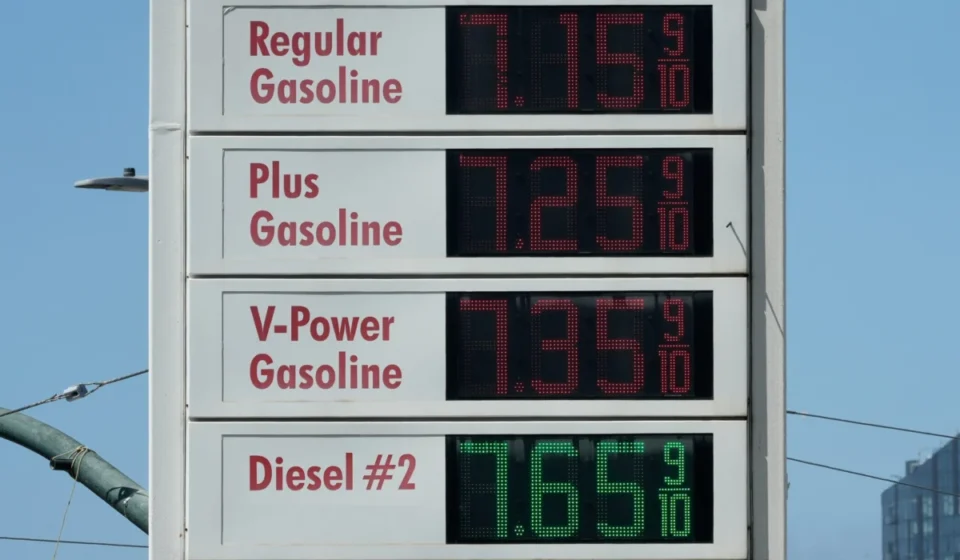
The Algorithmic Cartel: AI-Powered Price Fixing Lawsuit Targets California’s Gas Giants

In what legal experts are calling a landmark challenge to the digital age’s "new frontier" of collusion, a federal class-action lawsuit has been filed against some of the world’s largest oil and retail corporations. The lawsuit alleges that these giants utilized sophisticated Artificial Intelligence (AI) to systematically dismantle competition and artificially inflate gasoline prices across the state of California.
The complaint, filed in a U.S. District Court, targets industry titans including Marathon Petroleum, Circle K, BP, Speedway, EG America, Walmart, and Albertsons. At the heart of the controversy is Kalibrate, a Manchester-based fuel-pricing software provider. The plaintiffs allege that Kalibrate served as a "central nervous system" for an illegal price-fixing conspiracy, replacing the "smoke-filled back rooms" of the 20th century with high-speed algorithms and cloud-based data sharing.
Main Facts: The Digital Conspiracy Allegations
The proposed class-action lawsuit asserts that the named defendants, who collectively operate more than 1,700 gas stations in California, violated the state’s Cartwright Act—a robust antitrust law designed to protect consumers from anti-competitive practices. The core of the allegation is that these companies effectively outsourced their pricing strategies to Kalibrate’s AI-driven platform to ensure they would never have to engage in a "price war" that might benefit the consumer.
According to the legal filing, Kalibrate’s software does more than just analyze market trends; it actively discourages its users from lowering prices. The software reportedly warns operators that cutting prices to gain a competitive edge would trigger a "downward spiral," which in industry terms means a return to actual market competition. Instead, the lawsuit claims the software facilitates a "coordination of high prices" by ingesting sensitive, non-public data—including fuel costs and sales volumes—from all participating competitors and then outputting a "recommended" price that maximizes profit for all members of the network.
The lawsuit highlights a specific feature within the Kalibrate suite known as the "restoration" tool. This tool allegedly allows gas stations in a specific geographic area to raise their prices simultaneously and by significant margins. By acting in concert through the algorithm, the stations ensure that no single operator loses market share when they hike prices, as there is no cheaper alternative nearby.
Chronology: From Legislative Groundwork to the Courtroom
The path to this week’s lawsuit was paved by years of rising consumer frustration and strategic legislative action in Sacramento.
- June 2022: The starting point for the proposed class action. This date marks the beginning of the period for which plaintiffs are seeking damages, coinciding with a period of extreme volatility in global energy markets.
- 2023: Legislative Action: Recognizing the growing threat of "algorithmic collusion," California Governor Gavin Newsom signed a pivotal bill into law. This legislation explicitly clarified that state antitrust laws apply to pricing algorithms. This move was a direct response to concerns that traditional laws, written in an era of handshakes and paper ledgers, were insufficient to tackle the complexities of AI-driven market manipulation.
- Late 2023 – Early 2024: Federal Precedents: The U.S. Department of Justice (DOJ) began aggressively pursuing software companies in other sectors for similar practices. Cases against RealPage (in the rental housing market) and Agri Stats (in the meatpacking industry) set a national precedent, signaling that "outsourcing" price-fixing to a third-party software provider would no longer be a valid legal shield.
- Monday, Current Week: The class-action lawsuit is officially filed in federal court, representing California drivers who purchased fuel from the defendant-operated stations since mid-2022.
- Wednesday, Current Week: News of the lawsuit breaks globally, as Kalibrate and the major oil defendants remain silent, refusing to offer immediate comments on the allegations.
Supporting Data: The High Cost of a Single Cent
The financial stakes of the lawsuit are staggering, driven by the sheer scale of California’s fuel consumption. California consistently ranks among the most expensive states for gasoline due to high taxes, strict environmental regulations, and a "geographic island" effect regarding its refinery capacity. However, the lawsuit argues that a significant portion of this premium is artificial.
Cited research within the lawsuit suggests that the implementation of algorithmic fuel-pricing software leads to an average price increase of approximately 6 cents per gallon. In more concentrated markets—where a high density of stations uses the same software—that premium can skyrocket to as much as 30 cents per gallon.
To put these numbers into perspective, the lawsuit provides a sobering calculation:
- Total Impact: Because of the massive volume of fuel sold in the state, every single cent added to the price of a gallon at the pump drains roughly $134 million annually from the pockets of California drivers.
- Estimated Damages: If the alleged 6-cent to 30-cent "algorithm tax" is proven, the total damages sought could reach into the billions of dollars, covering a period of over two years.
The lawsuit further argues that this "drain" disproportionately affects low-income families and essential workers who have no choice but to commute, further exacerbating the cost-of-living crisis in the Golden State.
Official Responses and Industry Silence
As of the time of publication, the response from the defendants has been characterized by strategic silence. Kalibrate, which operates in over 70 countries and markets itself as a leader in "retail excellence," did not respond to multiple requests for comment.
The corporate defendants—Marathon, BP, Circle K (owned by Alimentation Couche-Tard), Walmart, and Albertsons—have also declined to issue formal statements. Typically, in high-stakes antitrust litigation, defendants maintain silence until they file their formal motions to dismiss or answers in court.
However, the plaintiffs’ legal team has been vocal about the nature of the alleged "cartel." In the filing, they use evocative language to describe the evolution of corporate greed:
"As technology has advanced, so too have the mechanisms available to competitors to fix prices without the cigars, the smoke, or even the room."
This sentiment echoes the stance of the Department of Justice’s Antitrust Division, which has recently stated that "automated price-fixing is still price-fixing." The legal strategy of the plaintiffs relies heavily on the idea that using an algorithm to achieve a result that would be illegal if done via a phone call is still a violation of the law.
Implications: A New Era of Antitrust Enforcement
The California gas station lawsuit is not an isolated incident; it is a flagship case in a broader war against "Price-Fixing 2.0." The implications of this case extend far beyond the gas pump and could reshape how the American economy functions in the age of Big Data.
1. Redefining "Collusion"
Historically, proving an antitrust conspiracy required evidence of a "meeting of the minds"—emails, recordings, or testimony of competitors agreeing to a price. In the age of AI, there may be no direct communication between the companies. If the court rules against Kalibrate and the gas giants, it will establish that the act of feeding data into a common algorithm with the knowledge that competitors are doing the same constitutes "tacit collusion."
2. The End of Dynamic Pricing?
"Dynamic pricing" has become a buzzword in retail, from Uber’s surge pricing to Amazon’s shifting costs. While dynamic pricing is generally legal when based on a single company’s internal data and public market trends, this lawsuit draws a line at the sharing of non-public data through a third party. If successful, this could force companies across all sectors to decouple their AI systems from shared industry data pools.
3. A Blueprint for Other States
California often serves as a legislative and legal laboratory for the rest of the United States. Following Governor Newsom’s 2023 bill, other states may look to adopt similar language to ensure their antitrust statutes are "algorithm-proof." If the plaintiffs win, it is highly likely that similar class actions will be filed in other states where Kalibrate and its competitors operate.
4. Consumer Trust and Transparency
The lawsuit brings to light the "black box" nature of modern pricing. Consumers often assume that price fluctuations are driven by the invisible hand of the market—supply, demand, and crude oil indices. This case suggests that the hand isn’t invisible; it’s digital and programmed to favor the seller. A victory for the plaintiffs could lead to calls for greater transparency in how algorithms determine the prices of essential goods.
As the case moves forward, the eyes of the legal and tech worlds will be on California. The outcome will determine whether AI will remain a tool for corporate efficiency or if it will be strictly regulated as a potential weapon for market manipulation. For the millions of California drivers who have watched the numbers on the pump climb relentlessly, the lawsuit represents a glimmer of hope for a return to true competition.