
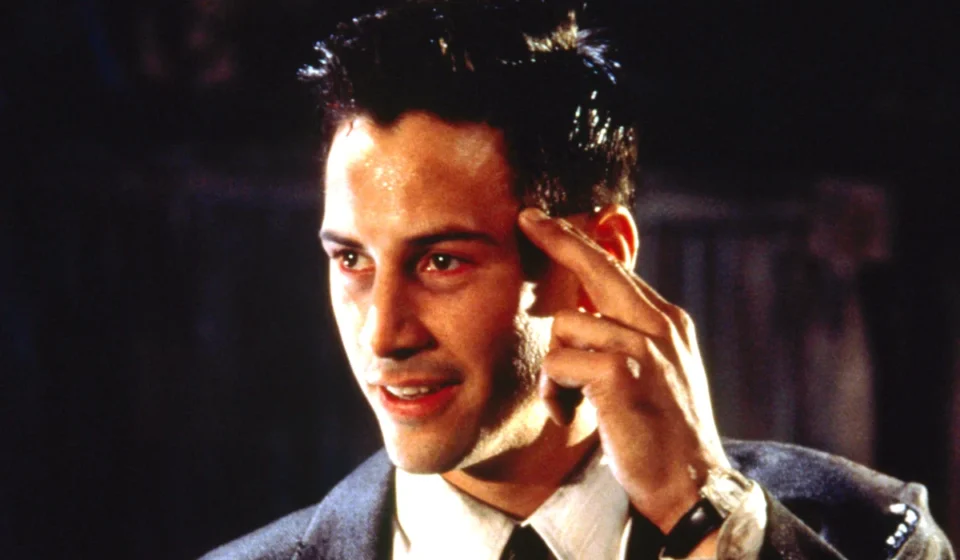

In the landscape of 1990s cinema, few films occupy a space as bizarre, fractured, and fascinatingly prophetic as Johnny Mnemonic. As of June 25, 2026, the film is scheduled to depart the Netflix library in just five days, leaving viewers with a dwindling window to revisit—or discover—this quintessential slice of cyberpunk debris. While Keanu Reeves has since become the gold standard for stoic, high-octane action heroes, Johnny Mnemonic remains a rare, unhinged artifact of a time when the actor was still finding his footing in the genre.
The Premise: Data, Decay, and the Burden of Memory
At its core, Johnny Mnemonic is a high-stakes techno-thriller. Based on the short story by William Gibson—the visionary author credited with coining the term "cyberspace"—the film follows Johnny (Reeves), a data courier who operates in a near-future society where information is the most dangerous currency on Earth.
To keep sensitive corporate data secure from hackers, Johnny has had a portion of his brain surgically modified to act as a physical hard drive. He is a living, breathing vessel for proprietary secrets, hauling gigabytes of data from point A to point B for the highest bidder. The conflict arises when Johnny takes on a "package" that exceeds his storage capacity, forcing him into a race against time. If he cannot offload the data within a few days, the brainware will induce fatal hemorrhaging.
Caught between a ruthless yakuza syndicate, corporate assassins, and a ticking clock, Johnny finds an unlikely ally in Jane (Dina Meyer), a cybernetically enhanced bodyguard. Together, they navigate a world of industrial decay and neon-soaked excess, searching for a way to extract the data before it destroys him from the inside out.
Chronology: A Production of Unintended Ambition
The history of Johnny Mnemonic is as disjointed as the film’s narrative. Originally envisioned as a low-budget, experimental arthouse project, the film was spearheaded by William Gibson and first-time director Robert Longo. Their initial vision was modest: a $1.5 million gritty, black-and-white exploration of the cyberpunk aesthetic that would serve as a pure adaptation of the source material.
However, the reality of 1990s Hollywood intervened. As the project gained momentum, the budget ballooned to $30 million. This influx of capital came with strings attached: studio mandates, heavy editing, and a desperate desire to pivot the film toward the "action blockbuster" demographic.
The resulting production was a tug-of-war between Longo’s abstract, visual-artist sensibilities and the studio’s demand for a recognizable star-driven vehicle. The inclusion of an eclectic, if somewhat incongruous, cast—including Takeshi Kitano, Ice-T, Henry Rollins, and a scenery-chewing Dolph Lundgren as the "Street Preacher"—turned the project into a surreal collision of genres. Upon its 1995 release, the film was largely misunderstood by critics and struggled to find a cohesive identity at the box office.
Supporting Data: The Anatomy of a Cult Classic
What makes Johnny Mnemonic a must-watch in 2026 is not its structural integrity—which is, admittedly, frayed—but its cultural resonance. The film serves as a time capsule for how the 90s imagined the "Information Age."
- The Aesthetic: The film presents a binary world. Johnny’s environment is either sterilized, hyper-clean corporate luxury or the gritty, claustrophobic industrial ruin of the urban underground. This visual language would go on to influence iconic works like Altered Carbon and The Matrix.
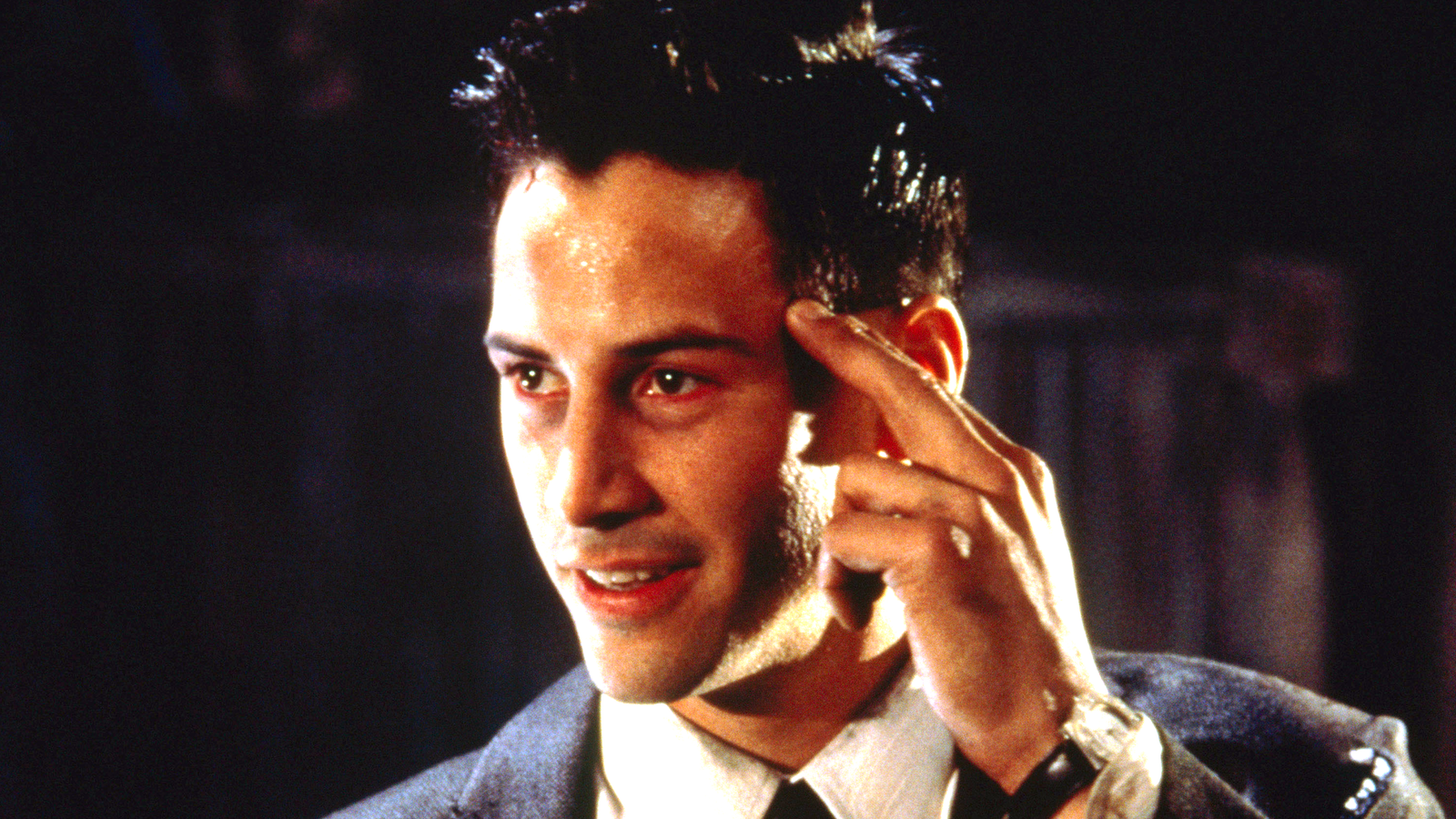
- The Performances: Keanu Reeves, usually cast as a steady, reliable force of nature, takes a rare, volatile turn here. While he provides the necessary anchor for the film’s absurd plot, he is also allowed to break. The film’s most famous moment—a near-psychotic, 90-second monologue in which a desperate Johnny screams about his desire for "room service"—has become a legendary viral clip. It is a raw, uncharacteristic display of hysteria that offers a fascinating look at a younger Reeves pushing his range.
- The Cast: The supporting players are a masterclass in 90s counter-culture casting. Henry Rollins provides a grounded, punk-rock grit as a technician, while Dolph Lundgren’s portrayal of a religious-themed assassin remains one of the most eccentric villain performances of the decade.
Official Perspectives and Critical Re-evaluation
When the film debuted in 1995, the reception was chilly. Critics like Roger Ebert noted that the film’s story was "too complicated by half," and the pacing felt hampered by its own internal contradictions. The film was frequently criticized for being a "messy" adaptation of Gibson’s tight, concise prose.
However, in the decades since, the discourse has shifted. Modern audiences, accustomed to the density of contemporary science fiction, have developed a newfound appreciation for the film’s messy ambition. Robert Longo himself has revisited the project, releasing a black-and-white extended cut that aims to align the final product more closely with his original, stripped-back vision. This version has been widely hailed as a "redemption" for the film, proving that the bones of the story were always strong, even if the original studio edit obscured them.

Implications: Why Watch It Now?
As we approach 2026, we live in a world that mirrors the anxieties of Johnny Mnemonic more closely than ever. Data privacy, the corporatization of personal memory, and the blurred lines between human anatomy and digital storage are no longer mere sci-fi tropes—they are the subjects of daily headlines.
Watching Johnny Mnemonic today is an exercise in seeing the future through a cracked, analog lens. It is a film that refuses to be boring. Whether it’s the bizarre world-building, the iconic "room service" rant, or the genuine thrill of watching a cast that seems to be having a chaotic, wonderful time, the movie justifies its runtime.
The film is currently a relic of a bygone era of moviemaking—one where, even when the budget grew too large and the studio interference too heavy, filmmakers were still willing to take massive, weird risks. It is a film that fails to be a perfect blockbuster, but succeeds in being a truly memorable, one-of-a-kind experience.
Final Viewing Advice
If you find yourself intrigued by the intersection of high-concept cyberpunk and low-budget grit, ensure you add Johnny Mnemonic to your queue before June 30. Once it leaves the platform, it becomes significantly harder to access the specific version currently available on Netflix. If the film resonates with you, seek out the black-and-white extended cut on Blu-Ray; it offers a deeper, more cohesive look at what Longo and Gibson truly intended to create three decades ago.
It may not be a perfect film, but it is an essential one—a loud, sprawling, and sometimes desperate piece of cinema that captures the exact moment the 20th century realized it was about to be consumed by the digital world. Don’t wait for a "data purge" to delete it from your watchlist.