In a groundbreaking study published in Nature Communications, researchers at La Trobe University have unveiled a previously unknown biological mechanism that challenges our fundamental understanding of cell death. The discovery, which centers on the identification of a unique type of extracellular vesicle, provides a new lens through which scientists can view both the body’s internal cleanup systems and the cunning evolutionary strategies employed by viruses to evade detection.
Led by PhD candidate Stephanie Rutter and Professor Ivan Poon at the La Trobe Institute for Molecular Science (LIMS), the research team has demonstrated that the process of cellular expiration is far more sophisticated—and potentially more vulnerable to exploitation—than previously believed. By identifying "F-ApoEVs," or "footprint-associated extracellular vesicles," the team has effectively mapped a silent communication network that occurs after a cell has technically ceased to function.
The Mechanics of Cellular Expiration: Challenging Old Paradigms
For decades, the prevailing scientific consensus held that cell death was a relatively chaotic, passive event. Once a cell reached the end of its programmed life cycle, it was thought to fragment in a somewhat haphazard fashion, essentially turning into biological debris to be swept away by the immune system’s "garbage collectors," such as macrophages.
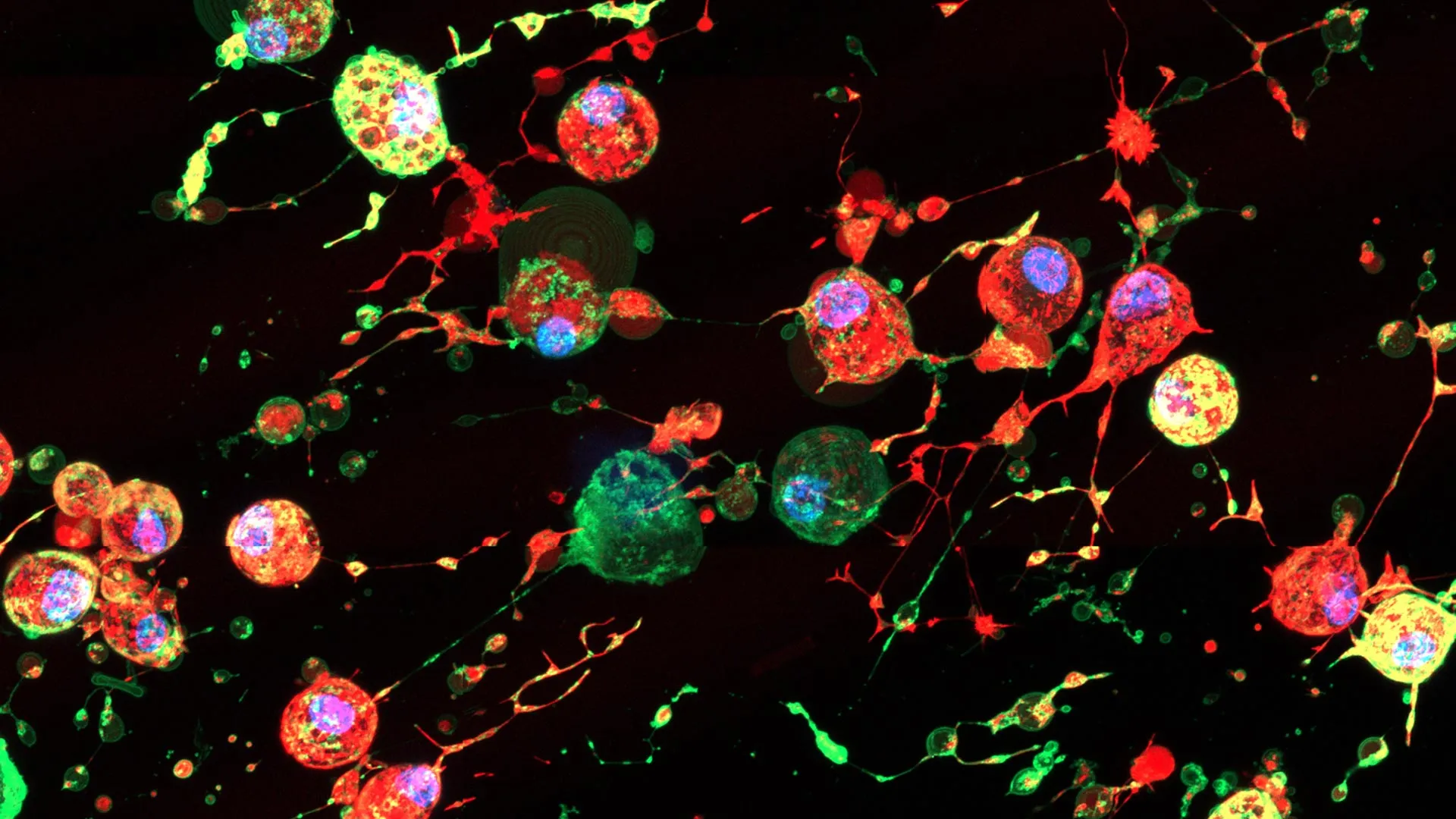
However, the La Trobe study suggests that this process is highly organized, deliberate, and critical to systemic health. As cells prepare to die, they undergo a series of precise physical transformations. They alter their morphology, detach from their structural anchors within tissues, and—most significantly—leave behind a residue that the researchers have dubbed "the footprint of death."
Within this residue, the team identified the F-ApoEVs. Extracellular vesicles (EVs) are already well-known in the scientific community as microscopic "envelopes" that cells use to transport proteins, lipids, DNA, and RNA to neighboring cells, facilitating complex communication networks. The novelty of the F-ApoEV lies in its specific location and function: these vesicles remain anchored at the site of the original cell death, acting as a molecular breadcrumb trail that guides the immune system to clear the debris before it can cause localized inflammation.
Chronology of Discovery: From Observation to Breakthrough
The road to this discovery began with a shift in perspective. Instead of viewing cell death as the end of a cell’s influence, Stephanie Rutter and the team at LIMS began investigating the "post-mortem" environment of the cell. Using advanced imaging and molecular analysis, the team traced the sequence of events following the initiation of apoptosis (programmed cell death).
Phase 1: The Morphological Shift
The researchers observed that before a cell fully collapses, it undergoes a complex sequence of structural changes. These changes are not random; they are highly choreographed steps that ensure the cell remains intact long enough to release signals to its surroundings.
Phase 2: The Formation of the "Footprint"
As the cell physically detaches, it leaves behind a distinct footprint. The team identified that this footprint is not merely inert waste but a concentrated collection of F-ApoEVs. This marked the first time researchers had successfully isolated and characterized these specific vesicles in the context of cell death.
Phase 3: The Viral "Trojan Horse"
The most startling phase of the research occurred when the team applied this model to influenza-infected cells. By tracking how the virus interacted with the dying cell, they discovered that viral particles could effectively hijack the F-ApoEVs. By hiding within these vesicles, the virus could remain concealed from immune surveillance while utilizing the body’s natural cleanup process to transport itself to healthy neighboring cells.
Supporting Data: The Complexity of Cell Communication
The significance of the F-ApoEVs cannot be overstated, particularly when considering the sheer scale of cellular turnover in the human body. Every single day, billions of cells reach the end of their lifecycle. If the process were truly random, the risk of inflammation and the release of intracellular components into the bloodstream would be catastrophic.
The study indicates that F-ApoEVs serve as a "cleanliness signal." When these vesicles are detected, they recruit immune cells to the site of death, ensuring that cellular fragments are ingested and broken down efficiently. This prevents the activation of autoimmune responses. Indeed, the failure of this cleanup process is widely linked to autoimmune conditions like Systemic Lupus Erythematosus (SLE), where the body’s inability to clear debris leads to chronic inflammation and immune system confusion.
The data provided by the research team confirms that F-ApoEVs are highly efficient at their task. However, the study also provides empirical evidence of the "Trojan Horse" effect, showing that the virus does not merely survive the cleanup process—it leverages it to expand its reach. This finding provides a compelling explanation for how certain pathogens can maintain a persistent, low-level infection while remaining largely invisible to the host’s primary immune defenses.
Official Responses and Scientific Perspective
The research has drawn significant attention from the global scientific community, with collaborators from the Walter and Eliza Hall Institute (WEHI) and Toronto Metropolitan University contributing to the findings.
Professor Ivan Poon, Director of the Research Centre for Extracellular Vesicles (RCEV), emphasized the paradigm shift this study represents. "Billions of cells are programmed to die each day as a part of normal turnover and disease progression," Professor Poon noted. "Until now, it was believed that the cell fragmentation process during cell death was random and fairly simple. Our findings demonstrate the complexity of this process and highlight how each step is critical to help the dying cell break down efficiently."
Stephanie Rutter, the lead researcher, echoed these sentiments, highlighting the "communication from the grave" aspect of the findings. "We know that the body clears away dead cell fragments to prevent them from lingering and causing inflammation," Rutter explained. "What we didn’t expect was how viruses can also take advantage of this process and cause infection by hiding in F-ApoEVs."
Dr. Georgia Atkin-Smith, a co-leader of the study from WEHI, underscored the broader clinical implications. "This study has revealed that dying cells can continue to communicate from the grave and may impact immune function," she said. "Understanding how these cells communicate with the immune system is paramount because cell death is a central component of such a wide range of human diseases, from cancer to viral infections."
Implications: The Future of Medicine and Therapy
The discovery of F-ApoEVs opens several high-potential avenues for future medical research and therapeutic development.
1. Enhanced Immune Support
By understanding the specific chemical signals that F-ApoEVs use to "call" the immune system, researchers may be able to develop synthetic vesicles or pharmacological agents that boost this cleanup process. This could be life-changing for patients suffering from autoimmune diseases like SLE, where the primary issue is the body’s inability to clear cellular debris before it triggers a damaging immune reaction.
2. Combating Viral Pathogens
The finding that viruses exploit these vesicles provides a new target for antiviral therapy. If scientists can identify the mechanism by which viruses "hitch a ride" on F-ApoEVs, they could potentially develop "decoys" or blocking agents that prevent viral particles from entering these vesicles. By closing this "Trojan Horse" loophole, the immune system might be better equipped to identify and neutralize the virus during the early stages of infection.
3. Redefining Disease Pathology
This research suggests that the pathology of many diseases—especially those involving chronic inflammation—may be better understood by looking at the "post-mortem" communication of cells. By shifting the focus from the living cell to the dying cell, medical researchers may find new biomarkers for disease progression that were previously ignored.
Conclusion: A New Era of Cellular Biology
The work conducted at La Trobe University, in collaboration with its partners, serves as a poignant reminder that the boundaries of biological knowledge are constantly expanding. The discovery of F-ApoEVs changes the narrative of cellular death from one of "chaos" to one of "complex communication."
As the research team continues to investigate the nuances of these vesicles, the broader scientific community will undoubtedly look toward applying these findings to the next generation of diagnostics and therapeutics. Whether it is by preventing the spread of infectious disease or quieting the overactive immune responses that characterize autoimmune disorders, the "footprint of death" may well become a cornerstone of future clinical intervention.
The study serves as a testament to the importance of basic science. By asking fundamental questions about how a cell dies, Rutter and her colleagues have unearthed a hidden layer of biological complexity, proving once again that in the landscape of human biology, even the smallest fragments can have a massive impact on the health of the whole.