
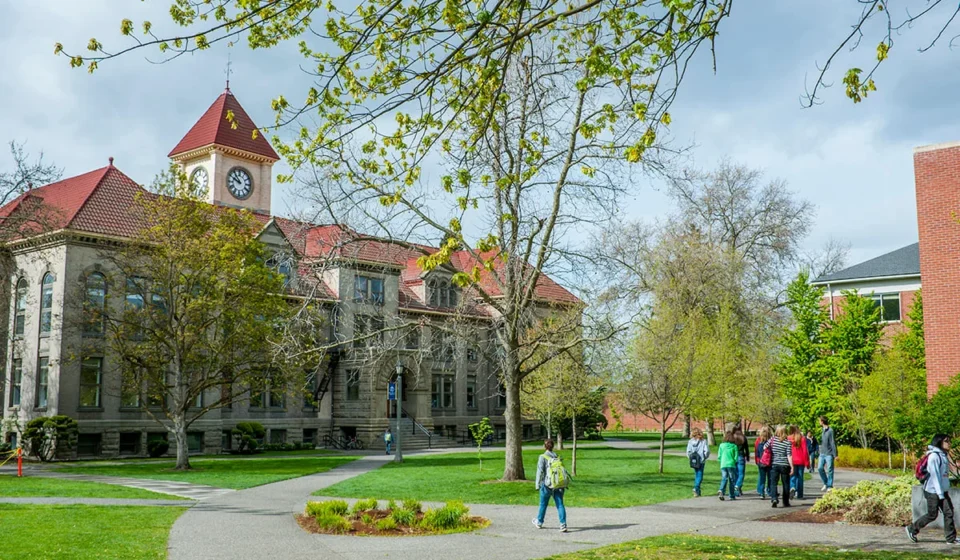
The Whitman 10% Promise: A Radical Overhaul of Higher Education Affordability

In a landscape defined by soaring tuition costs, opaque financial aid formulas, and a mounting national student debt crisis, Whitman College has launched an ambitious initiative that could redefine the economics of a private liberal arts education. On Saturday, the Walla Walla, Washington-based institution announced the “Whitman 10% Promise,” a groundbreaking tuition model designed to replace the often-convoluted financial aid process with a transparent, income-based cap. Under this new policy, no student’s family will be expected to pay more than 10 percent of their adjusted gross income (AGI) toward tuition, effectively creating a sliding-scale model for higher education that prioritizes predictability and accessibility.
The Core Mechanics of the 10% Promise
The "10% Promise" is built on a foundation of simplicity. Rather than forcing families to navigate the labyrinthine calculations of traditional institutional aid, Whitman will utilize the adjusted gross income (AGI) reported on a student’s Free Application for Federal Student Aid (FAFSA).
For the 2026–27 academic year, the college’s sticker price for tuition stands at $68,692. Under the new policy, the financial burden is tiered to protect middle- and lower-income families:
- The $100,000 Threshold: Students whose families earn $100,000 or less per year will receive scholarships covering the full cost of tuition. Effectively, for these students, the tuition portion of their bill is reduced to zero.
- The Scaled Model: For families earning above the $100,000 threshold, the 10 percent cap applies. For example, a family earning $150,000 per year will pay no more than $15,000 in tuition. When factoring in the additional costs of room, board, and books, their total annual cost of attendance is projected at $32,928—a significant reduction from the standard cost of attendance.
The college has explicitly stated that this model is inclusive of all federal grants and merit-based scholarships. These external and internal awards contribute toward fulfilling the "10 percent" commitment. Furthermore, the policy contains a "floor" protection: if a student’s existing merit or talent scholarships exceed the 10 percent cap, the student pays the lower amount, ensuring that high-achieving students are not penalized by the new structure.
Chronology: From Complexity to Clarity
The announcement follows years of mounting pressure on private colleges to justify their high tuition rates and demonstrate a commitment to socioeconomic diversity.
- The Problem Identification: Over the past decade, Whitman’s administration, like many of its peers, observed that the "sticker price" of college was scaring away qualified applicants, particularly from middle-class backgrounds who did not qualify for need-based aid but found full tuition cost-prohibitive.
- Development Phase: During the 2025 academic year, the college began modeling the impact of an income-capped tuition system. The goal was to eliminate the "financial aid anxiety" that prevents families from even applying to private institutions.
- The Official Rollout: Following internal review and financial sustainability analysis, the college finalized the "10% Promise" in June 2026, officially unveiling the program to prospective students for the 2026–27 academic cycle.
- Implementation: The program is currently active, with an integrated calculator on the Whitman website allowing families to input their AGI to receive an immediate estimate of their financial obligation.
Supporting Data and the Economic Landscape
The decision to implement the 10% Promise comes at a critical juncture in the history of American higher education. According to data from the College Board, tuition at private, nonprofit four-year institutions has increased steadily, far outpacing inflation for several decades.

Whitman’s data analysis suggests that by removing the "surprise" element of financial aid packages, the college can attract a more diverse student body. The current model of "discounting"—where colleges offer varying levels of merit and need-based aid to different students—often creates a "black box" that intimidates families.
By tying tuition directly to a widely understood metric (the AGI from the FAFSA), Whitman is attempting to shift the narrative from "What is the cost of your college?" to "What is your family’s capacity to pay?" This approach aligns with the growing trend of "tuition transparency," though few institutions have gone as far as capping tuition as a percentage of income.
Official Responses: The Philosophy of Access
The rationale behind the program is rooted in the belief that the current higher education financial model is fundamentally broken. Adam Miller, Whitman’s Vice President for Admission and Financial Aid, provided insight into the college’s motivation in a recent blog post.
"The current financial aid system is a hassle for families. It can be really confusing and opaque, and many families feel left out," Miller wrote. "Understanding the cost of college should not take months or create additional stress, and we are committed to doing everything we can to make it simpler and easier for students and families to engage with financial aid from the first moment they encounter Whitman."
The administration’s stance is that by removing the "sticker shock," they are removing a psychological barrier. For many families, the perceived cost of a private liberal arts education—often exceeding $80,000 annually when including housing and food—acts as an immediate deterrent, preventing many students from even considering schools like Whitman. By clarifying that tuition is capped at 10 percent, the college is attempting to make private education a "known quantity" in a household budget.
Implications for the Future of Higher Education
The Whitman 10% Promise has wide-reaching implications for the private college sector.

1. The Death of the "Sticker Price"
For years, the "sticker price" has been a marketing tool that few actually pay, but many fear. If Whitman’s model succeeds in driving enrollment and maintaining institutional health, it could force other private colleges to abandon the traditional high-tuition/high-discount model in favor of more transparent pricing.
2. Socioeconomic Diversity
By focusing on families with incomes of $100,000 and below, Whitman is signaling a commitment to the "missing middle"—families who earn too much to qualify for significant federal Pell Grants but too little to easily absorb the cost of a private education. This demographic has historically been the most squeezed by rising college costs.
3. Financial Sustainability Challenges
Critics of such programs often point to the risk of "revenue dilution." If an institution lowers its tuition revenue, it must find ways to offset those losses through endowment income, increased enrollment, or operational efficiencies. Whitman’s long-term success will depend on whether this "10% Promise" acts as a magnet for enough high-quality applicants to offset the loss of revenue per student.
4. Competitive Advantage
In the competitive recruitment cycle, Whitman now possesses a unique selling proposition. While other colleges are fighting to explain why their net price is lower than their sticker price, Whitman can offer a guarantee. This level of clarity may become a significant competitive advantage in a crowded market where student enrollment is projected to face demographic headwinds (the "enrollment cliff") in the coming years.
Conclusion: A New Benchmark?
The Whitman 10% Promise is more than just a financial aid policy; it is an experiment in institutional integrity. By choosing to trade the complexity of the current system for the transparency of an income-based cap, the college is attempting to build trust with families who have grown cynical about the value of higher education.
As the 2026–27 academic year begins, the eyes of the higher education world will be on Walla Walla. If the program succeeds in making private liberal arts education more accessible without compromising the quality of the academic experience, the Whitman 10% Promise may well serve as the blueprint for the next generation of American colleges. Whether it sparks a sector-wide trend toward radical transparency or remains a bold exception, one thing is clear: the era of opaque, confusing tuition models is under fire, and the demand for clarity has never been higher.