For decades, the automotive industry operated under a simple binary: you either embraced the raw, mechanical engagement of a combustion engine, or you surrendered to the sterile, silent efficiency of electric propulsion. Hyundai, however, has decided that this choice is a false dichotomy. By aggressively pursuing "digital fakery"—or what enthusiasts call sensory augmentation—the South Korean automaker is bridging the gap between the visceral nostalgia of the past and the inevitable electrification of the future.
As the company prepares its next generation of N-branded performance vehicles, it is doubling down on its "N e-shift" technology, promising to introduce features that simulate the idling, vibrations, and even the mechanical backfiring of traditional performance engines.
The Philosophy of "Fun to Drive"
In an industry where performance is increasingly measured in software updates and torque curves, Hyundai’s approach stands out for its unabashed focus on driver engagement. While competitors like Porsche focus heavily on track-focused precision and engineering purity, Hyundai’s R&D department is taking a different, more populist approach.
"We are not the serious Porsche guys," remarked Manfred Harrer, Hyundai’s head of R&D, in a recent interview with Autocar. "We are fun to drive."
This statement encapsulates the brand’s current trajectory. Hyundai understands that for many driving enthusiasts, the "soul" of a car isn’t just in the speed—it’s in the tactile feedback. By incorporating simulated gearboxes and combustion-style quirks, the company is attempting to preserve the emotional connection to the machine that many fear will be lost in the transition to battery-electric vehicles (BEVs).
Chronology of the N e-Shift Evolution
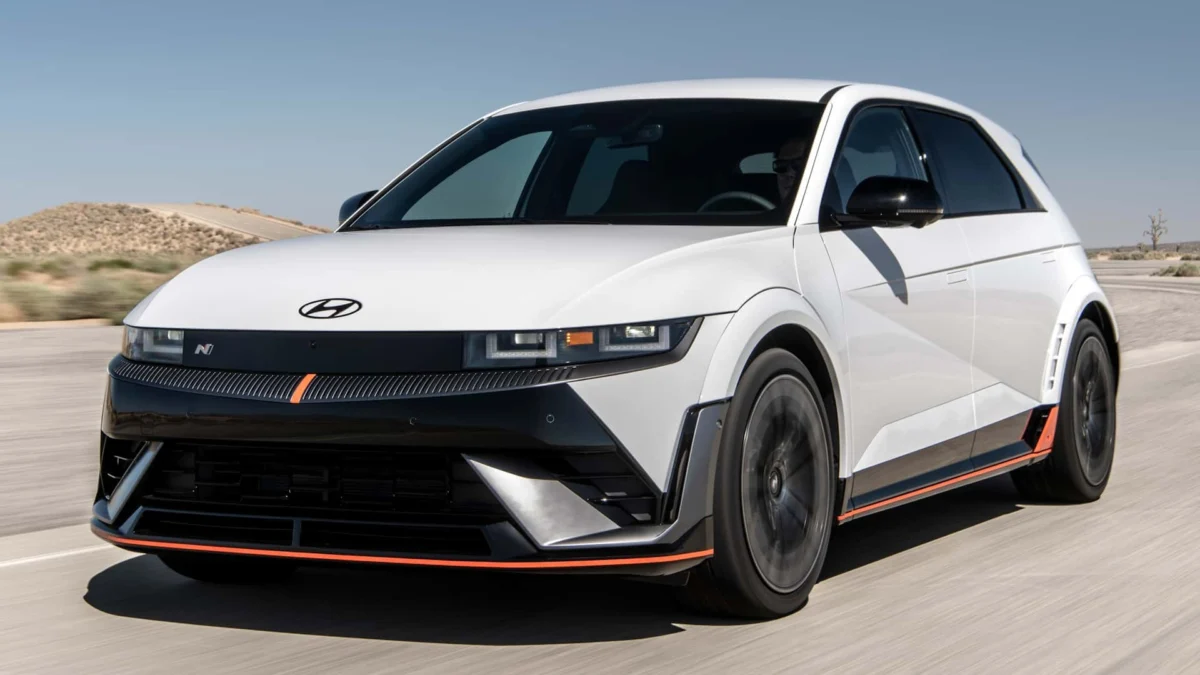
The journey toward this digital experience began with the introduction of the Ioniq 5 N, which debuted the N e-shift system. This technology was designed to emulate the behavior of an eight-speed dual-clutch transmission (DCT), complete with power interruptions and simulated gear changes that force the driver to interact with the vehicle in a way that feels familiar to those raised on traditional internal combustion engines.
- Phase One (2023): The launch of the Ioniq 5 N brought the first iteration of N e-shift, allowing drivers to toggle through virtual gears. It was met with surprise and, ultimately, widespread acclaim from the enthusiast community.
- Phase Two (2024-2025): Hyundai continued to refine the software, collecting telemetry data and user feedback to understand how drivers interacted with the system in various environments, from daily commutes to track sessions.
- Phase Three (The Future): As the automaker moves toward its next-gen architecture, the system is expected to evolve into a full sensory simulation suite. Current testing suggests the inclusion of "combustion quirks" such as synthetic engine vibrations, varying idle states, and even simulated backfiring—sounds and sensations that mimic the aggressive profile of a performance exhaust system.
The Anatomy of the Future: The Integrated Modular Architecture (IMA)
Underpinning these software innovations is a significant hardware shift. Hyundai is moving away from its current E-GMP (Electric-Global Modular Platform) toward the more advanced Integrated Modular Architecture (IMA).
Manfred Harrer characterizes the IMA not as a total revolution, but as a "huge evolution." While the E-GMP was a landmark platform that allowed Hyundai to become a global leader in EV performance, the IMA is designed to address the limitations of the current technology.
Key Technical Improvements:
- Advanced Thermal Management: One of the primary challenges of sustained high-performance EV driving is battery degradation and thermal throttling. The IMA platform introduces more efficient cooling cycles, allowing for consistent power delivery during extended track sessions.
- Next-Gen Battery Integration: By optimizing energy density and chemical composition, the IMA will allow for lighter battery packs that maintain or exceed current ranges, providing a more agile chassis for N-branded models.
- Scalability: The platform is designed to be highly modular, enabling Hyundai to scale its performance offerings across a wider range of vehicle sizes, from compact hot hatches to larger performance SUVs.
The Mechanical Illusion: Shift-by-Wire Innovation
Perhaps the most intriguing development in Hyundai’s patent portfolio is the new "shift-by-wire" mechanism. Recent filings suggest that the company is working on a system that can physically emulate a gated manual or a traditional automatic transmission.
This is not merely a software trick; it involves a sophisticated interface that includes a functional clutch pedal and a physical gear selector. In this setup, the "clutch" enables manual mode and a neutral position, forcing the driver to coordinate shifts just as they would in a gas-powered car. Even though there is no physical gearbox to engage, the system creates a mechanical bridge between the driver’s input and the electric powertrain’s torque delivery. When paired with the simulated gear ratios, this creates an experience that is functionally identical to operating a manual, yet maintains the instant, linear torque of an EV.
Implications for the Automotive Industry
Hyundai’s strategy is creating a ripple effect across the automotive landscape. While critics have labeled this technology as "fake," the market response tells a different story. The success of the Ioniq 5 N suggests that there is a significant segment of the population that is not ready to abandon the experience of traditional driving, even if they are ready to abandon gasoline.
1. Market Competition
Other automakers, including those in the luxury sector, are beginning to take note. If Hyundai can successfully market "digital emotion," other brands will likely follow suit to retain their enthusiast base. This signals a shift where performance EVs will be differentiated not just by their 0-60 times, but by the "character" of their software-driven personalities.
2. The Preservation of Enthusiast Culture
By digitizing the quirks of internal combustion, Hyundai is essentially acting as a curator of automotive history. By making these features optional, they allow the driver to decide: use the silent, smooth torque of the EV for the commute, and switch into "N-mode" with simulated gear shifts and vibrations for the weekend drive. This versatility is likely to be the defining feature of performance cars in the coming decade.
3. The Future of Software-Defined Vehicles
The reliance on these features underscores the transition to software-defined vehicles. Because these features are entirely digital, they can be improved through over-the-air (OTA) updates. An owner who buys a car in 2027 could, in theory, receive an update in 2029 that adds an entirely new "simulated engine profile," essentially giving the owner a "new" car without needing a physical hardware swap.
Official Stance and Future Outlook
Despite the skepticism from traditionalists, Hyundai is steadfast in its commitment. The company’s leadership views this technology as a pillar of their brand identity. By prioritizing "fun" over "purity," they are carving out a niche that is both defensible and commercially viable.
While it is unclear exactly when the next-gen N models will hit the streets, the timeline is likely within the next few years. As the current generation of Hyundai EVs reaches the five-year mark, the transition to the IMA platform will begin, bringing with it the most sophisticated version of the N-shift system yet.
For the purists, the loss of the physical internal combustion engine is a tragedy. But for Hyundai, the goal isn’t to replicate the engine—it’s to replicate the feeling of the engine. In an increasingly automated, autonomous, and silent future, the ability to "feel" a gear shift or hear a simulated backfire might be the difference between a car that is a tool, and a car that is an experience.
Hyundai has made it clear: they are not just building electric cars; they are building electric experiences. And if the current momentum is any indicator, the "fake" gearshift might just be the most real thing about the future of performance driving.