
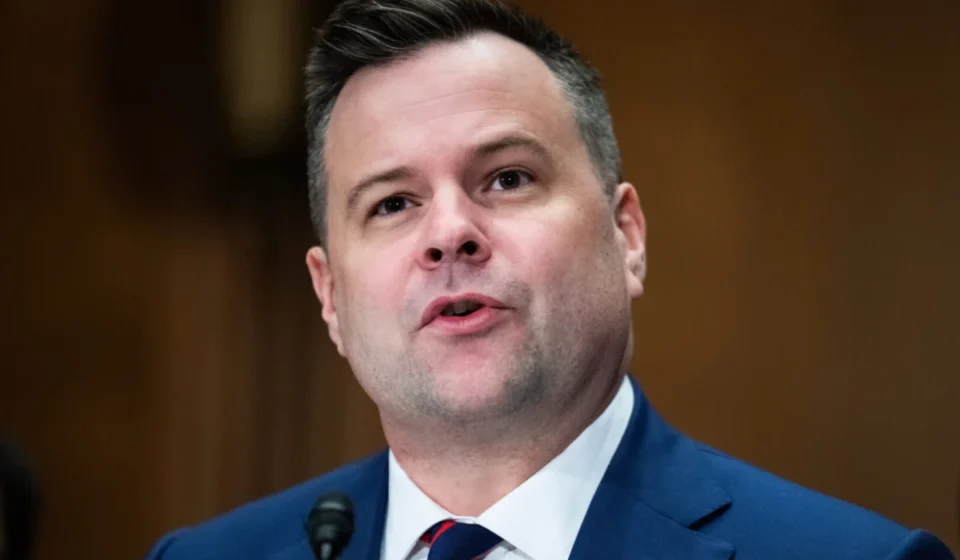
Turmoil at the Top: Acting DNI Bill Pulte’s Controversial First Days Spark Bipartisan Alarm

Washington D.C. – Just days into his tenure as the acting Director of National Intelligence (DNI), Bill Pulte has ignited a firestorm of controversy on Capitol Hill, drawing sharp criticism from both sides of the aisle. His immediate actions, including what has been widely reported as a mass dismissal of intelligence officials and staff, have prompted urgent legislative responses and raised profound concerns about national security, institutional stability, and the constitutional balance of power. The rapid-fire events underscore a deepening rift between the executive and legislative branches over the oversight and leadership of the nation’s sprawling intelligence apparatus.
Pulte, whose appointment was itself a subject of intense debate due to his perceived lack of intelligence experience and a history of politically charged actions in previous roles, assumed the acting directorship last Friday. By Monday, reports emerged that he had commenced sweeping personnel changes within the Office of the Director of National Intelligence (ODNI). This aggressive approach, taken by an unconfirmed official, has been deemed "inappropriate" by numerous lawmakers, casting a shadow over the crucial role of the DNI in coordinating the nation’s 17 intelligence agencies.
A Tumultuous Inauguration and Immediate Fallout
The controversy surrounding Bill Pulte’s leadership began even before he officially stepped into the acting DNI role. Weeks of criticism had preceded his appointment, with many questioning his qualifications given his background primarily in finance and housing, rather than intelligence. The DNI position, established in the wake of the 9/11 attacks to improve intelligence coordination and prevent future failures, demands a leader with deep expertise, a nuanced understanding of global threats, and a track record of non-partisanship. Critics argued that Pulte possessed none of these essential attributes.
Upon assuming the acting directorship last Friday, expectations were already low among a significant segment of Congress and the intelligence community. However, the speed and scale of his actions surprised even his harshest critics. On Monday, mere hours into his first full week, Pulte reportedly initiated a wave of firings and reassignments within the ODNI. These dismissals, described by some as "en masse," targeted numerous intelligence officials and staff, many of whom possess decades of invaluable institutional knowledge and expertise crucial to the agency’s operations.
The immediate repercussions of these actions were palpable. Lawmakers on both sides of the political spectrum expressed dismay, arguing that such significant structural and personnel changes were beyond the purview of an acting official who had not undergone the rigorous Senate confirmation process. The DNI, a cabinet-level position, typically requires extensive vetting, including hearings before the Senate Intelligence Committee, to ensure the nominee is qualified, trustworthy, and committed to upholding the intelligence community’s integrity. Pulte, bypassing this critical process, appeared to be asserting authority usually reserved for a fully confirmed director.
Legislative Pushback and Constitutional Concerns
The swift and decisive response from Congress highlighted the gravity of the situation. Senator Mark Warner (D-VA), the ranking Democrat on the Senate Intelligence Committee, emerged as a leading voice of opposition, articulating profound concerns about Pulte’s actions and the broader implications for national security.
On Tuesday, Senator Warner introduced significant legislation aimed at preventing future presidents from bypassing the Senate confirmation process for such critical intelligence roles. The proposed bill seeks to establish a clear line of succession within the ODNI, mandating that in the event of a vacancy, the Principal Deputy DNI — a position that is Senate-confirmed — would automatically assume the acting directorship. This measure is designed to ensure that any individual temporarily leading the nation’s intelligence efforts has already undergone Senate scrutiny and is deemed fit for high office.
In a scathing press release, Warner minced no words, directly attributing potential future intelligence failures to President Trump’s choice: "If there is an intelligence failure, a missed threat, or a national security crisis on Bill Pulte’s watch, Americans will pay the price, and President Trump will be to blame. He made the deliberate choice to pass over qualified national security professionals and put an unqualified loyalist in charge." This statement underscored the Democratic position that Pulte’s appointment was a politically motivated maneuver, prioritizing loyalty over competence, with potentially catastrophic consequences for national security.
Earlier, on Monday, Senator Warner, alongside Representative Jim Himes (D-CT), the top Democrat on the House Intelligence Committee, had jointly penned a letter to Pulte. In their correspondence, they explicitly conveyed their "expectation that you will not take actions while temporarily serving as the Acting Director of National Intelligence that are more appropriately left to a Senate-confirmed Director." This pre-emptive warning clearly indicated congressional apprehension about Pulte’s potential overreach, a concern that tragically proved prescient within hours.
The lawmakers further elaborated on their deep-seated doubts regarding Pulte’s capacity to lead such a complex and vital organization. "Given your lack of experience within the Intelligence Community, it is difficult to imagine that in such a short amount of time you have already developed fully informed views as to how to shrink ODNI without incurring risks to national security," they wrote. They unequivocally stated that "Making significant structural changes to ODNI, to include a reduction in force, is not an appropriate course of action for anyone in an acting capacity, let alone without consultation with Congress, and you should refrain from doing so." This sentiment reflects a fundamental principle of governance: significant, long-term policy and structural changes should be implemented by officials with full accountability and legitimacy, not temporary appointees.
The Shadow of Past Controversies
Pulte’s controversial tenure as acting DNI is not an isolated incident but rather the latest chapter in a pattern of appointments and actions that have drawn scrutiny. His previous roles, particularly as director of the Federal Housing Finance Agency and chairman of Fannie Mae and Freddie Mac, were marked by allegations of politically motivated targeting. Specifically, Democrats have highlighted his past referrals of some of President Trump’s perceived foes to the Department of Justice for mortgage fraud allegations.
These actions, occurring in a financial regulatory capacity, have fueled concerns that Pulte’s approach to the intelligence community would be similarly politicized. The DNI is meant to be an apolitical coordinator, synthesizing intelligence from disparate agencies and providing unbiased assessments to the President and policymakers. The fear among critics is that Pulte, as an "unqualified loyalist," might weaponize intelligence for political purposes, undermine objective analysis, or prioritize presidential directives over the intelligence community’s core mission of truth-telling. Such a perception could severely damage the credibility and independence of U.S. intelligence, both domestically and on the international stage.
FISA and the Political Stalemate
The contentious nature of Pulte’s appointment had already created significant ripple effects, even before his tenure began. Earlier this month, the controversy surrounding him directly contributed to a breakdown in bipartisan negotiations to renew Section 702 of the Foreign Intelligence Surveillance Act (FISA). This critical authority, which allows the government to collect intelligence on foreign targets located outside the United States, is considered vital for national security. However, its reauthorization had been stalled by debates over civil liberties protections and concerns about potential abuses.
Pulte, as DNI, would oversee this crucial authority. The Democrats’ deep distrust of his suitability for the role played a significant part in their decision to walk away from a bipartisan deal on Section 702. Consequently, after a vote in the House fell short, the authority expired on June 12, leaving a critical intelligence tool in limbo. This lapse, directly linked to the political fallout from Pulte’s impending appointment, underscored the real-world consequences of the ongoing executive-legislative battles over intelligence leadership.
Further exacerbating the situation, President Trump subsequently directed Jay Clayton, his permanent pick to be the DNI director, not to appear for his scheduled confirmation hearing on June 17. The timeline for Clayton’s confirmation remains "unclear," leaving the DNI office in a state of prolonged uncertainty with an acting director facing unprecedented levels of distrust and opposition. This deliberate obstruction of the confirmation process, following the expiration of FISA Section 702, paints a picture of a White House seemingly indifferent to congressional oversight and the stability of the intelligence apparatus.
Divisions Within the Republican Ranks
While Democrats have presented a largely unified front against Pulte, the Republican response has been notably fractured, revealing internal divisions within the party regarding the acting DNI’s actions and the future of the ODNI.
The Case for ODNI Streamlining
Senate Intelligence Chairman Tom Cotton (R-AR) offered a qualified defense of the firings, framing them as a necessary step towards streamlining the ODNI. "ODNI has employees mostly from other intelligence agencies," he stated on Tuesday. "I think, in most cases, they would be better off doing real intelligence work at those agencies. That’s returning intelligence officers to their agencies." Cotton echoed a sentiment shared by some conservatives that "The ODNI is too big and too bloated."
Senate Majority Leader John Thune (R-SD) largely concurred with the idea of making ODNI more efficient. "Frankly, I think that’s something that many of us agree on," Thune said, adding that "It’s fair to say that there is a consensus view around here that it is time for the ODNI to be scaled down." However, Thune also indicated a desire for congressional oversight, stating that "how they go about that will be something we’ll want some visibility into," and that Cotton and other Intelligence members "will have some input into that." This suggests that while Republicans may agree on the goal of reform, the method employed by Pulte is still subject to scrutiny.
Cotton further elaborated on the reform efforts, claiming, "I have a plan for that. I’ve worked with the administration on it. Some of it happened under Director Gabbard. It’s going to continue under Acting Director Pulte." He added, "Once we confirm Director Clayton, I’m sure it will continue as well." This narrative attempts to portray Pulte’s actions as part of a pre-existing, long-term strategy for ODNI reform, rather than an impulsive decision by an unconfirmed official.
Blunt Condemnation from a GOP Voice
However, this narrative was sharply contradicted by other prominent Republicans, most notably Senator Thom Tillis (R-NC). Tillis, who is retiring at the end of his term and thus potentially less constrained by party loyalty, delivered a scathing rebuke of Pulte, standing in stark contrast to the more measured tones of Cotton and Thune.
While Tillis conceded that if Pulte were to conduct proper analysis and "only eliminates the people whose jobs can either be automated or never should have been there, good," he quickly pivoted to a far more critical assessment. His blunt assessment of Pulte’s likely impact was expressed in unusually vivid language: "But my guess is based on his past experience, it’s going to be another hot steaming pile of DOGE shit," referring to the Department of Government Efficiency. This colloquialism, while jarring in a formal setting, underscored the senator’s profound cynicism regarding Pulte’s competence and intentions, suggesting that any "efficiency" measures would likely be poorly executed and detrimental.
Tillis did not shy away from a direct personal attack on Pulte’s character and qualifications. "I think he’s an incompetent sycophant and not the right person to lead DNI and you’re undermining what the confirmed administrator should be doing," he declared. This powerful condemnation from a departing Republican senator highlights the deep distrust Pulte has engendered, even within segments of the President’s own party. Tillis further predicted a grim inheritance for the eventual confirmed director: "Clayton, I believe, is going to inherit what I believe is going to be a mess left behind by Pulte." This stark warning underscores the potential for lasting damage to the DNI office and the broader intelligence community.
The Broader Implications
The turmoil surrounding Bill Pulte’s first days as acting DNI carries profound and far-reaching implications for national security, institutional integrity, and the delicate balance of power in Washington.
National Security Risks
Perhaps the most immediate and critical concern is the potential impact on national security. The ODNI plays a pivotal role in synthesizing intelligence from across the vast U.S. intelligence community, identifying threats, and providing timely, accurate assessments to the President and other senior policymakers. Mass firings, especially by an acting director lacking deep intelligence expertise, risk creating dangerous vacuums of knowledge and experience. Critical projects could be stalled, vital analytical capabilities diminished, and continuity of operations disrupted. In a world fraught with complex and evolving threats, such instability at the helm of intelligence coordination could leave the nation vulnerable to missed warnings or delayed responses. The departure of experienced personnel, particularly those involved in sensitive programs or highly specialized analytical fields, represents an irreplaceable loss of institutional memory and expertise that takes years, if not decades, to cultivate.
Institutional Integrity and Morale
The DNI’s actions also threaten the institutional integrity of the intelligence community. The intelligence services are inherently non-partisan, dedicated to providing objective analysis regardless of political winds. An acting director perceived as an "unqualified loyalist" engaging in politically motivated personnel changes can severely erode trust within the ranks. This can lead to a chilling effect, where intelligence professionals become hesitant to deliver unvarnished truths if they fear retribution. Low morale, uncertainty, and a sense of political interference can lead to a "brain drain," driving talented individuals out of public service and making it harder to recruit top talent in the future. The DNI’s credibility, both domestically and with international intelligence partners, relies heavily on its perceived independence and professionalism. Pulte’s actions risk undermining both.
Executive-Legislative Dynamics
The episode further exacerbates the ongoing power struggle between the executive and legislative branches. President Trump’s pattern of appointing acting officials to key roles, bypassing the Senate confirmation process, has been a recurring point of contention. Senator Warner’s proposed legislation directly addresses this perceived executive overreach, seeking to reassert Congress’s constitutional role in vetting and confirming high-level appointments. The current standoff not only challenges the norms of governance but also risks setting dangerous precedents where the executive branch can wield significant power without the traditional checks and balances designed to ensure accountability and competence. This constant friction makes effective governance more challenging and could lead to prolonged periods of uncertainty in critical national security agencies.
The Future of the DNI Office
For Jay Clayton, the President’s permanent nominee for DNI, the road ahead appears daunting. Senator Tillis’s prediction of a "mess left behind by Pulte" seems increasingly plausible. Clayton, whenever he is finally confirmed, will inherit an agency potentially reeling from mass departures, low morale, and a significant loss of institutional knowledge. He will face the monumental task of rebuilding trust, restoring stability, and re-establishing the ODNI’s credibility, all while navigating a politically charged environment. His ability to effectively coordinate the intelligence community and provide unbiased counsel will depend heavily on his capacity to heal internal wounds and reassure a skeptical Congress.
In conclusion, Bill Pulte’s tumultuous start as acting DNI has plunged the nation’s intelligence apparatus into a state of unprecedented flux. The swift and sweeping personnel changes, undertaken by an unconfirmed official, have not only triggered immediate legislative pushback but also raised fundamental questions about national security, the integrity of the intelligence community, and the constitutional balance of power. As Congress grapples with these challenges, the unfolding drama at the ODNI stands as a stark reminder of the critical importance of competent, apolitical leadership in safeguarding the nation’s most vital interests. The long-term consequences of this period of instability will undoubtedly resonate throughout the intelligence community and beyond for years to come.