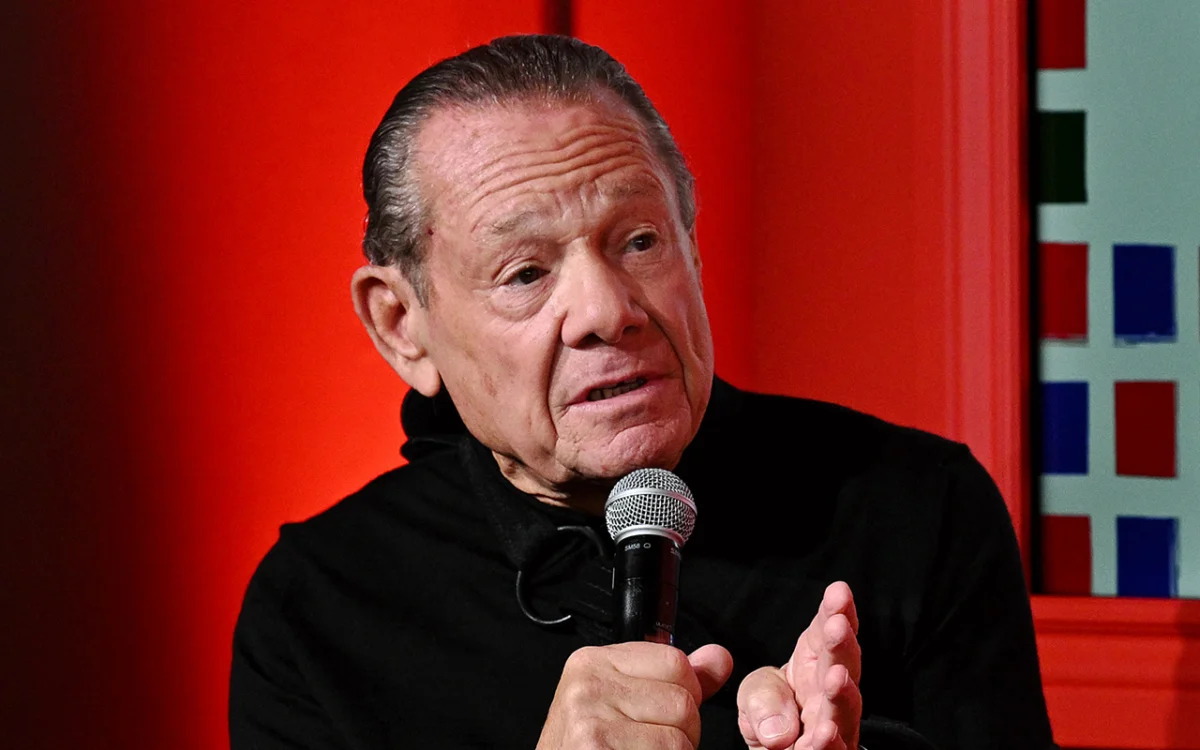
The machinery of Hollywood, long built on layers of discretion and carefully managed influence, faced an abrupt and volatile collision with the legal system this month. Michael Ovitz, the legendary co-founder of Creative Artists Agency (CAA) and a man once widely regarded as the most powerful figure in the entertainment industry, walked out of a court-ordered deposition on June 1, abruptly ending his testimony amidst a flurry of procedural tension and accusations of contempt.
The deposition was a pivotal moment in the ongoing civil lawsuit filed by actress Julia Ormond against CAA. Ormond alleges that the powerhouse agency—which represented her during the height of her career—facilitated her sexual assault by disgraced producer Harvey Weinstein in December 1995. The legal battle, brought under New York’s Adult Survivors Act, seeks to hold the institution accountable for what Ormond describes as a culture of silence and complicity that prioritized professional deal-making over the safety of the talent they were duty-bound to protect.
The Volatile Confrontation: A Chronology of the Breakdown
The scene at the Manhattan office of Ovitz’s legal counsel was, by all accounts, highly charged. Ormond’s legal team, led by attorney Kevin Mintzer, had spent over a year navigating bureaucratic hurdles to compel Ovitz to testify. A court order finally forced the industry titan to appear, but the session proved to be short-lived.
For the first 45 minutes of the scheduled three-hour proceeding, the questioning focused on Ovitz’s professional relationship with Weinstein. During this segment, Ovitz was pointedly dismissive of the former mogul, repeatedly labeling him a "bully" and insisting that he maintained as little contact as possible with the Miramax head. He claimed that he held no awareness of the sexual misconduct allegations against Weinstein until the global reckoning of 2017.
However, the atmosphere shifted rapidly when the inquiry pivoted to Ovitz’s personal associations, specifically his ties to the late convicted sex offender Jeffrey Epstein. When asked about the nature of his friendship with Epstein, Ovitz’s demeanor changed from cooperative to combative.
"I’m not going to discuss anything about Jeffrey Epstein," Ovitz declared. "You can ask all the questions you want—you’re going to get no answers."
When counsel persisted, pressing him on whether he had visited Epstein at his residence in St. Barts, Ovitz’s irritation boiled over. "What does this have to do with Harvey Weinstein?" he demanded, before declaring, "I’m done with this." He promptly removed his microphone, exited the room, and slammed the door, effectively abandoning the legal proceeding.
The Web of Associations: Supporting Data and Evidence
The line of questioning regarding Epstein was not a random pursuit by Ormond’s counsel; it was anchored in a significant trove of communications released by the Department of Justice earlier this year. These documents, which include emails between the two men, suggest a relationship that contradicts the casual distance Ovitz attempted to portray during his deposition.
In one 2012 exchange, Ovitz wrote to Epstein, "I would love to see you." Other records indicate plans for meetings in St. Barts, with one correspondence noting that Ovitz was in the company of a third party and that "we both are raving about you."
During the deposition, Ovitz initially attempted to minimize the connection, claiming he had visited Epstein’s home only once, for 20 minutes, at the recommendation of JP Morgan Bank. When asked by Mintzer if he was aware that Epstein had been convicted of sex crimes, the line of questioning hit a wall that resulted in the termination of the testimony.
This confrontation highlights the tension between the "Old Hollywood" era of backroom deals and the modern demand for accountability. Ormond’s attorneys contend that understanding Ovitz’s social and professional orbit is essential to contextualizing the "culture of harassment" that allegedly allowed Weinstein to operate with impunity for decades.
The Legal Implications: Contempt and Accountability
The fallout from the walkout was immediate. Meredith Firetog, an attorney representing Ormond, filed a motion for sanctions, stating plainly: "Ovitz has no plausible defense for his contemptuous conduct."
Ormond’s legal team is now formally requesting that the court hold Ovitz in contempt and issue an arrest warrant to ensure his return to the deposition. The argument from the plaintiff’s side is that Ovitz’s refusal to answer is not merely a personal choice, but a direct obstruction of justice in a case involving severe allegations of battery and negligence.
Conversely, counsel for CAA has argued that they were not properly notified that the deposition would venture into the territory of Epstein. This procedural objection serves as a defense strategy to invalidate the relevance of the questioning. However, legal observers note that in a deposition, questioning is often broad, and a witness does not have the unilateral authority to end proceedings simply because they dislike the direction of the inquiry.
Institutional Responsibility: The Core of the Ormond Lawsuit
The broader implications of this case reach far beyond the individuals involved. Julia Ormond’s lawsuit, filed in 2023, targets Disney, Miramax, and CAA, alleging that they knew of Weinstein’s predatory behavior yet continued to feed him talent. While Disney and Miramax have since reached out-of-court settlements, CAA has remained steadfast, denying any wrongdoing or knowledge of Weinstein’s criminal actions.
The agency’s defense rests on the premise that its agents were not aware of the specific sexual misconduct that occurred in 1995. Ormond’s case, however, challenges this narrative, arguing that the agency’s duty of care was systematically ignored.
Ovitz’s departure from CAA in early 1995—just months before the alleged assault—is a point of contention. While his defense might argue he was no longer involved in the agency’s daily operations at the time of the incident, Ormond’s attorneys believe his testimony is vital to understanding the internal culture of the agency during his tenure and the systemic rot that may have persisted after his departure.
The Road Ahead: Industry Reckoning
The spectacle of a former powerhouse agent walking out of a court-mandated deposition signals a shift in the power dynamics of the entertainment industry. For years, figures like Ovitz operated behind a veil of secrecy, protected by the very agencies they built. The demand for his testimony—and his subsequent refusal to provide it—highlights the fragility of that protection in the post-Weinstein era.
As the court considers the motion for sanctions, the industry is watching closely. If the court grants the request for an arrest warrant or mandates a resumed deposition, it will underscore the reality that no individual, regardless of their past stature or current wealth, is above the legal process.
For Julia Ormond, the deposition was meant to be a step toward transparency—a way to force a reckoning with the systems that allowed her assault to occur. Instead, the events of June 1 have provided a new, perhaps more revealing, window into the mindset of the men who once held absolute power in Hollywood. By choosing to walk out rather than answer, Michael Ovitz has arguably provided as much insight into the culture of the era as any testimony could have.
The case remains active, with the legal community awaiting the judge’s ruling on the contempt motion. Regardless of the outcome, the image of a titan of the industry fleeing a courtroom will likely serve as a defining moment in the long, arduous process of dismantling the structures of silence that once defined Hollywood.