
The Hidden Balancing Act: How Thawing Permafrost Is Rewriting the Global Carbon Budget

For decades, the scientific consensus regarding the Arctic and high-altitude cryospheres has been dominated by a singular, alarming narrative: the "permafrost carbon bomb." As global temperatures climb, the vast, frozen reservoirs of organic matter locked away in permafrost are thawing, allowing microbes to feast on ancient carbon and exhale potent greenhouse gases like carbon dioxide and methane. It has long been assumed that this biological feedback loop acts as a unidirectional accelerator for climate change.
However, a groundbreaking study recently published in the journal Nature has introduced a significant nuance to this grim outlook. Researchers from Umeå University in Sweden and East China Normal University in China have discovered that the thawing of frozen ground triggers a secondary, counterbalancing phenomenon: accelerated chemical weathering. This geological process effectively acts as a carbon sink, sequestering atmospheric CO₂ and partially—sometimes entirely—offsetting the emissions generated by biological decay.
The Dual Nature of Thawing Landscapes
To understand the complexity of the carbon cycle in warming regions, one must look at the landscape as both a biological engine and a geological laboratory. When permafrost thaws, two distinct processes initiate simultaneously.
The first is biological. As the insulating layer of frozen soil degrades, ancient organic matter—plants, animals, and microbes trapped for millennia—becomes accessible to contemporary microorganisms. These microbes break down the carbon, releasing it back into the atmosphere as CO₂. This is the mechanism that has traditionally occupied the spotlight in climate modeling.
The second, and until now under-researched, process is geological. As the ground thaws, the structural integrity of the landscape changes. Soil slumps, riverbanks erode, and glaciers retreat, exposing fresh, unweathered rock surfaces to water and the atmosphere. When water—often slightly acidic from atmospheric CO₂—interacts with these freshly exposed minerals, a chemical reaction occurs. This process, known as chemical weathering, strips CO₂ from the atmosphere and converts it into dissolved inorganic carbon, which is then transported through river systems toward the oceans.
A Chronology of Discovery: From the Tibetan Plateau to the Lab
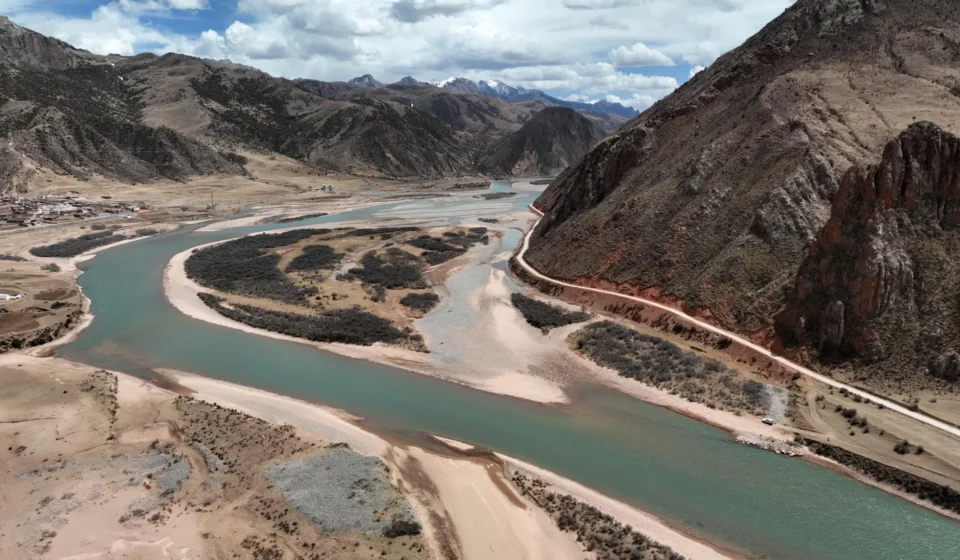
The road to this discovery began with a focused examination of the Qinghai-Tibet Plateau. Often referred to as the "Third Pole," this region represents the largest high-altitude cryosphere outside of the polar regions. It serves as a natural laboratory for observing the transition from continuous permafrost to degraded, patchy landscapes.
Between 2018 and 2022, the collaborative team from Umeå University and East China Normal University conducted an extensive survey of 50 rivers across the plateau. The researchers employed a rigorous multi-methodological approach to map the carbon flux:
- Field Sampling: The team collected water samples across a gradient of permafrost degradation, measuring CO₂ concentrations and isotopic tracers to distinguish between carbon derived from biological decay versus geological weathering.
- Geochemical Modeling: By integrating these field measurements with sophisticated geochemical models, the scientists reconstructed the "carbon journey" of each catchment area.
- Synthesis: The data revealed a clear trend: as permafrost cover diminished, the ratio of biological emissions to geological sequestration shifted significantly.
The findings suggest that the geological "sink" is not a static background feature but a dynamic response to the thawing process itself. As the physical environment destabilizes, the rate of mineral exposure increases, thereby increasing the rate of carbon uptake.
Supporting Data: The Magnitude of the Offset
The data gathered from the Qinghai-Tibet Plateau provides a compelling argument for the significance of this geological counterbalance. On average, the researchers estimated that rock weathering offsets approximately 35 percent of the CO₂ emissions generated by riverine biological decay.
However, the efficacy of this offset is highly dependent on the state of the permafrost. In areas where permafrost remains continuous, the geological impact is modest. The soil remains largely intact, and the underlying minerals are shielded from the reactive forces of water and air.
The real shift occurs in areas of "discontinuous" or "isolated" permafrost. In these regions, where the landscape is fragmented, the study found that weathering-driven carbon uptake could occasionally exceed 100 percent of the CO₂ emissions from the rivers. In these specific catchments, the landscape is effectively "carbon neutral" or even a net carbon sink, despite the biological decay taking place.
This variability suggests that the climate-regulating capacity of a landscape is fundamentally tied to its physical degradation state. As permafrost continues to thaw globally, the sheer scale of newly exposed rock surfaces could represent a more significant—and currently unaccounted for—carbon sink than previously imagined.
Official Responses and Expert Perspectives
The research has sent ripples through the climate science community, prompting a re-evaluation of how models incorporate geological feedback.
"We found that river CO₂ emissions decline while carbon uptake through rock weathering increases as permafrost cover decreases," explains Liwei Zhang, a lead biogeochemist at East China Normal University. "In some catchments where permafrost has become patchier, weathering-driven carbon uptake was large enough to offset or even exceed river CO₂ emissions."
Jan Karlsson, a professor at the Department of Ecology, Environment and Geoscience at Umeå University, emphasizes the necessity of a holistic view. "Our findings show that biological and geological carbon cycles are tightly linked," Karlsson notes. "To understand whether thawing permafrost ultimately amplifies or dampens climate warming, we need to consider both the carbon released from ancient soils and the carbon consumed through rock weathering."
While the results are optimistic, the researchers are quick to temper expectations. They caution against viewing rock weathering as a panacea for the climate crisis. Chemical weathering is a slow, complex, and sometimes unpredictable process. Depending on the mineralogy of the exposed rock—for instance, if the rocks contain high concentrations of certain carbonates or sulfides—the process can sometimes release CO₂ rather than sequester it.
Broader Implications: Redefining Climate Models
The primary implication of this study is that current climate models are likely overestimating the "net" carbon release from thawing permafrost. Most existing Earth system models are heavily weighted toward biological processes—the "methane burst" or "soil respiration" scenarios—while the geological component remains largely ignored or simplified.
The Need for New Metrics
Integrating geological weathering into future climate projections requires a paradigm shift. Scientists must now map the mineral composition of high-latitude regions with the same precision they apply to soil carbon content. If a region is slated to thaw, the potential for both carbon emission (biological) and carbon sequestration (geological) must be modeled as a coupled system.
Policy and Mitigation
From a policy standpoint, this discovery does not grant a "get out of jail free" card regarding fossil fuel emissions. The amount of CO₂ sequestered by weathering is miniscule compared to the gigatons of carbon released by human industrial activity. However, it does highlight the importance of understanding the Earth’s natural resilience mechanisms. As we move toward global climate assessments, including the IPCC reports, accounting for these "hidden" sinks will be vital for achieving accurate predictions of future warming trajectories.
A Complex Future
The study ultimately serves as a reminder that the Earth is not merely a passive victim of human-induced climate change, but a dynamic, self-regulating system. The thawing of the world’s permafrost is a tragedy for the stability of our current climate, but it is also a catalyst for profound geological change. By uncovering the tight link between the biological and geological cycles, the researchers have provided a vital piece of the climate puzzle, proving that even in the most catastrophic environmental shifts, nature’s internal mechanisms continue to work in ways that are only just beginning to be understood.
In conclusion, the work of Zhang, Karlsson, and their colleagues suggests that while the "permafrost carbon bomb" remains a valid and urgent concern, it is not the only story written in the thawing soil. The ground beneath our feet is a ledger of gains and losses, and as the planet warms, the geological debt and credit system is shifting in ways that will define the climate of the next century. Understanding these shifts is not merely an academic exercise—it is an essential step in navigating the future of a warming world.