
The Spider That Plays Dead: How a New Species Uses Fungal Mimicry to Survive in the Amazon

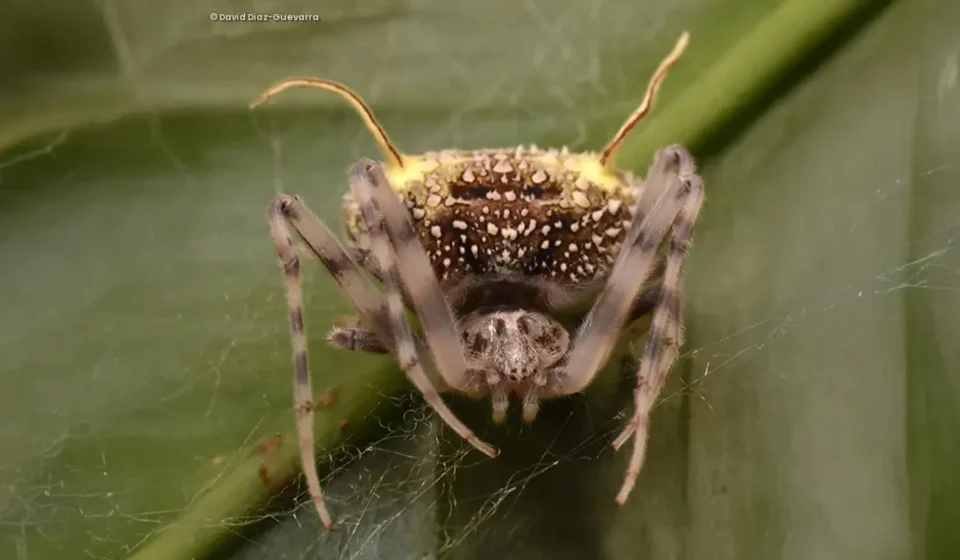
In the deep, emerald shadows of the Llanganates-Sangay Corridor—a biodiversity hotspot nestled within the Ecuadorian Amazon—nature has perfected a macabre and ingenious survival strategy. Researchers have officially identified a new spider species, Taczanowskia waska, which has evolved a disguise so convincing that even seasoned biologists initially mistook it for a stationary fungus.
This discovery, recently published in the journal Zootaxa, marks a biological milestone: it is the first recorded instance of a spider mimicking the very parasitic fungi that typically hunt and consume its own kind. The finding serves as a profound reminder of the evolutionary arms race unfolding in the world’s rainforests, where the line between predator and prey is often blurred by the art of deception.
The Chronology of a Curious Discovery
The story of Taczanowskia waska did not begin in a high-tech laboratory, but on the screens of a global community of amateur naturalists.
The Citizen Science Spark
The discovery path began on the digital platform iNaturalist, where a user uploaded a photograph of what appeared to be a common, albeit strange-looking, fungus clinging to the underside of a leaf. The organism featured a pale, fibrous structure that looked remarkably like the fruiting body of a Gibellula fungus—a known parasite that infects spiders, slowly consuming them from the inside out before erupting through their exoskeleton.
While the original poster suspected a mushroom, the iNaturalist community—a vast network of citizen scientists—began to debate the image. Experienced users noted that the "fungus" possessed a structural symmetry and movement pattern that hinted at something more animate. This digital curiosity caught the attention of professional arachnologists, prompting an organized field expedition to the Ecuadorian Amazon to investigate the source of the image.
The Field Expedition
During a nighttime survey in the Llanganates-Sangay region, researchers encountered the organism in its natural habitat. Under the beam of their headlamps, the team was initially deceived by the specimen’s appearance, confirming the effectiveness of its camouflage. Upon closer inspection, the creature was revealed to be a member of the rare and enigmatic Taczanowskia genus.
Back at the Museum of Nature Hamburg, part of the Leibniz Institute for the Analysis of Biodiversity Change (LIB), expert arachnologist Nadine Dupérré led the taxonomic work. By comparing the live specimen with historical reference samples held in global biological collections, the team confirmed that this was not only a new species but a unique evolutionary outlier.
Supporting Data: An Evolutionary Masterpiece
The morphology of Taczanowskia waska is a testament to the power of selective pressure. The spider possesses elongated abdominal outgrowths and a ghostly, pale coloration that mirrors the exact physical profile of the Gibellula fungi that prey on spiders in the same ecosystem.
Behavioral Integration
The spider’s mimicry is not merely visual; it is behavioral. The species is known to remain perfectly motionless on the undersides of leaves, a micro-habitat frequently occupied by the fungi it mimics. By adopting the posture of a dying, fungus-infected spider, Taczanowskia waska achieves two vital objectives:
- Predator Deterrence: Most predators of spiders, such as birds, wasps, or larger arachnids, avoid infected prey. By looking like a corpse covered in parasitic fungus, the spider effectively becomes "inedible" to its natural enemies.
- Ambush Predation: The disguise acts as a "wolf in sheep’s clothing." By remaining unnoticed until the final millisecond, the spider can lure or surprise its own prey, capitalizing on the assumption that it is a harmless piece of organic detritus.
The Genus Taczanowskia
Before this discovery, the genus Taczanowskia remained one of the most poorly understood groups in arachnology. Spiders in this group are notoriously difficult to track, and their ecology has remained a mystery to science. Taczanowskia waska provides the first significant data point for the genus in decades, offering researchers a "Rosetta Stone" to understand how these rare spiders interact with their environment.
Official Perspectives: The Value of Collaborative Science
The classification of Taczanowskia waska is a victory for the "Three Pillars of Modern Biology": field research, museum collections, and digital collaboration.
"Finds like these demonstrate the value of scientific collections," says Nadine Dupérré. "They enable us to classify new species and compare them with historical specimens. Combined with international collaboration and citizen science, this opens up new opportunities for researching biodiversity."
The Role of Museums
Dupérré emphasizes that the discovery would not have been possible without the historical archives preserved in scientific institutions. When the team returned from the field, they relied on the Hamburg Museum’s vast collection to differentiate Taczanowskia waska from its closest relatives. Without these physical records, the subtle morphological differences—the precise shape of the spider’s leg segments or the specific arrangement of its eyes—might have been overlooked as simple variation.
The Citizen Science Revolution
The fact that a global platform like iNaturalist served as the catalyst for this discovery signals a paradigm shift in how we catalog life on Earth. As tropical rainforests face unprecedented threats from deforestation and climate change, the scientific community is increasingly looking to "crowdsource" the observation process. By empowering non-professionals to document biodiversity, scientists can bridge the gap between vast, unexplored territories and the limited number of specialists available to study them.
Implications: Understanding Mimicry and Biodiversity
The discovery of Taczanowskia waska carries significant weight in the study of evolutionary biology, particularly in the field of crypsis (the ability of an animal to avoid detection).
Advancing the Theory of Mimicry
Most mimicry studies focus on Batesian mimicry, where a harmless species mimics a dangerous one to avoid predation. However, Taczanowskia waska represents a more complex, specialized adaptation. By mimicking a pathogen—a fungus that is itself a source of mortality—the spider is engaging in a form of "pathogen mimicry." This suggests that the evolutionary pressure in the Amazon is so intense that spiders have had to evolve to look like the very diseases that kill them to escape the notice of their predators.
The "Unknown" Rainforest
This discovery is a sobering reminder of how much remains hidden within tropical ecosystems. The Llanganates-Sangay Corridor is a place of intense biological activity, yet researchers estimate that a significant percentage of the species inhabiting these regions remain undocumented.
As the world continues to industrialize, the loss of these habitats means we are likely losing species before they are ever discovered. The Taczanowskia waska study highlights the urgent need for:
- Increased Funding for Taxonomy: We cannot protect what we have not identified.
- Global Cooperation: The collaboration between Ecuadorian field researchers and European museums highlights the necessity of international data sharing.
- Habitat Preservation: The spider’s reliance on specific leaf structures and micro-climates underscores the fragility of the rainforest ecosystem.
Conclusion
The story of Taczanowskia waska is more than just the identification of a new species; it is a narrative of resilience and complexity. In the dark, humid corners of the Ecuadorian Amazon, a tiny spider has evolved a mask that keeps it safe from the dangers of the forest.
Through the lens of modern technology and the dedication of a global community, we have been granted a glimpse into this hidden world. As scientists continue to study this remarkable creature, we are reminded that the natural world is a complex web of interactions, and every new species discovered is a piece of a much larger puzzle. The search for the next Taczanowskia waska continues, with the hope that we can document and protect these wonders before the shadows of the forest floor are lost to history.