

Fog-Delayed Start at Shinnecock Hills: 2026 U.S. Open Begins Amidst Atmospheric Uncertainty

The Morning Veil: A Weather-Impacted Start at Shinnecock Hills
The 2026 U.S. Open at the legendary Shinnecock Hills Golf Club—a venue steeped in the rich history of American golf—faced an immediate, albeit expected, hurdle on Thursday morning. A thick, rolling blanket of maritime fog descended upon the Long Island course, forcing tournament officials to trigger a mandatory delay at 7:05 a.m. ET. The suspension of play, which lasted exactly two hours, pushed the entire opening round schedule back, transforming the much-anticipated first day of the championship into a marathon session that will bleed into Friday morning.
For the 156-man field, the delay served as an unwelcome test of patience. Shinnecock Hills, already renowned for its unforgiving fescue and tricky, lightning-fast greens, demands absolute mental clarity. When play finally resumed at 9:05 a.m. ET, the players were greeted by a course that had been dampened by the morning moisture, potentially softening the surfaces—a rare gift for competitors at a U.S. Open where the USGA typically aims for firm, fast, and punishing conditions.
A Chronology of the Opening Round
The ripple effect of the two-hour delay has effectively compressed the tournament schedule, creating a logistical challenge for the USGA’s operations team and the broadcasting crews.
The Morning Wave
The initial groups, scheduled to lead off the championship at 6:35 a.m., had barely finished their opening holes before the horn sounded. As the fog cleared, the atmosphere at the first tee shifted from early-morning stillness to the high-stakes energy of a major championship.
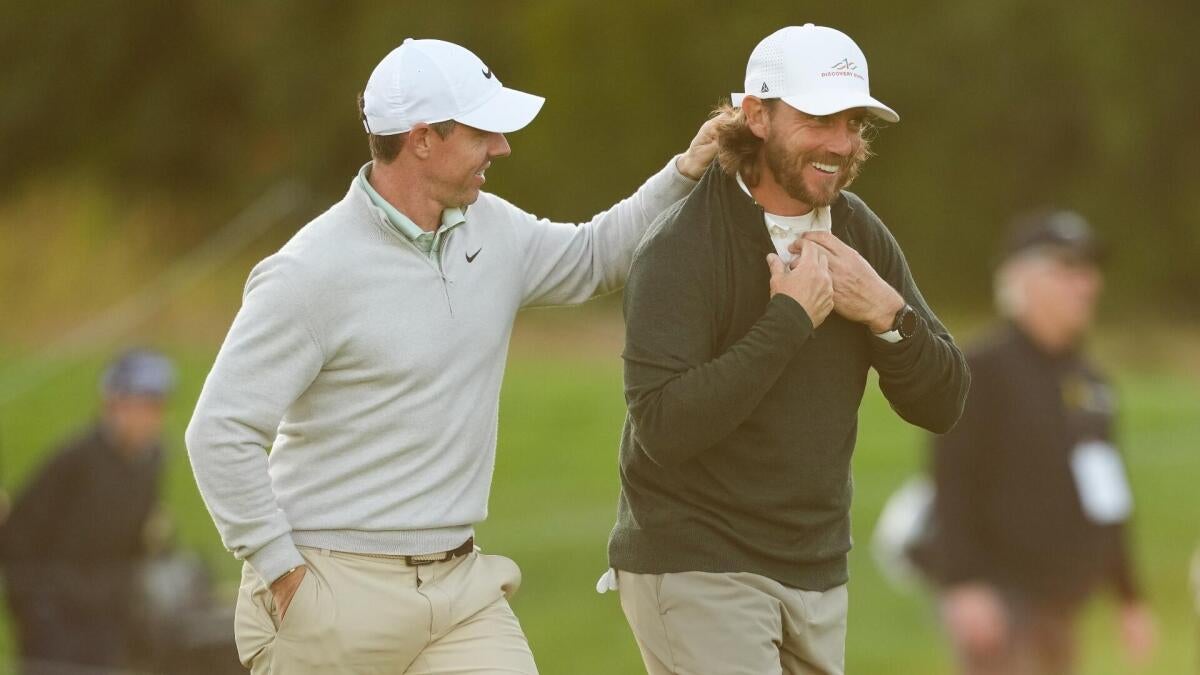
By 9:30 a.m., the marquee groups began their ascent. Brooks Koepka, a man whose game seems tailor-made for the specific demands of Shinnecock Hills, headlined the early action. Alongside Cameron Young and Chris Gotterup, Koepka’s presence signaled the start of the "heavy hitter" era of the day. Shortly thereafter, the European contingent took center stage; Rory McIlroy, Ludvig Åberg, and Tommy Fleetwood occupied the 10th tee at 9:52 a.m., drawing a significant gallery as McIlroy continued his pursuit of a U.S. Open title that has eluded him for 15 years.
The Afternoon Transition
As the sun climbs and the winds typical of the Southampton coast begin to whip off the Atlantic, the afternoon groups face a significantly different challenge. The course will likely dry out, increasing the speed of the greens and rewarding those who can flight their irons with precision.
The afternoon slate is headlined by a star-studded 3:25 p.m. grouping featuring the powerhouse trio of Bryson DeChambeau, Viktor Hovland, and Matt Fitzpatrick. Following them, the 3:47 p.m. tee time on No. 1 will feature the tactical brilliance of Justin Thomas, Hideki Matsuyama, and Xander Schauffele. The day’s concluding "marquee" pairing—Justin Rose, Jordan Spieth, and Jon Rahm—is expected to tee off at 4:09 p.m. on the 10th hole, potentially finishing their rounds under the long, golden shadows of a late June evening.
Supporting Data: The Field and the Course
Shinnecock Hills is widely considered one of the most balanced tests in golf. Its length, combined with the strategic placement of bunkers and the sheer complexity of the putting surfaces, makes par a significant achievement.
Notable Field Statistics
- Total Competitors: 156
- Tournament Defending Champion: J.J. Spaun
- World No. 1: Scottie Scheffler, who is actively pursuing a career Grand Slam.
- Key Storyline: The return of the U.S. Open to Shinnecock, a course that has produced iconic moments in golf history, dating back to the late 19th century.
The composition of this year’s field is a blend of veteran major winners and ascending amateur talents, such as Miles Russell and Mason Howell, who are receiving their baptism by fire on one of the most difficult layouts in the United States.
Official Responses and Tournament Logistics
USGA officials, while not offering extensive commentary during the active delay, maintained a professional stance, emphasizing the necessity of player safety and course integrity. In professional golf, the decision to delay is rarely made lightly, as it disrupts the rhythm of the players and forces the tournament into a condensed window.
"The safety of our players and the fairness of the competition are paramount," a representative noted shortly after the resumption of play. The decision to resume at 9:05 a.m. was predicated on the visibility improving to a level where officials could monitor the course and players could navigate the layout safely.
Because the delay was absolute, the USGA has confirmed that the schedule will remain pushed back for the remainder of the day. This creates a "long tail" for the first round, with the final groups likely finishing their opening 18 holes well into the evening, providing a unique atmosphere for the spectators on-site and the global television audience.
Implications for the Championship
The immediate implication of Thursday’s fog delay is the physical and mental fatigue it imposes on the field. Golfers are creatures of routine; a two-hour wait in the clubhouse, often spent in a state of high-adrenaline anticipation, can drain a player before they have even struck their first drive.
Scoring Dynamics
If the fog persists or if the morning moisture creates a "soft" course, we may see lower scores in the opening round than anticipated. However, the U.S. Open is a marathon, not a sprint. The real test will arrive on Friday and Saturday, when the USGA typically ramps up the difficulty of pin positions and restricts the fairways.
The Momentum Factor
For players like Rory McIlroy and Scottie Scheffler, maintaining focus through the delay is a test of their major-championship pedigree. Those who can navigate the "stop-and-start" nature of Thursday’s opening round without dropping unnecessary strokes will find themselves in a commanding position entering the second round.
Conversely, for the younger players in the field, the delay may actually serve as a buffer, allowing them to settle their nerves and observe how the course reacts to the initial groups. The disparity in experience levels will be laid bare over the next 72 hours, but for now, the focus remains entirely on completing the first round.
Looking Ahead: The Road to the Trophy
As the 2026 U.S. Open settles into its rhythm, the narrative is shifting from the weather to the sheer caliber of the golf being played. With the tee times now set for the remainder of the day, the focus shifts to the leaderboard. Who will emerge as the early leader? Will the veteran consistency of players like Justin Rose prevail, or will the raw power of Bryson DeChambeau and Brooks Koepka force the course into submission?
The beauty of the U.S. Open lies in its ability to humble the best in the world. Shinnecock Hills is a course that demands respect, patience, and a high degree of technical proficiency. As the fog lifts and the tournament unfolds, the world of golf watches with bated breath to see who will be the last man standing on Sunday evening.
For those tracking the action, the live leaderboard remains the most accurate source for real-time updates as the field navigates the nuances of Shinnecock Hills. Fans are encouraged to follow the official CBS Sports coverage guide to ensure they do not miss any of the critical moments as the 2026 U.S. Open continues.
Despite the rocky start, the championship is officially underway. The stage is set, the field is ready, and the battle for the U.S. Open trophy—the most prestigious honor in American golf—has truly begun.