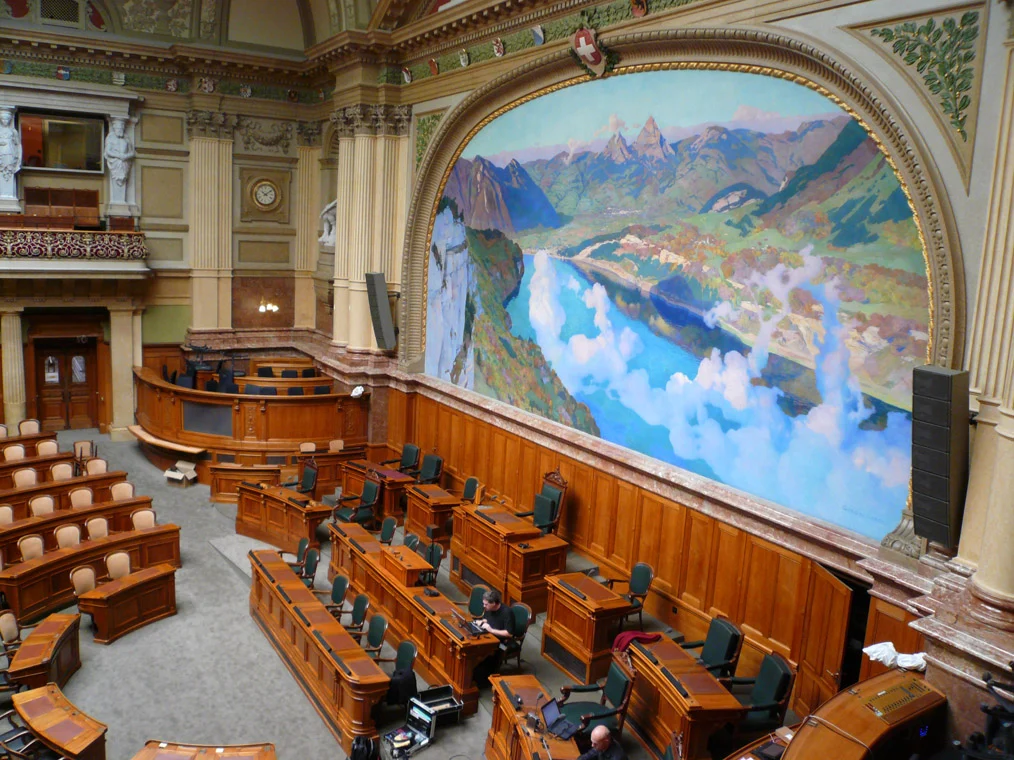
In a significant exercise of direct democracy, Swiss voters have decisively rejected a constitutional initiative that sought to limit the nation’s permanent resident population to 10 million by 2050. The proposal, which ignited a fierce national debate over the balance between economic prosperity, infrastructure sustainability, and immigration control, was defeated at the ballot box on Sunday. With a robust voter turnout exceeding 58%, the results signal a clear preference for maintaining Switzerland’s current international commitments over the adoption of rigid, isolationist demographic constraints.
Main Facts: The Result and the Mandate
The referendum saw 54% of the electorate vote against the proposal. The initiative, spearheaded by conservative factions, aimed to embed a strict population ceiling into the Swiss Federal Constitution. Had it passed, the federal government would have been legally mandated to intervene—specifically by restricting asylum and family reunification—should the population reach 9.5 million. Furthermore, if the 10-million threshold were breached, the government would have been compelled to renegotiate or unilaterally terminate international treaties, most notably the Free Movement of Persons Agreement with the European Union.
The Federal Council, Switzerland’s executive branch, hailed the turnout as a testament to the health of the Swiss democratic process, noting that the electorate carefully weighed the potential economic fallout against the perceived benefits of slowing population growth.
Chronology: The Road to the Ballot Box
The trajectory of this initiative reflects the shifting socio-economic landscape of Switzerland over the last two decades.
- 2002: The Catalyst: The signing of the Free Movement of Persons Agreement with the EU marked a turning point, facilitating easier access for labor across borders. At this time, Switzerland’s population stood at approximately 7.4 million.
- 2010–2020: The Acceleration: Rapid economic growth, driven by the pharmaceutical, financial, and technology sectors, created an insatiable demand for labor. The population grew steadily, surpassing 9 million by 2025.
- Early 2024: The Initiative Launch: The Swiss People’s Party (SVP) and allied groups formally launched the initiative, citing the "overheating" of public infrastructure and the cost-of-living crisis as primary justifications for a constitutional cap.
- Late 2024–Early 2026: The Public Debate: A polarized national discourse emerged. Proponents focused on the "quality of life" argument, while opponents—including business associations, labor unions, and the government—warned of economic stagnation.
- June 2026: The Referendum: The electorate delivered its verdict, rejecting the cap and reaffirming the status quo.
Supporting Data: The Drivers of Concern
The debate was not purely ideological; it was rooted in quantifiable pressures that have affected the daily lives of Swiss residents. Supporters of the initiative leaned on several key metrics to justify their stance:
Infrastructure and Housing
The rapid influx of residents has put significant strain on the Swiss housing market. In urban centers such as Zurich, Geneva, and Basel, rental prices have soared as demand consistently outstrips supply. Supporters argued that a population cap would act as a "pressure release valve," allowing urban planning and housing development to catch up with demographic shifts.
Service Congestion
Public transport systems, which are among the most efficient in the world, have faced record-breaking ridership. Critics of current migration levels pointed to increased congestion on trains and highways as evidence that the country’s physical infrastructure is approaching its functional limit.
Economic Necessity
Conversely, data from the State Secretariat for Economic Affairs (SECO) highlights a chronic labor shortage. Key sectors—specifically healthcare, elder care, construction, and high-tech engineering—rely heavily on cross-border commuters and foreign talent. Data shows that even with current immigration levels, the Swiss unemployment rate remains remarkably low (often hovering below 2.5%), suggesting that the economy is at near-full capacity.
Official Responses and Political Repercussions
The Federal Council took a firm stance against the initiative from the outset. Federal Councillor Beat Jans was the primary government voice in the lead-up to the vote, emphasizing that while the government acknowledges the "growing pains" of a larger population, a constitutional cap was the wrong tool for the job.
"The decision by the people is a clear reaffirmation of our bilateral path," Jans stated following the results. However, he was quick to qualify this, noting that the government is not blind to the issues raised by the initiative’s proponents. "Concerns regarding housing, infrastructure, and wage pressure are valid. We will address these through targeted, pragmatic policies—such as incentivizing denser housing development and investing in transport—rather than through blunt legal instruments that threaten our relationship with our largest trading partner."
The Swiss People’s Party (SVP), while disappointed, noted that the high level of support for the initiative—nearly 46%—sends a clear message to the Federal Council that the status quo is insufficient. They have signaled that they will continue to push for tighter controls on asylum and social welfare, framing the referendum not as a defeat, but as the beginning of a sustained campaign for demographic oversight.
Implications: The EU and Beyond
The rejection of the 10-million cap preserves the integrity of the bilateral agreements with the European Union. Had the initiative passed, Switzerland would have entered a period of unprecedented diplomatic volatility.
The "Bilateral Path"
Switzerland’s relationship with the EU is governed by a complex web of agreements that ensure market access. The Free Movement of Persons Agreement is the linchpin of this arrangement. The EU has historically signaled that it does not accept a "cherry-picking" approach; if Switzerland were to unilaterally restrict the movement of people, it would risk the suspension of the entire package of bilateral treaties. The defeat of the initiative avoids this "Swiss-EU standoff," maintaining the stability required for economic forecasting.
Long-term Socio-economic Strategy
With the referendum behind it, the government must now pivot to "managing growth." This involves several long-term strategic shifts:
- Housing Reform: Streamlining zoning laws to allow for more vertical growth in urban areas.
- Labor Market Integration: Shifting focus toward upskilling the existing domestic workforce to reduce reliance on external labor in certain sectors.
- Environmental Stewardship: Balancing population growth with Switzerland’s ambitious climate goals. The government is expected to introduce stricter environmental standards for new infrastructure, ensuring that growth does not come at the cost of the country’s natural beauty.
Conclusion: A Pragmatic Victory
The rejection of the 10-million population cap is a victory for pragmatism. It reflects a Swiss electorate that, while feeling the pinch of rapid growth, is unwilling to sacrifice the economic connectivity that has fueled the country’s high standard of living. However, the close nature of the vote serves as a warning to the political establishment. The Swiss public is signaling that they expect their leaders to move beyond rhetoric and deliver tangible solutions to the congestion and cost-of-living issues that characterize modern Switzerland.
As the nation moves forward, the focus will shift from the constitutional debate to the implementation of policies that harmonize Switzerland’s status as a global hub of commerce and innovation with the need to maintain the high quality of life that its residents demand. The "10 million" threshold may not be in the Constitution, but it remains a psychological milestone that will continue to influence Swiss policy for years to come.