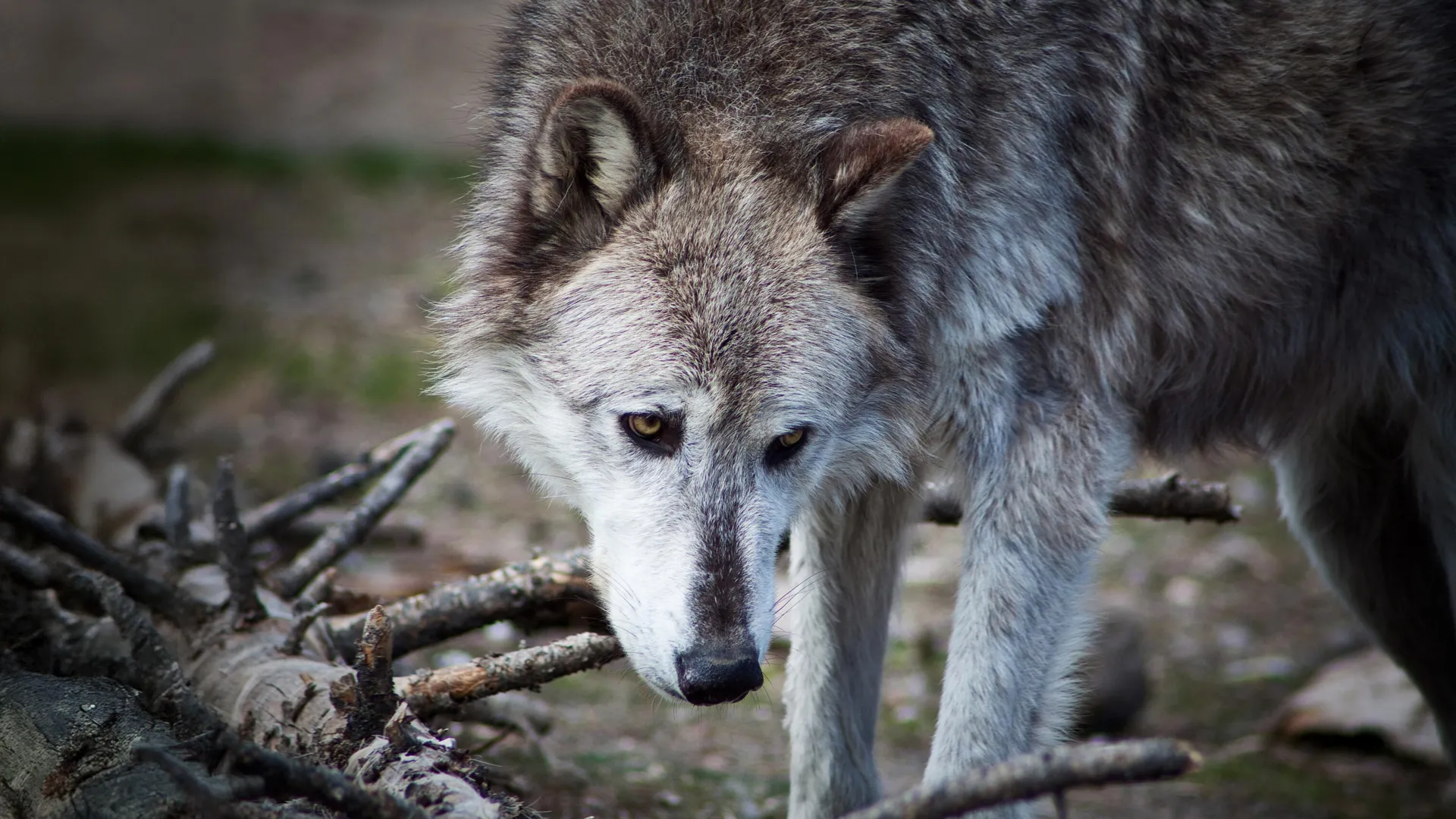
For over a quarter of a century, the reintroduction of gray wolves to Yellowstone National Park has been hailed as one of the greatest ecological success stories in modern history. The narrative—often centered on the concept of the "trophic cascade"—suggests that the return of this apex predator triggered a domino effect: wolves reduced elk populations, which in turn allowed willows and aspens to recover, which subsequently provided habitats for birds and beavers, effectively restoring the park’s entire ecosystem.
However, a landmark peer-reviewed analysis published recently in Global Ecology and Conservation has sent shockwaves through the scientific community. The new study, led by researchers from Utah State University and Colorado State University, suggests that the "Yellowstone miracle" may have been built on a foundation of statistical errors and exaggerated data. By dismantling the methodology of a high-profile 2025 study, the researchers argue that the narrative of a park-wide, wolf-driven ecological restoration is fundamentally flawed.
The Core Conflict: Statistical Rigor vs. Compelling Narrative
At the heart of the debate is the distinction between ecological reality and the mathematical models used to describe it. The 2025 study led by Ripple et al. famously claimed that willow crown volume in the park had surged by 1,500 percent following wolf recovery. This figure became a cornerstone of the "trophic cascade" theory, frequently cited in textbooks, documentaries, and policy briefings.
Dr. Daniel MacNulty, a wildlife ecologist at Utah State University and lead author of the new critique, contends that the 1,500 percent figure is a byproduct of "circular reasoning."
"Ripple et al. argued that carnivore recovery produced one of the world’s strongest trophic cascades," Dr. MacNulty stated. "But our re-analysis shows their conclusion is invalid because it relies on circular reasoning and violations of basic modeling assumptions."
The core of this statistical failure, according to the new paper, involves the way the researchers calculated willow volume. The original model used plant height to both calculate the volume and to predict it. Because height was used as both the dependent and independent variable, the model was mathematically guaranteed to show a strong correlation, regardless of whether any actual biological growth occurred.
A Chronology of the Yellowstone Debate
To understand the gravity of this new finding, one must look at the timeline of the Yellowstone wolf studies:
- 1995–1997: Gray wolves are reintroduced to Yellowstone National Park, marking a pivotal moment in conservation biology.
- Early 2000s: Initial observations suggest that willows, which had been stunted by decades of heavy elk browsing, are beginning to show signs of recovery in certain riparian areas.
- 2010s: The "trophic cascade" narrative gains massive public and academic traction. Research papers begin to draw direct, strong causal links between wolf presence and widespread vegetation recovery.
- 2024: Hobbs et al. publish a comprehensive field study based on two decades of experimental data, reporting only weak or localized trophic cascade effects, creating a stark contradiction with other, more sensationalist papers.
- 2025: Ripple et al. publish a widely publicized study asserting a massive, 1,500 percent increase in willow crown volume, reinforcing the dominant, high-impact narrative.
- Late 2025/Early 2026: MacNulty, Cooper, et al. publish their formal critique in Global Ecology and Conservation, systematically dismantling the methodology used in the 2025 study and calling for a paradigm shift in how wolf impacts are interpreted.
Supporting Data: Where the Models Went Wrong
The critique authored by MacNulty and his colleagues is not merely a philosophical disagreement; it is a technical dissection of data handling. The authors identify several key areas where the original 2025 study deviated from robust scientific practice:
1. Misapplication of Modeling Tools
The height-to-volume model used by the original researchers was never designed for the specific conditions found in Yellowstone. The park’s willows are frequently heavily browsed, resulting in stunted, distorted growth forms. When the researchers applied a model built for healthy, upright vegetation to these "distorted" plants, they significantly overestimated the volume of growth.
2. Inconsistent Sampling Sites
The analysis highlights that many of the willow plots compared between 2001 and 2020 were not the same physical locations. In ecological field studies, comparing apples to oranges—or in this case, different plots of land with different soil and water conditions—can lead to the false appearance of a temporal trend. The apparent "recovery" may have simply been a byproduct of choosing different sampling sites that were inherently more productive.
3. Equilibrium Fallacy
Perhaps most critically, the researchers argue that the original study relied on "equilibrium assumptions." Yellowstone is a dynamic, non-equilibrium ecosystem shaped by wildfire, climate change, and fluctuating human activity. Applying models that assume a stable, predictable state to such a chaotic environment leads to a misunderstanding of what is actually driving ecological change.
4. Omission of Confounding Factors
By focusing almost exclusively on the "wolf-elk-willow" triad, the original narrative ignored other significant drivers of vegetation health, such as local hydrology, soil nutrient availability, and even human hunting pressures outside park boundaries.
Implications: A More Modest Ecological View
The researchers involved in the new study are quick to clarify that their work is not an attempt to discredit the importance of predators. Instead, they are advocating for "scientific humility."
Dr. David Cooper, co-author and emeritus senior research scientist at Colorado State University, emphasizes that the reality of the Yellowstone ecosystem is far more nuanced than the "trophic cascade" narrative suggests. "Once these problems are accounted for, there is no evidence that predator recovery caused a large or system-wide increase in willow growth," Cooper explains. "The data instead support a more modest and spatially variable response influenced by hydrology, browsing, and local site conditions."
This perspective suggests that while wolves do have an effect on elk behavior—a concept known as the "ecology of fear"—the translation of that effect into massive vegetation recovery is filtered through a complex web of environmental variables. It is not as simple as "add wolves, get more trees."
The Scientific Community’s Response
The release of this analysis has forced a moment of introspection within the ecological community. The contradiction between the 2025 Ripple study and the 2024 Hobbs study—which relied on 20 years of direct field observations—is now explained by the statistical flaws identified by MacNulty’s team.
While some proponents of the original narrative may be reluctant to abandon such a potent, public-facing story, the academic consensus is shifting toward the need for rigorous, reproducible, and transparent modeling. The new study serves as a cautionary tale about the dangers of "narrative-driven science," where the desire to find a compelling story can sometimes lead to the subconscious—or even explicit—manipulation of data to fit a preconceived conclusion.
Moving Forward: The Future of Yellowstone Research
What does this mean for the future of Yellowstone conservation? First, it suggests that management strategies should be cautious. If the ecological impact of wolves is more localized and context-dependent than previously thought, then management policies based on the promise of "park-wide restoration" may be overreaching or misaligned with the actual needs of the landscape.
Second, it highlights the importance of open-science practices. By exposing the circular reasoning in the 2025 study, the new analysis underscores why raw data and methodological transparency are essential. As Dr. MacNulty noted, "Predator effects in Yellowstone are real but context-dependent—and strong claims require strong evidence."
The Yellowstone wolf story will likely remain one of the most studied ecological events in history. However, thanks to this new critique, the discussion is finally moving away from the simplified "fairy tale" of total restoration and toward a more honest, complex, and scientifically grounded understanding of how apex predators shape the wild landscapes they inhabit. The challenge for the next decade will be to reconcile these findings with the public’s enduring fascination with the wolves of Yellowstone, ensuring that policy remains rooted in reality rather than well-intentioned myths.