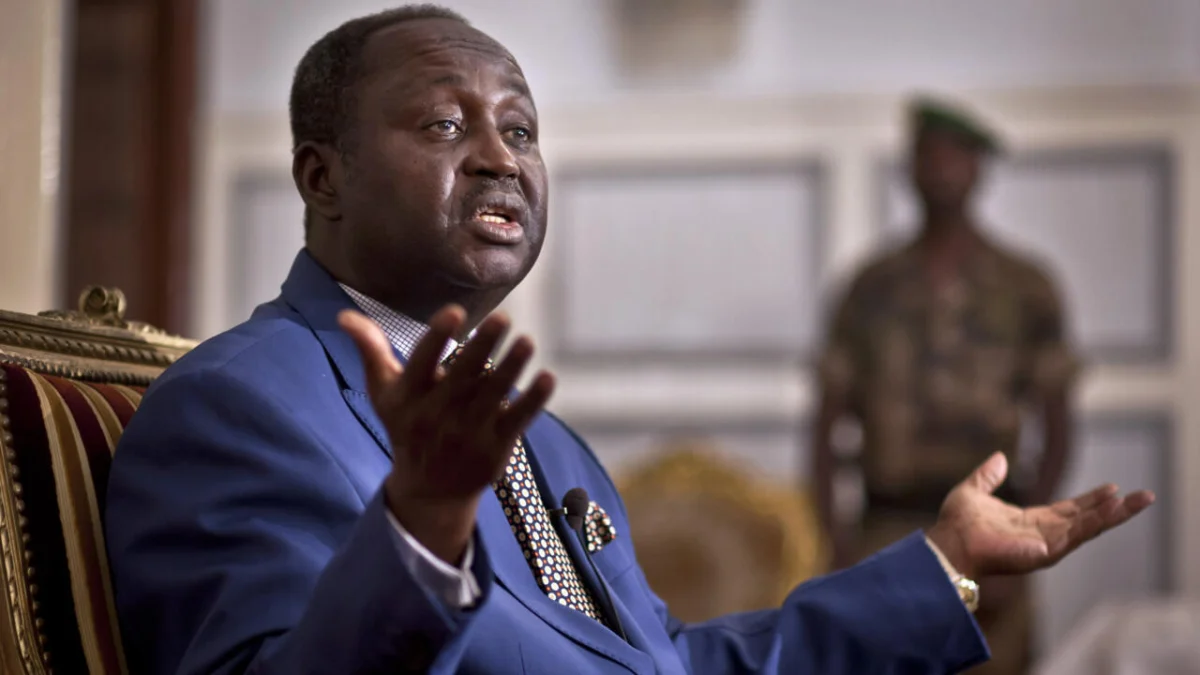
In a landmark moment for international justice and the long-suffering population of the Central African Republic (CAR), a UN-backed tribunal is set to commence the trial of former president François Bozizé this Tuesday. The proceedings, which will take place in absentia, mark a pivotal attempt by the Special Criminal Court (SCC) to hold the nation’s former leader accountable for a litany of atrocities—including murder, torture, and enforced disappearances—allegedly committed by his security forces between 2009 and 2013.
The trial is not merely a legal exercise; it is a profound test of the SCC’s legitimacy and its capacity to pierce the veil of political immunity that has historically protected elites in one of the world’s most fragile states. While Bozizé remains in exile in Guinea-Bissau, the shadow of his decade-long rule continues to loom over the streets of Bangui, where three of his former senior military officers—Eugene Barret Ngaikosset, Vianney Semndiro, and Firmin Junior Danboy—sit in pre-trial detention, awaiting their own reckoning.
The Special Criminal Court: A Hybrid Pursuit of Justice
The SCC represents a unique experiment in international law. Established in 2015 as a "hybrid" court, it operates within the domestic legal framework of the CAR but integrates international judges, prosecutors, and investigators. This structure was designed to overcome the paralysis of the national judiciary, which has historically been underfunded, politically compromised, or intimidated by armed actors.
The court’s mandate is to investigate and prosecute grave violations of human rights and international humanitarian law committed since 2003—the year Bozizé seized power in a military coup. By focusing on the "hierarchical superior" liability of the former president, the SCC is signaling that the chain of command will no longer serve as a shield for those who orchestrated state-sponsored terror.
The current case stems from an international arrest warrant issued in February 2024. The warrant centers on findings that Bozizé’s Presidential Guard operated a network of detention sites, including a civilian prison and a military training center in the central town of Bossembele. Investigators have unearthed "serious and consistent evidence" that these sites were used systematically to eliminate political rivals and intimidate the civilian population.
A Chronology of Conflict: From Coup to Chaos
To understand the gravity of the trial, one must examine the turbulent timeline of Bozizé’s influence in the Central African Republic:
- 2003: François Bozizé seizes power in a military coup, overthrowing the elected president, Ange-Félix Patassé. His rule begins a period of consolidation characterized by the militarization of state institutions.
- 2009–2013: The period under scrutiny by the SCC. During these years, Bozizé’s regime is accused of establishing a climate of fear, using the Presidential Guard to suppress dissent.
- 2013: The Seleka coalition—a predominantly Muslim rebel movement—launches an offensive that overthrows Bozizé. His flight from the country triggers a humanitarian catastrophe, as his supporters form the "anti-Balaka" militias, composed largely of Christian and animist fighters.
- 2014–2020: The nation descends into a brutal cycle of sectarian violence. Thousands are killed, and the country becomes a theater for proxy warfare and displacement.
- December 2020: In a bid to regain influence, Bozizé aligns himself with the Coalition of Patriots for Change (CPC), a new rebel alliance that threatens the capital, Bangui, and the administration of President Faustin-Archange Touadéra.
- 2021–2023: The government, bolstered by the deployment of Russian paramilitaries from the Wagner Group, forces the CPC to retreat. Bozizé flees the country, finding temporary refuge in Chad before settling in Guinea-Bissau in March 2023.
- 2022: Bozizé is sentenced in absentia to forced labor for life by a national court for conspiracy, rebellion, and murder.
Supporting Data: The Anatomy of Atrocity
The charges against Bozizé and his inner circle are grounded in extensive documentation provided by UN human rights experts and non-governmental organizations. The alleged crimes are not categorized as isolated incidents but as part of a systematic policy.
The Bossembele Dossier
Evidence collected by the SCC highlights the role of the Presidential Guard in operating detention facilities in Bossembele. Survivors have described a "revolving door" of torture. According to witness testimony, individuals deemed "enemies of the state" were abducted by elite units, held incommunicado, and subjected to extreme physical abuse. The court has identified several instances of "enforced disappearance," where victims were taken into custody and never seen again.
Systemic Patterns of Violence
The UN Office of the High Commissioner for Human Rights (OHCHR) has documented that between 2009 and 2013, state security forces—specifically those loyal to Bozizé—engaged in extrajudicial killings and gender-based violence. The use of rape as a weapon of war was a recurring theme, intended to punish communities suspected of harboring rebels or supporting the opposition.
Official Responses and Diplomatic Tensions
The trial has sparked a complex diplomatic environment.
The Government Perspective
The administration of President Faustin-Archange Touadéra has publicly supported the SCC’s efforts, viewing them as a necessary step toward national reconciliation. However, critics of the government argue that the trial is selectively applied, targeting former regime officials while ignoring allegations of human rights abuses committed by current government-allied forces, including the Wagner Group.
The Defense and Exile
Bozizé has consistently denied the charges, labeling them politically motivated. His legal team argues that the SCC lacks the jurisdiction to prosecute a former head of state and that the trials are a tactical move by the current government to ensure he never returns to the country. In Guinea-Bissau, the government has maintained a cautious stance, neither facilitating his return to CAR nor interfering with the international arrest warrant, keeping the former leader in a state of diplomatic limbo.
Implications for the Central African Republic
The proceedings beginning this Tuesday carry weight far beyond the courtroom in Bangui.
A Deterrent Effect
If the SCC succeeds in securing a conviction that stands up to international scrutiny, it will send a powerful message to current and future leaders in the region: the era of "victor’s justice" is ending. By establishing that heads of state can be held liable for the actions of their subordinates, the court is strengthening the principle of command responsibility in a region where such accountability has been historically absent.
The Challenge of Reconciliation
However, the trial also risks deepening existing divisions. For his supporters, Bozizé remains a symbol of an era before the current instability. The risk of the trial being perceived as "victor’s justice" is high, particularly in a country where political identity is often tied to ethnic and religious affiliation. The SCC must ensure the trial remains transparent and strictly evidence-based to avoid fueling further grievances.
The Future of the SCC
The success of this trial is vital for the continued funding and support of the SCC. International donors, including the European Union and the United Nations, are watching closely to see if their investment in the hybrid court yields tangible results. A failed trial, or one marred by procedural irregularities, could lead to a withdrawal of international support, effectively killing the only viable institution capable of addressing the country’s legacy of violence.
Conclusion: Justice in the Balance
As the trial of François Bozizé begins, the Central African Republic finds itself at a crossroads. The pursuit of truth is essential for a nation that has spent over six decades struggling with the ghosts of its past. While a conviction will not erase the scars of the civil wars or bring back the thousands who perished under the regimes of the last two decades, it represents a formal acknowledgment of their suffering.
The SCC faces an uphill battle. With the primary defendant absent and a volatile security situation on the ground, the path to a verdict will be fraught with legal, logistical, and political challenges. Nevertheless, by bringing these crimes into the light, the court is performing a vital function: documenting history and asserting that, in the eyes of the law, no leader is beyond the reach of justice. For the people of the CAR, the trial is a fragile, long-awaited step toward a future where the rule of law might finally replace the rule of the gun.