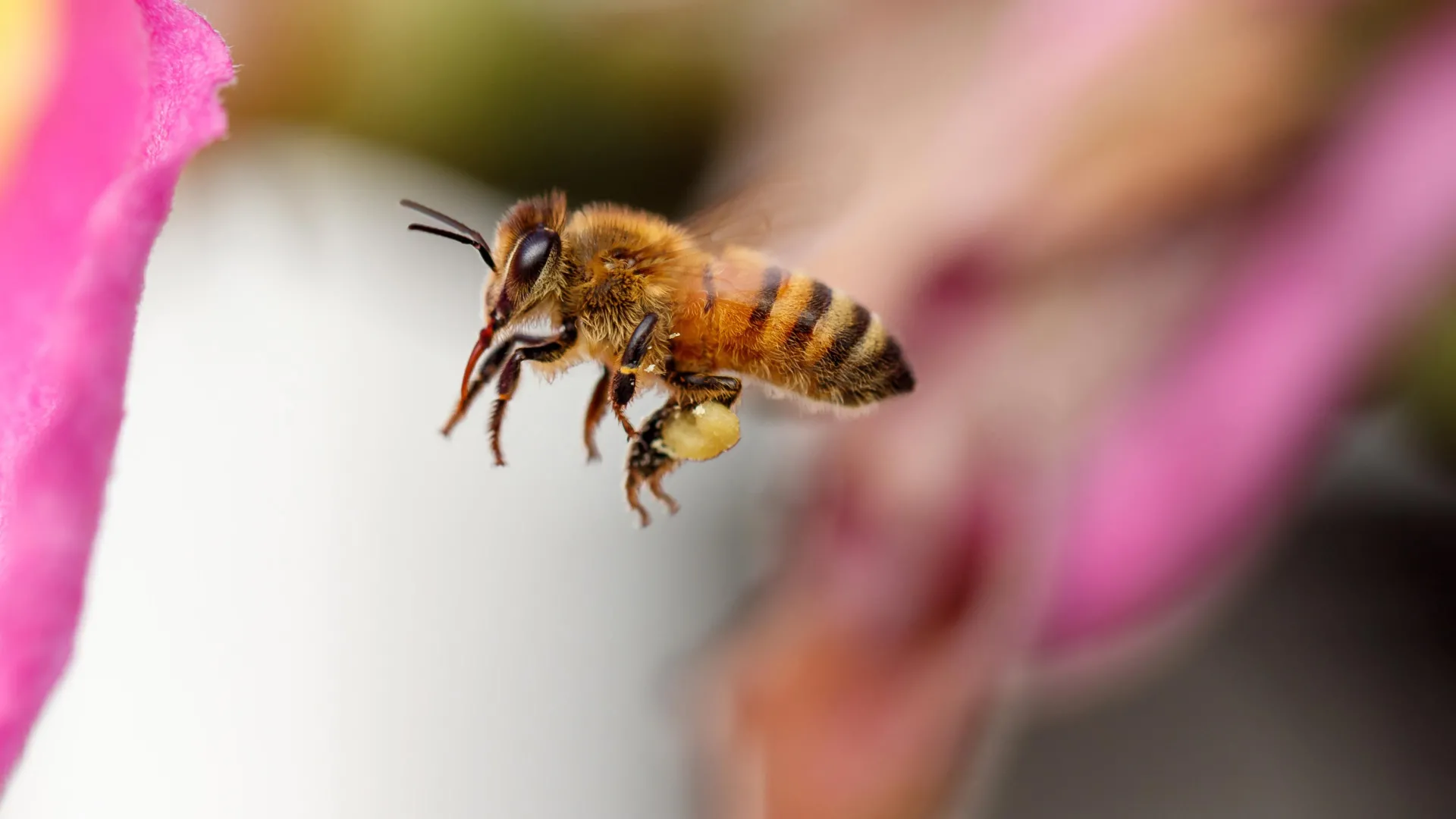
For centuries, the honey bee (Apis mellifera) has been celebrated for its complex social structures and the "waggle dance"—a sophisticated communicative ritual used to signal the location of nectar-rich blooms to fellow hive members. Yet, for all our admiration of this insect’s collective intelligence, we have long underestimated the individual capacity of the humble bee.
A groundbreaking study conducted by researchers at the University of Freiburg has dismantled long-held assumptions about how these insects navigate their environments. By employing cutting-edge drone technology, scientists have discovered that honey bees are not merely following generic chemical trails or collective maps; they are precise, habitual navigators, each possessing a unique "flight personality" and an uncanny ability to memorize complex landscapes.
The Main Facts: Precision in the Air
The core finding of the University of Freiburg study is that honey bees are far more than mere biological drones following simple instincts. When traveling between a hive and a consistent food source, individual bees do not fly in a broad, generalized corridor. Instead, they adhere to highly personalized, repeatable flight paths with a level of accuracy that borders on the extraordinary.
According to the research, which observed bees traversing 120-meter distances in agricultural settings, individual bees demonstrate a consistent "signature" flight path. They repeat these routes with such precision that they often deviate by only a few centimeters from their previous journeys. This suggests that bees possess a sophisticated spatial memory, treating the landscape not as a blank canvas, but as a dense network of visual landmarks that they map and store for future use.
Chronology: From Hive to Harvest
To understand the methodology behind this discovery, one must look at the technical evolution of bee tracking. Historically, tracking small insects over long distances in natural environments was nearly impossible. Researchers often relied on localized, tethered experiments that lacked the complexity of real-world flight.
The research team, led by neurobiologist and behavioral biologist Prof. Dr. Andrew Straw, revolutionized this process through a multi-stage approach:
- Development of FLO Tracking: The team developed ‘Fast Lock-On (FLO) Tracking,’ a proprietary system designed to solve the limitations of previous observational methods.
- Instrumentation: Researchers attached tiny, lightweight reflective markers to individual bees. These markers, while innocuous to the bee, acted as beacons for the tracking system.
- Aerial Surveillance: A specialized drone equipped with a high-speed computer was deployed. This system analyzed reflected light from the markers in real-time, allowing the drone to identify and track a specific bee within milliseconds, maintaining a continuous 3D coordinate record of its flight path.
- Data Collection: The team conducted extensive fieldwork near Kaiserstuhl, Germany. They monitored 255 distinct flight paths across varied terrain, including hedges, open cornfields, and solitary landmarks like a prominent tree.
- Comparative Analysis: By mapping these 255 flights, the researchers were able to overlay the paths of individual bees over multiple days, confirming the consistency and accuracy of the trajectories.
Supporting Data: Landscapes and Landmarks
The most compelling aspect of the study lies in how the bees interacted with their environment. By analyzing the 255 flight paths, the researchers identified a direct correlation between landscape complexity and flight precision.
The Landmark Effect
The data showed that flight paths remained most consistent when bees passed by prominent environmental features—specifically, a large tree located between the hive and the food source. In the presence of these "visual anchors," the bees demonstrated near-perfect repeatability. The tree acted as a waypoint, providing a structural reference point that allowed the bees to calibrate their internal positioning systems.
The Monotony Challenge
Conversely, the greatest variation in flight paths occurred when the bees flew over a sprawling cornfield. In this visually monotonous environment, the lack of distinct "landmarks" led to a slight increase in path variation. This confirms the theory that honey bees are visually guided navigators who rely on the richness of their surroundings to maintain their heading. When the scenery is "dull," their precision—while still remarkable—diminishes, underscoring the vital role that landscape diversity plays in the cognitive mapping of insects.
Official Responses: The "Personality" of the Bee
Prof. Dr. Andrew Straw, the lead researcher, has been vocal about the implications of these findings, noting that the data forces a re-evaluation of how we view insect behavior.
"Our tracking system makes it possible for the first time to record high-resolution 3D flight paths of honey bees in natural landscapes," Straw explained. "Our recordings show that each bee has its own preferred route and flies it very precisely. You could almost say that each bee has its own personality."
Straw emphasizes that the precision is not merely a byproduct of instinct, but a learned behavior that evolves as the bee becomes more familiar with its environment. "We found a high degree of precision in the flight paths. Individual bees repeated their individual flight paths nearly exactly on several flights. They often fly just a few centimeters away from their previous paths," he stated, highlighting that this level of consistency suggests a complex cognitive process involving spatial orientation and memory.
Implications: The Waggle Dance Revisited
Perhaps the most significant scientific outcome of this study is the new perspective it provides on the "waggle dance."
For decades, the waggle dance has been the gold standard for explaining how honey bees communicate. However, the dance has always had a known flaw: it is not particularly precise. When a bee communicates a food source location approximately 100 meters away, the directional information provided in the dance can deviate by as much as 30 degrees.
Historically, scientists attributed this inaccuracy to the bees’ limited navigation skills. The University of Freiburg study suggests this assumption was fundamentally incorrect.
A Correction in Understanding
The research proves that individual bees are significantly more spatially aware and accurate than their communication signals suggest. If a bee can return to a familiar location with a precision of just a few degrees, why does the dance remain imprecise?
The implications are twofold:
- Context-Dependent Navigation: The study suggests that the inaccuracy of the waggle dance is not a reflection of the bee’s internal compass, but rather a function of the communication system itself. The dance is designed to get a recruit into the general "neighborhood" of a resource, after which the recruit likely utilizes its own individual visual navigation skills to pinpoint the exact location.
- Individual vs. Collective Intelligence: The research distinguishes between the social information (the dance) and the individual cognitive map (the flight path). It turns out that while the bee is a social animal, its ability to navigate is a deeply individualistic, high-resolution skill.
Future Horizons
The implications of this study extend beyond pure entomology. By understanding how bees navigate using visual landmarks, researchers gain insights into the evolution of spatial cognition. Furthermore, this research could influence the development of autonomous robotics. If we can emulate the "landmark-based" navigation systems of honey bees, we might create smaller, more efficient drones that do not rely solely on GPS or complex sensor arrays, but rather on visual environmental cues.
Ultimately, the University of Freiburg study reminds us that the honey bee is a far more sophisticated creature than we once believed. It is a mapper, a traveler, and an individual with a unique, repeatable approach to the world. As we continue to study these insects, we are not just learning about biology; we are learning about the fundamental nature of navigation, memory, and the hidden complexities of the natural world.