
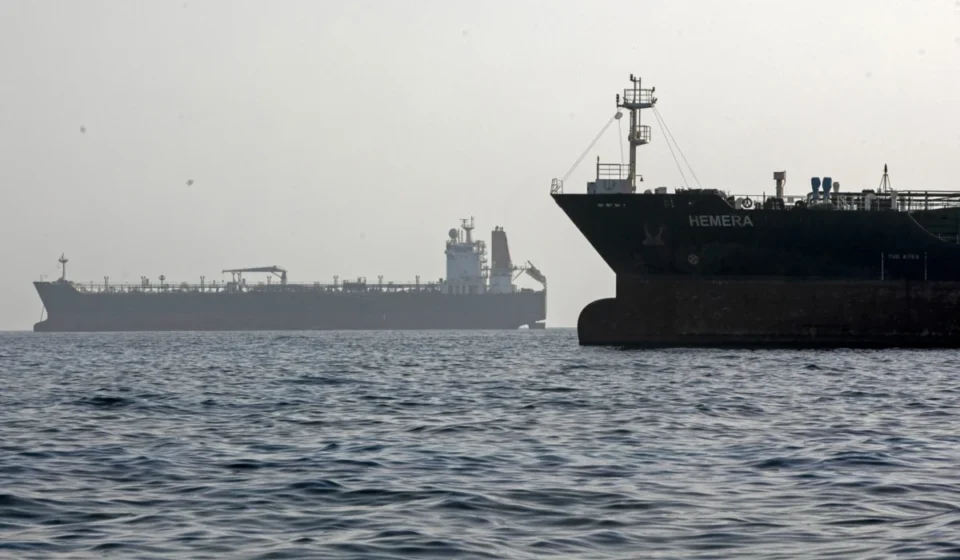
The Long Road to Recovery: Why the Reopening of the Strait of Hormuz Won’t Instantly Solve the Global Energy Crisis

LONDON – As diplomatic efforts intensify to stabilize the Persian Gulf and rumors of a durable ceasefire circulate through global capitals, the energy sector is issuing a sobering warning: the world’s oil supply will not return to normal overnight. Despite the potential reopening of the Strait of Hormuz—the world’s most critical maritime chokepoint—energy experts and analysts caution that a "lag effect" involving logistics, insurance, and the physical limitations of oil extraction will delay a full recovery for months, or even a year.
The Strait of Hormuz, a narrow waterway through which approximately 20% of the world’s total petroleum and liquefied natural gas (LNG) consumption passes, has been effectively paralyzed for over three months. While the cessation of hostilities is a necessary first step, the transition from a war-footing to a fully operational global supply chain is fraught with technical and psychological hurdles.
Main Facts: The Mechanics of a Stalled Supply Chain
The primary obstacle to an immediate surge in oil availability is the sheer physical backlog created by the conflict. For over ninety days, dozens of massive crude carriers (VLCCs) have remained anchored or stranded within the Persian Gulf, unable to run the gauntlet of the strait due to security risks.
The Logistics of "Emptying the Pipe"
According to Daniel Evans, Global Head of Fuels and Refining Research at S&P Global Energy, the recovery process is sequential rather than simultaneous. "First, ships that have been stranded will have to exit the strait, and then new tankers will have to come in to be loaded," Evans explained. This "one-way traffic" problem creates a bottleneck that could take weeks to clear before the regular rhythm of exports resumes.
Furthermore, the "window of safety" remains the most significant psychological barrier. Shipping companies are unlikely to risk multi-billion dollar assets and the lives of their crews until they are certain that a ceasefire is not merely a temporary pause. "To bring a ship in, you need to be confident that you’ve got a big enough window of safety to bring it in, load it, and move it out," Evans added.
The Physicality of Distance
Even once a tanker is safely loaded and exits the Persian Gulf, the journey has only just begun. Oil tankers are among the slowest moving vessels on the high seas, often traveling at speeds of 13 to 15 knots to conserve fuel. It can take several weeks for a tanker to reach major refining hubs in East Asia, Europe, or the United States. Once the crude arrives, it must be offloaded, processed through complex refining units into gasoline, diesel, or jet fuel, and then distributed to end-users. This entire cycle, from extraction to the pump, can span several months.
Chronology: Three Months of Paralysis
To understand the depth of the current crisis, one must look at the timeline of the disruption, which has evolved from a localized conflict into a global economic threat.
-
Month 1: The Initial Blockade and Market Shock
The closure of the Strait of Hormuz sent immediate shockwaves through the Brent and WTI crude markets. Initial optimism that the disruption would be short-lived faded as insurance companies began revoking "War Risk" coverage for vessels entering the Gulf. Major shipping lines, including Maersk and Hapag-Lloyd, diverted vessels, while those already inside were trapped. -
Month 2: Reaching Storage Capacity and "Shut-ins"
By the second month, storage facilities in the Middle East—specifically in Iraq, Kuwait, and parts of the UAE—reached their maximum capacity. With nowhere to put the oil they were extracting, producers were forced to implement "shut-ins." A shut-in occurs when a well is capped and production is halted entirely. Unlike a faucet, restarting an oil well is a delicate engineering feat that carries the risk of damaging the geological reservoir. -
Month 3: The Capital Freeze and Infrastructure Decay
As the conflict hit the 90-day mark, long-term investment in the region’s energy infrastructure ground to a halt. Maintenance schedules were missed, and capital intended for field expansion was diverted or frozen. This period marked the transition from a "temporary disruption" to a "structural crisis." -
The Present: The Fragile Ceasefire
Currently, the industry sits in a state of suspended animation. While there is talk of reopening the waterway, the damage to the supply chain is already "baked in" for the coming quarters.
Supporting Data: The Economic and Technical Toll
The scale of the disruption is best understood through the lens of the data provided by analytics firms like Wood Mackenzie and S&P Global.
The 20% Factor
Before the conflict, the Strait of Hormuz saw an average flow of 21 million barrels of oil per day (bpd). To put this in perspective, total global demand is roughly 100 million bpd. The loss of one-fifth of the world’s supply has forced non-OPEC producers, such as those in the U.S. Permian Basin and Guyana, to run at maximum capacity, yet they have been unable to bridge the massive deficit.
Divergent Recovery Timelines
Not all oil-producing nations will recover at the same rate. Alan Gelder, Senior Vice President of Refining, Chemicals, and Oil Markets at Wood Mackenzie, notes a stark divide between nations with diversified infrastructure and those without.
- Saudi Arabia and the UAE: These nations possess "East-West" pipelines that allow them to bypass the Strait of Hormuz to some extent, delivering oil to terminals on the Red Sea or the Gulf of Oman. These countries are expected to be the quickest to return to full export capacity.
- Iraq: In contrast, Iraq is facing a dire situation. Much of its production is concentrated in the south, with exports almost entirely dependent on the Persian Gulf terminals. "Iraq could be much more challenged because they’ve had a much bigger shut-in, their fields are more difficult… it may well take about a year before they get back," Gelder warned.
The Insurance Barrier
Insurance premiums for tankers are currently at historic highs. Even if the strait is declared "open," insurers often require a period of sustained peace—typically 30 to 60 days—before lowering premiums to pre-war levels. For many smaller independent refineries, the cost of insuring a cargo currently outweighs the profit margin of the refined product, further delaying the flow of oil.
Official Responses: Caution Over Optimism
Government officials and international energy bodies have been careful not to overpromise an immediate end to the energy crunch.
The Center on Global Energy Policy at Columbia University has emphasized that the definition of "open" is subjective. Daniel Sternoff, a Senior Fellow at the Center, points out that political declarations of peace do not always translate to operational reality. "We don’t know what ‘open’ means or what the speed of evacuation of trapped material is going to be," Sternoff said. He noted that countries that engaged in production shut-ins are unlikely to "un-cap" their wells until they are certain a ceasefire will last longer than a standard 30-day window.
OPEC+ officials have remained largely silent on specific restart dates, though internal sources suggest that the group is concerned about "market flooding" if too much oil is released simultaneously into a logistically constrained system. Their focus remains on "market stability," which in this context means a slow, controlled ramp-up rather than a sudden surge.
Implications: A New Reality for Global Energy Security
The long-term implications of this three-month closure extend far beyond the price of gasoline at the pump.
The Capital Investment Gap
Perhaps the most lasting damage is the halt in capital investment. The energy industry relies on multi-year investment cycles. When the strait closed, projects worth billions were mothballed. "It will take time for this capital to restart," Gelder noted. This gap in investment could lead to a "supply cliff" two to three years down the line, as the projects that should have been started today fail to come online in the future.
Psychological Shifts in Energy Policy
This crisis has exposed the extreme vulnerability of the global economy to a single geographic chokepoint. In response, many Western and Asian nations are expected to accelerate two divergent strategies:
- Strategic Autonomy: Increasing domestic production and expanding Strategic Petroleum Reserves (SPR) to provide a larger cushion against future disruptions.
- Energy Transition: Using the volatility of fossil fuels as a catalyst to speed up the transition to renewables and nuclear energy, which are not subject to maritime blockades.
The "Durable Peace" Requirement
Finally, the crisis has highlighted the difference between a "truce" and "stability." The energy market is now demanding a higher standard of security before committing resources. As Daniel Sternoff observed, producers need to know that a ceasefire is "stable and durable." If the market perceives the reopening as a temporary window, the "risk premium" will remain embedded in oil prices, keeping energy costs high even as the ships begin to move.
In conclusion, while the potential reopening of the Strait of Hormuz is a positive development for a weary global economy, the road to "normalcy" is long. Between the physical backlog of ships, the technical challenges of restarting shut-in wells, and the lingering shadow of geopolitical instability, the world must prepare for an energy market that remains tight well into next year. The "light at the end of the tunnel" may be visible, but the tunnel itself is much longer than many realize.