Introduction: A Fragile Lifeline Severed
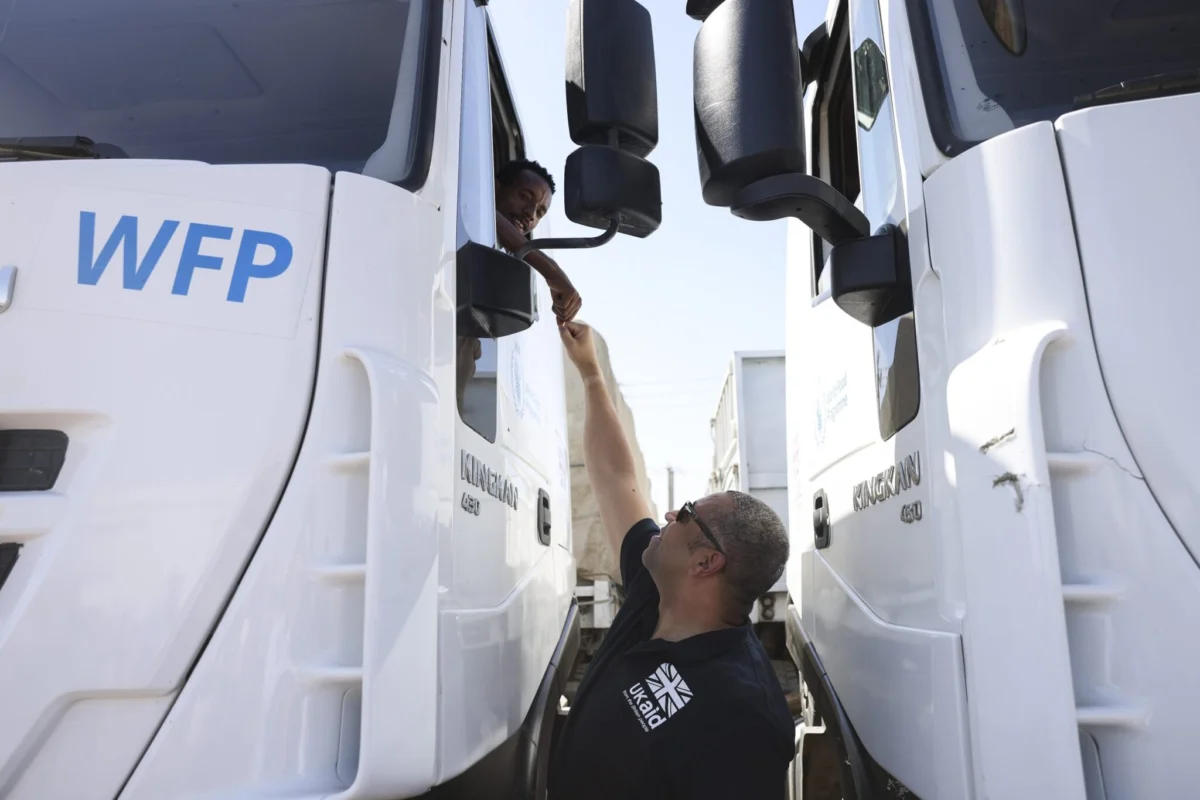
The United Nations World Food Programme (WFP) has issued a stern condemnation following a lethal airstrike on a convoy of humanitarian vehicles in Sudan’s South Kordofan state. The attack, which occurred in the early hours of Saturday, resulted in the death of one driver and underscored the harrowing dangers faced by aid organizations operating within the war-torn nation. The two trucks, clearly marked with humanitarian insignia, were carrying vital food supplies destined for civilians trapped in the crossfire of a conflict that has persisted since 2023.
This incident is not an isolated occurrence but rather a grim indicator of the systematic erosion of humanitarian space in Sudan. As the conflict between the Sudanese Armed Forces (SAF) and the Rapid Support Forces (RSF) intensifies, the protection of aid workers and the sanctity of life-saving corridors have become increasingly precarious, pushing millions toward the brink of total catastrophe.
Main Facts: The Anatomy of the Attack
The WFP reported that the convoy was targeted while transiting through South Kordofan, a region already suffering from acute food insecurity and limited humanitarian access. While the organization is currently conducting an assessment of the damage to the cargo, the human toll is already confirmed: a civilian driver, a frontline hero in the fight against starvation, has lost his life in the line of duty.
The vehicles were clearly identified as humanitarian assets. Under international humanitarian law (IHL), these markings serve as a protective shield, signaling that the occupants are non-combatants engaged in the delivery of life-saving assistance. The failure of the warring parties to respect this protection constitutes a flagrant violation of global norms. The WFP has demanded a thorough investigation, insisting that those responsible for the strike be held accountable to deter future attacks on the aid infrastructure that keeps millions of Sudanese civilians alive.
Chronology of Escalation: From Civil Strife to Humanitarian Collapse
To understand the gravity of the recent strike, one must examine the timeline of Sudan’s descent into chaos:
- April 2023: The power struggle between the SAF, led by General Abdel Fattah al-Burhan, and the RSF, commanded by Mohamed Hamdan "Hemedti" Dagalo, erupts into open warfare in Khartoum, rapidly spreading across the country.
- May 2026: UN experts issue an urgent condemnation of systematic attacks on Sudan’s healthcare infrastructure, noting that hospitals have been looted, occupied, or destroyed, leaving the population without emergency medical support.
- July 2026: UNICEF reports a devastating milestone: over 300 children have been killed or injured in the preceding months, a direct result of the indiscriminate shelling and urban combat.
- August 2026: The UN calls for an immediate halt to the hostilities, citing a massive surge in displacement as millions flee their homes in search of safety.
- Early September 2026: The WFP reports a similar incident in Dilling, where an aerial strike destroyed two food trucks. The repetition of these attacks suggests a pattern of disregard for humanitarian corridors.
- September 4, 2026: A UN fact-finding mission releases a damning report detailing how foreign support networks are fueling the conflict, effectively subsidizing the "war economy" that keeps the SAF and RSF supplied with arms and financing.
Supporting Data: A Nation at the Breaking Point
The crisis in Sudan is now widely considered one of the worst health and humanitarian emergencies in the 21st century. After over 1,000 days of relentless war, the statistics paint a bleak picture of the country’s social and physical infrastructure:
The Humanitarian Deficit
- Food Insecurity: Millions of Sudanese are dependent on international aid to survive. The destruction of food convoys does not merely delay delivery; it triggers localized famines in areas where supply chains are already severed.
- Displacement: Millions have been internally displaced, with thousands more crossing into neighboring nations, creating a regional migration crisis that threatens to destabilize East Africa.
- Educational Collapse: With schools functioning as shelters or being repurposed for military use, an entire generation of Sudanese children is being deprived of formal education. In response, the UN global education fund has earmarked $22 million to initiate "back to school" programs, though these are hampered by the persistent security threat.
The War Economy
A significant driver of the current violence is the financial sustainability of the warring parties. The UN has highlighted that the conflict is no longer just a domestic political struggle but a battle for control over natural resources and trade routes. External support—ranging from direct military hardware to indirect economic lifelines—has ensured that neither side is forced to the negotiating table, as both parties remain incentivized to continue the status quo.
Official Responses and Diplomatic Stance
The UN’s response to the South Kordofan strike has been characterized by a blend of diplomatic caution and urgent moral indignation. By calling for an investigation, the WFP is attempting to document these incidents as potential war crimes.
International bodies and humanitarian observers have echoed these concerns, emphasizing that:
- Compliance with IHL: The warring parties are bound by the Geneva Conventions to ensure the safe passage of humanitarian goods. Attacks on aid workers are not "collateral damage"—they are violations of the core principles that govern modern warfare.
- Accountability: There is a growing call for the international community to move beyond condemnation and toward targeted sanctions against commanders who authorize or fail to prevent strikes on aid convoys.
- Humanitarian Neutrality: The WFP continues to assert its commitment to the Sudanese people, maintaining that humanitarian aid is a neutral act. They have urged both the SAF and the RSF to provide security guarantees, though such guarantees have proven increasingly worthless in recent months.
Implications: The Future of Humanitarian Access
The implications of the latest strike are profound and potentially catastrophic for the aid sector in Sudan.
The Deterrence Effect
When aid workers are targeted, organizations are forced to suspend operations. The psychological and physical risk to personnel becomes untenable. If the WFP and its partners feel they can no longer guarantee the safety of their staff, the result will be a total withdrawal of aid from the most affected regions, effectively sentencing millions to death by starvation or disease.
The Normalization of Violence
There is a dangerous trend of "normalizing" attacks on civilian infrastructure. When hospitals, schools, and aid trucks are treated as legitimate targets—or as acceptable losses—the entire framework of international law begins to crumble. The international community’s inability to curb the violence suggests that the "red lines" once observed in conflict zones are no longer functioning as a deterrent.
A Call to Action
The UN’s recent disclosures regarding the "war economy" suggest that the solution to the humanitarian crisis lies as much in diplomacy and financial oversight as it does in humanitarian aid. Until the external flow of weapons and capital is severed, the SAF and RSF have little motivation to prioritize the welfare of the Sudanese people over their own territorial ambitions.
The tragedy in South Kordofan serves as a stark reminder that in Sudan, a food truck is not just a delivery vehicle; it is a symbol of the world’s remaining effort to uphold human dignity. If that symbol is shattered, the remaining hope for a peaceful resolution to the conflict may be shattered alongside it. The international community now faces a pivotal moment: to demand true accountability for the fallen driver and his colleagues, or to watch as the humanitarian crisis in Sudan spirals into an irreversible state of total collapse.