For decades, the evolutionary trajectory of the world’s only true flying mammals has been shrouded in a fog of scientific uncertainty. Where did bats originate? How did they master the night sky through echolocation? Why do they possess such unparalleled resilience to disease and extreme longevity compared to their mammalian peers? For years, the answers remained elusive, scattered across conflicting fossil records and fragmented genetic data.
However, a landmark study published in the journal Nature has finally cleared the air. Through a massive, multi-year collaboration, an international team of 137 researchers from 64 countries has reconstructed the evolutionary history of bats, identifying Europe as the cradle of their existence during the late Paleocene epoch, approximately 65 to 60 million years ago. This monumental achievement, spearheaded by the Bat1K consortium, provides a definitive roadmap for understanding the biological marvels that define one of the most successful groups of mammals on Earth.
The Great Geographic Debate: Resolving the Ancestral Home
For generations, evolutionary biologists have debated the birthplace of the Chiroptera order. Various hypotheses pinned the origin of bats to Africa, Asia, or North America, based on disjointed fossil discoveries and incomplete genetic sampling. The lack of a robust, unified phylogenetic tree meant that scientists were essentially trying to assemble a complex biological puzzle with missing pieces.
The Bat1K consortium, co-founded by Professor Emma Teeling of University College Dublin (UCD), sought to end this speculation by integrating state-of-the-art genomic sequencing with the fossil record. By analyzing 103 bat genomes—including 42 newly generated, high-quality chromosome-level assemblies—the team covered every one of the 21 recognized bat families. When this genomic data was synthesized with evidence from 44 ancient fossils, a clear pattern emerged: the common ancestor of all living bats most likely evolved in the forests of Europe shortly after the mass extinction event that wiped out the non-avian dinosaurs.
"It is extraordinary, after decades of research and conflicting findings, we finally have a robust phylogenetic tree that we can now use to properly understand how and where bats’ unique traits evolved," noted Professor Teeling.
Chronology of Diversification: From Europe to the World
The study offers a compelling timeline of how bats transitioned from their European origins to becoming a global phenomenon. Once the lineage was established in the late Paleocene, these early pioneers began to expand their range.
The Early Migrations
The initial evolutionary radiation saw descendants of the ancestral European bats move into Africa. This migration served as a springboard for further global expansion. As the bats continued to diversify and adapt to new ecological niches, separate lineages branched out, eventually colonizing the Americas, Asia, and Australia.
The Refinement of the Tree
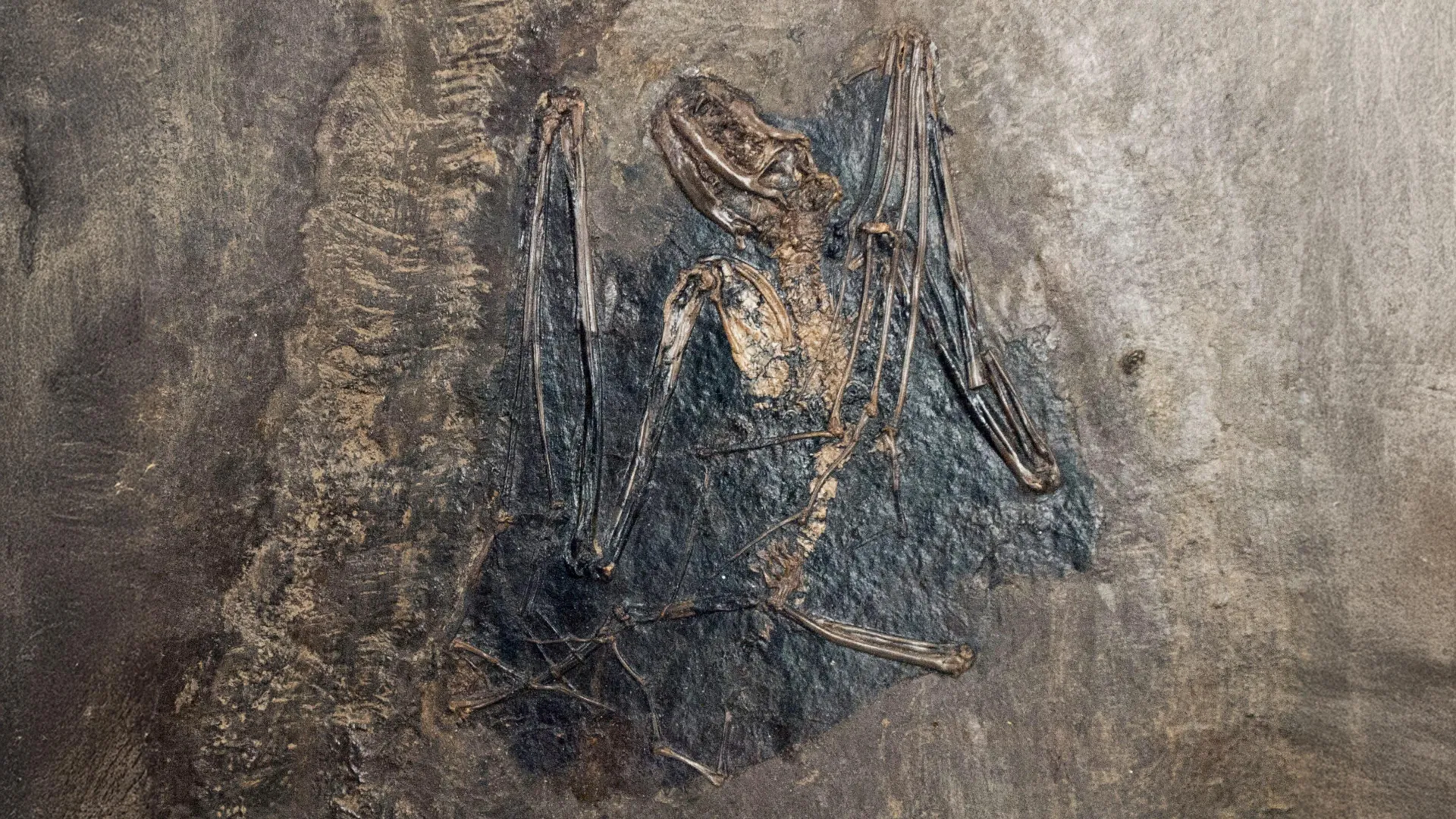
The research team employed advanced computational modeling to reconcile the differences between fossilized remains and modern genetic data. By using the fossil Vielasia—which occupies a position on the oldest branch of the bat family tree—the researchers were able to confirm that the defining characteristics of bats, specifically powered flight and laryngeal echolocation, appeared very early in their evolutionary history. This suggests that these traits were not late-stage adaptations but were instead "pre-adapted" features that fueled the rapid success and diversification of the group.
Unlocking the Secrets of Flight and Echolocation
Bats occupy a unique ecological space. They represent nearly one-fifth of all living mammalian species and are the only mammals capable of sustained, powered flight.
The "Flight First" Hypothesis
The findings suggest that Europe was not only the cradle of bat evolution but also the likely birthplace of mammalian powered flight. The genetic data indicates that the molecular machinery required for the physiological demands of flight was locked into the bat genome before the group fully diversified into the myriad forms seen today.
The Role of Echolocation
The integration of the Vielasia fossil into the genomic tree provided a critical breakthrough. Because this fossil is among the oldest known specimens, its placement indicates that echolocation was a foundational trait. This means that the ability to navigate through darkness using sound-based mapping emerged almost simultaneously with the development of wings, providing early bats with an unmatched advantage in nocturnal hunting.
Genomic Architecture: The X Chromosome Breakthrough
One of the most significant technical hurdles in this study was the "conflict" within the bat genome. Previous attempts to map the evolution of bats were often derailed by the fact that different sections of their DNA told different stories about their relationships. This is a common phenomenon in evolutionary biology, often caused by ancient lineages interbreeding or exchanging genetic material in the distant past.
The Bat1K team discovered that the X chromosome held the key to untangling this history. By isolating specific, highly conserved regions of the X chromosome, researchers were able to filter out the "noise" of historical gene flow. This allowed them to resolve long-standing disputes regarding the phylogenetic relationships between different bat families. It provided the clarity needed to finalize the family tree, revealing unexpected evolutionary connections between groups that were previously thought to be unrelated.
Official Responses and Scientific Significance
The scale of the Bat1K project is unprecedented. Professor Liliana M. Dávalos of Stony Brook University, a senior author on the paper, emphasized the unique nature of their approach. "The approach we used to model the evolution of fossil and living species together can do what other methods cannot—identify the oldest group of fossil bats while taking the genomic data into account, and uncover when and where bats originated."
Professor Michael Hiller, from the Senckenberg Research Institute, highlighted the technical rigor involved: "We combined state-of-the-art DNA sequencing and computational methods to generate and compare these genomes and identify the genes they contain."
For the co-founding directors of Bat1K, the result is the fulfillment of a long-term vision. Professor Sonja Vernes of the University of St Andrews remarked, "Bats constantly surprise us. They are one of evolution’s greatest experiments. This extraordinary genomic resource, the culmination of years of international cooperation, is finally allowing us to understand how their remarkable biology evolved."
Implications: Longevity, Immunity, and Human Health
Beyond the historical significance of where and when bats evolved, the creation of a reconstructed "ancestral bat genome" provides a vital tool for biomedical research. Bats are famously resilient, exhibiting an extraordinary ability to host pathogens—including viruses that are lethal to humans—without falling ill themselves. They also display incredible longevity for their size, with some species living decades longer than other mammals of comparable dimensions.
The new genomic dataset allows scientists to investigate the specific genetic changes associated with these traits. By comparing the ancestral genome to the modern genomes of 103 species, researchers can pinpoint the exact mutations that led to:
- Enhanced Immune Responses: Understanding how bats manage viral loads could provide breakthroughs in human immunology.
- Delayed Aging: The mechanisms behind the "longevity genes" in bats offer potential insights into human age-related diseases.
- Disease Resistance: As the world faces increasing threats from zoonotic diseases, the study of bat immune systems has never been more urgent.
Professor David Ray of Texas Tech University highlighted the future utility of this work: "This resource for the community of scientists allows them to investigate the different types of genomic variation, from single base changes to hundreds or thousands of bases missing from one lineage but present in another, that have given rise to the huge variety of bats that we share the planet with."
A Legacy of Global Cooperation
The success of this study is a testament to the power of international collaboration. Samples were gathered over decades from remote regions ranging from the jungles of Madagascar to the forests of New Zealand. Field researchers, curators of natural history museums, and computational biologists worked in concert to bring these samples together.
"None of this would have been possible without the dedication and collaboration of these researchers," Professor Teeling concluded. By bridging the gap between paleontology and genomics, the Bat1K consortium has not only solved a major mystery of natural history but has also built a foundation for future scientific discovery that will likely influence fields as diverse as ecology, medicine, and evolutionary biology for years to come.
As we look to the future, the "winged experiment" of evolution continues to provide profound lessons. Through this massive, unified effort, we now have a much clearer understanding of our own place in the mammalian story, and a renewed appreciation for the extraordinary flying mammals that share our world.