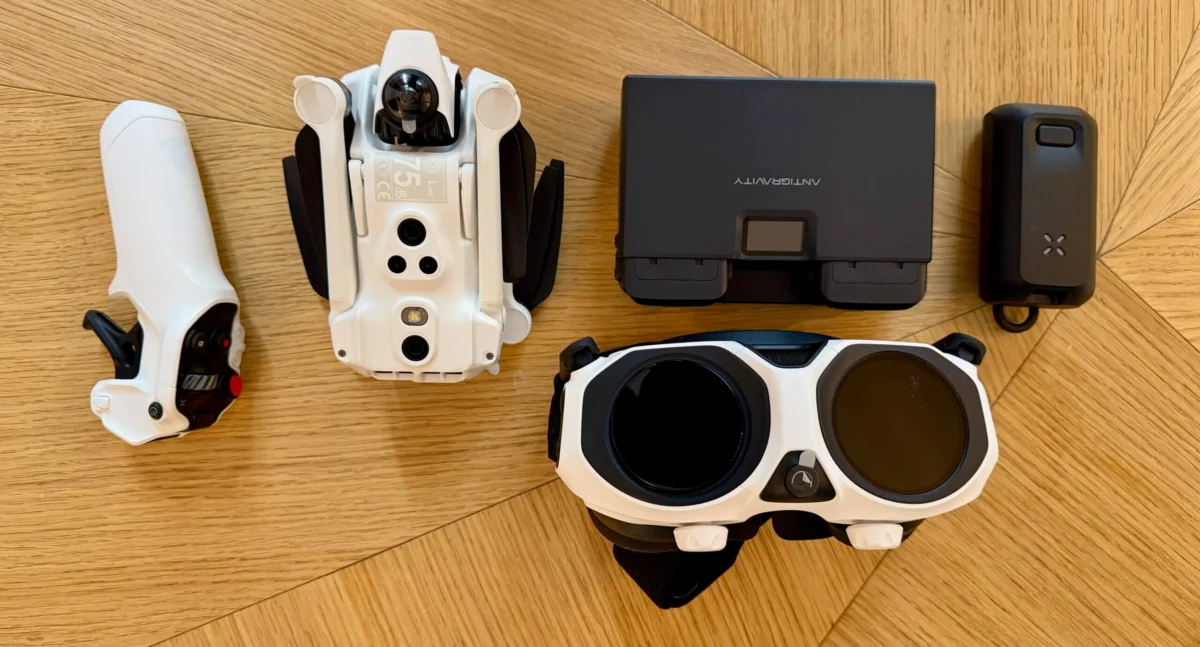
The drone industry has long been defined by a singular pursuit: the perfect, stabilized shot. For years, this meant massive, complex gimbal systems and a pilot’s constant battle against wind, vibration, and the narrow field of view provided by front-facing sensors. However, a seismic shift has arrived. Released in late 2025, the Antigravity A1 has effectively rendered the traditional gimbal-mounted camera obsolete for a vast segment of creators. By leveraging a dual-lens 360-degree capture system, the A1 moves the creative process from the cockpit to the editing suite, offering a "fly now, frame later" experience that feels more like directing a virtual film crew than piloting an aircraft.
The Core Innovation: Capturing the Sphere
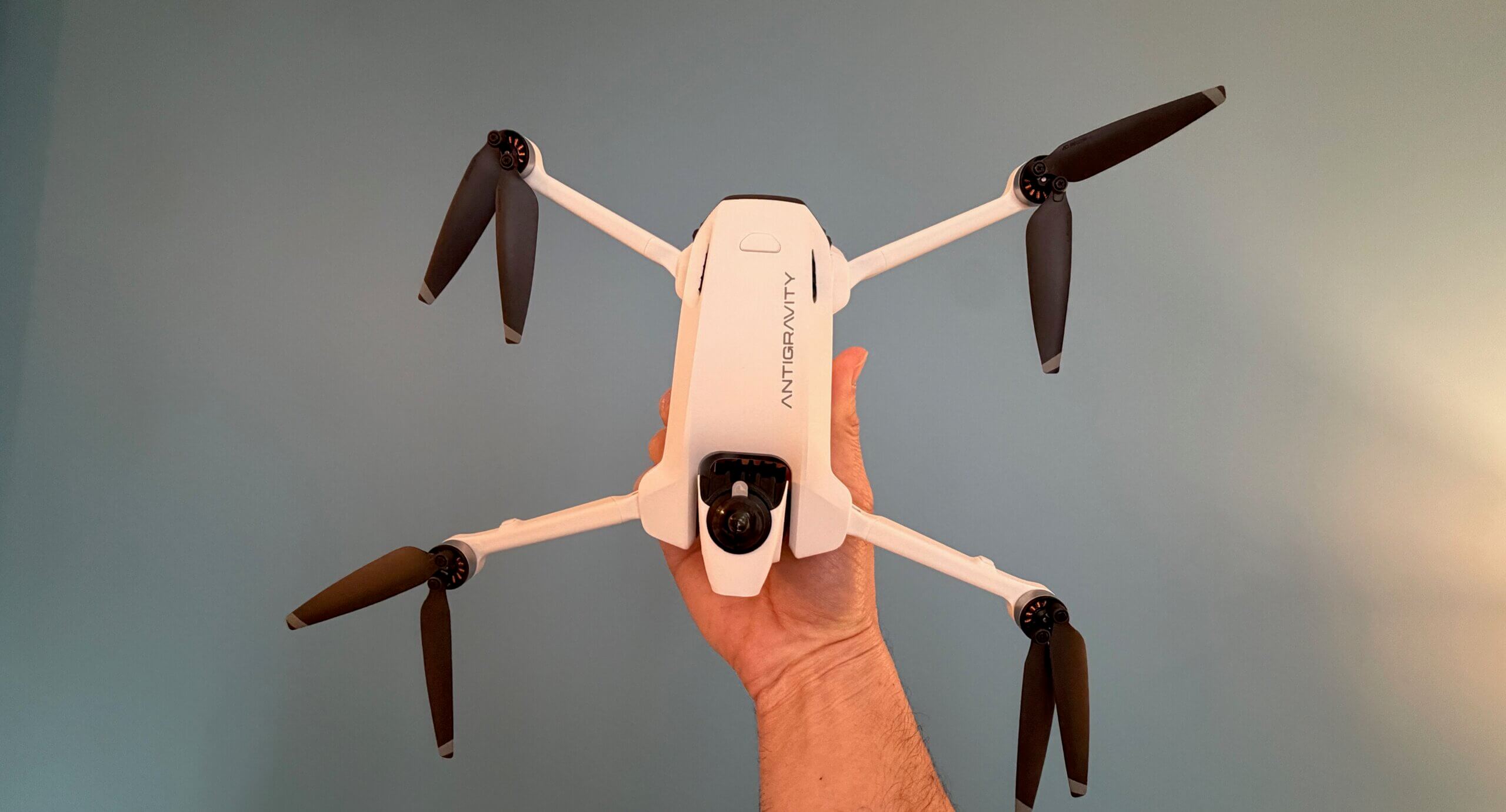
The technical marvel of the Antigravity A1 lies in its dual-lens architecture. Unlike standard drones that utilize a single forward-facing lens, the A1 features two ultra-wide-angle lenses—positioned on the top and bottom of the central fuselage—each boasting a 200-degree field of view.
When combined, these images overlap to create a seamless, 360-degree sphere of data. Because the drone’s software digitally removes the physical chassis from the final exported footage, the result is a disorienting, magical effect: a camera that appears to be floating unsupported in mid-air, capturing every angle of a subject simultaneously.
Technical Specifications and Sensor Performance
At the heart of the A1’s imaging system are two 1/1.28-inch CMOS sensors. While purists might point to the 1-inch sensors found in top-tier "Pro" photography drones, the A1’s sensors are significantly larger than those found in traditional 360-degree action cameras. This allows for superior low-light performance and an expanded dynamic range, ensuring that detail in high-contrast environments—such as a midday desert sun or a dimly lit forest—is preserved rather than crushed into shadows or blown out in highlights.
A Chronology of Development and Design
The trajectory of the A1’s development reflects a broader industry trend toward accessibility and regulatory compliance.
- Mid-2024: Industry leaks suggested that Antigravity was prototyping a "spherical" flight platform intended to eliminate the mechanical failure points associated with traditional three-axis gimbals.
- Late 2025: The official launch of the A1. Antigravity made a strategic decision to ensure the drone weighed exactly 249 grams with its standard battery.
- The Regulatory Pivot: This weight threshold is critical. In most jurisdictions, drones weighing 250 grams or more are subject to rigorous registration and restrictive flight regulations. By keeping the A1 under this threshold, the manufacturer has effectively opened the door for recreational travelers to operate a high-performance, professional-grade camera without the bureaucratic burden of commercial licensing.
The build quality matches the ambition of the design. The drone is constructed from a high-grade, carbon-fiber-reinforced polymer, providing a superior strength-to-weight ratio compared to the ABS plastics used in budget models. The folding mechanism is engineered for tactile, long-term durability, allowing the drone to compress to the size of a large smartphone, making it an essential companion for long-haul travel.
The Flight Experience: Immersive Control
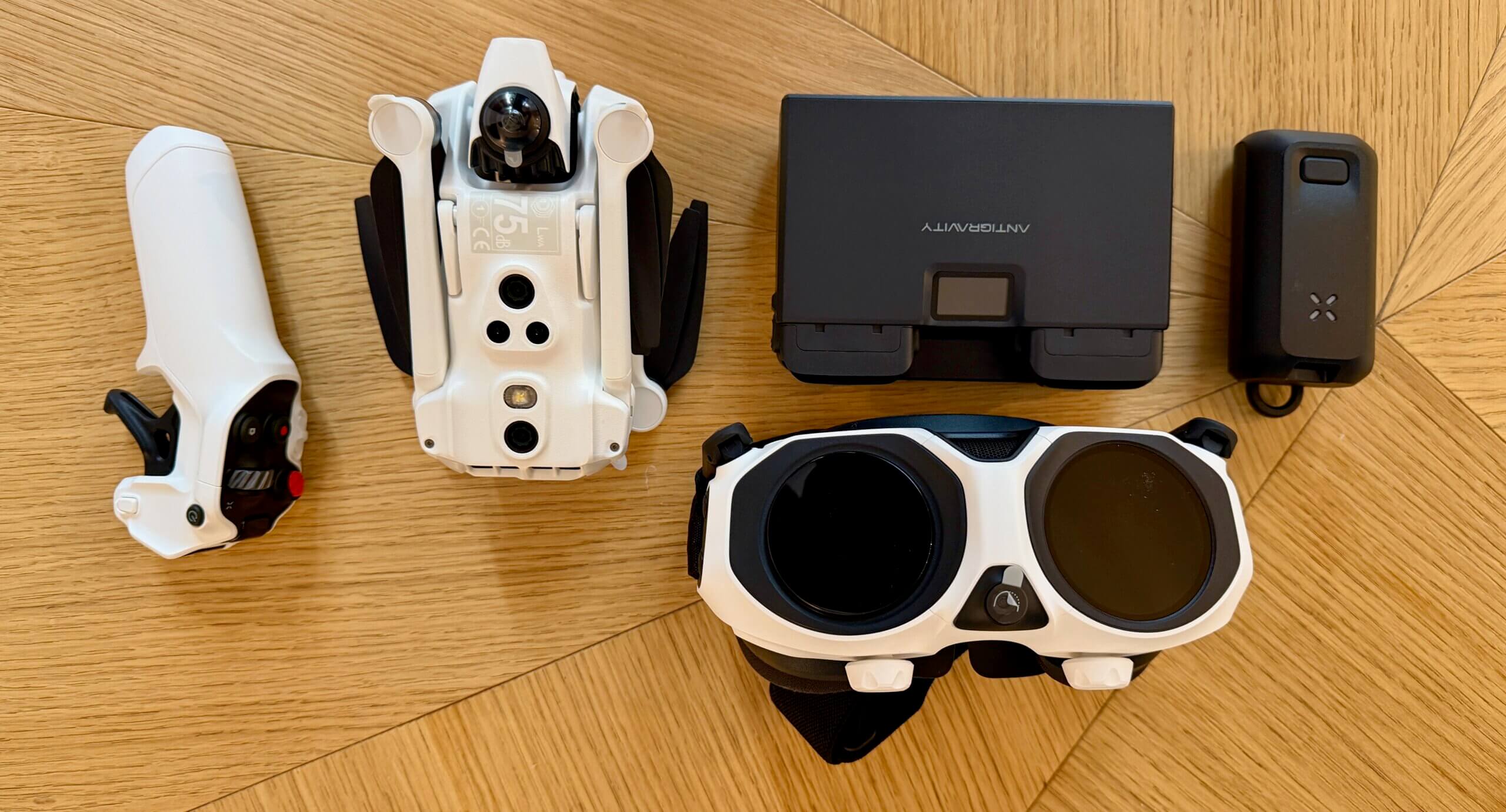
Antigravity has revolutionized the pilot interface through two distinct methods.
The Vision Goggles
For the most immersive experience, the Vision Goggles offer dual 4K micro-OLED displays with a 120Hz refresh rate. The integration of head tracking is the defining feature here; because the A1 records in 360 degrees, the pilot is not constrained by where the drone is pointing. If the pilot turns their head, the goggle feed pans accordingly, offering a level of spatial awareness that was previously impossible in traditional FPV (First Person View) flight.
Motion Control vs. Manual Precision
The A1 introduces a single-handed motion controller that mimics natural movement. By pointing the controller and pulling the trigger, the drone accelerates; tilting the wrist initiates banking. This intuitive design allows novices to navigate complex environments within minutes. For the purists, the system remains compatible with traditional "Mode 2" stick controllers, though the fluidity of the motion-tracking system is such that most users find little reason to revert to legacy controls.
Data and Performance Metrics
The marketing of the A1 emphasizes "8K Resolution," a term that requires context. In traditional cinematography, 8K implies a dense 16:9 frame. In the context of the A1, the 8K resolution refers to the total pixel count of the spherical capture. When a creator "reframes" this footage into a standard 16:9 video, they are essentially cropping a portion of that sphere.
The stabilization technology, branded as "FlowState," is perhaps the most impressive aspect of the A1’s performance. During field testing in 20mph winds, the drone’s footage remained as steady as if it were mounted on a professional-grade tripod. The color science has also seen a significant upgrade, offering a "Vivid" profile for instant social media consumption and a 10-bit "Log" profile for professional color-grading workflows.
Battery and Flight Dynamics
Battery life remains the perennial bottleneck for sub-250g drones. The standard battery yields approximately 20 minutes of real-world flight. While this may seem brief, the "work per minute" of the A1 is significantly higher than that of a traditional drone. Because a single pass captures every angle, the pilot does not need to re-fly a path to get a profile shot or a reverse angle.
For those requiring extended flight, an optional "Pro Battery" extends time to 39 minutes, though this pushes the drone over the 250g threshold. The A1 is categorized as a "cinewhoop"—stable and predictable, with a top speed of 36 mph. It is not designed for the high-speed chases of racing drones, but it excels in narrative, follow-me, and cinematic tracking applications.
Official Responses and Industry Implications
The reception among professional creators has been largely positive, with many noting that the "Turtle Mode"—which allows the drone to flip itself upright after a crash—is a game-changer for solo operators.
However, industry experts note that the 360-degree lenses remain the "Achilles’ heel" of the unit. Because the lenses protrude to capture the full sphere, they are susceptible to scratching and impact damage. Antigravity has addressed this with a series of replaceable lens guards, but users are advised to treat the optics with significantly more care than a standard, protected-gimbal camera.
Conclusion: A Shift in Creative Philosophy
The Antigravity A1 is not just a hardware update; it is a fundamental shift in how we conceive of aerial photography. By removing the stress of manual framing, the A1 allows the operator to focus entirely on the subject and the story.
It bridges the gap between traditional, rigid cinematography and the immersive, boundless nature of VR. While the image quality may not yet satisfy the demands of feature-length cinema, for the modern travel creator, vlogger, and independent filmmaker, the A1 offers a level of creative liberation that is currently unmatched. It is a tool that turns the sky into a canvas where the framing is decided not by the limits of the flight path, but by the imagination of the director. For those looking to evolve their visual language, the Antigravity A1 is no longer a luxury; it is an essential addition to the modern digital toolkit.