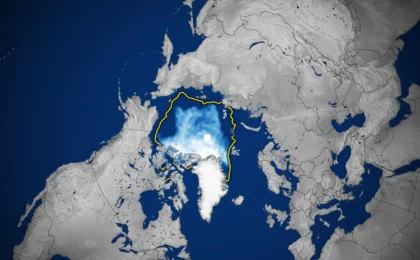
For over two decades, the scientific community has been captivated by a peculiar seismic phenomenon: the glacial earthquake. Unlike the tectonic shudders caused by shifting fault lines or volcanic eruptions, these events are born of ice and ocean. When massive, towering icebergs break away from glaciers and capsize into the sea, they deliver a violent kinetic blow to the “mother” glacier. This collision generates powerful mechanical vibrations that ripple through the Earth’s crust, traveling thousands of kilometers.
While these events were first documented in the Northern Hemisphere—specifically along the massive ice caps of Greenland—they have long remained elusive in Antarctica. However, a groundbreaking study published in Geophysical Research Letters has finally pierced this veil of silence. By deploying localized seismic monitoring, researchers have identified hundreds of previously undetected glacial earthquakes in the Antarctic, centered primarily around the most precarious ice formation on the planet: the Thwaites Glacier.
The Anatomy of a Glacial Earthquake
To understand why these quakes went unnoticed for so long, one must look at the unique signature they leave behind. Traditional seismic monitoring networks are calibrated to detect high-frequency waves—the sharp, rapid tremors characteristic of tectonic earthquakes, volcanic activity, or nuclear testing.
Glacial earthquakes, by contrast, are fundamentally different. Because they are produced by the slow, massive movement of ice, they lack these high-frequency components. Their seismic signature is long-period and muffled, often appearing as "background noise" to conventional equipment designed to map the Earth’s deeper structural shifts. Consequently, while the world’s seismologists have spent decades cataloging tectonic movements, the icy groans of the poles remained largely off the radar.
When a tall, thin iceberg calves from a glacier, its center of gravity often forces it to tip. As it rolls, it strikes the remaining ice shelf with enough force to generate seismic waves detectable by high-quality, sensitive instrumentation. In Greenland, these events are significant enough that they can reach magnitudes comparable to historical nuclear tests, making them visible to global, wide-area seismic networks. In Antarctica, however, the scale and nature of the ice behavior have necessitated a more intimate approach to observation.
A Chronology of Discovery: From Greenland to the South Pole
The timeline of our understanding of glacial seismic activity is a testament to technological evolution in polar science.
- 2003: The first formal recognition of glacial earthquakes occurs in the scientific literature, marking a new frontier in glaciology and seismology.
- 2000s–2010s: Researchers establish that Greenland’s glacial earthquakes are seasonal, with activity peaking in late summer as melting accelerates. Studies correlate this rise in frequency with the rapid warming of polar regions.
- 2010–2023: A new data-collection window opens as researchers shift focus to the Antarctic. Previous attempts to use global seismic arrays to detect Antarctic quakes largely failed, as the tremors there are generally lower in magnitude than those in the North.
- 2025: The publication of new findings confirms the detection of over 360 seismic events in Antarctica. This data set, covering a 13-year period, provides the first comprehensive look at how Antarctic glaciers are “speaking” to the solid earth beneath them.
Supporting Data: The Thwaites and Pine Island Clusters
The recent study did not rely on the global network, which had proven insufficient for capturing smaller Antarctic events. Instead, the researchers utilized seismic stations situated directly on the Antarctic continent. This proximity allowed for the detection of 362 distinct seismic events that were previously absent from all international earthquake catalogs.
The data reveals a stark geographical concentration. The events were clustered in two primary regions: the Thwaites Glacier and the Pine Island Glacier. These two formations are the most significant contributors to Antarctic sea-level rise, acting as massive conduits for ice flowing from the interior to the Southern Ocean.
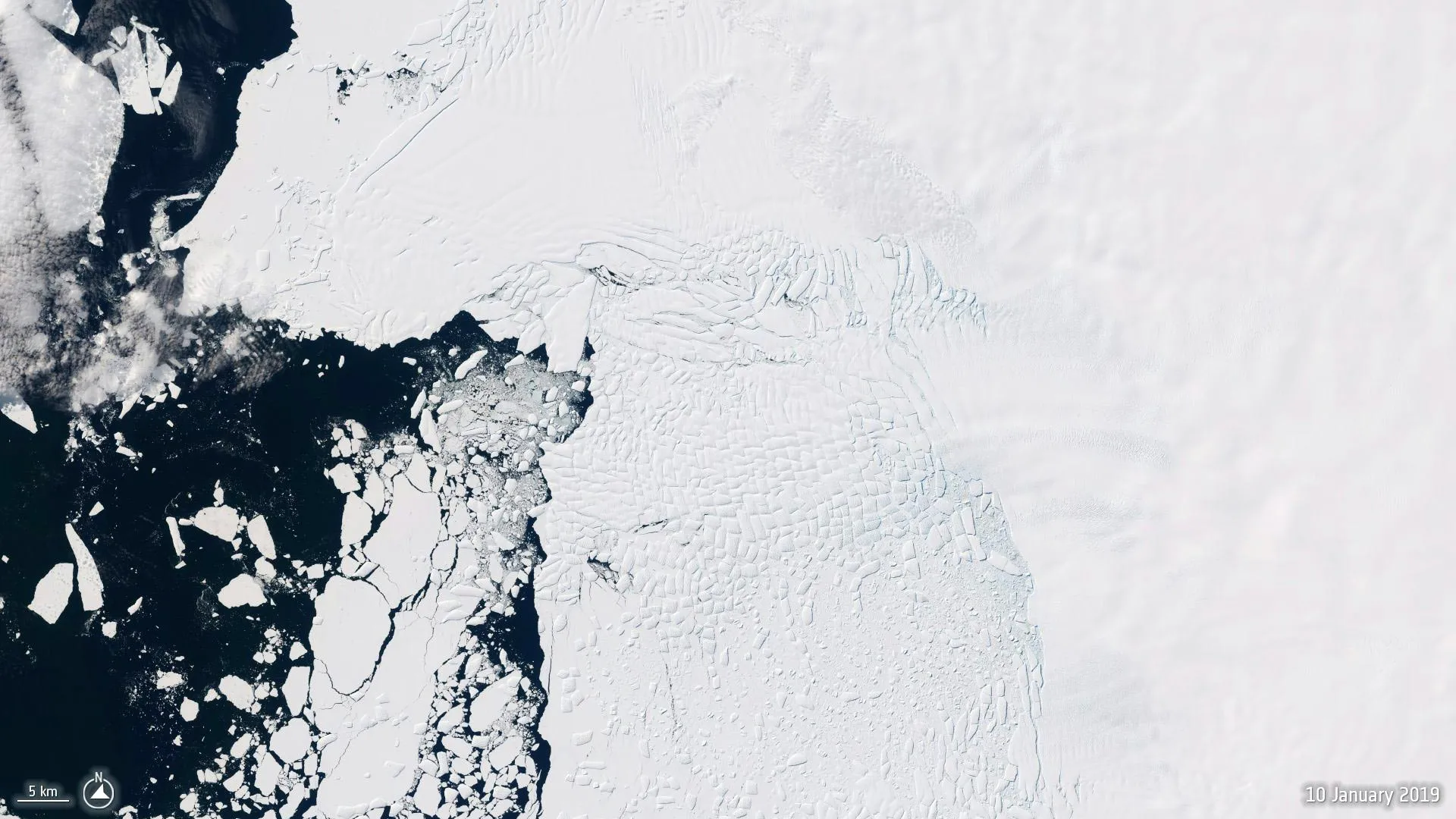
At the Thwaites Glacier, researchers identified 245 of the 362 events. Crucially, the timing of these tremors does not mirror the seasonal, temperature-driven cycles seen in Greenland. Instead, the most intense period of seismic activity at Thwaites occurred between 2018 and 2020. Satellite imagery from the same period independently confirmed that this was a time of accelerated flow for the glacier’s ice tongue. This suggests that the seismic activity is intrinsically linked to the physical stress and rapid movement of the ice, rather than just the surface melting of the summer months.
The second cluster, near the Pine Island Glacier, presented a mystery. Unlike the Thwaites events, these tremors occurred 60 to 80 kilometers away from the waterfront. Because they were not adjacent to the calving front, they could not have been caused by capsizing icebergs. This has opened a new line of inquiry for geophysicists, who are now scrambling to determine the source of these deep-interior tremors.
Implications: The "Doomsday" Perspective
The Thwaites Glacier is colloquially known as the "Doomsday Glacier," a moniker earned by its sheer size and potential for catastrophic instability. Its collapse would result in an estimated global sea-level rise of three meters, a scenario that would redraw coastlines worldwide and displace millions of people.
The discovery of frequent seismic activity at the terminus of Thwaites is a vital indicator of its current state of health. It reveals a dynamic, rapidly changing environment where the interaction between the ocean, the ice, and the solid ground is far more intense than previously estimated. The fact that the glacier’s stability appears linked to short-term fluctuations in ocean conditions—which are currently poorly understood—is a cause for concern.
If ocean states can trigger periods of accelerated flow and increased seismic instability, it suggests that the glacier is sensitive to oceanic changes that are not captured in traditional climate models. The seismic data provides a “pulse” for the glacier, allowing scientists to monitor its internal stresses in real-time. By observing how often and how violently the glacier vibrates, researchers can better project the likelihood of a total, rapid collapse.
Official Scientific Responses and Future Research
The global scientific community has met these findings with a mix of urgency and analytical caution. Leading glaciologists emphasize that while these earthquakes are a symptom of instability, they are also a tool for resolution. The current uncertainty regarding future sea-level rise over the next two centuries is largely driven by our lack of understanding of marine-terminating glaciers like Thwaites.
"We are dealing with a complex feedback loop," notes one expert familiar with the study. "The ice affects the ocean, the ocean affects the ice, and the earth underneath is recording every interaction through these seismic waves."
The next phase of research will focus on two key objectives:
- Decoding the Pine Island Mystery: Investigating the 60–80 kilometer inland tremors to determine if they represent a new, deeper form of glacial instability or a unique tectonic interaction.
- Integrating Seismic Data into Climate Models: Scientists aim to incorporate these hundreds of new events into existing predictive models to narrow the range of uncertainty regarding global sea-level rise.
The silence of Antarctica has been broken. The tremors recorded at the Thwaites Glacier are more than just geological curiosities; they are a warning. They demonstrate that the massive ice sheets of the south are undergoing a period of unprecedented transformation. As researchers continue to analyze these hidden quakes, they are not just looking at the past thirteen years of data—they are attempting to write the script for the next two centuries of our planet’s coastal future. The “Doomsday” label may be dramatic, but the data arriving from the Antarctic ice shelf is proving that the glacier is indeed in a state of precarious, seismic flux.