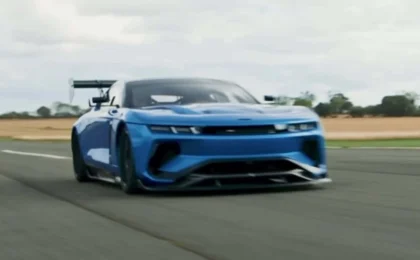
In the rarefied world of ultra-high-end automotive engineering, there exists a tier of manufacturing that transcends commercial production. It is a space occupied by bespoke commissions, where the limitations of road legality are discarded in favor of pure, unadulterated performance. Aston Martin, a brand currently undergoing a massive rejuvenation, appears to be the latest manufacturer to dive headfirst into this abyss.
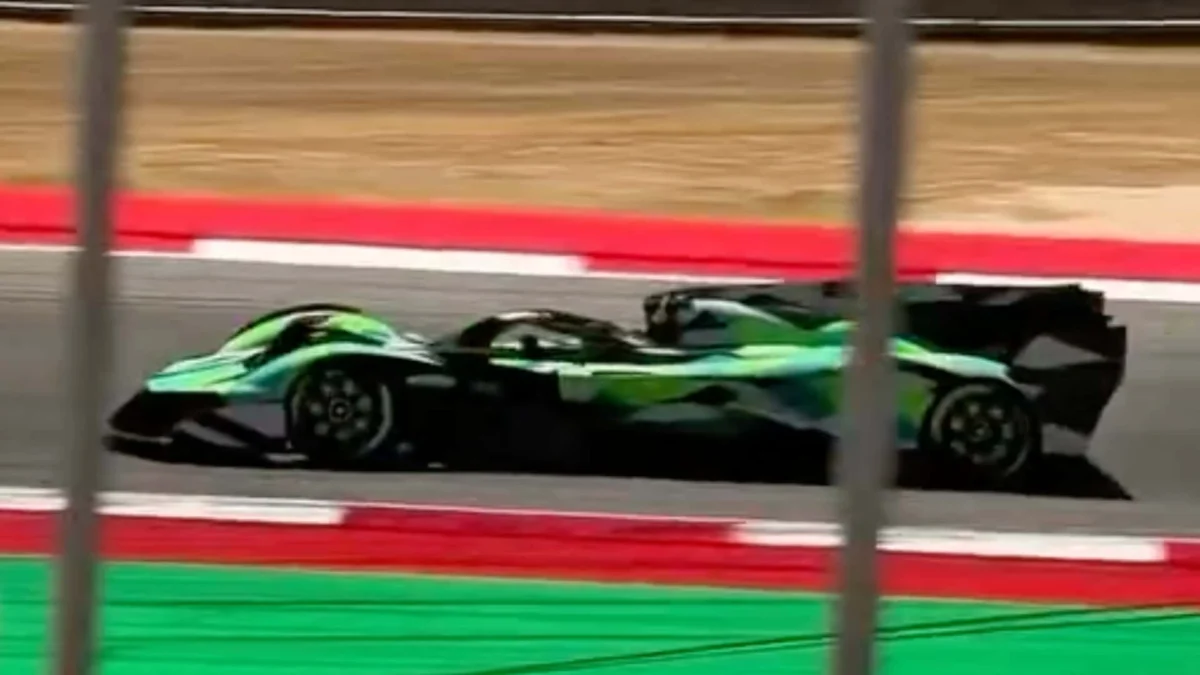
Recent footage from the Algarve International Circuit in Portugal has provided the automotive world with its clearest look yet at a mysterious, unnamed prototype. This vehicle, which appears to be a track-only hypercar of unprecedented capability, is currently serving as the focal point of intense speculation. It is a machine that looks less like a consumer vehicle and more like a laboratory for future racing technology.
The Chronology of a Mystery
The existence of this project first entered the public consciousness in April 2024, when social media snippets surfaced showing an aggressive, low-slung machine testing in near-secrecy. The silhouette was unmistakable: a radical, single-seat configuration reminiscent of a modern Formula 1 car, yet possessing the aggressive aero-sculpting of the Aston Martin Valkyrie.
Following those initial leaks, the rumor mill remained active until fresh footage surfaced via the Instagram account ivomat_all_about_cars. The video captured the car lapping the Algarve circuit, providing a tantalizing audio profile of what is widely believed to be a high-revving, naturally aspirated V12 engine. The auditory experience is visceral—a sharp, piercing shriek that cuts through the silence of the track, characteristic of the bespoke engines crafted by Cosworth for Aston Martin’s previous flagship projects.
However, the most intriguing detail remains the car’s hybrid nature. During the initial April sightings, observers noted that when the driver pulled into the pit lane, the V12 engine fell silent, yet the car continued to crawl forward under electric power. This "stealth mode" capability suggests a sophisticated kinetic energy recovery system (KERS) or a high-output electric motor integrated into the drivetrain, signaling that this isn’t merely a lightweight track toy, but a complex, high-voltage hybrid powertrain.
Technical Architecture: Where F1 Meets the Road
While Aston Martin has maintained a wall of silence regarding the project, engineering experts have begun to piece together the likely specifications of this machine. If the rumors regarding a 1,200-horsepower output hold true, this car would eclipse the already formidable 1,160-horsepower output of the standard Valkyrie.
The Aerodynamic Philosophy
Visually, the car is a masterclass in aggressive aerodynamics. It features an open-wheel design with exposed wishbone suspension—a direct nod to Formula 1 engineering. The in-board dampers are visible, suggesting a pushrod or pullrod suspension setup designed for maximum track stability. Most notably, the car features a prominent F1-style halo protection device, a safety innovation that has become mandatory in top-tier open-wheel racing but is rarely seen in private track cars.
The vehicle’s intake system, mounted high above the driver’s head, suggests a need for massive airflow to feed the mid-mounted engine. The rear diffuser appears expansive, indicating that the car is designed to generate massive amounts of downforce, likely allowing it to corner at speeds that would physically overwhelm an average driver.
The Powerplant
The heart of this beast is almost certainly an evolution of the 6.5-liter Cosworth V12 that powers the Valkyrie. In its current iteration, that engine is widely considered the pinnacle of internal combustion. To reach the rumored 1,200-horsepower threshold, Aston Martin engineers would likely have increased the compression ratio and optimized the hybrid-electric assist to provide instantaneous torque, effectively eliminating the "turbo lag" that affects many modern performance vehicles.
The Billionaire’s Commission
Perhaps the most fascinating aspect of this project is its origin. According to reports from the German publication Auto Motor und Sport, the car is not a mass-production vehicle, nor is it a future fleet model for the brand. Instead, it is allegedly a bespoke, one-off commission for Ken Griffin, the American billionaire and founder of the Citadel hedge fund.
This revelation contextualizes the project entirely. When a client possesses the financial capital of a major sovereign wealth fund, the "cost" of engineering becomes secondary to the "capability" of the machine. If the reported performance figures are accurate—specifically the claim that this car is roughly 10 seconds faster per lap than a standard Formula 1 car around a traditional circuit—it would effectively make this the fastest closed-course vehicle in existence.
Such a performance gap is astronomical in the world of motorsport, where seconds are usually fought for over years of development. To achieve this, the car would require not only immense power but also a chassis stiffness and tire-management capability that goes beyond the regulatory constraints imposed on FIA-sanctioned race cars.
Official Responses and Corporate Strategy
Aston Martin has remained notoriously tight-lipped. When pressed for comment, the company typically defaults to a "no comment on future or private projects" policy. This is a strategic move; by allowing the public to speculate, the brand maintains a level of mystique that is essential for its ultra-luxury branding.
However, the implications for the wider Aston Martin brand are significant. By building such a machine, Aston Martin is demonstrating its engineering prowess to the world. It serves as a "halo" project that elevates the brand’s image from a sports car manufacturer to a high-tech engineering powerhouse. This is vital as the company navigates the difficult transition toward electrification while trying to keep the V12 engine alive for as long as possible.
Implications for the Future of Hypercars
The emergence of this prototype signals a shift in the hypercar market. For years, the competition was defined by top speed and 0-to-60 times. Today, the battleground has shifted toward "track-only" performance and the integration of F1-grade technology.
The "Track-Only" Trend
Manufacturers like Aston Martin, Ferrari, and McLaren are increasingly focusing on cars that are not designed for public roads. By removing the need for headlights, airbags, emissions compliance, and crash safety structures for street use, engineers are free to pursue the theoretical limits of physics. This creates a new breed of "track-only" hypercars that are effectively rolling laboratories for the next generation of automotive performance.
The Sustainability Paradox
Ironically, even as these cars push the limits of internal combustion, they are also showcasing the necessity of hybrid technology. The inclusion of electric motors allows these vehicles to achieve power figures that would be impossible with traditional engines alone, while also providing a degree of modularity in how that power is delivered. This "hybrid-first" approach is likely to trickle down into more accessible sports cars over the next decade, proving that hybridization is not just a tool for fuel economy, but a mechanism for extreme performance.
The Road Ahead
As the testing phase continues in Portugal and potentially at other high-profile circuits, the automotive world waits with bated breath. Will this car ever be seen in a public setting, or will it remain hidden away in a climate-controlled private garage?
If the rumors are true, this vehicle represents the absolute zenith of what is possible when human ingenuity meets virtually unlimited resources. Whether or not the 1,200-horsepower figure is verified, the mere existence of the project is a testament to the fact that, despite the global push toward silent, autonomous electric vehicles, the hunger for raw, visceral, track-focused internal combustion performance is stronger than ever.
For the engineers at Aston Martin, this project is more than a car—it is a proof of concept. It is a declaration that even as the automotive industry faces its most significant evolution in a century, there will always be a place for the uncompromising pursuit of speed. As we look toward the future, one thing is certain: Aston Martin’s mystery hypercar has set a new bar, and the industry will be chasing its shadow for years to come.