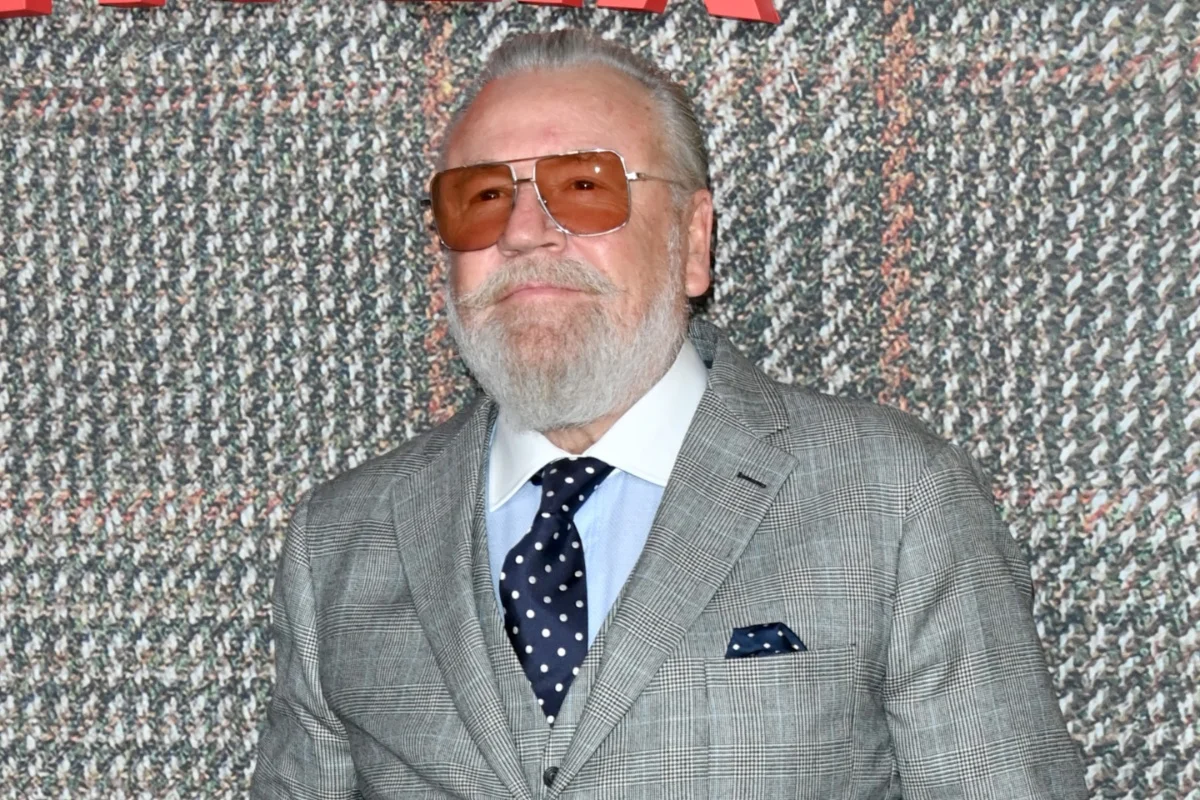
In a candid and wide-ranging interview with The Times of London, veteran British actor Ray Winstone has offered a rare, unfiltered glimpse into the "Wild West" era of film sets. Known for his imposing screen presence and roles in hard-hitting dramas, the 67-year-old actor opened up about the shifting moral landscape of the entertainment industry, his confrontation with an abusive director, and his current tenure as a crime lord in Netflix’s hit series The Gentlemen.
The Incident: Confronting Abuse of Power
The headline-grabbing portion of Winstone’s interview centers on an unsettling incident from his past. Winstone, whose career spans over four decades, recalled a specific production where he witnessed a director crossing the line of professional conduct.
According to Winstone, the incident occurred during a scene that required him to physically lift a female co-star. The director, presumably attempting to "coach" the actors on the mechanics of the movement, stepped in to demonstrate—but did so by inappropriately touching the actress.
"I was in a scene where I had to pick up this girl, and the director wanted to show me what to do," Winstone recounted. "But he was groping her. That was it. I said, ‘Don’t you dare do that.’ He abused his power, took advantage, and she was a good kid, you know, who seemed a little lost. Anyway, it was dealt with."
Winstone’s intervention highlights a recurring theme in Hollywood history: the vulnerability of young, less experienced actors when confronted by directors who wield unchecked authority. While Winstone did not name the director or the specific production, his account serves as a stark reminder of the toxic environments that existed before the industry-wide reckonings of the #MeToo movement.
The Old-School Justice System
When pressed on what exactly "dealt with" meant in the context of a film set decades ago, Winstone described a form of frontier justice that functioned outside of official Human Resources departments or modern legal frameworks.
"Well, back in the day, if there was a wrong ‘un on set, 99 times out of 100 it was sorted, either by the hairy-arse riggers or sparks," Winstone explained. "I’ve done it myself too, taken someone to the side to give them a slap or to tell them, in no uncertain terms, to behave."
This admission provides a fascinating, albeit controversial, window into the internal culture of film crews. In an era predating modern intimacy coordinators and rigid set protocols, the "blue-collar" contingent of a film set—the lighting technicians (sparks) and the construction crews (riggers)—often acted as the unofficial arbiters of morality. For Winstone, this was a necessary mechanism to maintain order and protect those who were being exploited.
However, Winstone was quick to acknowledge that these methods are largely a relic of the past. "But it’s a different world today," he noted, signaling an acknowledgment that while the old methods were effective in the short term, the industry has since moved toward more structured and transparent systems for handling misconduct.
The Evolution of Set Culture
The contrast Winstone draws between the "old days" and the present day is indicative of a broader cultural shift. For decades, the film industry operated under a system of silence, where complaints about director misconduct were often ignored or silenced to protect the production’s bottom line.
In recent years, the implementation of intimacy coordinators—professionals tasked with choreographing scenes of a sexual or physical nature—has changed the landscape entirely. These professionals ensure that actors feel safe, comfortable, and empowered to set boundaries. Winstone’s story serves as a testament to why these roles are now considered essential; in his era, the safety of an actress depended entirely on the conscience and bravery of her male co-stars. If a co-star failed to intervene, there was often no recourse for the victim.
A Career in Transition: ‘The Gentlemen’ and Beyond
While Winstone’s reflections on the past have garnered significant media attention, his current professional life remains as vibrant as ever. He is currently enjoying a career renaissance thanks to his role as Bobby Glass in Guy Ritchie’s The Gentlemen.
The series, which has been a massive global success for Netflix, was recently greenlit for a third season, building on the momentum of its second. Playing the kingpin of a massive cannabis empire, Winstone brings a gravitas and menace that has defined his career. Yet, even as he enjoys this success, Winstone admits that the role has forced him to confront the reality of his own aging.
"When you’re not the young lead but the old boy, who everyone says they’ve got to look after because he’s getting on a bit," Winstone joked during the interview. It is a humble reflection for a man who has played some of the most dangerous and resilient characters in British cinema, from Sexy Beast to The Departed.
Implications for the Future
The implications of Winstone’s testimony are twofold. First, they provide historical context for the systemic issues that plagued the industry, reinforcing why the current push for diversity, inclusion, and accountability is so vital. By sharing his story, Winstone reinforces that abuse was not just a myth, but a frequent occurrence that required active resistance from peers.
Second, his comments underscore the "generational gap" in how actors perceive their responsibilities on set. Winstone belongs to a generation that felt a duty to protect their colleagues through personal intervention. The modern generation, conversely, is operating in an environment where safety is codified in policy. The transition from "giving someone a slap" to "filing a formal complaint" is perhaps the most significant evolution in the history of filmmaking.
The Taxman and the Grind
When asked if he had any plans to slow down his career or retire to a quieter life, Winstone’s response was characteristically grounded and pragmatic. Despite his legendary status, he remains firmly tethered to the realities of the working actor.
"Well, you’ve got to pay the taxman, haven’t you?" he quipped.
This refusal to romanticize his craft is a hallmark of Winstone’s personality. He does not view himself as a celebrity who is above the fray, but as a worker who takes pride in a job well done. It is this blue-collar ethos that has made him a fan favorite for decades, and it is the same ethos that led him to stand up to a director when he saw something fundamentally wrong.
Conclusion: A Legacy of Integrity
Ray Winstone’s interview with The Times is more than just a trip down memory lane; it is a vital contribution to the ongoing conversation about ethics in the arts. By being honest about the "hairy-arse riggers" and the physical confrontations of his past, he has provided a candid look at a world that is often shrouded in mystery.
As he continues his work on The Gentlemen and looks toward future projects, Winstone remains a bridge between two worlds: the gritty, unpolished, often dangerous industry of the 1980s and 90s, and the more transparent, safety-conscious, and accountable industry of today. Whether he is playing a ruthless kingpin or offering life lessons from his years in the trenches, Winstone continues to command respect—not just for his acting, but for his willingness to say "don’t you dare" when it matters most.