For centuries, the mulberry tree (Morus) has been a silent partner in human health, utilized across diverse cultures from traditional Chinese medicine to European folk remedies. While its leaves and fruits have long been prized for their therapeutic properties, modern science is now peering deeper into the mechanism of action—specifically, how this plant interacts with the complex ecosystem of the human gut.
A comprehensive review conducted by researchers at Wroclaw Medical University suggests that the humble mulberry may hold the key to modulating gut microbiota, potentially offering a novel pathway to treat metabolic disorders. However, the study warns that the path from plant to pharmacy is not straightforward: the biological efficacy of mulberry depends on a precise interplay between species, plant anatomy, and the specific extraction techniques used to process it.
The Microbiota-Metabolism Connection
The human gut is home to trillions of microorganisms, a community known as the gut microbiota. Far from being simple passengers, these microbes perform critical functions, including the fermentation of dietary fibers into short-chain fatty acids (SCFAs)—such as acetate, propionate, and butyrate—which are essential for maintaining intestinal barrier integrity and regulating systemic metabolism.
"The gut microbiota not only contributes to the functioning of the gastrointestinal tract but may also influence metabolism throughout the body," explains Dr. Anna Prescha, Professor at the Department of Dietetics and Bromatology at Wroclaw Medical University. "Mulberry is particularly interesting in this respect because it contains numerous bioactive compounds, including polyphenols and polysaccharides, which may interact with gut microorganisms."
The research team posits that by consuming specific mulberry preparations, individuals might be able to shift the composition of their gut bacteria, favoring beneficial strains that improve glucose and lipid metabolism, thereby offering a potential intervention for metabolic syndrome and related health issues.
Chronology: From Student Inquiry to Scientific Review
The project’s origins are as unconventional as the results are intriguing. Rather than beginning in a high-budget clinical facility, the research germinated within the Nutri-Sfera Student Research Group at Wroclaw Medical University.
The spark for the study came from two students—Marta Miszczak, a dietetics student, and Karolina Kłosowska-Buryło, a pharmacy student. Recognizing a gap in the literature, they proposed an interdisciplinary investigation that merged nutritional science with pharmaceutical methodology.
Key Stages of Development:
- Initial Conception: The student-led team identified that while mulberry was known to be "healthy," the scientific community lacked a cohesive understanding of why different preparations yielded different results.
- Data Synthesis: Over several months, the team aggregated studies involving both Morus alba (white mulberry) and Morus nigra (black mulberry), mapping the specific compounds found in leaves versus fruits.
- Analysis of Extraction: The researchers highlighted how drying, fermentation, and chemical extraction drastically alter the bioactive profile of the plant.
- Peer-Reviewed Review: The findings were consolidated into a formal review, which now serves as a roadmap for future clinical research into the "mulberry-microbiome" axis.
Supporting Data: The Diversity of Bioactive Profiles
A central finding of the review is that the term "mulberry" is far too broad for clinical application. Different parts of the plant and different species offer entirely different therapeutic tools.
Leaf vs. Fruit
- White Mulberry (Morus alba) Leaves: These are rich in 1-deoxynojirimycin (DNJ), a potent iminosugar known for its ability to inhibit alpha-glucosidase, thereby slowing the breakdown of carbohydrates and moderating blood sugar spikes. They also house a complex array of polyphenols.
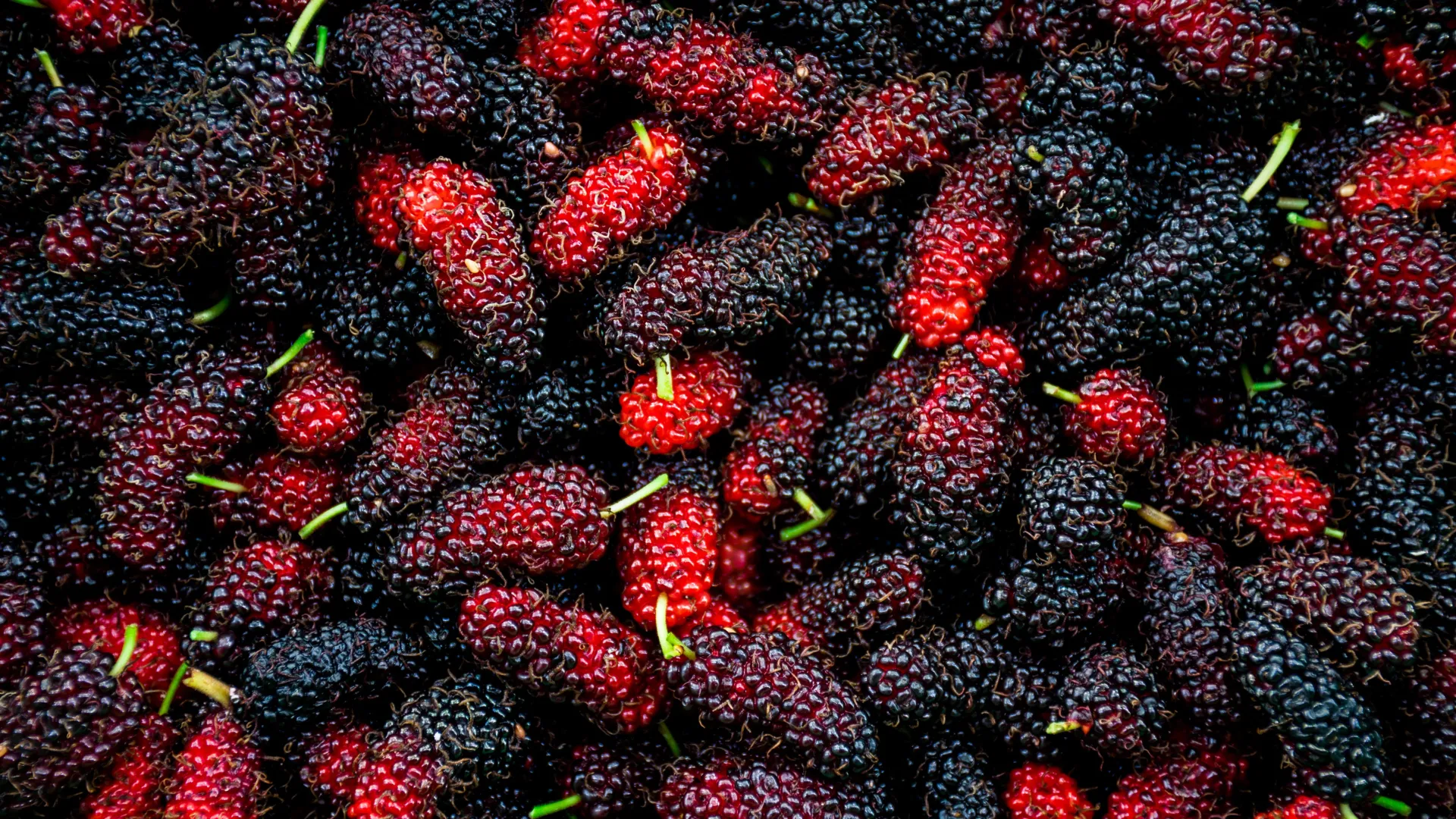
- Black Mulberry (Morus nigra) Fruits: These are powerhouses of anthocyanins—the pigments responsible for their dark color—which function as powerful antioxidants and prebiotic substrates for gut bacteria.
The Processing Paradox
The researchers discovered that two preparations derived from the same tree could have vastly different effects. For instance, the structural characteristics of polysaccharides—such as their molecular weight and the specific monosaccharides present—dictate which bacterial species can "eat" them.
In studies focusing on black mulberry polysaccharides, water extraction techniques compared to enzymatic treatment with pectate lyase yielded significantly different prebiotic potentials. This suggests that the "biological signature" of the mulberry is not inherent, but rather manufactured through the processing method.
Experimental Evidence: The Power of Synergy
Some of the most compelling evidence comes from animal models, where the whole is proving to be greater than the sum of its parts. In experiments involving mice fed a high-fat diet, a combination of polyphenols and polysaccharides derived from white mulberry fruit demonstrated superior efficacy compared to administering the compounds in isolation.
The "synergy effect" was profound:
- Microbial Shift: The combination induced a more favorable restructuring of the gut microbiome, increasing the abundance of bacteria associated with lean body mass and metabolic health.
- Metabolic Markers: The mice showed clearer improvements in markers of metabolic syndrome, such as insulin sensitivity and reduced fat accumulation, compared to controls.
- Transplant Validation: In a landmark experiment, the microbiota from the treated mice were transplanted into other animals. The recipients exhibited similar metabolic improvements, confirming that the changes in the gut bacteria were indeed the drivers of the metabolic health improvements, rather than just a secondary symptom.
Official Responses and Implications
Professor Anna Prescha emphasizes that these findings represent a shift in how we think about functional foods. "These findings suggest that what matters is not only the presence of an individual compound, but also the complex composition of the preparation, the proportions of its compounds, and their interactions," she notes.
Implications for Future Research:
- Moving Beyond "Single Compounds": The industry has traditionally focused on isolating single molecules (like DNJ). The research suggests that natural "cocktails" of plant compounds may be more effective due to their synergistic interactions.
- Standardization: For mulberry to become a legitimate therapeutic tool, researchers must move toward standardized preparations. Currently, variability in extraction makes it difficult to replicate results across different studies.
- The "Human Gap": Despite the optimism surrounding animal models, the scientific team is careful to manage expectations. There is, as of yet, no direct human clinical trial confirming that these specific shifts in microbiota occur in human subjects.
The Road Ahead: Clinical Translation
The jump from mice to humans is the "final frontier" for this line of inquiry. The scientific team at Wroclaw Medical University highlights that future clinical trials must be rigorous.
"The available findings are promising, but at this stage, they do not allow us to determine whether the relationships observed in experimental models between mulberry preparations, the microbiota, and metabolism also occur in humans," says Prof. Prescha.
To bridge this gap, future studies must:
- Characterize the Material: Provide detailed chemical analyses of the specific mulberry preparations used in trials.
- Measure Microbiota Diversity: Use advanced sequencing (16S rRNA or metagenomics) to track changes in the gut community over time.
- Monitor Metabolic Endpoints: Link changes in the microbiota directly to clinical markers like fasting glucose, HbA1c, and lipid profiles in human participants.
Conclusion: A New Era for Traditional Medicine
The study serves as a masterclass in modernizing traditional wisdom. By treating the mulberry not as a static folk remedy but as a complex, variable, and powerful tool for microbiome modulation, the researchers have opened a new door for nutritional therapy.
While we are not yet at the point of prescribing mulberry extracts to manage metabolic disease, the foundations have been laid. The interdisciplinary spirit that started with a student research group has successfully elevated the mulberry from a simple fruit to a candidate for precision nutrition. As researchers continue to untangle the "structural secrets" of these plant compounds, we move closer to understanding how we might harness the gut microbiome to improve human health, one mulberry at a time.