A groundbreaking study involving more than 5,500 adults over the age of 50 has illuminated a perilous intersection of health risks that could fundamentally change how clinicians approach geriatric care. The research, published in the journal Diabetes, Obesity and Metabolism, reveals that the convergence of abdominal obesity and vitamin D deficiency creates a "perfect storm" for the human body, resulting in a 123% higher risk of mortality compared to individuals who suffer from neither condition.
For decades, medical professionals have treated obesity and nutrient deficiencies as distinct, albeit related, clinical issues. However, this new data suggests that when these two conditions manifest simultaneously, they do not merely add to one another—they multiply the risk of premature death, creating a physiological feedback loop that accelerates the decline of vital bodily systems.
The Chronology of the Research
The study, a collaborative effort between the Federal University of São Carlos (UFSCar) in Brazil and University College London (UCL) in the United Kingdom, was made possible through the English Longitudinal Study of Ageing (ELSA). This initiative stands as one of the world’s most comprehensive, ongoing datasets regarding the biological and social aspects of aging.
Researchers tracked 5,520 participants over a rigorous six-year period. The methodology was straightforward but granular: investigators monitored waist circumference and serum vitamin D levels, establishing clear benchmarks for what constituted a "high-risk" state.
- Abdominal Obesity: Defined as a waist circumference exceeding 102 centimeters (approx. 40 inches) for men and 88 centimeters (approx. 35 inches) for women.
- Vitamin D Deficiency: Defined as blood levels falling below 30 nmol/L.
By monitoring the health trajectories of these individuals over the six-year span, the team was able to isolate the impact of each variable independently, and subsequently, their synergistic impact when combined.
Supporting Data: The Statistics of Risk
The statistical findings are stark and highlight a clear hierarchy of health threats. While both abdominal obesity and vitamin D deficiency are independently linked to higher mortality rates, the magnitude of the increase varies significantly.
According to the data:
- Abdominal Obesity alone: Associated with a 47% higher risk of death.
- Vitamin D Deficiency alone: Associated with a 91% higher risk of death.
- The Combined Effect: When both conditions are present, the risk of mortality surges by 123%—more than doubling the baseline risk of an individual with neither condition.
These numbers provide a sobering look at how "hidden" markers of health, such as internal fat storage and micronutrient status, dictate longevity. The study reinforces the theory that the body is not a collection of isolated systems, but a deeply integrated network where the failure of one metabolic pillar compromises the entire structure.
The Mechanism: Why Belly Fat Sequesters Vital Nutrients
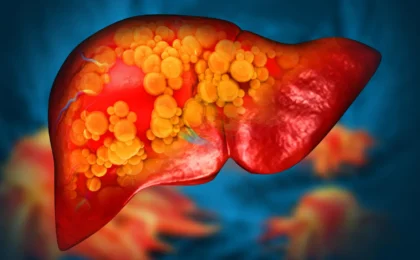
To understand why this combination is so deadly, one must look at the biology of adipocytes—the cells that store fat. Tiago Silva Alexandre, a professor in the Department of Gerontology at UFSCar and the study’s coordinator, explains that abdominal fat acts as a "sink" for vitamin D.
"Abdominal fat can sequester vitamin D circulating in the body," says Alexandre. "It stores the vitamin in adipocytes rather than leaving it available in the bloodstream. This means that although the body may technically have the vitamin stored within its tissues, it is not bioavailable—it cannot reach the organs and systems that require it to perform essential functions."
Furthermore, obesity appears to inhibit the body’s ability to process vitamin D effectively. The study notes that individuals with high levels of abdominal fat exhibit lower expression of the specific enzymes required for vitamin D metabolism. This creates a dual-threat: the body is physically blocked from using the vitamin it has, and it is chemically hindered from activating the little that remains in circulation.
Official Responses and Clinical Implications
The findings have sparked a conversation among health practitioners regarding the necessity of routine screening for the aging population. Professor Alexandre argues that the traditional focus on Body Mass Index (BMI) may be insufficient for those over 50.
"Abdominal obesity is a well-known risk factor because it is intimately associated with chronic inflammation and metabolic syndrome," Alexandre notes. "When you add a vitamin D deficiency—which acts as a systemic hormone—you are essentially removing the body’s primary regulatory brake on inflammation. Monitoring vitamin D levels and actively managing abdominal fat are now essential, non-negotiable measures for preventing premature death in older adults."
The study implies that health policy should shift toward "proactive gerontology." Rather than waiting for patients to present with chronic disease, clinicians should prioritize the correction of these two biomarkers as a preventive baseline for all patients entering their fifth decade of life.
The "Inflammaging" Crisis
The danger of this combination is amplified by a phenomenon known in the medical community as "inflammaging." As humans age, the body naturally enters a state of low-grade, chronic systemic inflammation.
In a healthy individual, vitamin D serves as a vital regulator of the immune system, preventing this inflammation from spiraling out of control. However, when an aging individual is deficient in vitamin D and carries excess abdominal fat, the immune system loses its ability to manage these inflammatory signals. The result is a toxic environment that accelerates the progression of cardiovascular disease, metabolic syndrome, and muscle atrophy.
A Cascade of Decline: The Broader Consequences
The implications of this study extend beyond mortality statistics. The research group at UFSCar has been investigating the "cascade effect" of vitamin D deficiency for several years, and their findings paint a grim picture of how physical function deteriorates when these systems fail.
1. Loss of Mobility and Independence
The study identified that vitamin D deficiency is a primary driver in the loss of muscle strength. This reduction in strength leads to slower walking speeds, which in turn causes a decline in physical independence. As an individual loses the ability to perform daily tasks, their world shrinks, leading to a sedentary lifestyle that further exacerbates obesity—creating a vicious cycle of decline.
2. Cognitive Decline
Previous research from the same team has highlighted that vitamin D deficiency is linked to an increased risk of cognitive impairment. Because vitamin D plays a critical role in the regulation of the central nervous system, its depletion can affect everything from blood pressure regulation to mood and executive function.
3. Multisystem Failure
Because vitamin D acts more like a hormone than a simple nutrient, it influences the endocrine, immune, and cardiovascular systems. When levels remain low, it is not just the bones or the muscles that suffer; it is the entire metabolic apparatus of the body. The research suggests that the "silent" nature of this deficiency makes it particularly dangerous, as many individuals are unaware of their low status until secondary health complications—such as falls, fractures, or metabolic disease—become symptomatic.
Conclusion: A New Standard for Healthy Aging
The message from this study is clear: health in later life is heavily dependent on the intersection of body composition and nutrient bioavailability. The 123% increase in mortality risk is not a call to panic, but a call to action.
For the aging population, the takeaway is twofold. First, the waist-to-hip ratio should be monitored as closely as blood pressure or cholesterol levels. Second, vitamin D deficiency must be treated as a systemic medical condition, not merely a minor nutritional gap. By addressing these two factors early—through dietary intervention, lifestyle modification, and, where necessary, targeted supplementation—it is possible to disrupt the "lethal synergy" and promote a longer, more independent life.
As Professor Alexandre emphasizes, "Vitamin D is a hormone with various functions. It plays a role in regulating blood pressure, heart rate, the central nervous system, the immune system, and the endocrine system. When its levels are low, and when that deficiency is compounded by the inflammatory environment of abdominal obesity, several essential bodily functions are compromised simultaneously. It is time to treat this combination with the clinical urgency it demands."