
As the jury deliberates in the highly publicized murder trial of Lindsay Clancy in Plymouth Superior Court, the public and legal experts alike are closely analyzing the potential outcomes of a case that has gripped the nation. Clancy, a former labor and delivery nurse from Duxbury, Massachusetts, stands accused of strangling her three young children in January 2023. While the prosecution seeks a conviction for first-degree murder, the defense has mounted a rigorous insanity defense, arguing that Clancy was suffering from severe postpartum psychosis and was not in control of her actions.
If the jury ultimately finds Clancy "not criminally responsible" (NCR) by reason of insanity, she will not simply walk free. However, contrary to popular belief, she would also not face an automatic, guaranteed life sentence inside a state psychiatric facility. According to Carol Erskine, a retired Massachusetts juvenile court judge and child welfare advocate, the reality of a civil commitment following an NCR verdict is highly complex, governed by strict statutory timelines, and subject to unpredictable annual reviews.
"She could remain hospitalized for many years—even indefinitely—but only as long as the legal criteria for civil commitment continue to be met," Erskine explained.
This analysis explores the legal framework, chronological history, supporting psychiatric data, trial arguments, and broader societal implications of the Lindsay Clancy case.
Main Facts of the Case
Lindsay Clancy, 34, is charged with three counts of first-degree murder in the deaths of her children: five-year-old Cora, three-year-old Dawson, and eight-month-old Callan. The tragedy occurred on the evening of January 24, 2023, inside the family’s suburban home in Duxbury, Massachusetts.
According to investigators, Clancy used exercise bands to strangle the three children. Immediately following the acts, she attempted to end her own life by cutting her wrists and neck before jumping out of a second-story window of her home. While she survived the fall, the impact caused severe spinal cord damage, leaving her permanently paralyzed from the waist down.
The defense does not dispute that Clancy caused the deaths of her children. Instead, the central legal battle focuses on her state of mind. The defense contends that Clancy was in the throes of postpartum psychosis—a rare and severe psychiatric emergency characterized by hallucinations, delusions, and a break from reality. The prosecution, conversely, argues that her actions were planned, deliberate, and executed with a clear understanding of their wrongfulness.

The jury has been tasked with weighing several potential verdicts:
- Guilty of First-Degree Murder: Carries a mandatory sentence of life in prison without the possibility of parole.
- Guilty of Second-Degree Murder: Carries a life sentence with the possibility of parole after a set period (typically 15 to 25 years).
- Guilty of Manslaughter: Carries a maximum penalty of 20 years in prison.
- Not Criminally Responsible (NCR): The Massachusetts equivalent of the insanity defense, which would result in her commitment to a mental health facility rather than a state prison.
Chronology of the Tragedy and Legal Proceedings
To understand the current state of the trial, it is necessary to examine the timeline of events leading up to the tragedy and the protracted legal battle that followed.
[Late 2022] ------------------> [Jan 24, 2023] --------------> [Feb 2023 - 2025] -----------> [Early 2026]
Clancy suffers severe           Tragedy occurs; children       Medical stabilization,       Trial begins in Plymouth
postpartum anxiety/depression;  strangled; Clancy survives     arraignments, psychiatric    Superior Court; jury
prescribed multiple meds.       suicide attempt, paralyzed.    evaluations, and divorce.    deliberations commence.
The Prelude (Late 2022 – January 2023)
Following the birth of her third child, Callan, in May 2022, Clancy began struggling with severe postpartum anxiety and depression. Her family and husband, Patrick Clancy, became increasingly concerned about her mental health. Over the course of several months, Clancy sought extensive medical help, consulting with numerous psychiatrists and doctors. She was prescribed a rapidly rotating "cocktail" of psychiatric medications—including sedatives, antidepressants, and anti-anxiety drugs—which her defense claims exacerbated her mental instability rather than alleviating it.
The Tragedy (January 24, 2023)
On the evening of January 24, Lindsay Clancy asked her husband, Patrick, to leave the house to run two errands: picking up a prescription at a local CVS in Kingston and grabbing takeout food from a restaurant. Prosecutors calculated that this window of unsupervised time lasted approximately 55 minutes.
When Patrick returned home, he was met with silence. After searching the house, he found his wife lying in the backyard, conscious but severely injured after jumping from the second-floor window. In the basement of the home, Patrick discovered the three children. Cora and Dawson were pronounced dead at the scene, while infant Callan survived for several days on life support before succumbing to his injuries at Boston Children’s Hospital.
The Legal and Medical Aftermath (2023–2025)
Clancy was hospitalized under police guard, undergoing multiple spinal surgeries and receiving intensive psychiatric care. Her initial arraignments were conducted remotely from her hospital bed. The case sparked intense public debate, polarizing communities over the issues of maternal mental health and criminal culpability.
During this period, Patrick Clancy released a public statement asking for forgiveness for his wife, describing her as a loving and devoted mother who had been overtaken by a medical condition. However, as the legal proceedings advanced and the reality of the tragedy set in, Patrick and Lindsay Clancy legally divorced. Patrick was called as the prosecution’s first witness when the trial eventually commenced.

The Trial (Early 2026)
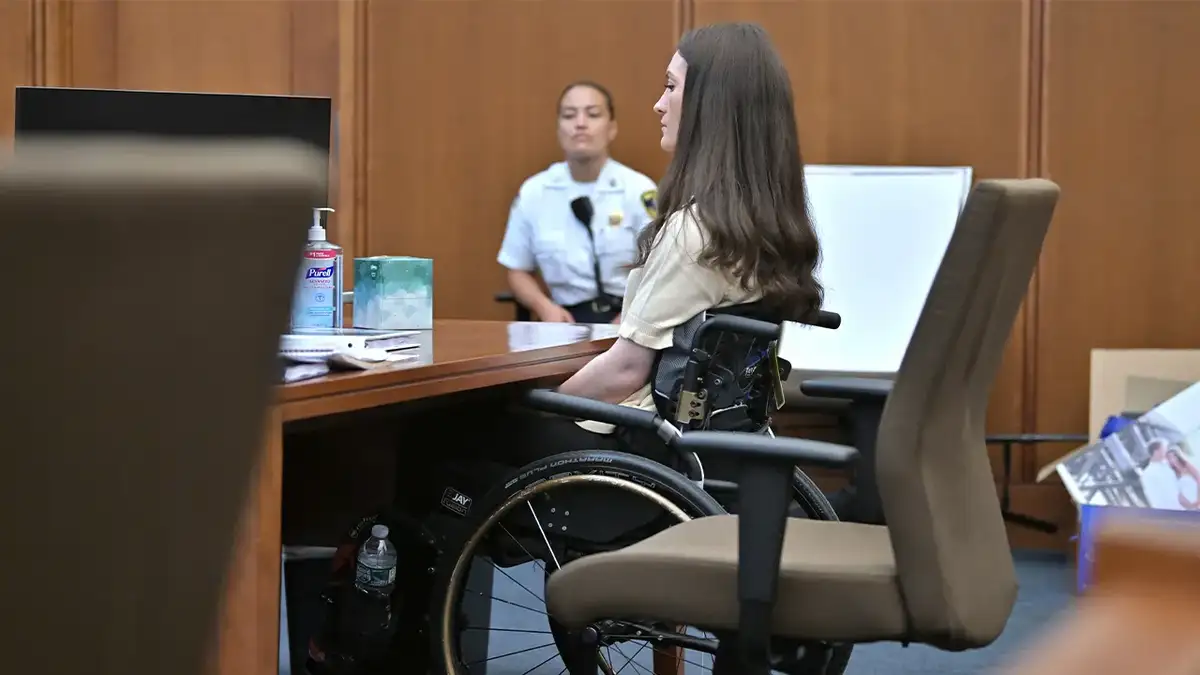
The trial began in Plymouth Superior Court, drawing national media attention. Over several weeks, jurors listened to harrowing testimonies from first responders, medical experts, and family members. On Friday, July 31, 2026, medical experts testified in detail about the frantic efforts to save the children and the immediate psychiatric assessments of Clancy. After closing arguments, the jury officially began deliberations, leaving Clancy’s fate hanging in the balance.
Supporting Data: The Legal Framework of Civil Commitment
Should the jury return a verdict of Not Criminally Responsible, the legal mechanism that follows is highly structured under Massachusetts General Laws Chapter 123, Section 16. It is a multi-step process designed to balance public safety with psychiatric rehabilitation.
[NCR Verdict]
      │
      ▼
[Initial Evaluation] ────► Up to 40 days in a locked psychiatric unit (Sec. 16a)
      │
      ▼
[First Commitment Hearing] ──► If "likelihood of serious harm" is found, committed for 6 months (Sec. 16b)
      │
      ▼
[Annual Review Hearings] ────► Yearly evaluation to determine if criteria for commitment are still met (Sec. 16c)
Phase 1: The Initial 40-Day Evaluation
According to retired Judge Carol Erskine, the first step is entirely in the hands of the trial judge. "The initial aspect of what happens is an order by the judge," Erskine stated. "If the judge so orders it, a 40-day evaluation in a locked unit."
Under Section 16(a) of the statute, this period is used by state-appointed forensic psychiatrists to conduct a comprehensive diagnostic assessment of the defendant’s current psychiatric state and to determine if they continue to present a danger to themselves or others.
Phase 2: The Six-Month Commitment
Following the 40-day evaluation, a formal court hearing is held. If the evaluating clinicians and the court find that the individual continues to suffer from a mental illness and that their release would create a "likelihood of serious harm," the judge will order a formal civil commitment.
"If the recommendation is for a civil commitment because there’s likelihood of serious harm under the statute, then there would be a commitment for a period of six months," Erskine explained. "And that would, again, be in a locked unit."
Phase 3: The Annual Review Process
This is where the predictability of a defendant’s confinement ends. Unlike a criminal sentence, which has a defined minimum and maximum term, a civil commitment after an NCR verdict is indefinite but must be re-evaluated every year.

Under Section 16(c), after the initial six-month commitment expires, any subsequent commitment must be renewed annually. Each year, the state must prove beyond a reasonable doubt that:
- The individual still suffers from a mental illness.
- The individual’s discharge would create a substantial risk of physical harm to themselves or others.
"Beyond that, Clancy would be up for review every year to determine whether there is still a likelihood of serious harm and if she should still be committed to a mental institution," Erskine said. "It’s really impossible to say how long she would be committed if she’s committed because it all depends on these yearly evaluations."
The Impact of Physical Paralysis on Legal Standards
A unique variable in the Clancy case is her permanent physical paralysis. Under Massachusetts law, "likelihood of serious harm" is defined in three ways:
- A substantial risk of physical harm to the person themselves (suicide or self-harm).
- A substantial risk of physical harm to other persons.
- A very high risk of physical impairment or injury to the person themselves due to an inability to protect themselves in the community.
Erskine emphasizes that Clancy’s limited physical mobility will likely not disqualify her from meeting the standard of "likelihood of serious harm."
"I don’t think it would play a huge role in how they evaluate whether she has a mental illness that creates a likelihood of serious harm because we’re talking about serious harm to herself as well," Erskine noted. Clancy’s history of severe suicidal ideation and her self-destructive actions on the night of the tragedy remain primary factors in assessing her ongoing risk to herself.
Official Responses and Trial Arguments
The trial has featured starkly contrasting narratives from the prosecution and the defense, each presenting expert witnesses to support their interpretation of Clancy’s mental state on January 24, 2023.
The Prosecution: Calculation and Control
The prosecution, led by the Plymouth County District Attorney’s office, has argued that Clancy’s actions were not the result of an uncontrollable psychotic break, but rather a calculated sequence of events.

To support this claim, prosecutors pointed to Clancy’s digital footprint on the night of the murders. They presented evidence that she used her phone to look up the transit time for her husband to drive to the CVS in Kingston and back, as well as the menu of the restaurant where he picked up dinner. The state argues this shows she was deliberately calculating how much time she would have alone with the children.
Furthermore, the prosecution has emphasized that Clancy did not display obvious outward signs of psychosis to her husband or the retail workers she interacted with shortly before the incident. They argue that her ability to plan, organize, and execute the crimes—and her subsequent attempt to evade criminal justice through suicide—demonstrates that she understood the wrongfulness of her actions.
The Defense: Postpartum Psychosis and Overmedication
The defense, led by attorney Kevin Reddington, has presented a starkly different portrait: that of a loving, desperate mother whose brain was hijacked by a severe psychiatric emergency.
The defense team presented medical records indicating that Clancy had been seeking help for severe, debilitating anxiety and intrusive thoughts for weeks. They highlighted testimonies from psychiatric experts who concluded that Clancy was experiencing postpartum psychosis, a condition that can cause rapid mood shifts, delirium, and command hallucinations.
During the trial, testimony revealed that Clancy described hearing a "male voice" ordering her to "kill her children and kill herself." According to defense experts, this hallucinatory command voice completely overrode her rational thinking, rendering her unable to appreciate the wrongfulness of her actions or conform her behavior to the law. The defense also pointed to the toxic accumulation of more than a dozen psychiatric medications prescribed to her in the months leading up to the tragedy, arguing that the medical system failed her.
Implications and Broader Societal Impact
Regardless of the verdict, the Lindsay Clancy case has already had a profound impact on the legal, medical, and social landscapes.
Maternal Mental Health Advocacy
The case has thrust the severe realities of perinatal and postpartum psychiatric disorders into the national spotlight. Advocacy groups, such as Postpartum Support International (PSI), have used the tragedy to highlight the critical distinction between postpartum depression (PPD)—which affects up to 15% of new mothers—and postpartum psychosis (PPP), which is a rare emergency occurring in approximately 1 to 2 out of every 1,000 deliveries.
| Condition | Prevalence | Key Symptoms | Risk of Harm |
|---|---|---|---|
| Postpartum Depression (PPD) | 10%–15% of births | Sadness, severe anxiety, fatigue, difficulty bonding | Low; requires therapy and medication |
| Postpartum Psychosis (PPP) | 0.1%–0.2% of births | Delusions, hallucinations, paranoia, mania, confusion | High; constitutes a medical emergency |
Medical professionals hope that the widespread coverage of Clancy’s struggles will encourage better screening protocols, faster intervention strategies, and a reduction in the stigma that prevents struggling mothers from disclosing intrusive thoughts or hallucinations.
Legal Reforms and the Insanity Defense
The case also highlights the public’s deep-seated discomfort with the insanity defense, particularly in cases involving the loss of young lives. Legal scholars note that successful NCR defenses are exceedingly rare and difficult to prove, especially in high-profile cases where public emotion runs high.
If Clancy is found NCR, her case will likely serve as a benchmark for how the Massachusetts court system handles the long-term confinement and rehabilitation of individuals who commit violent acts during acute psychiatric episodes. The annual review process ensures that her confinement remains a matter of ongoing legal, clinical, and public scrutiny for the rest of her life.