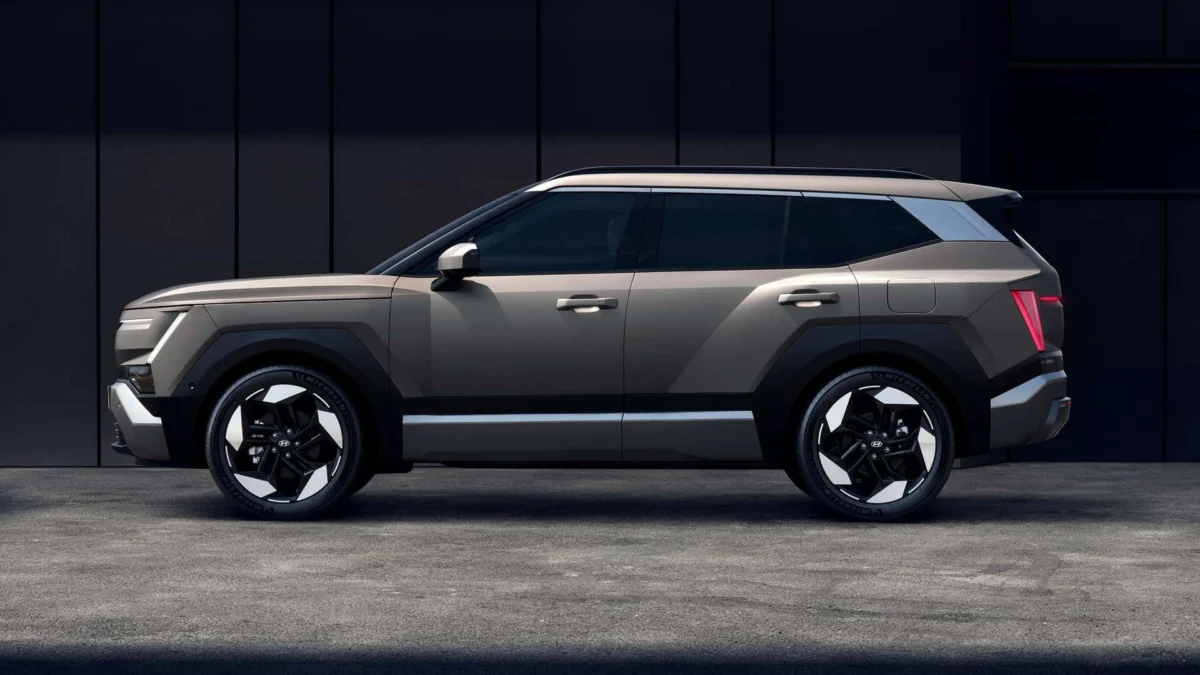
Update: Hyundai has officially pulled back the curtain on the 2027 Tucson, revealing a comprehensive overhaul of its best-selling SUV. You can read all the specific technical specifications and trim-level details here.
The Hyundai Tucson has long served as the cornerstone of the Korean automaker’s North American portfolio. Positioned strategically between the compact, urban-focused Kona and the three-row, family-oriented Santa Fe, the Tucson represents the "Goldilocks" zone for American consumers. It is a vehicle that balances utility, efficiency, and a diverse range of powertrains—spanning traditional internal combustion, hybrid, and plug-in hybrid (PHEV) configurations—to capture the widest possible demographic.
After a virtual debut in August that whet the appetites of enthusiasts and prospective buyers, Hyundai is finally bringing the 2027 Tucson to the American public in the physical realm. With a high-profile launch event in New York City, the company is transitioning from digital renders to real-world experience, signaling a pivotal shift for its most critical SUV.
A New Design Language: The Evolution of "Sensuous Sportiness"
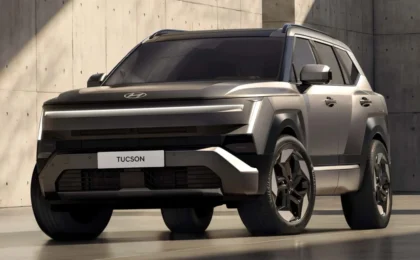
The 2027 Tucson represents the fifth generation of this storied nameplate, and it is far more than a simple mid-cycle refresh. Hyundai has opted for a "clean-sheet" approach to the SUV’s aesthetic, pivoting toward a more upright, commanding stance that leans into the rugged SUV zeitgeist while maintaining the futuristic flair for which the brand has become known.
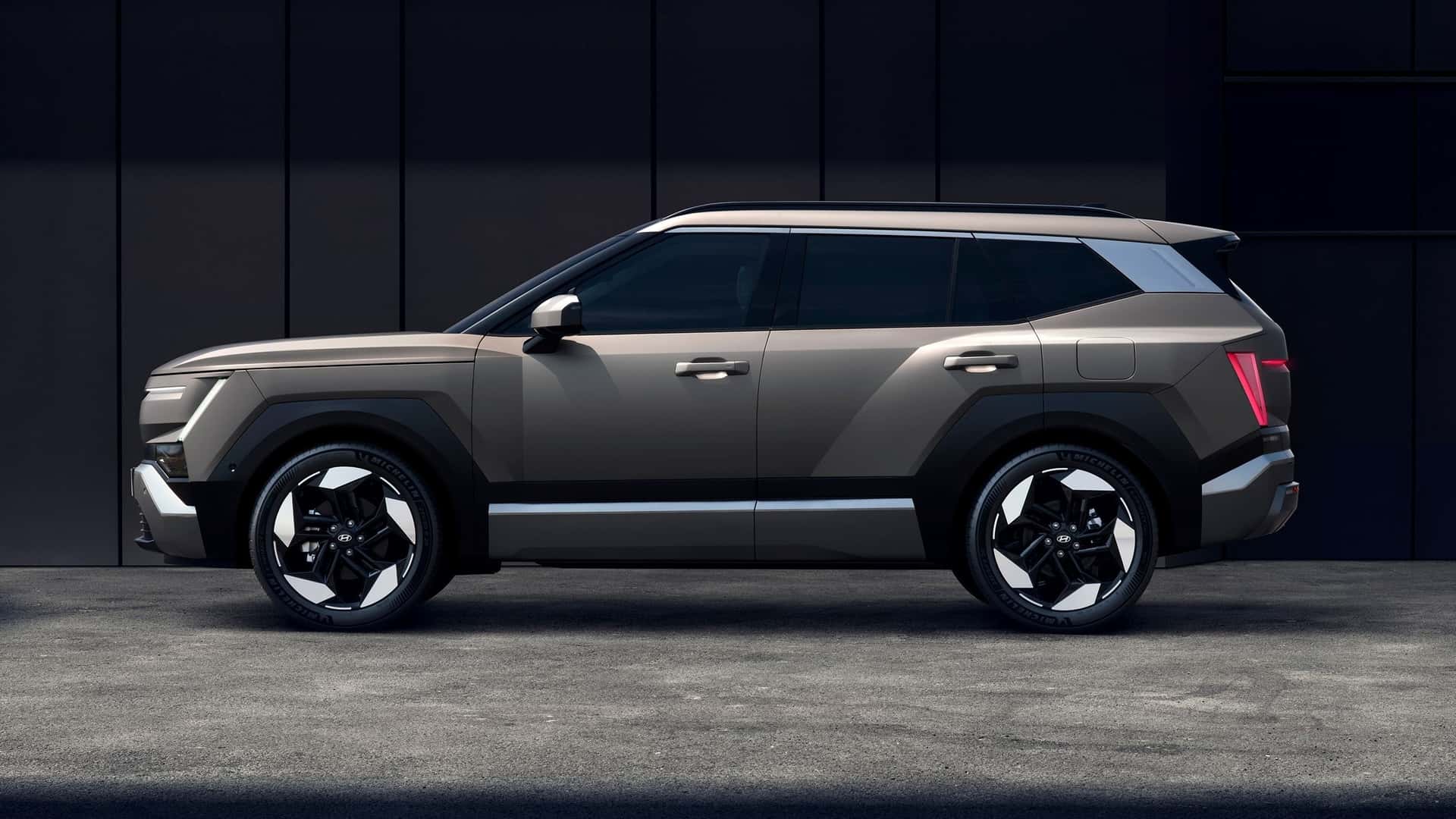
The exterior design is dominated by angular lighting signatures that integrate seamlessly into a wider, more imposing grille. The "Parametric Hidden Lights" signature, a hallmark of recent Hyundai design, has been refined to offer a sharper, more piercing gaze. Flanking the body are prominent, flared wheel arches that give the vehicle a wider footprint, suggesting increased stability and off-road capability.
At the rear, the design philosophy continues with a full-width lighting bar that connects the taillights, emphasizing the width of the vehicle. The overall silhouette is more squared-off than its predecessor, moving away from the soft, organic curves of the fourth generation in favor of a look that communicates durability and modern sophistication.
Under the Hood: Performance and Efficiency Reimagined
While the visual changes are immediately striking, the most significant updates for the 2027 model year occur beneath the sheet metal. Hyundai has overhauled the powertrain options to ensure the Tucson remains competitive in a segment increasingly crowded with electrified rivals.
The standard powerplant is a refined 1.6-liter turbocharged four-cylinder engine. Hyundai engineers have managed to extract more horsepower and torque from this unit compared to the outgoing model, providing more confident acceleration for highway merging and heavy-load scenarios.
More importantly, the hybrid and plug-in hybrid (PHEV) variants remain central to the strategy. These models continue to leverage Hyundai’s advanced battery and electric motor integration, promising to bridge the gap between traditional fuel economy and the desire for zero-emissions capability. While final EPA fuel-economy ratings are pending, internal expectations suggest that the 2027 lineup will offer incremental improvements in both range and efficiency, bolstered by better regenerative braking management and software optimization.
The XRT: Embracing the Adventurous Spirit
Hyundai’s commitment to the "XRT" trim line continues to grow, and for the 2027 Tucson, it serves as a distinct alternative to the standard urban-focused models. The XRT is designed for those who want their daily driver to look the part of an off-road companion.
The 2027 XRT features a unique front-end treatment, characterized by a more aggressive bumper design and protective cladding that guards against trail debris. It also benefits from specialized tire options and, in many cases, a suspension tuning that prioritizes absorption over purely on-road handling. By diversifying the Tucson’s personality, Hyundai is effectively capturing two distinct markets: the suburban commuter who values the standard model’s efficiency, and the weekend adventurer who values the XRT’s rugged aesthetic.
A Cabin Redesign: The Tech-Forward Sanctuary
If the exterior of the 2027 Tucson is an evolution, the interior is a revolution. Upon entering the vehicle, the first thing occupants will notice is the total abandonment of the previous, button-heavy dashboard. In its place is a sleek, minimalist environment dominated by a massive, curved central display that acts as the command center for infotainment, navigation, and vehicle settings.
Hyundai has opted for a two-spoke steering wheel design that feels both ergonomic and retro-futuristic. The center console has been rounded and simplified, freeing up space and reducing visual clutter. The use of premium, soft-touch materials throughout the cabin indicates a push upmarket, aiming to compete with luxury-adjacent SUVs.
However, the improvements are not purely aesthetic. The engineering team focused heavily on NVH (Noise, Vibration, and Harshness) reduction. The suspension has been recalibrated with new bushings and dampers, specifically designed to respond more precisely to varied road surfaces. The result is a ride that is quieter and more composed, even on the imperfect pavement often found in urban centers.
Chronology of the 2027 Tucson Launch
The road to the 2027 Tucson’s arrival has been a calculated, multi-stage process:
- August 2024: The global, virtual debut provided the first glimpse into the design philosophy and technical shifts of the fifth-generation SUV.
- Late 2024: Industry analysts and automotive journalists began reporting on the supply chain integration and manufacturing updates at Hyundai’s production facilities.
- November 2024: The New York City launch event serves as the "in-the-metal" introduction for North American media and potential customers.
- Early 2025 (Projected): The vehicle is scheduled to reach dealerships across the United States, with initial inventory focuses on high-volume trims.
Supporting Data and Market Position
The Tucson’s importance to Hyundai cannot be overstated. In recent fiscal years, it has consistently vied for the title of the brand’s best-selling vehicle in the US market. The decision to invest so heavily in this mid-cycle redesign is a testament to the intensity of the competition.
According to market research, the compact SUV segment remains the largest and most fiercely contested space in the automotive industry. With rivals like the Toyota RAV4, Honda CR-V, and Ford Escape constantly updating their offerings, Hyundai’s pivot toward a more aggressive, tech-heavy, and electrified portfolio is a necessary defensive move. The 2027 model aims to secure a larger market share by appealing to the growing segment of buyers who view their vehicle as a mobile tech hub rather than just a mode of transportation.
Official Responses and Strategic Implications
Hyundai’s leadership has been vocal about the strategic importance of this launch. In recent press communications, the company highlighted that the 2027 Tucson was designed with the American driver specifically in mind.
"The American market is unique," said one spokesperson during the lead-up to the New York event. "Drivers here want a vehicle that can handle a commute, a cross-country road trip, and a trip to the grocery store with equal capability. The 2027 Tucson is the culmination of years of data collection on what our customers love, and where they felt we could do better."
The implications of this launch are broad. Should the 2027 Tucson prove successful, it will validate Hyundai’s aggressive shift toward standardizing large-format displays and hybrid-first powertrain architectures. It also signals that the "N Line" and "XRT" branding will continue to be cornerstones of their sub-brand strategy, allowing the company to charge premium prices for specialized trims without needing to develop entirely new platforms.
Looking Ahead: The Future of the Lineup
While we wait for the final pricing, trim-specific fuel-economy ratings, and comprehensive availability dates, the market is already speculating about what comes next. There is considerable buzz regarding the potential for a high-performance version of the Tucson, with rumors of a 350-horsepower hybrid performance SUV floating through enthusiast circles.
Furthermore, as Hyundai leans deeper into its "XRT" initiative, there is an expectation that the company will continue to push the boundaries of what its standard SUVs can do in off-road scenarios. With the next generation of Elantra hybrids and other electrified models also on the horizon, the 2027 Tucson is the flagship for a broader, more efficient, and more technologically capable Hyundai.
For now, the automotive world has its eyes on New York. The 2027 Tucson is more than just a car; it is a declaration of intent. It is a signal that Hyundai is no longer just chasing the leaders of the compact SUV segment—it is actively trying to define it. As the first units prepare to hit the assembly lines, the industry will be watching closely to see if this blend of bold styling and refined engineering is exactly what the American consumer has been waiting for.