In today’s hyper-competitive real estate market, a property listing is far more than a collection of square footage statistics and bedroom counts. Whether you are selling a quintessential shotgun-style home in New Orleans or a sprawling five-bedroom estate in the suburbs of Milwaukee, the digital presentation of your home serves as the primary gateway for potential buyers. To truly succeed, a listing must do more than document a property; it must provide a narrative that allows prospective buyers to visualize themselves living, entertaining, and thriving within those walls.
The secret to a high-impact listing lies in the synergy between meticulous ground-level outdoor staging and strategic, professional drone photography. While many sellers focus their efforts on interior design, the "curb appeal" and "backyard experience" have become the new frontier of property marketing.
The Strategy of Outdoor Storytelling
Outdoor staging is not about over-decorating a patio with expensive, designer furniture; it is about providing clarity. When a buyer scrolls through listing photos, they should be able to look at a backyard or a front porch and immediately grasp the intended function of the space.
Before a professional photographer ever sets foot on your property, you must conduct a "first-impression walk-through." Start at the front curb, move methodically around both sides of the house, and conclude in the backyard. The fundamental rule of staging is to provide enough visual cues to illustrate how the space "lives," while removing any clutter that makes the environment feel crowded, neglected, or temporary.
Function Over Perfection
Buyers rarely expect a home to look like an untouchable museum exhibit. In fact, a touch of realism makes a home feel more attainable and inviting. For patios and decks, the goal is to make the space look maintained. Simple, clean furniture arrangements—perhaps a modest dining set or a neatly organized lounge area—are far more effective than cluttering every square inch of the surface. In listing photography, you must leave "visual room" for the buyer’s imagination to fill in the gaps.
The Aerial Perspective: Why Drones Are a Game-Changer
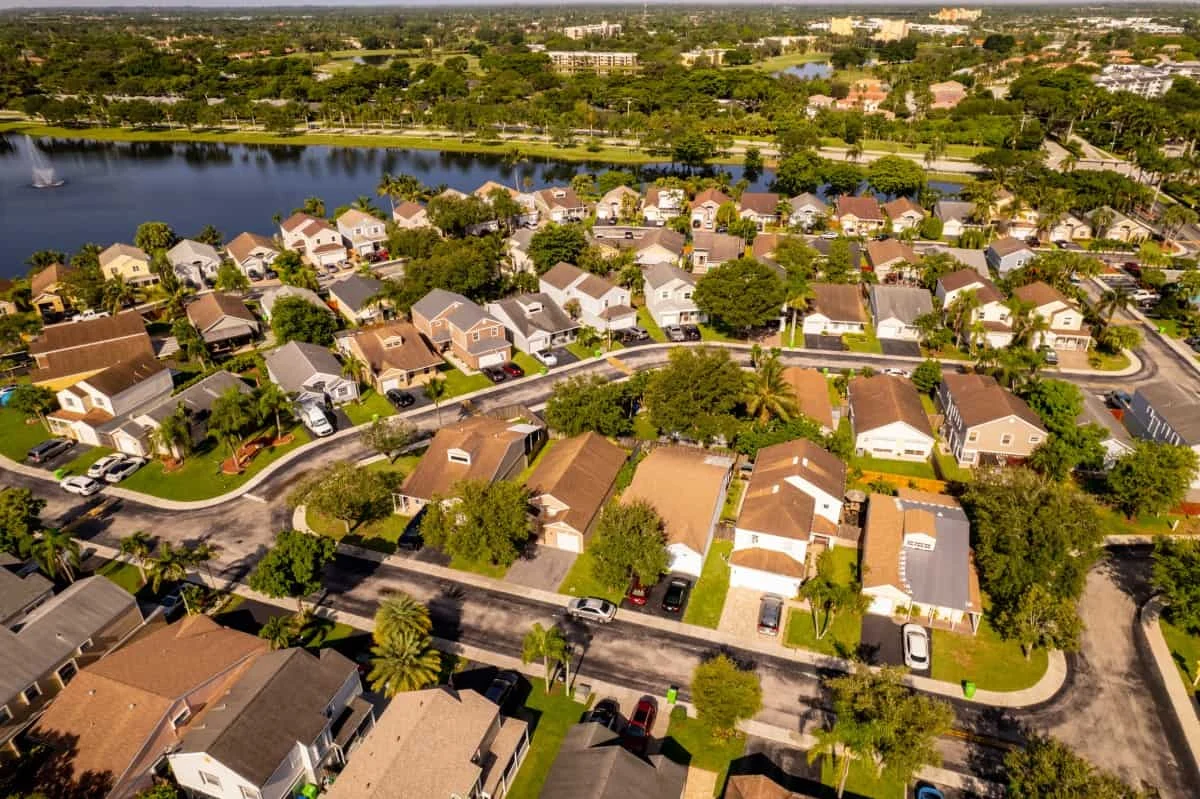
While ground-level photography captures the intimate details of a home, drone photography provides the essential context. The goal of using drone technology is not to artificially exaggerate the size of a property or create cinematic drama for the sake of it; rather, it is to reveal the spatial relationships between the home, the yard, the neighborhood, and the surrounding landscape.
A New Definition of "Photo-Shoot Ready"
The introduction of drone photography has fundamentally changed what it means for a property to be "photo-shoot ready." In the past, cleaning the front walkway was sufficient. Today, the camera may capture rooflines, side yards, fencing, driveway placement, and the transition between your property and the street.
Felix Guan, Founder of VideoGuru, notes that the preparation required for a drone shoot is extensive. "Before a drone shoot, sellers should make the property look just as polished from above as it looks from the ground," Guan explains. "It is helpful to open up patios, decks, pools, and other outdoor areas so the drone can capture the full lifestyle appeal of the property rather than just the house itself."
Expert Perspectives: Maximizing the Aerial Advantage
To understand the technical nuances of property presentation, we consulted with industry leaders who specialize in visual real estate marketing.
Preparing the Footprint
Scott Rose of DroneVideos.com emphasizes that the devil is in the details—many of which are invisible from the ground. "Make sure to prepare your entire property, including side yards and areas behind the house, because drone photos reveal spaces that ground photos often miss," says Rose.
His advice includes practical steps:
- Dry Surfaces: Turn off sprinklers well in advance so that driveways and patios have time to dry evenly, preventing unsightly wet patches.
- Highlighting Features: Share specific property boundaries and unique features—such as walking trails, waterfront access, or large garden beds—with the photographer in advance so they can plan shots that highlight the home’s greatest assets.
Choosing the Right Angle
A common misconception is that the "best" drone shot is the one taken from the highest altitude. In reality, a bird’s-eye view can sometimes flatten a property, turning a beautiful home into an abstract diagram.
Eli Zafrani, owner and operator of Pick Three Photography, advocates for a more grounded approach. "The most valuable drone shot usually isn’t the overhead one," Zafrani explains. "It’s the frame from 25 or 30 feet high, where the camera sits above the landscaping and below the roofline. This shows the house in a way no tripod can." This specific altitude allows the camera to showcase the connection between a deck and the yard, or the depth of a porch, without losing the human-scale perspective that makes a house feel like a home.
The Architecture of a Reveal
When it comes to video marketing, the sequence of the footage is as important as the quality of the image. A common error is "revealing" everything in the first five seconds of a video.
Ben Wagner, CMO of InboundREM.com, suggests that sellers and agents treat the flight path as a narrative arc. "Think about a grand reveal," Wagner suggests. "If there is a hidden feature like a pool or a private garden, plan the flight path to save it for the climb. Alternatively, consider how the house itself might be the grand reveal after a drone trip through a tree-lined street."
This approach requires no elaborate filmmaking equipment; it requires intentionality. The camera should move because each change in perspective reveals a new, useful piece of information to the buyer.
Implications for the Modern Seller
The intersection of backyard staging and drone photography creates a powerful, cohesive message. A beautifully styled patio loses its impact if the aerial angle makes it look disconnected or small. Conversely, an impressive drone shot of a large lot feels empty if the ground-level images do not show how that space can be utilized.
To synthesize these efforts, sellers should view their listing as a curated sequence:
- The Approach: Establishing the home’s place in the neighborhood via drone.
- The Context: Showing the relationship between the front of the house and the curb.
- The Lifestyle: Transitioning to ground-level photography that highlights the functionality of outdoor living areas.
- The Hidden Value: Concluding with the unique features of the backyard or surrounding land that were revealed from the aerial perspective.
Ultimately, these tools do not invent a lifestyle; they illuminate the one that already exists. A buyer may not remember the technical specifications of every home they view online, but they will remember the emotional resonance of a backyard that looked "ready for a Saturday night" or a property that sat perfectly within its landscape. By focusing on function, maintenance, and the strategic use of height, sellers can turn a simple digital listing into a compelling invitation to move in.