Main Facts: U.S. Supreme Court Pauses Federal District Court Ruling
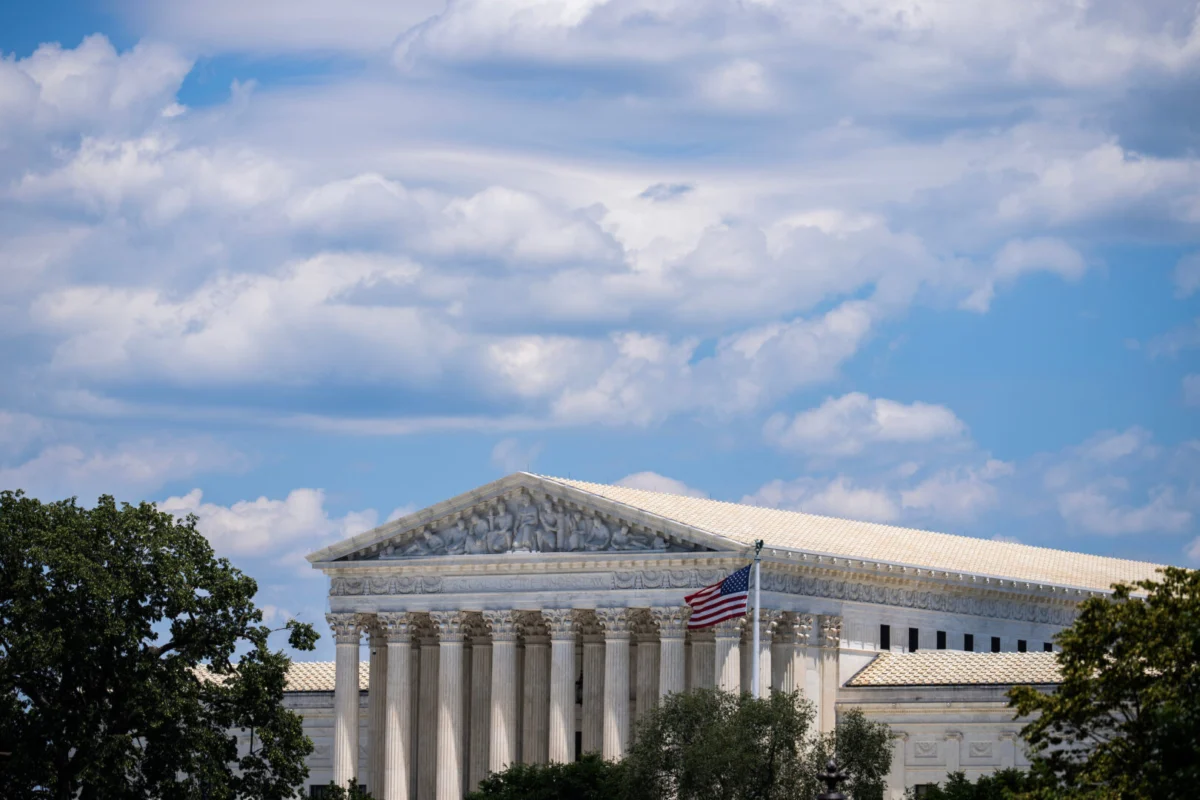
In a decisive late-morning order, the U.S. Supreme Court paused a federal trial court order that had mandated Missouri use a newly drawn, Republican-favored congressional map for the upcoming midterm elections.
The emergency decision leaves in place a ruling from the Missouri Supreme Court, which held that the mid-decade congressional map passed by the Republican-controlled state legislature in 2025 was illegal and unenforceable due to an active, citizen-led ballot referendum process.
The high court’s order immediately halts a Temporary Restraining Order (TRO) issued earlier in the week by U.S. District Judge Stephen R. Clark of the U.S. District Court for the Eastern District of Missouri. Judge Clark had required election officials to conduct the November general election under the contested 2025 boundaries, citing administrative continuity after the state used those lines in its August primary.
Thursday’s intervention by the Supreme Court provides clarity in a rapidly escalating jurisdictional clash between federal and state courts. The practical effect of the high court’s stay is that Missouri will almost certainly revert to the congressional district boundaries adopted in 2022 for the midterm elections.
The ruling directly impacts the partisan balance of Missouri’s eight-member delegation in the U.S. House of Representatives. Under the 2022 lines, the delegation consists of six Republicans and two Democrats. The blocked 2025 map was specifically engineered to dismantle the Democratic-leaning 5th Congressional District in Kansas City, setting up a potential 7-1 Republican majority.
Despite the Supreme Court’s order, election officials face severe logistical challenges. State statutory deadlines for final ballot certification passed, leaving local election authorities scrambling to implement revised boundaries, reprint ballots, and update voter registration systems weeks before voting begins.
Chronology of the Missouri Redistricting Saga
The legal dispute stems from a multi-year effort to redraw Missouri’s electoral boundaries following the 2020 Decennial Census, culminating in a fast-paced legal battle.
[2022] General Assembly adopts baseline congressional map (6 GOP / 2 DEM balance)
  │
[2025] Republican Legislature enacts mid-decade redistricting plan targeting MO-05
  │
[Late 2025 - Early 2026] "People Not Politicians Missouri" files citizen referendum petition
  │
[August 2026] State conducts primary under 2025 map despite pending petition
  │
[Early Sept 2026] Missouri Supreme Court strikes down 2025 map due to pending referendum
  │
[Sept 8, 2026] SCOTUS denies initial state appeal; Federal suit filed by Rep. Bob Onder;
               Judge Clark issues TRO ordering 2025 map
  │
[Sept 9, 2026] 8th Circuit denies stay of TRO; Emergency appeal submitted to U.S. Supreme Court
  │
[Sept 10, 2026] U.S. Supreme Court grants emergency stay against Judge Clark's TRO
The 2022 Baseline and 2025 Mid-Decade Redraw
Following the 2020 census, Missouri enacted a congressional map in 2022 after prolonged legislative debate. That plan largely preserved the existing balance of power: six safe Republican seats, one safe Democratic seat anchored in St. Louis (District 1), and one Democratic-leaning seat centered in Kansas City (District 5), represented by long-serving Democratic Rep. Emanuel Cleaver II.
In 2025, amid nationwide efforts by state legislatures to redraw electoral boundaries mid-decade for strategic gain, the Republican-controlled Missouri General Assembly passed a revised congressional map. The new boundary lines split Jackson County, redistributing heavy concentrations of Democratic voters in Kansas City into surrounding rural, deeply conservative districts.
The Citizen Referendum Movement
Under the Missouri Constitution, citizens possess the right of referendum—a process allowing voters to approve or reject legislation passed by the General Assembly before it officially takes effect. Following the passage of the 2025 map, a nonpartisan coalition named People Not Politicians Missouri launched a statewide petition drive to place the redistricting legislation on the ballot for a public vote.
Under state law, submitting a sufficient number of valid signatures automatically suspends the underlying statute until the public votes on the referendum.
Secretary of State Refusal and Primary Elections
Despite the referendum petition filings, Missouri Secretary of State Denny Hoskins refused to suspend the 2025 map. Hoskins proceeded to administer the August primary elections using the 2025 lines, arguing that the petition process had not been fully vetted and that altering electoral lines mid-stream would disrupt election operations.
High-Speed Litigation Sequence
The procedural clash escalated into legal action across multiple court systems:
- Late August to Early September 2026: People Not Politicians Missouri sued in state court to stop the enforcement of the 2025 map. The Missouri Supreme Court ruled that the legislative map was invalid and unconstitutional under state law because the pending citizen referendum automatically stayed the legislation.
- September 8, 2026 (Morning): Secretary of State Hoskins sought emergency relief from the U.S. Supreme Court to overturn the state court’s decision. The Supreme Court denied Hoskins’ application without comment.
- September 8, 2026 (Afternoon): Concurrently, newly nominated Republican candidate Rep. Bob Onder, alongside another congressional candidate and two individual voters, filed a federal lawsuit in the U.S. District Court for the Eastern District of Missouri. They argued that reverting to the 2022 lines violated federal law and the Elections Clause of the U.S. Constitution. U.S. District Judge Stephen R. Clark issued a Temporary Restraining Order requiring Missouri to use the 2025 map for the November election.
- September 9, 2026: Opponents of the 2025 map appealed to the U.S. Court of Appeals for the Eighth Circuit, requesting an emergency stay of Judge Clark’s order. The Eighth Circuit denied the stay. Later that afternoon, the challengers submitted an emergency application to the U.S. Supreme Court.
- September 10, 2026: The U.S. Supreme Court granted the application, pausing Judge Clark’s TRO and allowing the Missouri Supreme Court’s ruling—mandating the 2022 lines—to take effect.
Supporting Data and Map Comparison
The conflict centers on how district boundaries alter voter demographics and partisan lean across Missouri’s eight congressional districts.
+-----------------------------------------------------------------------------------+
|                       MISSOURI CONGRESSIONAL MAP COMPARISON                       |
+-------------------+----------------------------------+----------------------------+
| Metric / Feature  | 2022 Enacted Map (Restored)      | 2025 Suspended Map         |
+-------------------+----------------------------------+----------------------------+
| MO-05 Composition | Urban Jackson County / KC Core   | Split Jackson County into  |
|                   | Unified (D+11 Lean)              | Rural Counties (R+5 Lean)  |
+-------------------+----------------------------------+----------------------------+
| Expected Delegation| 6 Republicans, 2 Democrats      | 7 Republicans, 1 Democrat  |
| Partisan Split    |                                  |                            |
+-------------------+----------------------------------+----------------------------+
| Key Target Seat   | MO-05 (Rep. Emanuel Cleaver II)  | Targeted for GOP Flipping  |
|                   | Democratic Safe/Likely           | Republican Favorable       |
+-------------------+----------------------------------+----------------------------+
| Legal Status      | Enforceable for Nov 2026        | Suspended Pending Citizen  |
|                   | Midterms                         | Referendum Vote            |
+-------------------+----------------------------------+----------------------------+
Demographic and Partisan Breakdown of Missouri District 5
The core focus of the legislative dispute is Missouri’s 5th Congressional District, held by Democratic Representative Emanuel Cleaver II since 2005.
- 2022 District Lines: The 2022 map unifies Kansas City within Jackson County, yielding a Cook Partisan Voting Index (PVI) of approximately D+11. Cleaver won reelection comfortably under these lines in 2022 and 2024.
- 2025 Redrawn Lines: The suspended 2025 map sliced urban Jackson County into three separate districts, diluting Democratic voters by combining them with conservative rural populations in the 4th and 6th Districts. This altered the 5th District’s partisan lean to R+5, putting the seat in competitive reach for Republicans.
Election Administration Metrics and Operational Deadlines
Reverting maps close to an election presents distinct operational challenges for state election authorities:
- Ballot Certification Deadline: Missouri’s statutory deadline for certifying candidates and finalizing ballot text was Tuesday, September 8, 2026.
- Uniformed and Overseas Citizens Absentee Voting Act (UOCAVA): Federal law dictates that absentee ballots for military and overseas voters must be transmitted no later than 45 days before a federal election (September 19, 2026).
- Jurisdictional Adjustments: Election authorities across 114 counties and the independent City of St. Louis must update precinct voter files, reallocate poll workers, and issue notices to affected voters whose congressional districts changed twice within a two-week window.
Official Responses and Key Legal Arguments
The Supreme Court Emergency Order
The Supreme Court issued an unwritten, single-paragraph order granting the stay. In keeping with standard procedure for emergency shadow docket applications, the court did not provide a detailed opinion or publish dissents from individual justices. The order stated that Judge Clark’s federal district court injunction is stayed pending the final disposition of appeals before the Eighth Circuit and any subsequent petitions to the Supreme Court.
Challengers and Advocacy Groups
Counsel for the original state court plaintiffs and voting rights advocacy groups celebrated the Supreme Court’s intervention, maintaining that federal courts cannot override state constitutional procedures regarding legislative referendum power.
In their emergency application submitted to the Supreme Court on Wednesday, attorneys for the challengers wrote:
"Every hour the TRO remains in force, election officials will continue to implement a congressional map that Missouri’s highest court has held is not and never has been law."
A spokesperson for People Not Politicians Missouri added:
"The Supreme Court’s order respects the Missouri Constitution and the rights of Missouri voters to review laws passed by their legislature. Politicians tried to subvert the process to choose their own voters, but the constitutional right to referendum stands."
Missouri State Election Officials
Missouri Secretary of State Denny Hoskins, a Republican named as a primary defendant in state proceedings and a key applicant in federal litigation, emphasized the administrative burdens resulting from the order.
In federal court filings, Hoskins argued that transitioning back to the 2022 map post-primary introduces confusion for local administrators:
"Reverting to 2022 boundaries after the August primary was conducted under the 2025 map presents severe administrative hurdles, voter confusion, and logistical challenges past statutory deadlines."
Following the Supreme Court’s stay, Hoskins stated that his office would comply with the order and instruct county clerks to proceed under the 2022 lines, while continuing to highlight the technical difficulties facing local administrators.
Congressional Representatives and Candidates
- Rep. Emanuel Cleaver II (D-MO-05): "This ruling protects the constitutional rights of Missouri voters. The attempt to push through an illegal map mid-decade was a partisan power grab designed to dilute the voices of Kansas City residents."
- Rep. Bob Onder (R-MO): Plaintiff in the federal lawsuit, expressed disappointment with the stay: "Holding elections under outdated maps that do not reflect recent legislative enactments disenfranchises voters and undermines federal constitutional principles governing federal elections."
Implications for Federalism, Redistricting, and the 2026 Midterms
State Judicial Sovereignty vs. Federal Court Intervention
The Supreme Court’s order reasserts key principles of judicial federalism. By staying federal Judge Clark’s order, the Supreme Court signaled that federal courts should exercise restraint when asked to overturn state supreme court interpretations of state constitutional law.
The decision underscores that a state legislature’s authority to draw congressional maps under the Elections Clause of the U.S. Constitution (Article I, Section 4) remains subject to procedural constraints set by state constitutions—including citizen voter referendums.
                  ELECTION LITIGATION FRAMEWORK

     State Level                             Federal Level
+-----------------------+               +-----------------------+
|  Missouri Assembly    |               |  U.S. District Court  |
|  Passes 2025 Map      |               |  Issues TRO for 2025  |
+-----------+-----------+               +-----------+-----------+
            |                                       |
            v                                       v
+-----------------------+               +-----------------------+
| Citizen Referendum    |               |  8th Circuit Court    |
| Suspends Legislation  |               |  Denies Emergency Stay|
+-----------+-----------+               +-----------+-----------+
            |                                       |
            v                                       v
+-----------------------+               +-----------------------+
| Missouri Supreme Court|               | U.S. Supreme Court    |
| Rules Map Illegal     |  ───────────> | Grants Stay on TRO    |
+-----------------------+  (Prevails)   | (Reverts to 2022 Map) |
                                        +-----------------------+
The Purcell Principle and Emergency Litigations
The Purcell principle—a legal doctrine derived from Purcell v. Gonzalez (2006)—advises federal courts not to alter state election rules shortly before an election to avoid voter confusion and administrative disruption.
In this case, both sides invoked Purcell:
- Republican Plaintiffs argued that changing maps from the 2025 primary configuration back to 2022 lines right before November violated Purcell.
- Challengers and State Appointees countered that Judge Clark’s last-minute TRO was the intervention that violated Purcell by overriding the state Supreme Court’s ruling and forcing election officials to use an unconstitutional map.
By pausing the federal injunction, the Supreme Court deferred to the state supreme court’s prior ruling, treating the state judicial determination as the baseline legal status quo.
National Stakes for House Majority Control
With slim margins separating Republicans and Democrats in the U.S. House of Representatives heading into the 2026 midterms, every seat remains vital to party leaders.
- Had the 2025 map remained in place, national Republicans would have secured an opportunity to flip Missouri’s 5th District, shifting the state delegation from 6-2 to 7-1.
- With the Supreme Court halting the 2025 map, Rep. Emanuel Cleaver II remains favored to retain his Kansas City seat under the D+11 baseline of the 2022 map.
Broader Outlook
As state election authorities race to update voting machines, re-issue sample ballots, and notify affected voters prior to the UOCAVA deadline, the legal dispute moves back to the U.S. Court of Appeals for the Eighth Circuit for full briefing on the merits. However, with the Supreme Court’s emergency stay active through the election cycle, Missouri will conduct its 2026 congressional elections using the 2022 district lines.