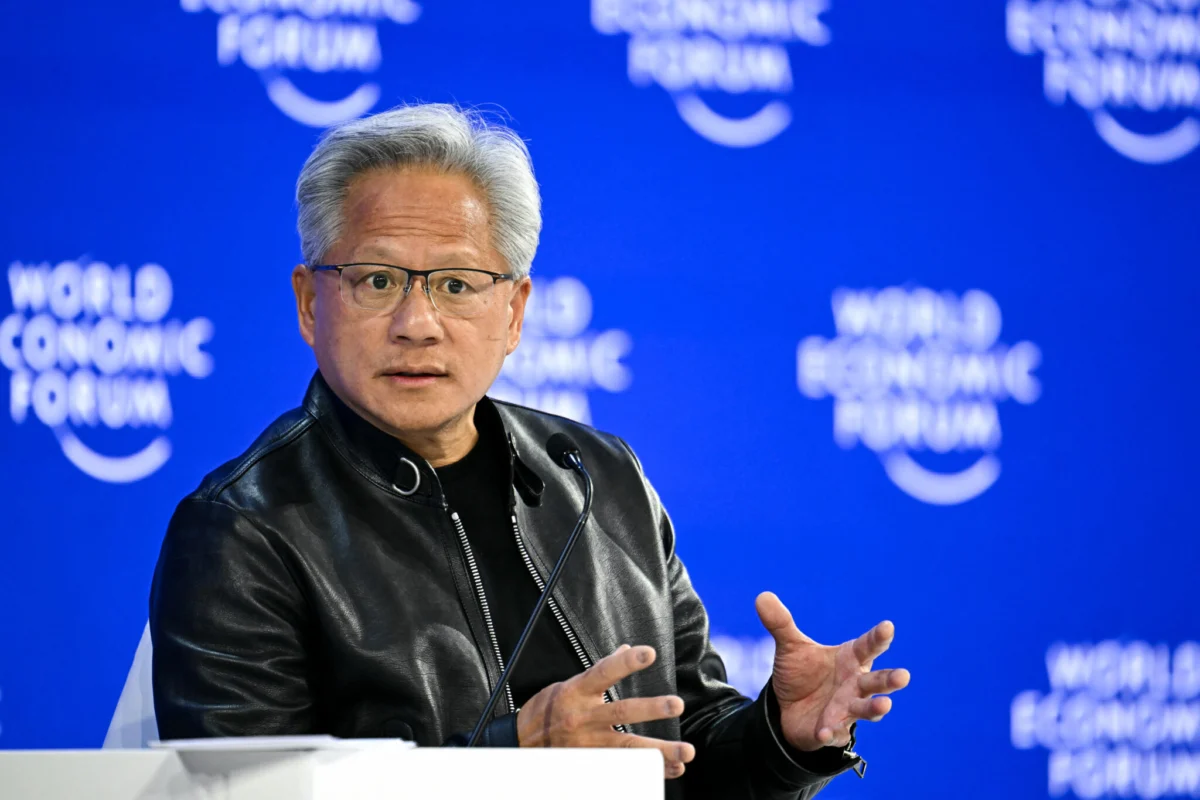
In a moment that blurred the lines between high-stakes geopolitics and the tech industry’s internal discourse, Nvidia CEO Jensen Huang found himself at the center of a surreal public spectacle on Monday morning. While speaking onstage at the prestigious All-In Summit in Los Angeles, Huang received an unscheduled call from President Donald Trump. Rather than directing the call to voicemail, Huang opted to bring the President of the United States directly into the conversation, effectively turning a tech industry panel into an impromptu Oval Office policy briefing.
The incident, which left public relations professionals wincing at the lack of stage-managed protocols, underscored the increasingly tight-knit—and highly public—alliance between the current administration and the titans of Silicon Valley. As the AI arms race intensifies, the exchange served as a definitive signal: for the Trump administration, the path to national security runs directly through the GPU clusters of Santa Clara.
The Chronology: An Unscripted Convergence
The scene at the All-In Summit was already charged with industry heavyweights. Huang was joined on stage by the podcast’s co-hosts—venture capitalists Chamath Palihapitiya, Jason Calacanis, and White House advisers David Friedberg and David Sacks. The group had been deep in a debate regarding the future of artificial intelligence, specifically focusing on the growing movement to "slow down" AI development—a sentiment recently championed by Anthropic CEO Dario Amodei.
As the discussion turned toward the friction between safety-conscious researchers and aggressive commercial expansion, Huang’s phone buzzed. Upon realizing the caller was President Trump, the CEO opted for transparency over decorum.
"I’m onstage with the besties," Huang remarked to the President, acknowledging the venture capitalists who have become influential voices in the administration’s tech policy orbit.
The logistical challenge of amplifying the call to the audience became a moment of levity. "The great thing about life is Jensen can develop the most complex computer chip in the world… but he can’t figure out how to put you on speaker," Trump quipped, drawing laughter from the crowd. Huang, demonstrating his own brand of pragmatism, quickly requested an extra microphone from the stagehands, ensuring the audience could hear the President’s unvarnished thoughts on the state of the industry.
The "Hoax" of AI Slowdown
The core of the conversation shifted quickly from pleasantries to the ideological battle over AI regulation. The panel had been dissecting Dario Amodei’s recent call for a more cautious pace in AI development—a stance that has found sympathy among industry peers like SpaceX CEO Elon Musk and OpenAI CEO Sam Altman.
President Trump, however, wasted no time dismissing these concerns.
"They’re just playing right in the hands of a lot of people that don’t want to see it happen," Trump stated, referring to those advocating for a slower development cycle. "That could be political people. It could also be China. And we’re not going to let that happen. It’s a hoax."
The term "hoax," frequently used by Trump to describe political narratives he opposes, was here weaponized against the regulatory framework surrounding AI. For the administration, the push for safety benchmarks and slower development is viewed not as a prudent technical necessity, but as a strategic vulnerability that could allow global competitors—namely China—to leapfrog American innovation.
"You’re right. We’re not going to let that happen, sir," Huang replied, a response that was met with sustained applause from the Summit’s attendees, signaling a broad consensus among the tech elite present that aggressive growth is the only viable path forward.
Supporting Data: The Grassroots Resistance
While the political leadership and the tech moguls are aligned on acceleration, the ground reality is far more complex. The "pro-AI" narrative currently being pushed by the administration faces significant headwinds from the public, creating a widening chasm between Washington’s policy goals and local community concerns.
Recent Gallup polling reveals a stark disconnect: seven in 10 Americans now oppose the construction of large-scale data centers in their neighborhoods. The opposition is not rooted in an abstract fear of sentient AI, but in tangible resource depletion. More than 50% of respondents cited the environmental impact—specifically the massive water consumption and electricity load required to cool and power modern GPU farms—as their primary grievance. Another 20% expressed concerns regarding cost-of-living spikes, as local power grids struggle to accommodate the massive energy demands of data centers, potentially driving up residential utility bills.
Despite these findings, proponents like Y Combinator CEO Garry Tan have characterized the backlash against data centers as an "international psyop." This narrative suggests that anti-data center sentiment is a manufactured crisis designed to stifle American economic growth. By framing public concern as a foreign-influenced disruption, the administration and its allies are attempting to delegitimize local resistance, viewing the siting of data centers as a matter of national security that should supersede local zoning or environmental concerns.
Official Responses and Administration Stance
The phone call concluded with a clear affirmation of the administration’s commitment to the industry. Trump explicitly signaled his support for Nvidia’s mission, framing it as a prerequisite for American global dominance.
"We have to be a little bit careful… We have to do things and we have to do them prudently, but that doesn’t mean we’re going to stop an industry," Trump told Huang. "So I’m with you all the way. I didn’t even know how you felt about it. I just hoped you felt the same way as me. We’re going to lead."
This "all the way" endorsement is likely to translate into significant policy shifts. Observers anticipate that the administration will prioritize "streamlined" permitting processes for data centers, potentially invoking federal authority to bypass local environmental reviews that have historically slowed infrastructure projects. The message is clear: the administration views the energy demands of AI not as a nuisance to be mitigated, but as a strategic priority to be fulfilled at any cost.
The Implications: A New Era of Corporate Governance
The implications of this public alignment between the White House and the world’s most valuable chipmaker are profound. Firstly, it signals the end of the "hands-off" era of tech regulation. Rather than acting as a neutral arbiter, the administration is positioning itself as a partner in the industry’s growth, suggesting that companies like Nvidia are effectively extensions of the American state’s strategic interest.
Secondly, the dismissal of environmental and community concerns as a "hoax" sets the stage for a period of intense civil friction. As the demand for AI compute continues to double and triple, the physical footprint of these companies will grow, bringing them into direct conflict with local governments and residents. If the administration continues to frame these local concerns as "psyops," it risks alienating a significant portion of the electorate, potentially creating a polarized landscape where technological progress is viewed as an elite project detached from the needs of the average citizen.
For investors and industry stakeholders, the call was a bullish signal. It suggests that regulatory hurdles—whether related to antitrust, environmental compliance, or safety oversight—will likely be minimized or overruled in the name of winning the AI race.
However, for the broader public, the spectacle raised uncomfortable questions about accountability. When the CEO of the world’s most powerful hardware company receives his policy direction from the President via a speakerphone at a private summit, it confirms a reality that many have suspected: the governance of the future of AI is happening in private, in real-time, and with very little regard for the democratic processes that typically mediate public concerns.
As the industry moves forward, the question remains: Can the administration maintain its "all-in" support for AI acceleration without provoking a broader backlash from a public that is increasingly wary of the environmental and economic costs of this digital revolution? For now, the answer from the stage in Los Angeles was clear: the pursuit of supremacy will take precedence, and the machinery of the AI era will continue to turn, regardless of the noise on the ground.