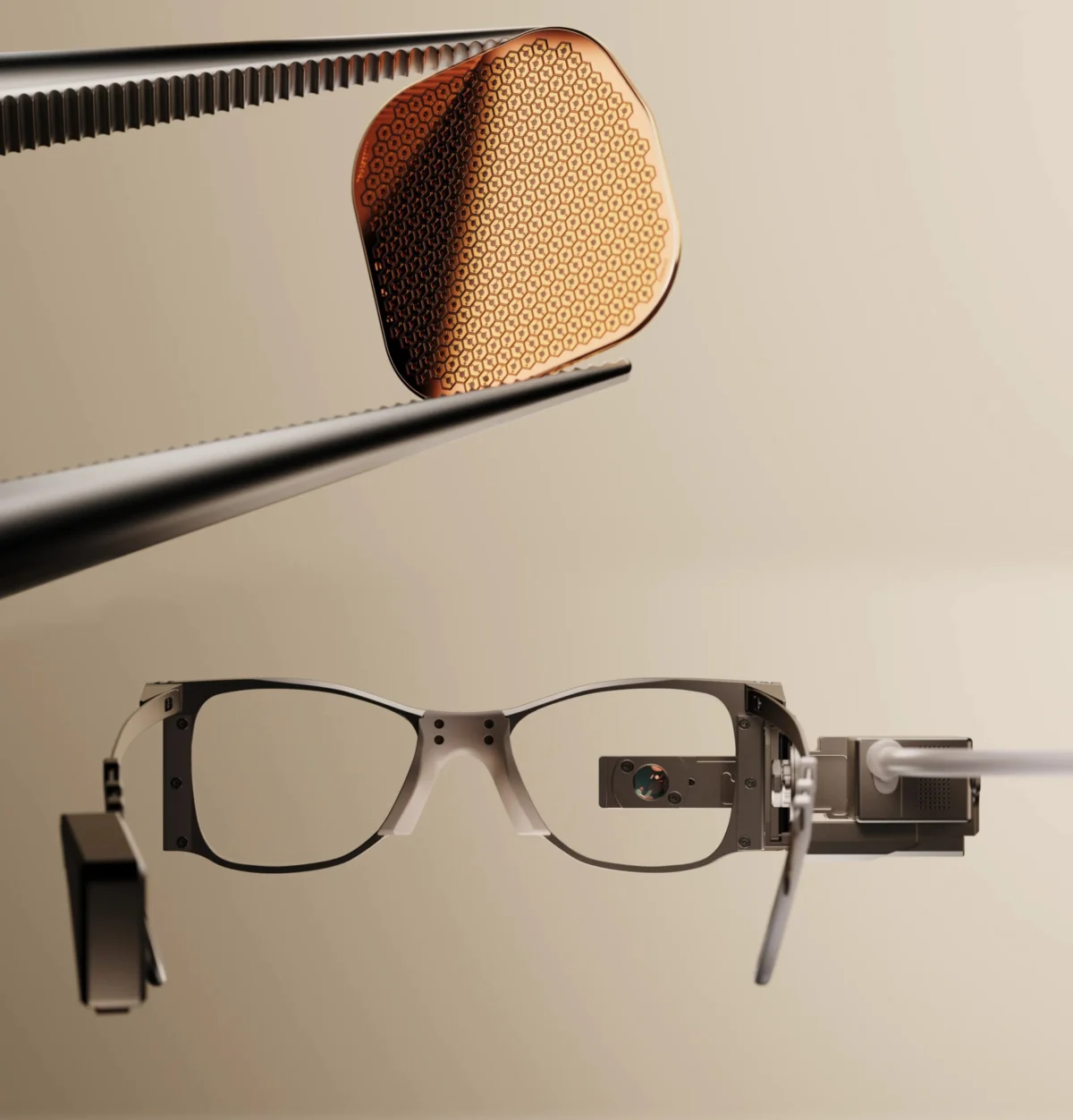
In a landmark achievement for the burgeoning field of brain-computer interfaces (BCI), Science Corporation—a startup founded by former Neuralink president Max Hodak—has secured European regulatory approval for its PRIMA vision restoration system. This milestone marks a significant shift in the medical technology landscape, moving from theoretical, long-term neural research to the immediate, tangible application of restoring sight to those suffering from age-related macular degeneration (AMD).
The approval, which grants Science the CE Mark, allows the company to begin commercializing the PRIMA device across Europe. Simultaneously, the startup has secured a breakthrough designation from the U.S. Food and Drug Administration (FDA), a vital step toward an expedited regulatory review that could see the technology reach patients in the United States struggling with rare forms of blindness.
The PRIMA System: Bridging Biology and Technology
At the heart of Science Corporation’s success is the PRIMA system, a sophisticated neuro-prosthetic designed to bypass damaged photoreceptor cells in the retina. AMD, a condition affecting millions globally, effectively blinds its victims by destroying the light-sensitive cells at the back of the eye, rendering the brain unable to receive visual signals.
The procedure to restore this function is surprisingly efficient. Patients undergo an hour-long outpatient surgery where a small, specialized chip is implanted behind the retina. Once the chip is in place, the patient wears a pair of specially designed, camera-equipped glasses. These glasses capture the world, process the visual data, and transmit it wirelessly to the implanted chip, which then stimulates the remaining functional neurons in the eye to relay signals to the brain.
The results, according to CEO Max Hodak, are transformative. "One of our patients in France finished a 300-page novel a little while ago, and sent us the book," Hodak noted in a recent interview. "We have a sketch on the wall—one of our patients drew the Sydney Opera House. There are videos of patients playing crossword puzzles and filling in Sudoku."
Chronology: From Neuralink to the PRIMA Acquisition
The trajectory of Science Corporation is intrinsically linked to the broader evolution of the BCI industry. Max Hodak, a key figure in the early development of Elon Musk’s Neuralink, departed the company in 2021 with a vision that extended beyond pure neural stimulation. While Neuralink focused on direct brain implants, Hodak sought to explore a more sustainable, bio-hybrid approach—merging silicon-based hardware with living biological cells.
However, as Hodak quickly realized, the "winter" of neuro-technology development—a period where funding dries up due to a lack of commercialized, revenue-generating products—posed a significant existential threat to startups. To avoid this, he needed a path that balanced ambitious long-term R&D with a commercially viable medical device.
The turning point came in 2024, when Science Corporation acquired Pixium Vision, a French company that had already laid the foundational work for the PRIMA technology. While Pixium had the innovative science, it lacked the organizational momentum to shepherd the product through the final stages of regulatory approval. Science stepped in, leveraging its internal engineering and documentation platform to refine the device and prepare it for the rigorous scrutiny of European regulators.
This acquisition represents a strategic pivot: rather than starting from scratch, Science identified a high-potential technology and applied its internal "operating system" to push it across the finish line.
Supporting Data: The Burden of Disease and Market Potential
The medical need for a solution like PRIMA is staggering. Age-related macular degeneration is a leading cause of vision loss in developed nations, affecting a large demographic that is currently underserved by traditional optometry and ophthalmology. The inability to perform basic tasks—reading, recognizing faces, or navigating daily life—results in a profound loss of autonomy.
While the clinical data from trials in Germany and France remains the primary metric for the CE Mark, the economic model is equally critical to the technology’s survival. Science Corporation expects each PRIMA device to cost in the "hundreds of thousands of dollars." This high price point is common for advanced, life-altering medical implants, but it necessitates a robust reimbursement framework.
Science is currently in active negotiations with European healthcare providers and insurance systems to establish these reimbursement pathways. The company plans to initiate its first commercial procedures in Germany—where its primary clinical trials were conducted—as early as September.
Official Responses and Strategic Vision
Max Hodak’s approach to business is rooted in the belief that the BCI industry needs a "win" to survive. "The thing that the space needs is a company making $100 million a year of revenue," Hodak stated. "There’s this risk that the whole thing enters a winter, and so we think it’s important to build a sustainable business as we develop these longer-term technologies."
This pragmatism is the core of Science’s identity. The company is not merely chasing the next venture capital cycle; it is building a revenue-generating entity that can sustain the high-cost, high-risk development of its "bio-hybrid" sensors.
The company’s roadmap involves two distinct tiers of development:
- The Commercial Tier: Refining the PRIMA system, including the development of a more advanced, high-resolution chip and a sleeker form factor for the glasses. Currently, the glasses require a battery pack, a limitation that Hodak hopes to resolve in future iterations by mimicking the lightweight design of modern augmented reality (AR) hardware.
- The Innovation Tier: Developing directly implanted bio-hybrid brain sensors. In collaboration with Dr. Murat Günel, chair of the Department of Neurosurgery at Yale Medical School, Science is preparing for human trials of a sensor that interacts more directly with the neural architecture of the brain.
"Bringing PRIMA to market is the most important thing for the company," Hodak explained, "because we don’t get to do the bio-hybrid stuff long term if you don’t have a great vision business. That’s what’s really financing the rest of it—that’s the thing that investors know how to build spreadsheets around."
Implications: A New Era for Neural Engineering
The regulatory success of Science Corporation signals a maturation of the neuro-tech sector. For years, the industry was dominated by high-profile, speculative announcements. Today, the focus is shifting toward "boring" but vital processes: regulatory documentation, reimbursement models, and clinical safety.
The implications of this shift are profound for several stakeholders:
- For Patients: The immediate horizon offers hope for those with retinal degeneration. If PRIMA’s commercial rollout is successful, it could provide a roadmap for the treatment of other sensory deficits, potentially extending into auditory or even somatosensory systems.
- For Investors: The shift toward revenue-generating medical devices provides a clearer exit strategy and a lower-risk profile for capital, potentially encouraging more funding into the space.
- For the BCI Field: By proving that a startup can successfully acquire, refine, and monetize a complex neuro-device, Science has set a template for other firms. The "Science model"—blending rapid iterative engineering with a clear, revenue-generating commercial product—is likely to become the standard for the next decade of biotech development.
As the company prepares for its first commercial surgeries in Germany, the eyes of the medical and technology worlds will be watching. If the PRIMA system can successfully scale, it will do more than just help individuals read books and play Sudoku; it will solidify the position of brain-computer interfaces as a cornerstone of 21st-century medicine.
Looking Forward: Challenges and Technological Hurdles
Despite the optimism, the path forward is not without significant challenges. The power and compute requirements for a truly high-resolution BCI are immense. While current AR glasses from companies like Meta have set a high bar for user comfort and aesthetics, they do not have to perform the real-time, low-latency signal processing required to translate camera data into neural stimulation.
Science faces the dual challenge of shrinking the power envelope of its hardware while simultaneously increasing the bandwidth of the data sent to the retinal chip. This is an engineering problem that will likely occupy the company’s R&D teams for years to come. Furthermore, the long-term biological stability of the implants remains a subject of ongoing study. While the current trials have been promising, the true test of a BCI is its longevity—the ability to function for decades within the harsh, saline environment of the human body.
Ultimately, the success of Science Corporation will be measured by the quality of life it restores to its patients. By bridging the gap between the lab and the hospital, and between the brain and the digital world, the company is not just creating a product—it is creating a new category of human experience. As Hodak and his team navigate the complexities of global regulation and surgical rollout, they are proving that the most advanced technology is often that which is put to the most human use.