By International Affairs Desk
Published: July 19, 2026
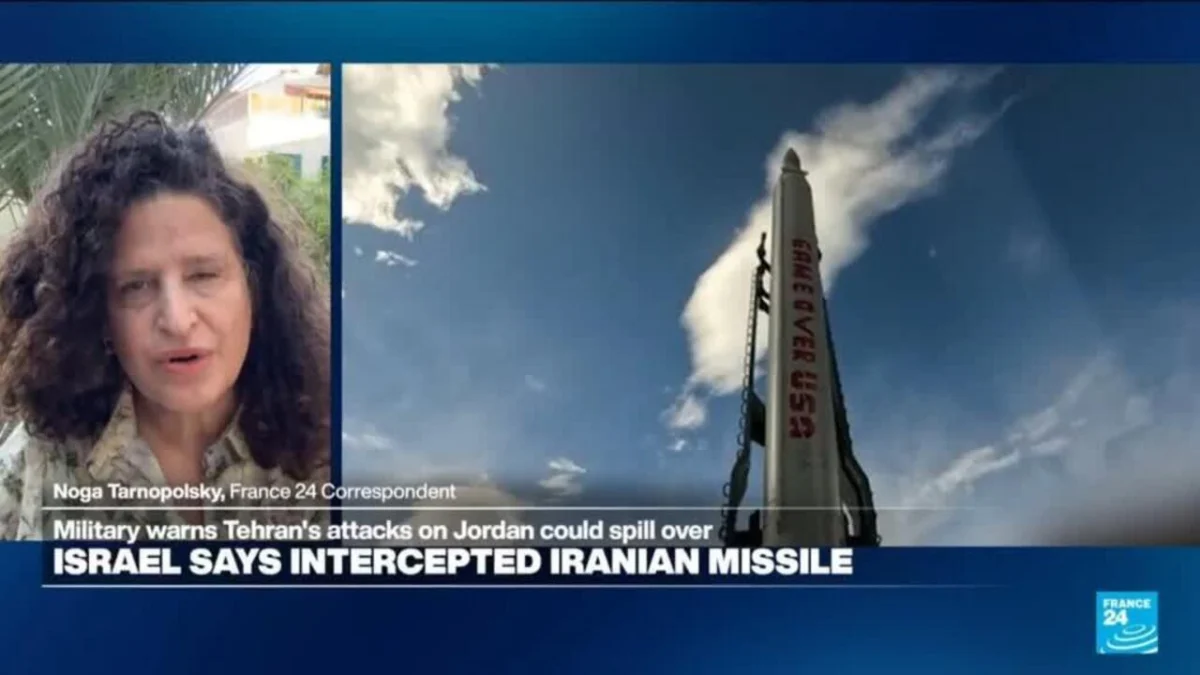
The geopolitical landscape of the Middle East shifted violently on Sunday evening as Israeli defense forces confirmed the successful interception of a ballistic missile launched from Iranian territory, which appeared to be targeting the strategic Jordanian port city of Aqaba. The incident, which occurred amidst heightened regional volatility, has triggered a cascade of diplomatic condemnations and prompted urgent security consultations across several capitals.
While the interception prevented catastrophic physical damage or loss of life, the implications of this strike—reaching the sensitive border area near the Red Sea—mark a significant escalation in the ongoing shadow conflict between Tehran and Tel Aviv.
Main Facts: The Interception Over the Red Sea
At approximately 17:45 local time, air raid sirens blared across the southern Israeli resort city of Eilat and the neighboring Jordanian port of Aqaba. Residents reported a loud, thunderous explosion echoing across the Gulf of Aqaba, which separates the two nations.
According to the Israel Defense Forces (IDF), an advanced Iranian-manufactured ballistic missile was detected traversing the airspace in a trajectory that intelligence assessments suggested was aimed at the Jordanian maritime hub. Israeli air defense systems, primarily the Arrow-3 interceptor, were deployed to neutralize the threat. The resulting interception occurred at high altitude, with debris reportedly scattering into the unpopulated desert regions surrounding the border corridor.
Initial forensic analysis by regional security experts suggests the projectile was a variant of the Kheibar-shekan or a similar long-range ballistic platform. The choice of target—Aqaba—is significant; as Jordan’s only seaport, it is a critical artery for the Hashemite Kingdom’s economy and a focal point for international trade.
Chronology: A Day of Heightened Alert
The timeline of the event reflects a rapid intensification of military readiness that had been building for several days:
- 08:00: Intelligence agencies across the region reported increased radio silence and unusual activity at known missile storage facilities in western Iran.
- 14:30: Israeli military command transitioned to a "high-alert" status following signals from US-backed regional radar arrays suggesting pre-launch fueling sequences.
- 17:40: The missile was detected on launch, prompting immediate activation of the regional ballistic missile defense umbrella.
- 17:47: The interception was confirmed by IDF spokespersons.
- 18:15: The Jordanian military announced it had closed its airspace temporarily to civilian traffic as a precautionary measure to allow for interceptor and patrol flight paths.
- 20:00: Formal statements began circulating from Tehran, Tel Aviv, and Amman, as the international community scrambled to assess the scope of the incident.
Supporting Data: The Geography of the Strike
The distance between the launch site in western Iran and the target area in Aqaba spans over 1,500 kilometers. This trajectory requires sophisticated guidance systems capable of circumventing various detection grids.
Data provided by independent aerospace observers indicates that the flight path was designed to maximize the threat to regional stability while testing the coordination between Israeli and allied regional defense networks.
Key Technical Considerations:
- Trajectory: The missile’s flight path suggests it was programmed to utilize a low-altitude "skimming" approach before terminal-phase maneuvering, a tactic intended to evade standard detection radar.
- Intercept Efficiency: The success of the Arrow-3 system confirms the efficacy of Israel’s multi-layered defense architecture, which integrates intelligence feeds from regional partners, including satellite telemetry provided by the United States.
- Regional Impact: The proximity to the Jordanian border forces places the Kingdom of Jordan in a precarious position. Amman has historically sought to maintain a policy of "active neutrality" in the Iran-Israel conflict, a position that is becoming increasingly difficult to sustain as territorial violations increase.
Official Responses: A Diplomatic Firestorm
The fallout from the interception has been immediate, with governments rushing to define the incident through their own strategic prisms.
The Israeli Perspective
The Israeli Prime Minister’s office issued a terse statement: "Israel will not tolerate any aggression directed at its sovereignty or the stability of its neighbors. This unprovoked launch from Iranian soil proves once again that Tehran is the primary driver of instability in the Middle East. We retain the right to respond at a time and place of our choosing."

The Jordanian Stance
Jordanian officials expressed deep alarm, labeling the incident a "dangerous provocation." The Jordanian Foreign Ministry stated, "The sanctity of our airspace and the safety of our citizens are non-negotiable. We are currently investigating the debris and are in high-level contact with all parties to ensure that our country does not become a theater for regional proxy warfare."
The Iranian Narrative
Tehran’s response was characterized by its characteristic ambiguity. A spokesperson for the Islamic Revolutionary Guard Corps (IRGC) denied direct involvement, suggesting that the launch may have been a "defensive exercise" by allied regional factions. However, military analysts note that the technical specifications of the missile suggest a degree of sophistication that remains well outside the reach of non-state actors.
International Reaction
The United States Department of State issued a strong condemnation, affirming its "ironclad" commitment to Israel’s security and the territorial integrity of Jordan. The European Union called for an immediate de-escalation, urging all parties to return to back-channel negotiations to prevent the conflict from spiraling into a wider regional war.
Implications: The Future of Middle Eastern Stability
This incident signifies a turning point in how regional powers perceive missile threats. The fact that an Iranian projectile was aimed at or near a Jordanian city suggests that the "conflict zone" is no longer restricted to the immediate Israel-Iran perimeter.
1. The "Jordanian Dilemma"
Jordan finds itself in the crosshairs. As a key US ally and a signatory to a peace treaty with Israel, Jordan is often viewed by Tehran as an obstacle to its regional influence. The potential for Jordan to be used as a battlefield poses an existential threat to the stability of the Hashemite monarchy.
2. Deepening Security Integration
The success of the interception will likely accelerate the development of an integrated regional air defense network. Discussions that were previously held behind closed doors regarding shared radar data and joint response protocols between Israel, Jordan, and other Gulf states are now moving toward formalization.
3. The Risk of Miscalculation
As the frequency of these long-range incidents increases, the margin for error narrows. A single failed interception or a piece of debris striking a civilian population center could trigger a massive, overt retaliatory strike from Israel, potentially igniting a conflict that could draw in global superpowers.
4. Economic Consequences
The immediate disruption to regional aviation and the psychological impact on the tourism sector—specifically in the resort areas of the Red Sea—are significant. Investors are watching closely to see if this incident is an isolated occurrence or the beginning of a sustained campaign of aerial pressure.
Conclusion: A Fragile Status Quo
As the sun sets on the Gulf of Aqaba, the region remains on edge. The interception of the missile is being hailed as a tactical success, but the strategic environment is more precarious than it has been in years.
The incident highlights that the "shadow war" has effectively come out of the shadows. With diplomatic channels strained and military posturing at an all-time high, the international community faces the daunting task of preventing a localized interception from evolving into a catastrophic regional confrontation. For the people living along the shores of the Red Sea, the events of July 19th are a stark reminder that the promise of regional peace remains fragile, subject to the whims of long-range missiles and the volatile politics of the Middle East.
Observers will now look to the coming days for signs of further escalation—or, if the parties can be persuaded, a return to the precarious, yet functional, quiet that preceded this latest explosion.