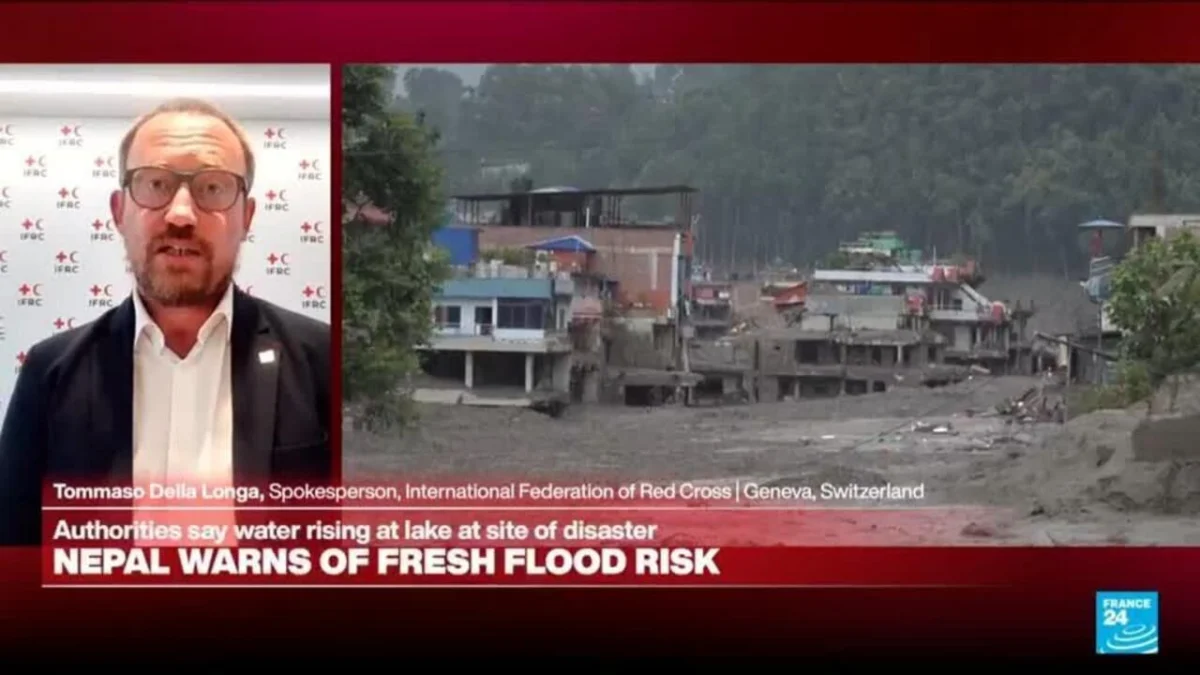
KATHMANDU – The Himalayan nation of Nepal is currently grappling with one of the most severe natural disasters in its recent history. Following a series of unprecedented monsoon cloudbursts, vast swathes of the country have been left submerged, with remote mountain villages completely erased by catastrophic landslides and flash flooding. As the death toll climbs, humanitarian organizations—most notably the Red Cross—have launched a desperate, large-scale mobilization effort to reach isolated communities that have been effectively cut off from the outside world.
Main Facts: A Nation Under Siege
The current disaster, which reached a critical peak on August 27, 2026, is the result of relentless, high-intensity monsoon rainfall that has exceeded historical meteorological records for the region. The geography of Nepal, characterized by steep, unstable mountain terrain, has turned the heavy precipitation into a lethal weapon.
- The Scale of Destruction: Government reports indicate that the damage is not localized but widespread across both the high-altitude Himalayan regions and the low-lying Terai plains.
- Infrastructure Collapse: Dozens of vital bridges have been swept away, and key arterial highways—the lifelines of the nation—are blocked by massive debris flows, rendering humanitarian logistics a logistical nightmare.
- The Humanitarian Toll: Thousands of residents have been displaced, with many still listed as missing. The Red Cross and local authorities have confirmed that entire settlements have been "washed out," leaving survivors with nothing but the clothes on their backs.
- Communication Blackouts: In the worst-hit districts, power grids and telecommunication towers have collapsed, creating a "silent zone" where the true extent of the mortality rate remains obscured.
Chronology of the Disaster
The timeline of this tragedy began weeks ago, but the events of late August represent a catastrophic escalation.
Early Warning Signs (August 20–24)
Meteorologists began tracking a persistent low-pressure system lingering over the Bay of Bengal, which began funneling unprecedented moisture toward the Himalayan foothills. By August 22, the Department of Hydrology and Meteorology issued "Red Alerts" for the central and western districts, warning of potential flooding.
The Critical Surge (August 25–26)
The rainfall intensity shifted from "severe" to "extreme." In a 48-hour window, some regions received more than 400mm of rain. During the night of August 25, massive mudslides were triggered in the districts of Myagdi and Sindhupalchok. These landslides acted as dams, creating temporary lakes that eventually burst, sending torrents of mud and boulders into the valleys below.
The Breaking Point (August 27)
By the morning of August 27, the situation reached a breaking point. The Red Cross officially declared a state of emergency, deploying search and rescue teams via helicopter as road access became impossible. This remains the current state of operations, as responders race against time to find survivors trapped under debris.
Supporting Data: Understanding the Physics of the Disaster
To comprehend the scale of the devastation, one must look at the environmental factors currently converging in Nepal.
Topographical Vulnerability
Nepal’s unique topography makes it a "ground zero" for climate-driven disasters. The rapid rise in elevation—from near sea level in the south to the world’s highest peaks in the north—means that when water accumulates, it gains kinetic energy at an alarming rate.
Hydrological Data
Recent analysis shows that river basins in the Gandaki and Koshi regions reached levels 3.5 meters above the "danger mark." These rivers, which serve as the drainage system for the entire Himalayan range, have breached their embankments, leading to the inundation of farmland that produces the majority of the nation’s rice crop.
Satellite and Ground Observation
Data from the International Centre for Integrated Mountain Development (ICIMOD) suggests that the saturation of soil on mountain slopes has reached 95% capacity. This means that even light rainfall in the coming days could trigger secondary landslides, posing an extreme risk to rescue workers currently operating in the field.
Official Responses and Humanitarian Mobilization
The government of Nepal, under immense pressure, has invoked the Disaster Risk Reduction and Management Act to streamline aid distribution.

The Role of the Red Cross
The Nepal Red Cross Society (NRCS) has been the primary civilian responder. Their teams are currently engaged in:
- Search and Rescue: Utilizing specialized equipment to stabilize mudslide areas while searching for survivors.
- Emergency Shelter: Establishing temporary camps for the thousands of internally displaced persons (IDPs).
- Medical Support: Deploying mobile health clinics to address the surge in waterborne diseases—such as cholera and dysentery—that inevitably follow such flooding.
International Cooperation
International aid agencies, including the UN Office for the Coordination of Humanitarian Affairs (OCHA), have pledged emergency funding. Neighboring countries and global partners are coordinating to send airlift capabilities, as helicopters remain the only viable method for delivering food, medicine, and clean water to the "cut-off" villages.
Implications: The Long Road to Recovery
The immediate crisis is only the beginning of a prolonged recovery process. The structural implications for Nepal are profound and multi-generational.
Economic Impact and Food Security
The destruction of the Terai plains—the "breadbasket" of Nepal—carries severe implications for national food security. The loss of standing crops and the deposition of silt on agricultural land could lead to a localized famine if international food aid is not secured for the upcoming winter months.
Climate Change and Infrastructure Policy
Experts are now calling for a complete overhaul of Nepal’s infrastructure policy. The 2026 monsoon has exposed the frailty of roads built without adequate drainage or slope stabilization. Moving forward, the government faces a binary choice: continue traditional reconstruction or adopt a "Climate-Resilient Infrastructure" model, which would require significant investment and international technical assistance.
Mental Health and Social Displacement
Beyond the physical destruction, there is the silent crisis of displacement. Many of the villages that were washed away were ancestral homes. The prospect of relocation is not merely a logistical challenge but a cultural one. The government must now navigate the difficult task of resettling communities in areas that are both safe from future landslides and capable of supporting the agricultural lifestyles of the residents.
The Future of Monsoon Preparedness
As the climate warms, the Himalayan region is expected to experience more volatile weather patterns. The 2026 tragedy serves as a grim template for future risks. Experts argue that an "Early Warning System 2.0" is required, one that utilizes AI-driven flood modeling and community-based alert systems that can function even when the power grid fails.
Conclusion: A Nation’s Resilience
As of the latest updates, the rain has begun to taper off, allowing for the first real assessment of the carnage. However, the emotional toll on the Nepali people is immeasurable. The resilience of the survivors, working alongside the Red Cross and military personnel, remains the only beacon of hope in a landscape that has been irrevocably altered.
The international community must now look beyond the initial shock and commit to a multi-year recovery plan. Nepal’s ability to rebuild its homes, its economy, and its infrastructure will depend on the sustained attention and support of the global community. The tragedy of August 2026 will be remembered not just for the lives lost, but as the moment when the world was forced to confront the reality of living in a rapidly changing, increasingly unstable climate.
For now, the focus remains on the ground: one village at a time, one rescue at a time, as the nation waits for the waters to recede and the long, arduous process of rebuilding to begin.