Introduction: The Geopolitical Stakes
As the shadow of the French presidential election looms large, President Emmanuel Macron has embarked on a decisive diplomatic mission to Spain, aiming to solidify his vision of a "stronger Europe." Amidst a global climate defined by a perceived crisis of democracy and the surging tide of political extremes, Macron is positioning himself as the primary architect of European strategic autonomy. By framing his domestic challenges through the lens of a broader continental imperative, the French President is attempting to redefine the stakes of his leadership, moving beyond local partisan politics to address the systemic pressures threatening the European project.
This two-day state visit to Madrid is not merely a diplomatic formality; it is a calculated effort to align the political capital of the European Union’s two most significant Mediterranean powers. By securing the support of Spanish Prime Minister Pedro Sánchez, Macron seeks to validate his long-standing argument that only a unified, economically integrated, and militarily capable Europe can insulate its member states from the destabilizing influence of populism and the shifting tides of global geopolitics.
Chronology: A Ceremonial Arrival and High-Level Diplomacy
The Tuesday Arrival
The state visit commenced on Tuesday with a display of traditional European pageantry, signaling the gravity of the diplomatic alliance. President Macron and First Lady Brigitte Macron arrived at the Royal Palace in Madrid, escorted by the Spanish Royal Guard—a striking procession of cavalry in full ceremonial dress. The choice of a Rolls-Royce, flanked by the rhythmic thud of horses’ hooves on the ancient cobblestones of the palace courtyard, served as a deliberate contrast to the modern, often fragmented political discourse of the current era.
The Royal Welcome
In the early afternoon, the Macrons were greeted by King Felipe VI and Queen Letizia. The scene was one of choreographed precision: the resonant sounds of a military band, the thunderous echoes of cannon salutes, and the presence of Prime Minister Pedro Sánchez underscored the importance of this bilateral partnership. Following the formal reception, the leaders retreated into the inner chambers of the palace, signaling the beginning of intense, behind-closed-doors negotiations regarding fiscal policy, migration, and the future of the Eurozone.
The Agenda Ahead
The visit is structured around a rigorous schedule, including:
- Wednesday Morning: Joint sessions between French and Spanish cabinet members to discuss common agricultural and environmental regulations.
- Wednesday Afternoon: A visit to the Prado Museum to highlight shared cultural heritage as a pillar of European identity.
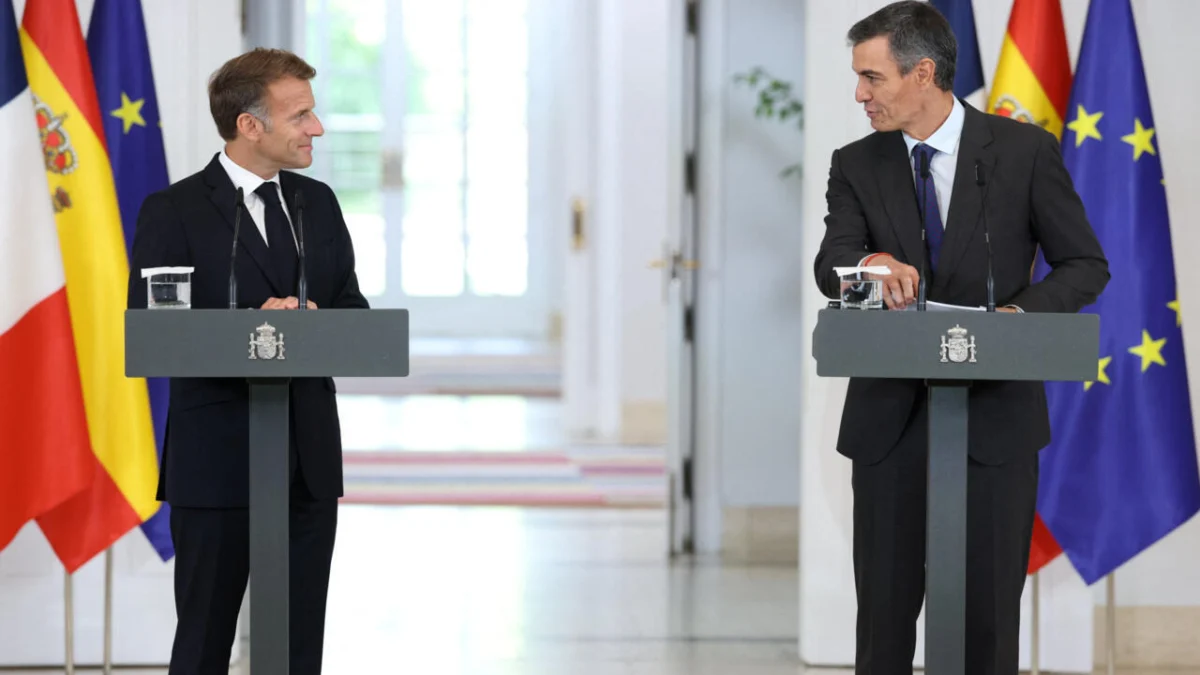
- Wednesday Evening: A closing press conference where both Macron and Sánchez are expected to issue a joint declaration on "The Path Toward Strategic Autonomy."
Supporting Data: The Crisis of Democracy and Economic Realities
The backdrop for this visit is a sobering array of data that informs Macron’s sense of urgency. The "crisis of democracy" is not merely rhetorical; it is reflected in recent voter turnout figures and the rise of radicalized political movements across the European Union.
The Rise of Extremes
Across the EU, the last decade has seen a marked shift in parliamentary composition. Data from the European Parliament indicates that "anti-establishment" and populist parties have seen their support grow by approximately 18% since 2014. In France specifically, the presidential election discourse has been dominated by debates over national sovereignty and identity, themes often exploited by the political fringes.
Economic Fragility
The investment required for a "stronger Europe" is substantial. According to recent estimates from the European Central Bank (ECB), the EU requires an annual injection of €400 billion in private and public funding to reach its climate targets by 2030 and to bolster its digital infrastructure. Macron’s push for a common European debt instrument, modeled after the successful pandemic recovery fund, is a direct response to this need. However, the proposal faces resistance from "frugal" Northern European states, making the alliance with Spain—a major Southern economy—vital for his leverage.
Official Responses: Aligning Madrid and Paris
The convergence of interests between Paris and Madrid is significant. Prime Minister Pedro Sánchez, a leading voice for social democracy in Europe, has emerged as a key ally for Macron.
The Sánchez Perspective
In a pre-visit statement, the Spanish Prime Minister’s office noted: "Spain and France share a common destiny. We are the two pillars upon which a social and green Europe must be built. The challenges of the 21st century—be it the digital divide or the threat to democratic institutions—cannot be solved in isolation."
The French Position
President Macron, speaking briefly to the press upon his arrival, emphasized the necessity of the moment: "We are at a tipping point. Either we define a coherent, sovereign European path, or we succumb to the fragmentation of our values. My visit here is a signal that France and Spain are ready to lead that transition."
Dissenting Voices
Predictably, the visit has drawn criticism from both the left and right in France. Marine Le Pen’s party has dismissed the visit as "a distraction from the failure of domestic economic policy," arguing that Macron is "outsourcing his failures to Brussels and Madrid." Simultaneously, some labor unions have expressed concern that a deeper fiscal integration will lead to austerity measures imposed by a centralized European authority, further alienating the working class from the political elite.
Implications: The Long-Term Vision for Europe
The implications of the Macron-Sánchez alignment extend far beyond the immediate state visit. By strengthening the Franco-Spanish axis, Macron is effectively bypassing the traditional German-French motor, which has often stalled due to Berlin’s cautious approach to common fiscal policy.
Strategic Autonomy and Defense
A primary implication of this visit is the push for a common European defense capability. Macron has long advocated for an EU "army" or a more integrated defense cooperation mechanism to reduce reliance on the United States, particularly in light of shifting American isolationist tendencies. By securing Spain’s commitment to increased defense spending and joint industrial military projects, Macron is signaling to NATO and the global community that the EU is taking its security into its own hands.
The Future of the European Project
The visit highlights a fundamental shift in the European narrative. The "European project" is no longer just about a single market or the Euro; it is about the defense of liberal democracy itself.
- The Sovereignty Argument: Macron is banking on the idea that voters are tired of being caught between the superpowers of the US and China. By emphasizing "European Sovereignty," he offers a path where Europe is a primary actor, not a secondary player.
- Addressing the Populist Surge: By focusing on concrete, large-scale investments—in green energy, digital infrastructure, and cross-border research—Macron hopes to prove that the current democratic system can deliver tangible benefits to citizens, thereby draining the support base of populist movements.
- The Election Catalyst: Domestically, this visit serves as a "Presidential" backdrop for his upcoming campaign. By appearing alongside the Spanish Royal family and the Prime Minister, Macron projects stability, competence, and international stature—qualities he hopes will contrast with the perceived chaos of his political challengers.
Conclusion: A High-Stakes Gamble
President Emmanuel Macron’s state visit to Spain is a masterclass in using international optics to influence domestic narratives. While the grandeur of the Royal Palace and the ceremony of the Royal Guard provide a veneer of historical continuity, the underlying mission is distinctly future-oriented.
Whether this vision of a "stronger Europe" will resonate with the French electorate remains to be seen. The disconnect between the high-level policy discussions in Madrid and the lived experiences of citizens in rural France is a cavernous one. However, by aligning with Spain, Macron has at least ensured that the European agenda remains front and center, forcing his opponents to engage with his vision of a unified continent rather than focusing solely on his domestic political vulnerabilities. As the state visit concludes, the true test will be whether these promises of a sovereign and prosperous Europe can be translated into the everyday reality of the citizens he hopes to lead for another term. The stakes for the continent are nothing less than the preservation of the democratic model itself in an increasingly uncertain world.