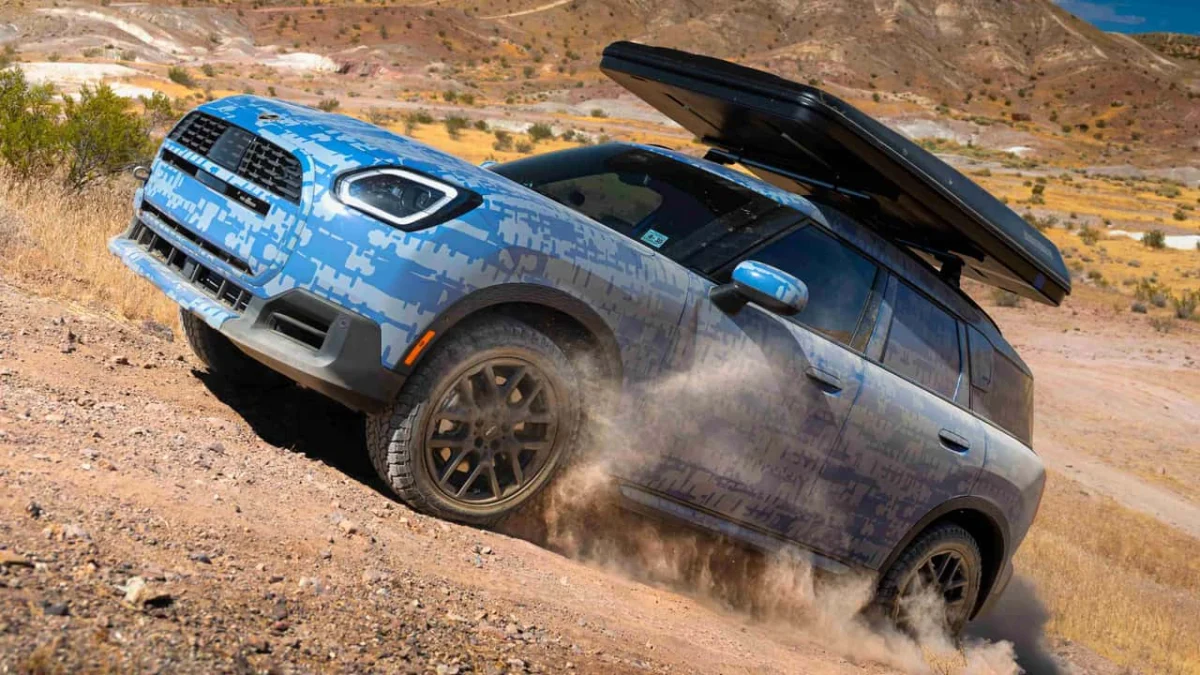
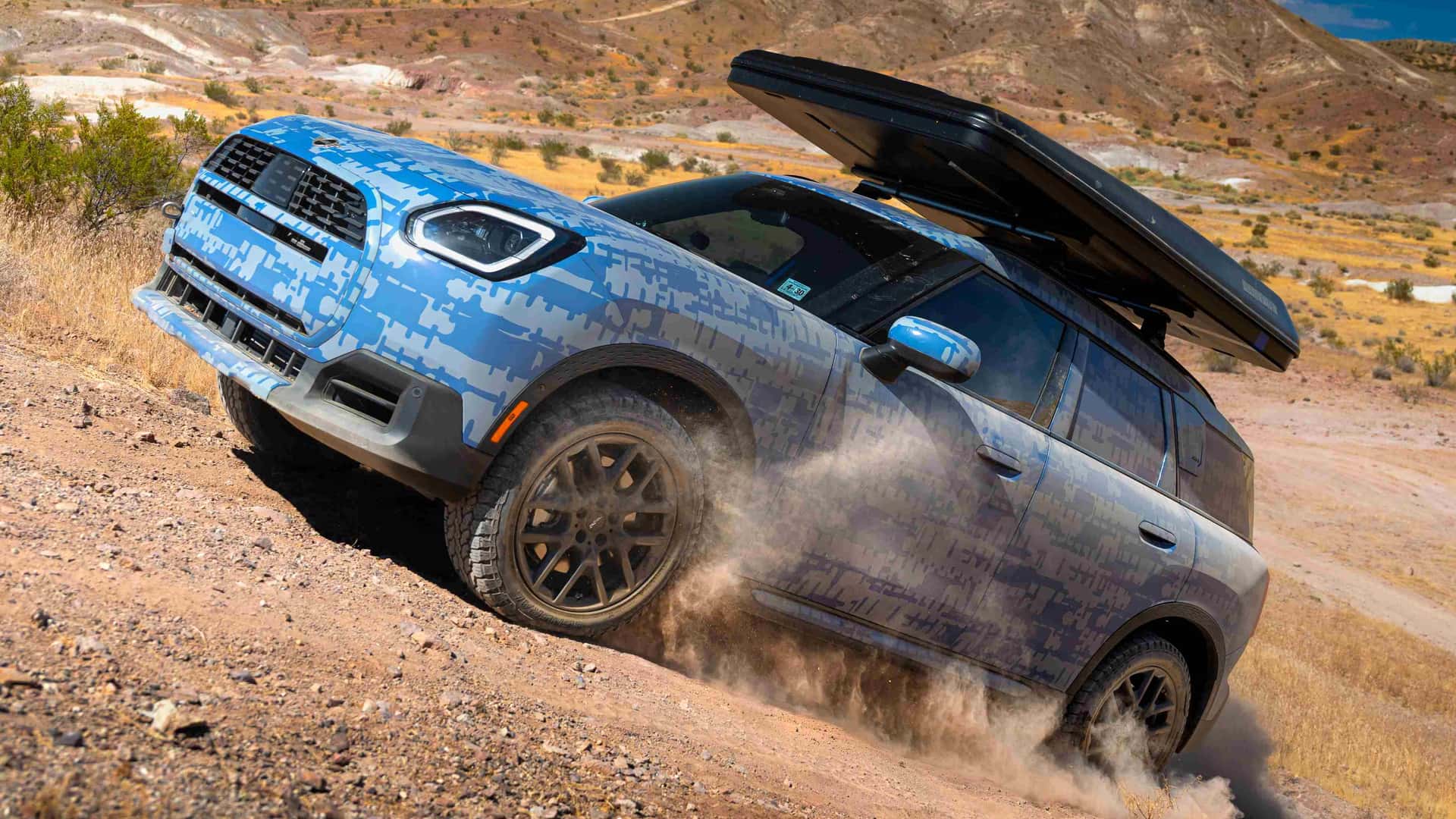
In the world of automotive manufacturing, few things are as guarded as a prototype undergoing real-world validation. Typically, these vehicles are draped in intricate vinyl patterns to hide body lines, relegated to high-security testing tracks or remote, snowy tundras. However, Mini USA is taking a decidedly different approach. The brand has pulled back the curtain—if only slightly—on a new, adventure-oriented iteration of the Mini Countryman, one that is currently undergoing the ultimate "torture test": the 1,500-mile Rebelle Rally.
While the prototype is still obscured by heavy camouflage, the presence of a rooftop pop-up tent is a loud, unapologetic statement. This is not a showroom-bound appearance package designed for the mall parking lot; this is a serious foray into the burgeoning segment of compact, off-road-capable adventure vehicles.
The Mission: Conquering the Rebelle Rally
For the 2026 running of the Rebelle Rally, Mini USA is making its debut in the prestigious navigation-based off-road event. Spanning the rugged, unforgiving terrain of Nevada and California, the rally is a grueling test of both machine and endurance. Unlike traditional desert racing, the Rebelle Rally prohibits the use of GPS, requiring teams to navigate exclusively by map and compass.
Piloting this specialized Countryman will be driver Felicia Killman and navigator Erika Ferrer. Their objective is twofold: to compete in the rally and to validate the structural and mechanical integrity of a vehicle that Mini hopes will redefine the brand’s rugged identity. The rally concludes on October 17 at the towering Imperial Sand Dunes in California, where the team hopes to prove that the "Adventure Variant" is more than just a concept.
Engineering for the Unknown: A Shift in Philosophy
The development of this prototype was spearheaded by a trio of BMW Group engineers: James Wallace, Dennis Heaphy, and Eran Garma. Their design philosophy focused heavily on off-road durability—a pivot from the brand’s usual emphasis on agile, city-focused handling.
"For every bracket, every mount, every panel, we gave thought to what happens when it is in such rigorous conditions forty miles from pavement," Wallace explained during the project’s rollout. According to the team, the process was one of constant iteration. They realized early on that simulations could only go so far; true off-road reliability is forged through the repetitive cycle of testing, breaking, and adjusting.
This focus on ruggedization suggests that if this vehicle reaches production, it will feature significant reinforcements to the chassis and underbody, ensuring that the components can withstand the vibrations and impacts of high-speed desert driving.
The Hardware: Anatomy of an Adventure Machine
While Mini remains tight-lipped regarding the specific powertrain—leaving enthusiasts to wonder if the 241-hp turbocharged 2.0-liter engine or the 312-hp JCW powerplant will be utilized—the external hardware speaks volumes.
The prototype has been spotted with a comprehensive suite of off-road equipment, including:
- Thule Cargo Systems: A robust roof rack and storage solution designed to handle the weight and vibration of off-road excursions.
- Heinlein Racing Development (HRD) Skid Plates: These are essential for protecting the oil pan, transmission, and fuel lines from jagged rocks.
- Toyo Open Country A/T Tires: Mounted on specialized wheels, these tires are the gold standard for dual-purpose off-roading, providing grip on sand, gravel, and rock.
- Morimoto Auxiliary Lighting: Featuring roof-mounted and grille-integrated pods, these lights are crucial for the nighttime navigation legs of the rally.
- Pelican Cases: Mounted securely, these weatherproof cases ensure that vital tools and navigation gear remain shielded from the pervasive desert dust.
Perhaps the most talked-about feature is the roof-mounted pop-up tent. While some skeptics dismissed it as a marketing gimmick, the decision to include it in a 1,500-mile rally suggests that the vehicle is designed to be a self-contained base camp, catering to the growing "overlanding" subculture that values multi-day autonomy.
The Navigator’s Perspective: Mental Discipline in the Desert
While the hardware draws the cameras, the human element remains the deciding factor in the Rebelle Rally. Erika Ferrer, the navigator, noted that the physical build of the car is only half the battle.
"This rugged-looking SUV is impressive, I will not pretend otherwise, but the training that kept me up at night was mastering navigation," Ferrer said. She emphasized the psychological shift required to ignore modern technology. "When you are in the middle of the desert, trusting a compass bearing over your own instinct is a discipline that takes months to hone."
The interplay between the driver, Killman, and the machine is critical. The Countryman must provide enough feedback for the driver to handle technical terrain without the car suffering catastrophic failure, all while maintaining the composure required for long-distance navigation.
Official Stance and Market Implications
Mini has confirmed the existence of the vehicle and acknowledged that it represents a significant departure for the brand. However, they are playing their cards close to their chest regarding a U.S. launch. The company has yet to confirm a release date, pricing, or the final powertrain specifications, noting that a global reveal is scheduled for just before the event’s start.
This strategy—using a high-profile competition as a "torture test"—is a page out of the playbook used by manufacturers like Jeep and Subaru. By placing the vehicle in the public eye during the development phase, Mini is building anticipation while simultaneously gathering data that would be impossible to replicate in a laboratory setting.
Implications for the Compact Off-Road Market
Should this project transition from a prototype to a showroom model, it would represent a seismic shift in Mini’s U.S. strategy. Currently, the compact off-road segment is dominated by the Subaru Crosstrek Wilderness and the Jeep Compass Trailhawk.
The Crosstrek Wilderness has seen immense success by offering a "plug-and-play" adventure vehicle that is affordable and highly capable. The Jeep Compass Trailhawk, meanwhile, leverages the brand’s deep history in rock crawling. A production version of the Mini Countryman Adventure would likely occupy a "premium-rugged" niche, offering the refinement and heritage of the BMW-backed brand with the capability to hold its own against these established giants.
This move aligns with the broader automotive trend of "lifestyle branding," where consumers are less interested in pure track performance and more interested in vehicles that symbolize a weekend escape from the grid.
Looking Ahead: The October Countdown
As the clock ticks toward October 7, 2026, the industry will be watching the Imperial Sand Dunes closely. For Mini, the stakes are high. If the Countryman performs well, it proves that the brand can evolve beyond its "urban-chic" roots and compete in the rugged wilderness. If it struggles, the project may be relegated to a one-off marketing experiment.
However, the dedication shown by the engineering team suggests that Mini is serious about this venture. By treating the rally not as a parade, but as a proving ground, the company is signaling to its customers that the next generation of Countryman will be built to handle the road less traveled.
Whether it becomes a mass-produced reality or a rare, trail-ready limited edition, the "Adventure Variant" has already succeeded in doing one thing: it has forced the world to look at the Mini Countryman in a new light—not just as a compact city car, but as a potential companion for the long, dusty miles ahead.