Main Facts: Structural Failure Turns College Celebration Into Mass-Casualty Response
A festive college homecoming celebration turned into a chaotic emergency on Friday night when an outdoor wooden deck suddenly collapsed at an off-campus residence in Williamsburg, Virginia. The catastrophic failure left at least 28 people injured, sparking a massive, multi-agency emergency response that overwhelmed the immediate residential neighborhood with first responders.
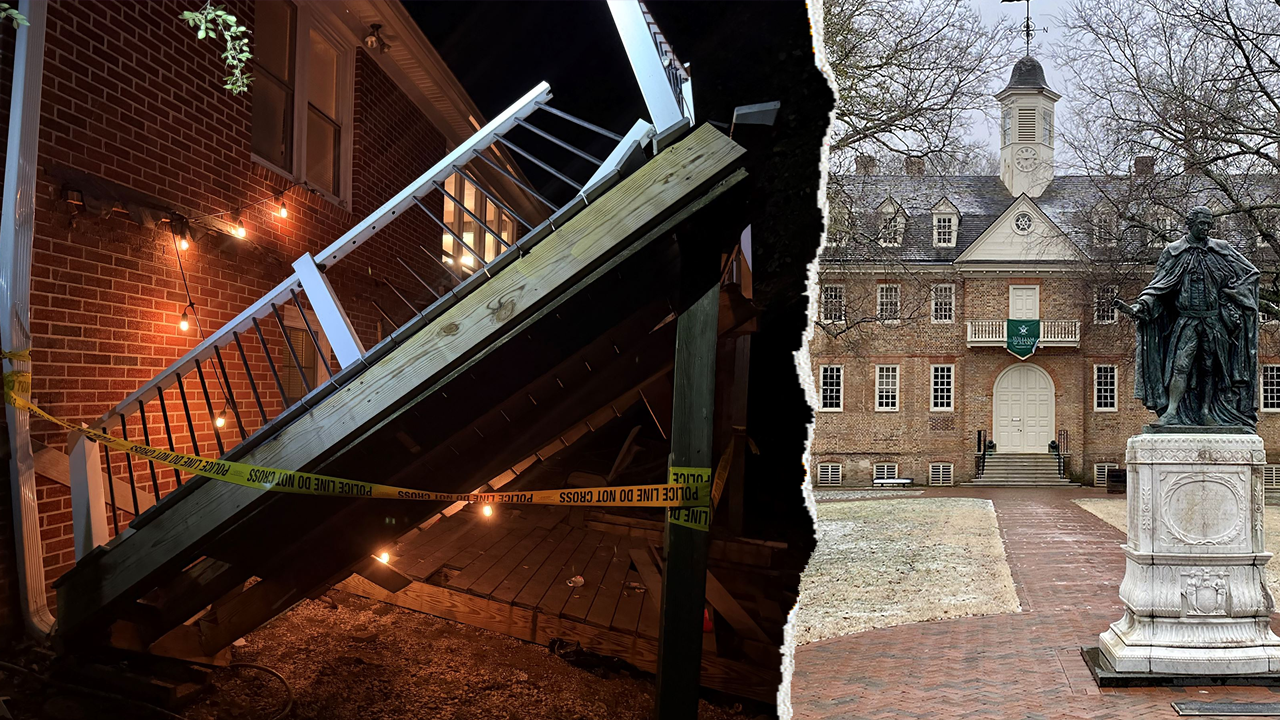
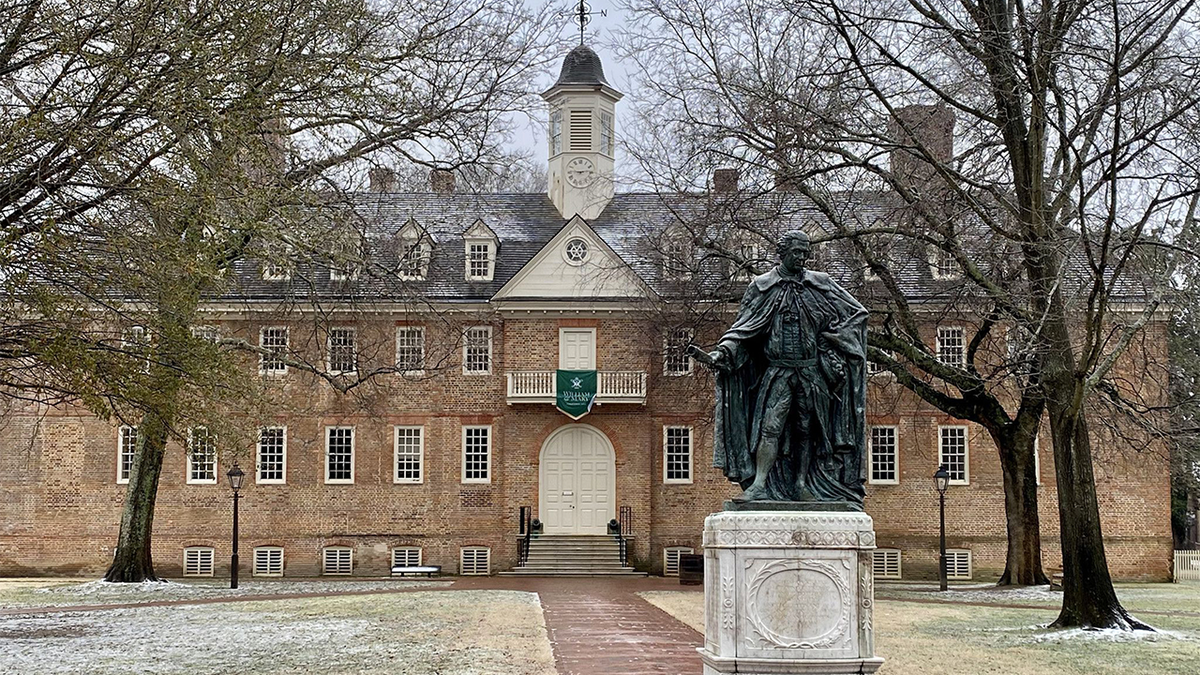
The incident occurred during the annual homecoming weekend for the College of William & Mary, a historically significant public university located in Williamsburg. Officials confirmed that students were among the dozens injured when the elevated rear porch gave way under the weight of partygoers.
Emergency medical services (EMS) personnel transported 13 victims directly from the scene to regional medical facilities. An additional 15 individuals sought independent medical evaluation and treatment at nearby urgent care centers and emergency departments following the incident. Despite the high number of casualties, city and university officials confirmed that none of the injuries were deemed life-threatening.
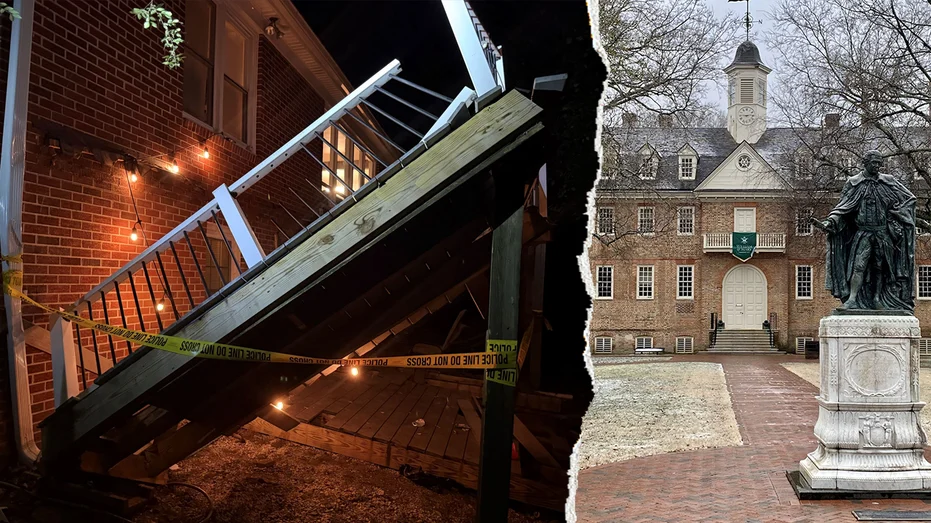
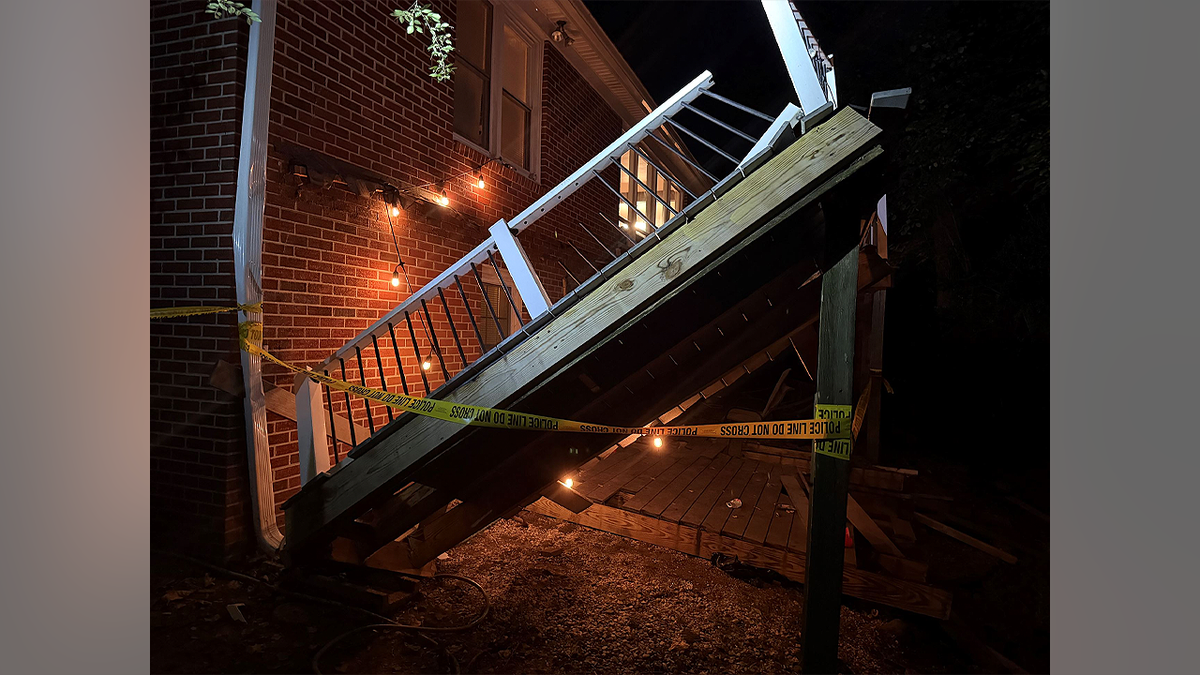
The collapse occurred on the 200 block of Matoaka Court, a residential street situated near the perimeter of the William & Mary campus. The site remains cordoned off with police tape as municipal code compliance officers and structural investigators evaluate the cause of the failure.
Chronology of the Incident
[Friday Evening]
Festivities begin for William & Mary Homecoming Weekend at 200 block of Matoaka Court.

[10:07 p.m.]
Distress call dispatched; rear elevated deck suffers sudden structural collapse.

[10:10 p.m. – 10:30 p.m.]
First responders arrive; mass casualty protocols initiated; at least 9 ambulances arrive on scene.

[Late Night / Early Saturday]
Triage completed; 13 patients transported by EMS, 15 self-transport; local neighbors assist victims.

[Saturday Morning]
William & Mary Senior VP Ginger Ambler issues community statement; City Codes Compliance begins site inspection.
Friday Evening Festivities
On the evening of Friday, October 23, students, alumni, and guests gathered across Williamsburg to mark William & Mary’s traditional homecoming festivities. On the 200 block of Matoaka Court—a neighborhood known for hosting off-campus student housing—a social gathering was underway at a two-story brick residence.
As the evening progressed, a significant crowd gathered on the home’s rear wooden deck. Witnesses described an energetic atmosphere, typical of peak homecoming celebrations, with dozens of attendees socializing outdoors.
At approximately 10:07 p.m., the structural integrity of the back deck failed precipitously. Without warning, the elevated platform separated from the exterior ledger board and joists, dropping several feet and trapping, throwing, and crushing attendees beneath wooden beams, shattered handrails, and outdoor furniture.
Eyewitnesses reported a sudden, deafening crack followed immediately by screams and confusion. Those standing on the deck were thrust to the ground, while individuals standing directly underneath or adjacent to the structure were struck by falling debris.
Rapid First Responder Mobilization
Within minutes of the initial 911 dispatch, units from the Williamsburg Fire Department, Williamsburg Police Department, and surrounding regional emergency services arrived on Matoaka Court. Recognizing the scale of the incident, dispatchers declared a mass-casualty situation, routing emergency vehicles from neighboring jurisdictions to assist.
Responders established a command post and triage area on the street. Matoaka Court was quickly closed to traffic as a line of emergency vehicles extended down the block. First responders worked rapidly to extract victims from the collapsed wreckage, assess their injuries, and categorize them for emergency transportation.
Overnight Care and Neighbor Mobilization
While official emergency teams focused on stabilized trauma care and transport, neighboring residents stepped forward to assist impacted students. Community members opened their doors, provided temporary shelter, offered ice packs and basic first aid, and arranged transportation for those who did not require immediate ambulance transport but needed medical evaluation or safe return to their dormitories.
By early Saturday morning, the immediate rescue operation concluded, leaving the collapsed structure behind police line tape under heavy floodlights.
Supporting Data and Emergency Operations
Breakdown of Casualties and Medical Distribution
The emergency response involved significant coordination between local public safety teams and regional hospital networks. The following breakdown highlights the extent of the casualty management effort:
Category
Count
Primary Destination / Status
EMS Hospital Transports
13
Regional Emergency Centers (Non-life-threatening)
Self-Reported Injuries
15
Urgent Care & Walk-in Emergency Facilities
Total Reported Injured
28
Stabilized / Discharged upon evaluation
Fatality Count
0
N/A
First responders prioritized patients based on the severity of impact injuries, which primarily included fractures, sprains, lacerations, contusions, and suspected concussions caused by the fall and structural debris.
Eyewitness Accounts and Community Impact
Neighbors along Matoaka Court described a night defined by sudden panic followed by an impressive display of community solidarity.
One neighboring resident, who asked to remain anonymous, recalled the overwhelming presence of emergency personnel in what is typically a quiet residential cul-de-sac.
"All the way down the street and wrapped around just ambulances and fire trucks," the neighbor told local news outlet WAVY. "We saw a lot of hospital gurneys coming out of ambulances. At least nine ambulances kind of wrapped around the street."
Joshua Wise, a student living next door to the property, returned to his home shortly after the primary emergency units cleared the scene. He noted that several of his classmates were present during the collapse.
"Word was traveling pretty fast," Wise said. "By the time I got back here, the emergency response was over, but I had a housemate who was helping people, trying to help out as much as possible, drive people home, get people where they needed to be."
Wise praised both the efficiency of the local emergency crews and the compassionate response of his peers.
"We did everything we could to help each other out, and I think that that’s beautiful," Wise added. "Thank goodness for the emergency responders. They were great. The ambulances and everything got here pretty fast."
Official Responses and University Support
   ┌─────────────────────────────────────────────────────────┐
   │             INDEPENDENT INVESTIGATION PATHWAY            │
   └────────────────────────────┬────────────────────────────┘
                                │
        ┌───────────────────────┴───────────────────────┐
        ▼                                               ▼
┌───────────────────────────────┐               ┌───────────────────────────────┐
│     CITY OF WILLIAMSBURG      │               │     WILLIAM & MARY ADMIN      │
├───────────────────────────────┤               ├───────────────────────────────┤
│ • Codes Compliance Division   │               │ • Student Affairs Support     │
│ • Building & Permit Audit     │               │ • Counseling & Mental Health  │
│ • Structural Engineering Inspection           │ • Academic Accommodations     │
└───────────────────────────────┘               └───────────────────────────────┘
Statement from William & Mary Leadership
On Saturday morning, Ginger Ambler, Senior Vice President for Student Affairs and Public Safety at William & Mary, issued a comprehensive message to the student body, faculty, and university community.
Ambler confirmed that university administrators were working closely with municipal authorities and local hospitals to monitor the status of injured students.
"We are grateful that none of the injuries were life-threatening," Ambler stated in her communication. She noted that university personnel were continuing to gather information, acknowledging that additional students might have sought medical care privately after the initial city updates.
Ambler emphasized that William & Mary activated its full network of support resources—including student health services, the counseling center, academic advising offices, and the Dean of Students office—to support those affected physically or emotionally by the event.
"We recognize that such an experience may affect our students deeply and in different ways," Ambler wrote, urging students in need of assistance or academic flexibility to reach out to campus resources immediately.
Municipal Coordination and Public Safety Updates
The City of Williamsburg issued formal updates through its public information office, clarifying the timeline of events and confirming that city staff are collaborating directly with regional hospital administrators to ensure accurate record-keeping of all injured individuals.
Local police and fire departments commended the rapid coordination among regional emergency medical service providers, which allowed for the quick stabilization and triage of nearly 30 victims within an hour of the initial dispatch call.
Implications, Investigations, and Structural Safety
Codes Compliance and Engineering Investigation
The focus of municipal authorities has turned toward determining the root structural cause of the collapse. The City of Williamsburg’s Codes Compliance Division initiated a formal inspection of the Matoaka Court property on Saturday.
Structural engineers and code enforcement officers are examining several key factors:
Ledger Board Attachment: Investigators are inspecting whether the ledger board—the primary structural element securing the deck to the house framing—was attached using approved lag screws or through-bolts, or if it was inadequately secured with nails.
Occupancy Load and Overcrowding: Inspections will analyze the structural load-bearing capacity of the deck relative to the estimated number of individuals standing on it at the time of failure.
Wood Rot and Maintenance: Officers are checking for signs of internal timber rot, water intrusion, insect damage, or corrosion of metal fasteners, which can significantly weaken wooden structures over time.
Permitting and Code Compliance History: City records are being audited to verify whether the deck was constructed with proper building permits and subjected to mandatory municipal inspections at the time of installation.
The incident at William & Mary highlights a broader, nationwide concern regarding structural safety and housing maintenance in university towns. Off-campus student housing residences often experience heavy foot traffic and higher occupancy levels during social events like homecoming, testing the limits of residential infrastructure.
According to data from the U.S. Consumer Product Safety Commission (CPSC), thousands of deck and porch collapses occur annually across the United States, frequently resulting in severe blunt-force trauma, spinal injuries, and fractures. A vast majority of structural deck failures are attributed to improper ledger board installation or aging structural components that have lacked regular maintenance.
This event is expected to prompt renewed conversations between Williamsburg city officials, William & Mary student government representatives, and local landlords regarding property safety audits, off-campus housing standards, and party safety awareness.
Moving Forward: Safety Reforms and Campus Vigilance
As William & Mary students return to normal routines following homecoming weekend, university administrators and local law enforcement continue to stress the importance of environmental awareness during large social gatherings.
Property owners in university-adjacent neighborhoods are being encouraged by municipal leaders to conduct independent structural inspections of outdoor elevated platforms, decks, and balconies. Meanwhile, city code enforcement officials are expected to publish their final findings once the physical reconstruction analysis on Matoaka Court is complete.
For the William & Mary community, the swift recovery of the 28 injured students remains the immediate priority, alongside a renewed focus on ensuring off-campus residential safety to prevent similar occurrences in the future.