As the Federal Open Market Committee (FOMC) prepares to convene this Tuesday, October 27, for a two-day policy summit, the atmosphere in Washington and on Wall Street is one of cautious anticipation. With the committee scheduled to announce its latest decision on interest rates on Wednesday, October 28, the central bank faces a complex landscape defined by persistent inflationary pressures, volatile market expectations, and the looming shadow of the upcoming midterm elections.
While the consensus among market participants is that the Fed will likely maintain the status quo this month, the debate surrounding the committee’s path forward has intensified. Economists and institutional analysts are weighing the necessity of aggressive monetary tightening against the risk of stifling a fragile economic recovery.
The Core Mandate: Balancing Inflation and Growth
The primary focus of the October meeting is the federal funds rate, currently positioned in a target range of 3.75% to 4.0%. Since the Fed’s aggressive pivot to combat surging prices, the primary challenge has remained the same: lowering inflation without triggering a recessionary spiral.
The September inflation data served as a wake-up call for many on Wall Street. Despite some optimistic revisions in previous months, the latest report indicated that the price trajectory remains stubbornly elevated. Aditya Bhave, an economist at BofA Securities, has become a prominent voice arguing that the Fed’s "wait-and-see" approach may be insufficient.
"The inflation picture has deteriorated on a net basis since the September meeting," Bhave noted in a recent assessment. "The beat in September inflation was large and broad-based enough to offset last month’s bigger-than-expected downward revisions." For Bhave and others who share his hawkish outlook, the current economic data suggests that the "soft landing" narrative is under significant strain, necessitating further decisive action from the Fed.
A Chronology of the Policy Debate
To understand the current tension, one must look at the progression of the Fed’s rhetoric over the last quarter.
- September 2026: The Fed opted for a rate adjustment, signaling that while the peak of the hiking cycle might be near, the battle against inflation was far from won.
- Early October 2026: Economic indicators, specifically the Consumer Price Index (CPI), showed an unexpected uptick, rattling investors who had priced in a more dovish stance for the remainder of the year.
- Late October 2026: Market volatility increased as analysts parsed the minutes of the previous meeting, searching for clues regarding the committee’s "neutral rate" estimations and their tolerance for continued price instability.
As the committee gathers this week, the primary question is whether they will prioritize the immediate cooling of the economy or opt for a "data-dependent" pause to observe the lagged effects of previous rate hikes.
Market Reaction: Stability Amidst Uncertainty
Despite the hawkish undertones in recent inflation reports, the broader stock market has shown surprising resilience. As of the start of the week, the major indices have been trading in positive territory. The Nasdaq Composite, driven by investor excitement regarding upcoming high-profile initial public offerings (IPOs) like Anthropic, led the market with a 1% gain. Meanwhile, the S&P 500 and the Dow Jones Industrial Average posted modest gains of 0.7% and 0.2%, respectively.
This optimism persists even as the bond market signals potential stress. The 2-year Treasury yield, which is highly sensitive to Federal Reserve policy expectations, climbed 2.1 basis points to 4.703%. This rise suggests that while equity investors are focused on corporate earnings and growth, the bond market is pricing in a "higher for longer" interest rate environment.
The Anatomy of the Decision: Who Votes?
The FOMC is comprised of 12 members, representing a mix of permanent and rotating voices. Understanding the composition of this committee is essential for predicting the outcome of the October vote.
The permanent core of the committee consists of:
- The Chair of the Federal Reserve
- The Vice Chair of the Federal Reserve
- The five members of the Board of Governors
- The President of the Federal Reserve Bank of New York
The remaining four seats are held by regional Fed presidents who rotate on an annual basis. This rotating system ensures that the diverse economic realities of different regions—from the industrial hubs of the Midwest to the tech-heavy corridors of the West—are represented in the deliberation process.
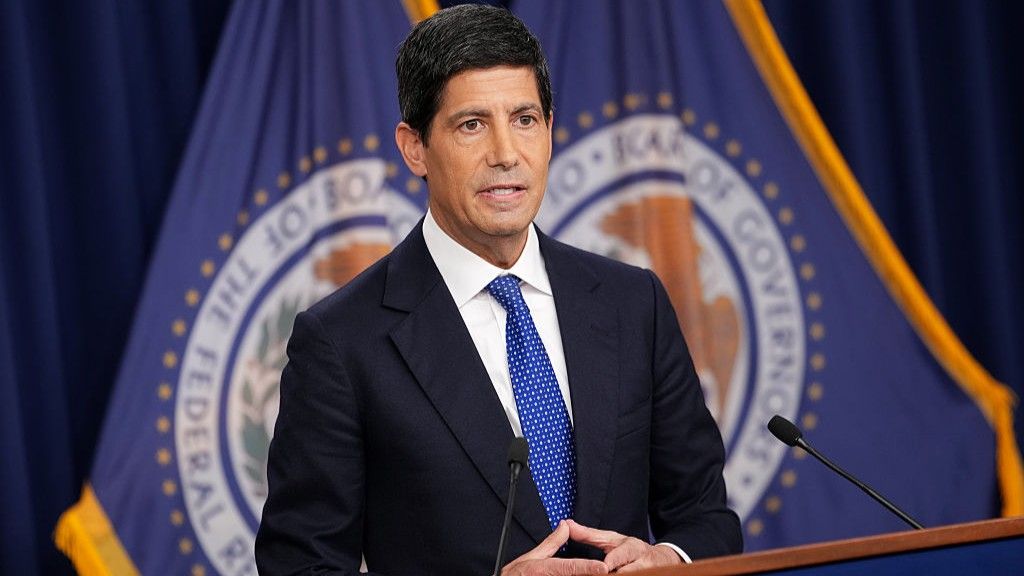
For 2027, the rotation will bring in new perspectives from the Federal Reserve Banks of Chicago, Richmond, Atlanta, and San Francisco. This turnover is crucial, as the incoming members may bring different regional mandates that could influence future policy statements, particularly regarding the balance between unemployment targets and price stability.
Official Responses and Institutional Analysis
While the Fed maintains a policy of independence, the geopolitical and political environment surrounding the upcoming midterms cannot be ignored. Deutsche Bank economists recently offered a comprehensive view on why a pause is the most probable outcome for the October meeting.
"Financial conditions have started to tighten, though they remain accommodative on many metrics," the firm wrote in a recent research note. "Officials might want to see how much Financial Conditions Index (FCI) tightening occurs for reasons outside of monetary policy before taking further action. One could also argue that if tightening is needed to catch up to a rising neutral rate, it makes sense to take a gradual approach in this adjustment, given that the ‘r-star’ [neutral interest rate] is uncertain."
Beyond the purely economic metrics, there is the undeniable reality of the political calendar. The Deutsche Bank report explicitly acknowledges that "the Fed might prefer to stay out of the headlines for raising rates just ahead of a midterm election where affordability is the principal concern." This sentiment reflects the broader institutional concern that the Fed’s actions, while technically apolitical, are inevitably viewed through the lens of electoral politics.
Implications for the American Consumer and Investor
For the average household, the implications of the October meeting are profound. Interest rates affect everything from mortgage affordability to the yield on savings accounts.
Mortgage and Housing Markets
If the Fed maintains the current rate, the housing market will likely continue its slow, painful adjustment to higher borrowing costs. Prospective homebuyers have faced significant headwinds as mortgage rates remain elevated, leading to a cooling of home sales. A pause may offer a brief period of stabilization, but without a clear path toward rate cuts, affordability remains a major obstacle.
The Investment Landscape
For investors, the current environment demands a defensive posture. Experts suggest focusing on companies with strong balance sheets and the ability to maintain pricing power in an inflationary environment. Stocks that thrive in high-interest-rate environments—often found in the financial or energy sectors—have been touted as potential hedges against the volatility surrounding the Fed’s upcoming decisions.
Tax and Financial Planning
The broader economic policy set by the Fed also has indirect impacts on tax obligations. A higher interest rate environment can influence corporate earnings, which in turn affects tax revenues and potentially shifts the fiscal policy landscape. As voters head to the polls, the connection between Fed policy, personal affordability, and the broader economic platform of candidates has become a central theme of the national discourse.
Conclusion: A Delicate Tightrope Walk
As the committee enters its deliberations, the path forward is anything but clear. The Fed is walking a tightrope between an economy that is showing signs of overheating and one that is increasingly sensitive to the restrictive nature of current interest rates.
With an overwhelming 90% probability currently priced into futures markets for a pause, the burden of proof lies with the committee to explain how they intend to reconcile the recent uptick in inflation with their stated goals. Whether the Fed chooses to hold steady or surprises the markets with a hawkish shift, the outcome of the October meeting will set the tone for the final quarter of the year and dictate the economic narrative heading into the upcoming election cycle.
Investors, policymakers, and the public alike will be watching closely as the committee moves toward its Wednesday announcement, seeking clarity in an era of unprecedented economic uncertainty.