By Legal Correspondent
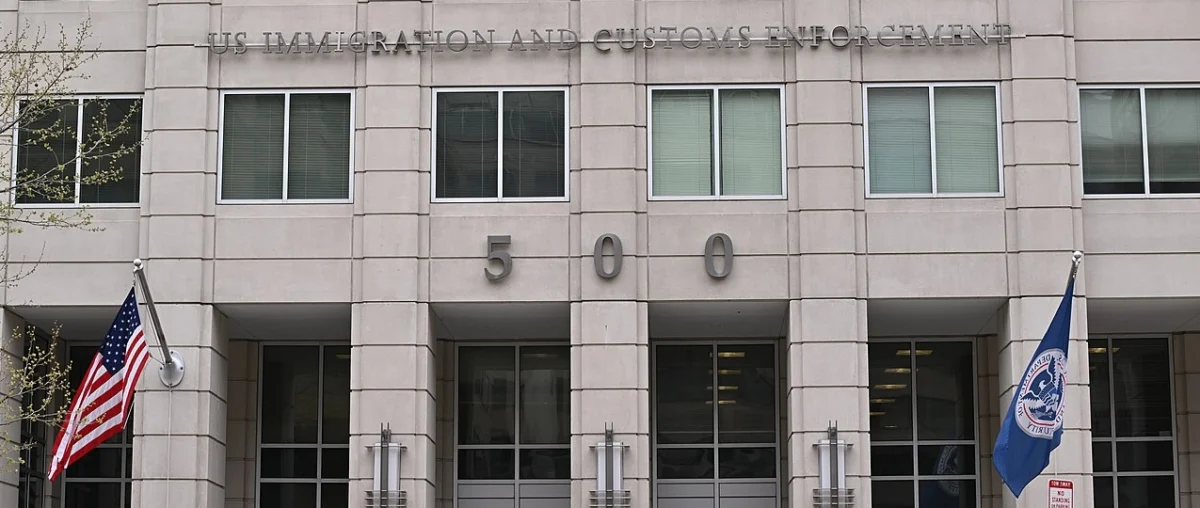
In a landmark decision that highlights the escalating tension between federal immigration enforcement and the constitutional rights of lawful residents, the Terre Haute Division of the US District Court for the Southern District of Indiana has ordered the immediate release of Salah Sarsour from Immigration and Customs Enforcement (ICE) custody. Sarsour, a prominent pro-Palestinian activist and lawful permanent resident of the United States for over three decades, had been held for 80 days, a period during which his health reportedly deteriorated significantly.
Federal Judge James Hanlon’s ruling serves as a stern rebuke to the federal government’s practice of utilizing immigration enforcement as a tool to stifle political speech. By confirming that Sarsour established a "substantial claim of First Amendment retaliation," the court has signaled that the constitutional protections afforded to those on US soil cannot be bypassed simply by labeling an individual’s political advocacy as a "foreign policy concern."
The Facts of the Case: A Constitutional Clash
The detention of Salah Sarsour, the president of the Islamic Society of Milwaukee and a board member of American Muslims for Palestine (AMP), began in March under circumstances that his legal team described as an intimidation tactic. Armed plainclothes agents intercepted Sarsour using a fleet of ten unmarked vehicles, arresting him on an I-200 administrative warrant. He was subsequently transported to a detention facility in Indiana, where he remained for nearly three months.
Judge Hanlon’s order did not reach a final conclusion on the merits of Sarsour’s removability or the ultimate outcome of his First Amendment claim. Instead, the court focused on the immediate harm caused by his detention, which the judge characterized as likely unlawful due to its retaliatory nature. The government had attempted to argue that as a non-citizen, Sarsour’s First Amendment rights were diminished, particularly when viewed through the lens of "national security" and "foreign policy."
The court flatly rejected this premise. Judge Hanlon reminded the Department of Homeland Security (DHS) that the Constitution does not distinguish between citizens and lawful permanent residents regarding the fundamental guarantee of free speech. The judge further noted that the "mere invocation of foreign relations concerns" does not grant the executive branch carte blanche to circumvent constitutional safeguards.
Chronology of the Detention and Legal Struggle
The timeline of Sarsour’s ordeal reveals a pattern of administrative hostility that civil rights groups argue is becoming characteristic of the current administration’s approach to dissent.
- 1998: Sarsour obtains lawful permanent resident status. Throughout his 33 years in the US, he maintains a clean criminal record within the country.
- March 2026: Sarsour is arrested by ICE agents in a coordinated, high-visibility operation.
- March – June 2026: Sarsour is detained in Indiana. During this 80-day period, his health fails significantly; he suffers from unmonitored diabetes, claiming that facility staff provided medical oversight only once per month.
- June 2026: Judge James Hanlon issues the order for his immediate release, finding that the government failed to justify his detention beyond retaliatory motives linked to his activism.
The legal proceedings were complicated by the intervention of Secretary of State Marco Rubio, who had issued a formal memo to the DHS last year. Rubio asserted that Sarsour’s status as a green card holder was irrelevant because his activities purportedly "undermine US foreign policy to combat antisemitism." The court’s rejection of this memo—and the government’s attempt to equate political speech with a national security threat—marks a significant judicial pushback against the executive branch’s broad interpretation of immigration authority.
Supporting Data and Historical Context
The government’s primary justification for the detention rested on Section 212(a)(3)(C) of the Immigration and Nationality Act (INA). This provision allows for the exclusion or removal of foreign nationals if their presence or activities are deemed to have "serious adverse foreign policy consequences" for the United States.
Historically, this provision has been utilized sparingly, reserved for instances of genuine espionage or threats to international stability. However, legal scholars note that its current application against activists is a departure from historical precedent. The government has attempted to leverage this clause to target individuals like Sarsour, arguing that their advocacy for Palestinian rights creates friction in US-Israeli relations.
The court noted that authorities were fully aware of Sarsour’s past—specifically his convictions for throwing Molotov cocktails and stones at Israeli forces prior to his arrival in the US—at the time they granted him permanent residency. This fact undermined the government’s sudden pivot to characterize him as an immediate danger to national security, suggesting that the "threat" was not his past actions, but his current, protected speech.
A Broader Pattern of Targeting
Sarsour’s case is not an isolated incident but part of a documented trend of ICE targeting pro-Palestinian activists. The legal landscape is currently littered with similar cases, reflecting a chilling effect on political expression:
- Mahmoud Khalil: In March 2025, Columbia University graduate and student leader Mahmoud Khalil was arrested at his campus residence. While a lower court initially ordered his release, a federal appellate court reversed that decision in January 2026. He remains in detention today.
- Mohsen Mahdawi and Badar Khan Suri: In May 2025, both men were detained under similar administrative warrants. Unlike Khalil, they were granted release by federal judges who found their detentions to be unlawful and lacking in evidentiary support.
These cases suggest a strategy of "administrative exhaustion," where the government uses the detention process itself as a penalty for political advocacy. By moving detainees through the bureaucracy of the immigration court system, the government can impose significant personal, financial, and physical costs on activists without ever needing to secure a criminal conviction.
Implications for the Rule of Law
The implications of the Sarsour ruling extend far beyond the individual. Human rights organizations, including Amnesty International, have issued dire warnings regarding the state of American democracy. In a January 2026 report, Amnesty identified a rise in "authoritarianism" within the US, noting that the weaponization of immigration law is a primary mechanism for silencing dissent.
The Erosion of Due Process
The physical toll on Sarsour—the loss of weight and the risk of death from neglected diabetes—highlights the human rights concerns inherent in private or government-run detention centers. When the state treats political dissenters as "security threats" to be held in administrative limbo, it effectively bypasses the procedural protections of the criminal justice system.
Foreign Policy as a Shield for Censorship
The court’s ruling challenges the "foreign policy" defense used by the administration. By stating that the government cannot use foreign relations as a pretext to ignore the First Amendment, Judge Hanlon has established a precedent that could protect other activists from similar actions. However, the inconsistency in lower court rulings—as seen in the disparate outcomes for Sarsour and Khalil—suggests that the legal battles are far from over.
The Role of the Executive
The intervention by high-level officials like Marco Rubio into individual immigration cases underscores the politicization of the DHS. Critics argue that when political leaders directly influence detention decisions, the separation of powers is compromised, and the immigration system ceases to function as a rule-of-law institution, becoming instead a tool for executive retribution.
Conclusion
The decision to release Salah Sarsour is a victory for civil liberties advocates, but it arrives in a climate of persistent legal uncertainty. As the US moves further into a period of heightened political polarization, the intersection of immigration status and free speech will likely remain a central battleground.
For now, the Terre Haute Division’s ruling serves as a vital reminder: the US Constitution does not stop at the border of an immigration detention facility. As Judge Hanlon aptly put it, the government’s desire to align domestic political discourse with its foreign policy objectives cannot override the foundational rights that define the American legal tradition. Whether this ruling will stem the tide of similar detentions remains to be seen, but for advocates of free speech, it provides a much-needed legal framework to challenge the weaponization of the immigration system against those who dare to speak out.