The Mexican government, under the administration of President Claudia Sheinbaum, has launched a robust and unprecedented legal offensive against the United States in response to a string of deaths involving Mexican nationals while in the custody of U.S. Immigration and Customs Enforcement (ICE). This move represents a significant escalation in bilateral tensions, as Mexico pivots from diplomatic appeals to formal criminal complaints filed with state prosecutors, the U.S. Department of Justice, and international human rights bodies.
Main Facts: A Formal Reckoning
On Tuesday, the Secretariat of Foreign Relations (SRE) confirmed that the Mexican government has initiated a series of legal actions aimed at holding U.S. detention centers accountable for the loss of life among Mexican detainees. The administration’s strategy is multi-pronged: it involves filing criminal complaints through the Mexican Embassy, issuing formal cease-and-desist letters to specific detention facilities, and petitioning the United Nations High Commissioner for Human Rights.
At the heart of these complaints is a recurring allegation: systemic neglect. The SRE has explicitly cited a "lack of access to timely and efficient medical care" and substandard medical policies as the primary drivers behind these fatalities. The first formal cease-and-desist letter was dispatched to the Adelanto Detention Center in California—a facility that has seen four Mexican nationals, including José Guadalupe Ramos Solano, die under questionable circumstances.
President Sheinbaum has framed the issue not merely as a matter of policy, but as a moral imperative. "Their pain is shared by the nation," she declared in a recent address, signaling that the protection of Mexican migrants has become a cornerstone of her administration’s foreign policy agenda.
Chronology of Crisis
The mounting death toll has been a slow-burning fire that reached a breaking point with the recent killing of Lorenzo Salgado Araujo.
- Cumulative Toll: To date, at least 17 Mexican immigrants have died while in ICE custody across various states, including Georgia, Texas, Arizona, California, Missouri, Florida, Illinois, and Louisiana.
- July 7, 2026: The death of 52-year-old Lorenzo Salgado Araujo, a long-term U.S. resident of 35 years with no criminal record, served as the catalyst for the current diplomatic storm. Araujo was shot and killed by an ICE agent in Houston.
- The Disputed Narrative: U.S. authorities claim that the encounter turned lethal because Araujo was evading arrest and allegedly attempted to run over an agent. Conversely, the family of the deceased maintains that Araujo was unknowingly followed while commuting to work, leading to a tragic, unprovoked confrontation.
- July 2026: Following the incident, President Sheinbaum signaled that Mexico would no longer remain a passive observer to the treatment of its citizens, leading directly to the filing of formal criminal charges and the intervention of the United Nations.
Supporting Data: The Scope of the Migration Landscape
The friction between Mexico and the U.S. occurs against a backdrop of massive demographic integration. As of 2023, the total number of Mexican-born individuals residing in the United States stood at 10.9 million. This population represents approximately 23% of the 47.8 million foreign-born residents in the U.S.
Geographically, the concentration of these immigrants is highest in states like Texas, California, and Arizona—the very states where the highest number of deaths in ICE custody have been recorded. This statistical overlap creates a volatile environment where the health and safety of the immigrant population are increasingly viewed as a domestic political issue within Mexico.
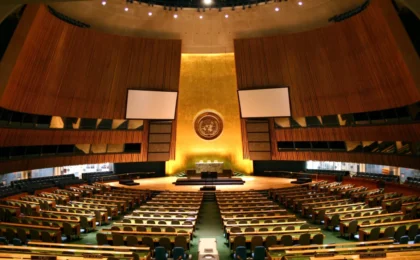
The SRE’s communication to UN High Commissioner Volker Türk underscores the gravity of these numbers. Mexico is requesting an urgent, independent investigation into these deaths, specifically asking the UN to analyze the "compatibility of these events with international obligations" to which the United States is a signatory.
Official Responses and Diplomatic Friction
The response from the United States has been largely procedural, creating a vacuum of accountability that the Sheinbaum administration is now attempting to fill with legal pressure. By involving the U.S. Department of Justice and UN human rights investigators, Mexico is attempting to force a transparency audit of ICE’s internal medical protocols.
The SRE, led by Roberto Velasco Alvarez, has remained tight-lipped regarding the specific legal arguments contained in the criminal complaints, likely to preserve the integrity of the pending filings. However, the cease-and-desist letters serve as a clear warning: the status quo regarding the treatment of detainees is no longer acceptable to the Mexican state.
In the U.S., the reaction has been muted, complicated by a broader climate of diplomatic frostiness. On July 1, the U.S. government announced a refusal to renew a key trade deal that Mexico had sought to maintain, adding a layer of economic uncertainty to an already strained relationship.
Implications for Bilateral Relations
Experts suggest that the current crisis is symptomatic of a deeper fracture in the U.S.-Mexico partnership. José Luis Valdés Ugalde, an academic at the Center for Research on North America at the National Autonomous University of Mexico (UNAM), notes that the 17 deaths are not isolated incidents but are inextricably linked to the broader, struggling relationship between the two nations.
"These events affect the bilateral relationship and the pending issues that Mexico and the United States have before them," Ugalde stated. The issues of security, migration, and trade have become increasingly tangled, and the death of migrants has added a human rights dimension that makes political reconciliation significantly more difficult.
The View from Academia: Hopes for Reform
The academic community in Mexico is looking toward the U.S. political cycle as a potential turning point. Professor Tomás Milton Muñoz Bravo of UNAM argues that the upcoming U.S. midterm elections represent a critical juncture. He suggests that if the current majority loses its footing, the resulting "checks and balances" could create a more favorable environment for negotiation.
Muñoz Bravo identifies a two-fold path for de-escalation:
- Mexico’s Self-Correction: Mexico must move past its historical hesitancy in advocating for its diaspora. For decades, there has been a perception that Mexico lacked the political will or strategy to effectively defend its migrant community abroad. The current actions of the Sheinbaum administration suggest a shift toward a more proactive, rights-based diplomacy.
- U.S. Reciprocity: The United States must demonstrate a tangible concern for the safety of those under its legal custody. A failure to address the systemic issues within detention facilities will likely continue to erode the trust required to manage the shared border and trade corridor effectively.
Conclusion: A New Era of Assertiveness
The decision by the Sheinbaum administration to utilize international legal channels to address the deaths of its citizens marks a departure from traditional diplomatic norms. Mexico is effectively demanding that the U.S. treat the safety of Mexican nationals in detention as a matter of international law rather than internal administrative procedure.
Whether this strategy will result in substantive reforms within ICE facilities remains to be seen. However, by elevating the issue to the United Nations and the U.S. Department of Justice, Mexico has ensured that the treatment of its migrant population is no longer a peripheral concern. It is now a central, potentially destabilizing factor in the future of the U.S.-Mexico relationship. As both nations head into a period of political uncertainty, the resolution of these legal complaints will likely serve as a barometer for the future of North American cooperation.