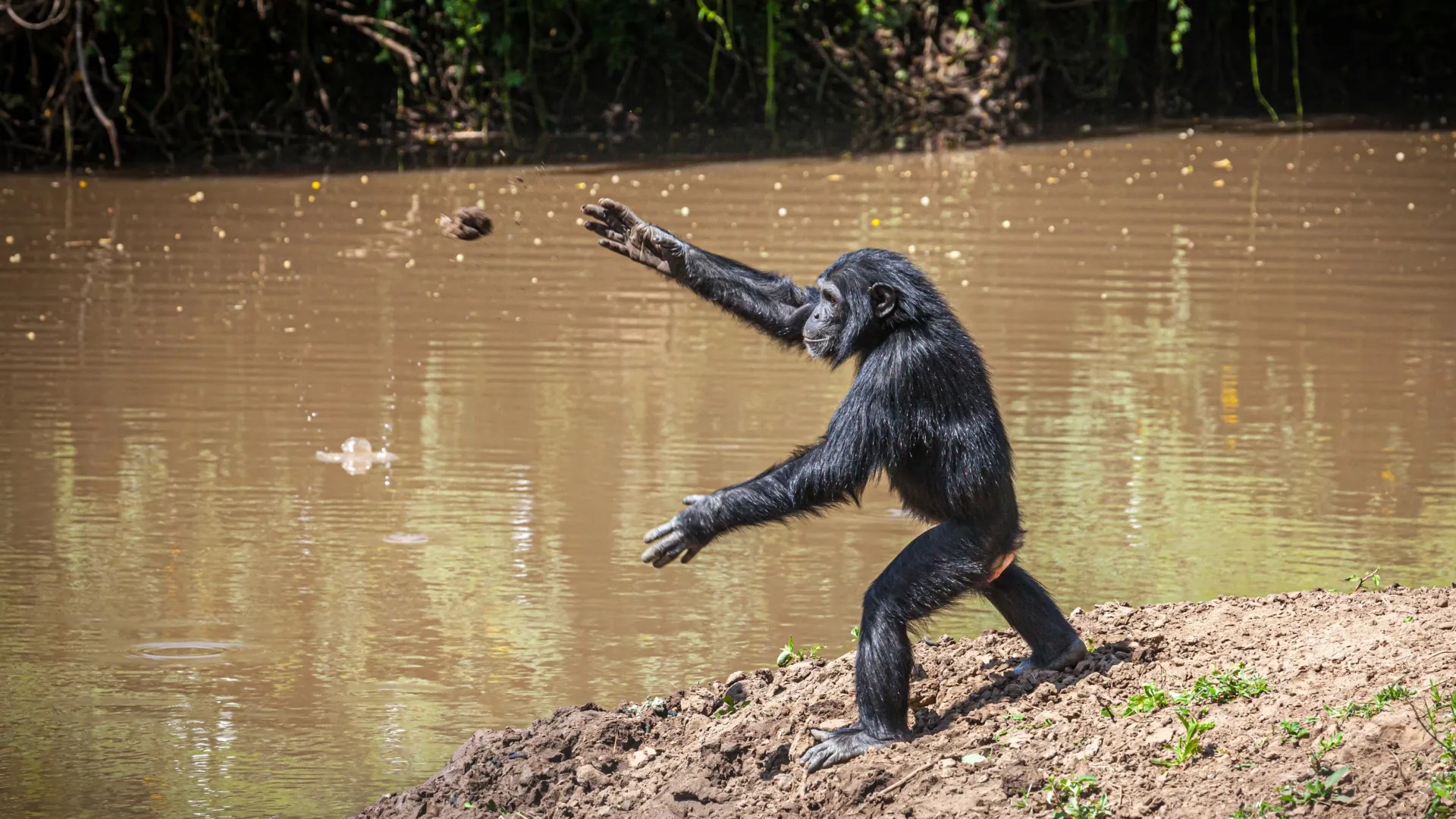
Deep within the savanna-woodland mosaic of Boé National Park in Guinea-Bissau, a peculiar archaeological puzzle lies waiting beneath the canopy. To the untrained eye, a scarred, gnarled tree surrounded by a curious, unnatural pile of stones might appear to be a quirk of nature. To the primatologist, however, it is a rare, living testament to the emergence of complex culture in our closest evolutionary cousins.
This phenomenon, known as "accumulative stone throwing," represents one of the most enigmatic behaviors observed in wild chimpanzees. It is a rare, social use of stone tools that appears to serve purposes far beyond mere subsistence—potentially touching upon the origins of communication, symbolism, and the very foundations of human culture.
The Core Phenomenon: A Cultural Display
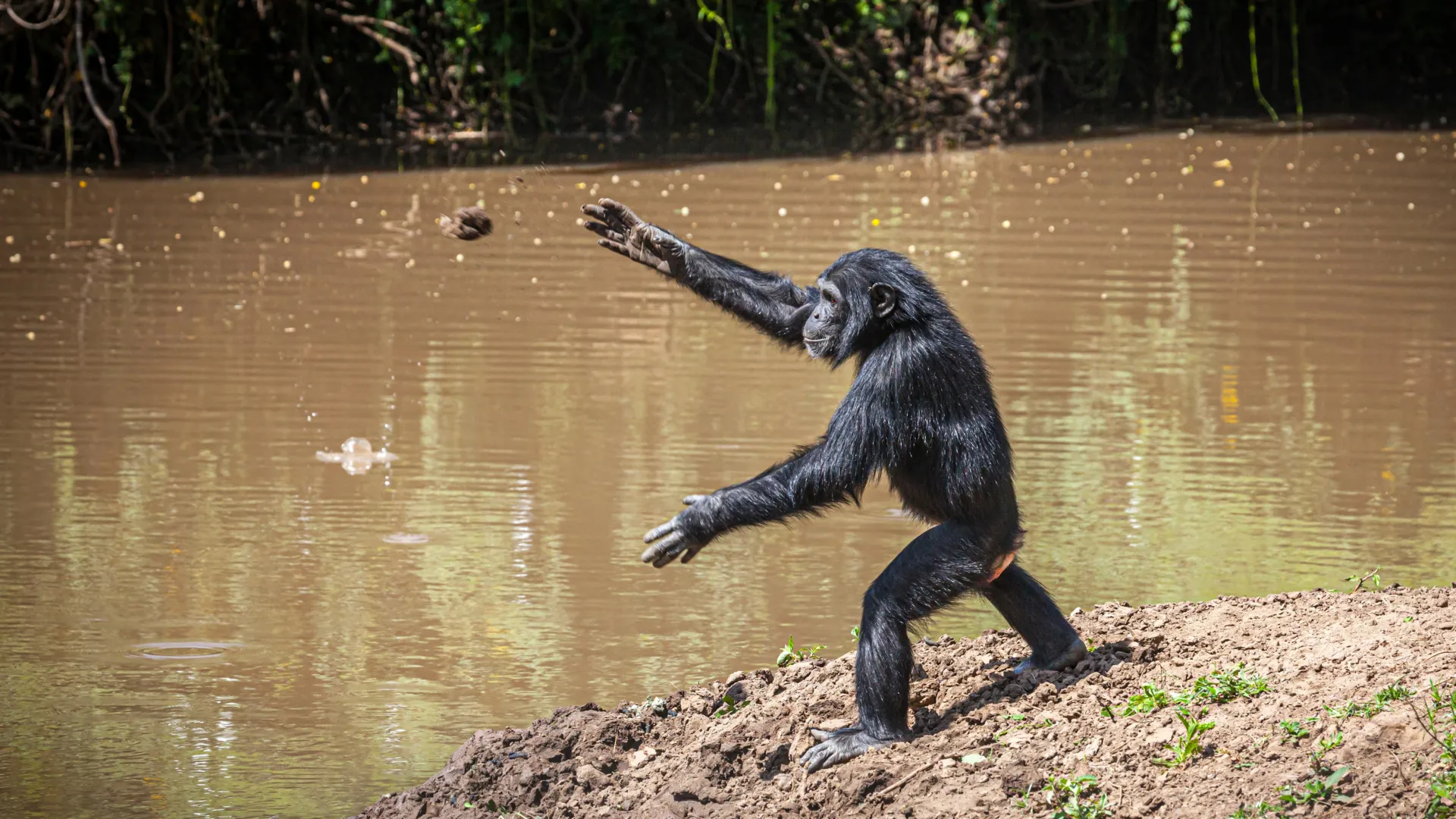
The behavior is as striking as it is rare. Adult male chimpanzees approach specific trees, perform a display—often involving the loud "pant-hoot" vocalization and "buttress drumming," where the apes rhythmically strike their hands and feet against the resonant trunks—and then hurl rocks at the wood. They do not do this at random; they return to the same trees repeatedly, sometimes over the course of decades, creating distinct "stone sites" at the base of these trees.
To date, this behavior has been documented in only four chimpanzee groups across West Africa. The limited geographical distribution and the fact that the presence of rocks and trees does not guarantee the existence of a site strongly suggest that this is a learned, cultural behavior passed down through generations.
A Chronology of Discovery and Investigation
The scientific journey to understand this behavior has been a multi-year effort involving international collaboration and rugged field logistics.
Initial Observations (2017)
The current research builds upon foundational work conducted by the Pan African Program (PanAf). In 2017, researchers identified a series of these stone-throwing sites in the Boé region. These sites were not merely transient; they were hubs of activity, showing evidence of long-term usage.
The Recent Expedition (2023–2024)
Recognizing the urgency of documenting these behaviors before habitat degradation, a research team returned to Boé to collect high-resolution data. The team based themselves in the village of Béli, home to the Dutch non-governmental organization Chimbo, which provides essential infrastructure for researchers in the region.
From Béli, the researchers trekked 22 kilometers into the interior, establishing a bush camp near the Fefine River—a vital lifeline for both humans and wildlife in the dry season. For weeks, the team maintained a grueling schedule: rising at 6:30 a.m. to navigate to multiple sites, swapping SD cards in camera traps, conducting 3D scans of the stones, and cataloging the physical characteristics of the "target" trees.
Supporting Data: Technology Meets Behavioral Ecology
Because the chimpanzees of Boé are "unhabituated"—meaning they are wary of human presence and flee when encountered—the researchers relied on remote sensing technology. By deploying camera traps and high-fidelity audio recorders, the team captured the social context of the stone-throwing events.
Methodology and Findings
- The Audience Effect: By analyzing video data, researchers are currently investigating who is watching when a male throws a stone. Does the presence of females or rivals influence the frequency or intensity of the display?
- Acoustic Signatures: The use of audio devices allows for the correlation of stone-throwing with pant-hooting and buttress drumming, providing a clearer picture of whether the stone-throwing is an extension of standard male competitive displays.
- Site Longevity: Data confirming that sites identified years ago remain active provides evidence that these locations are culturally significant landmarks within the chimpanzees’ territory.
The goal is to determine if these stones serve as "markers"—not unlike the way humans use monuments or shrines to signify importance or territorial boundaries.
Official Perspectives and Evolutionary Implications
The study of these chimpanzees is not merely an exercise in zoology; it is an investigation into the human story. Given our shared evolutionary history, the existence of stone-tool use in a social, non-foraging context provides a "living model" for how early hominids might have begun to develop symbolic communication.
Scientific Significance
"We hope that by studying accumulative stone throwing, we can gain insights into the emergence of complex communication and stone tool use during human evolution," the research team notes. If chimpanzees are using stones to communicate, it suggests that the cognitive capacity for symbolic representation existed long before the advent of human language.
Conservation and Local Governance
The research team has collaborated closely with local assistants, Djei Baldé and Balu Séra, and academic partners from the Great Ape Behaviour Lab. Their work is also bolstered by organizations like Chimbo, which acts as a bridge between scientific inquiry and local conservation efforts in Guinea-Bissau.
However, the researchers emphasize that the success of their work is inextricably linked to the political and economic stability of the region. They have documented "bore holes"—the tell-tale signs of bauxite mining exploration—encroaching on the chimpanzees’ habitat.
Implications: The Looming Shadow of Industry
While the study of chimpanzee behavior offers a window into the past, it also highlights the precariousness of their future. The Boé region is currently subject to intense interest from the mining sector.
The Bauxite Threat
Bauxite, the ore from which aluminum is produced, is a major economic driver for Guinea-Bissau. However, the environmental cost of extraction—habitat fragmentation, water pollution, and the destruction of nesting sites—is severe. In neighboring Guinea, industrial mining has already led to the displacement of chimpanzee populations and the collapse of local biodiversity.
The Erasure of Primate Heritage
Beyond the biological loss of the chimpanzees themselves, the researchers warn of the "erasure of primate heritage." If a group of chimpanzees is displaced or exterminated, their unique cultural traditions—such as the specific stone-throwing techniques practiced in Boé—are lost forever. This is not just a loss of a species, but the loss of a unique, non-human cultural lineage.
A Call for Environmental Oversight
The researchers advocate for:
- Stricter Environmental Regulations: Ensuring that mining concessions are subject to rigorous, independent environmental impact assessments.
- Community-Based Conservation: Supporting organizations like Chimbo that empower local villagers to act as stewards of the land, proving that chimpanzee preservation and economic development are not necessarily mutually exclusive.
- Global Recognition: By bringing international attention to the cultural significance of these chimpanzees, the team hopes to create a "social license to operate" for mining companies, where the preservation of these sites is treated as a non-negotiable global priority.
Conclusion: A Fragile Legacy
The savanna-woodland of Boé is a landscape of echoes. When a male chimpanzee strikes a tree and sends a stone tumbling into the dust, he is participating in a tradition that spans generations. It is a behavior that bridges the gap between the wild and the symbolic, providing a rare link between our own evolutionary origins and the natural world we are rapidly altering.
As the political and economic climate in Guinea-Bissau continues to shift, the future of these chimpanzees remains uncertain. The stones, however, remain. They are waiting for us to understand their language, provided we have the foresight to ensure that the ones who throw them are still there to leave their mark.
For those interested in witnessing the behavior firsthand, video recordings of the Boé chimpanzee displays are archived in the associated academic literature (DOI: 10.1038/srep22219).