By Bryan DeArdo | Senior NFL Analyst
September 18, 2026
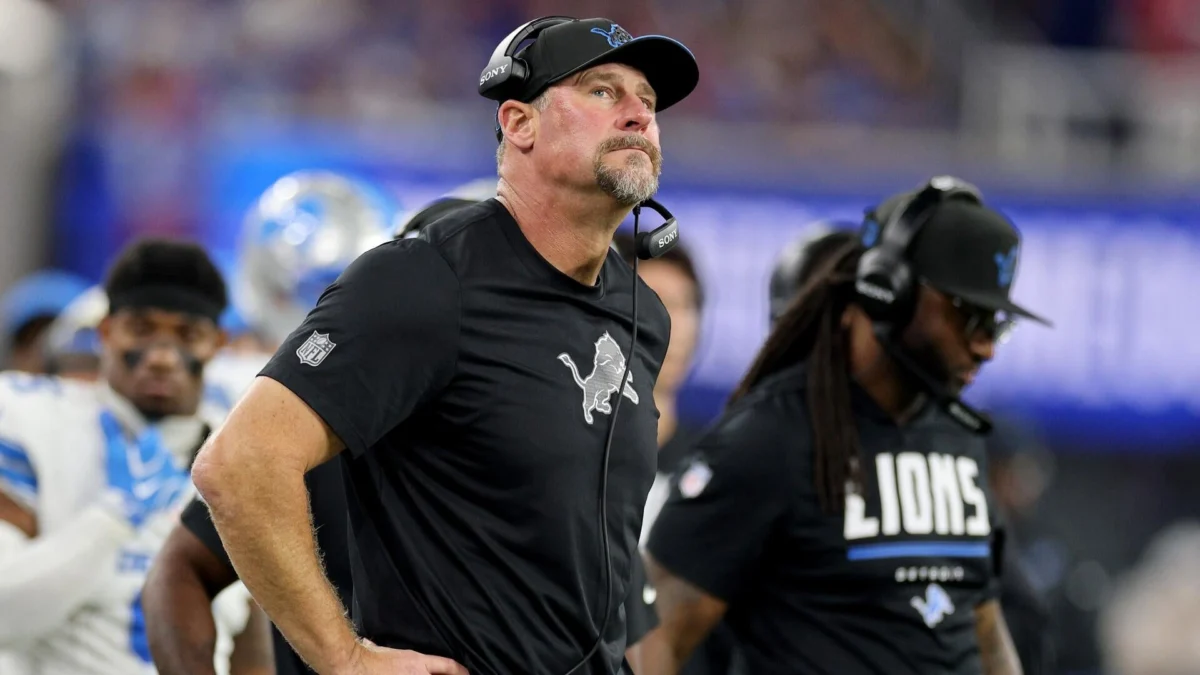
The Detroit Lions find themselves at a crossroads that is becoming hauntingly familiar for their passionate fan base. Despite possessing an offense capable of putting up points in bunches, the Lions are currently suffering through a defensive crisis that threatens to render their high-flying attack irrelevant. In the NFL, balance is the currency of champions; without it, even the most explosive teams are destined for early postseason exits.
The 2026 season is only two weeks old, yet the warning signs are blaring. After surrendering 30 points to the New Orleans Saints in an overtime thriller and 41 points to the Buffalo Bills in a lopsided Week 2 defeat, the Lions are statistically and visually struggling to stop anyone. Unless General Manager Brad Holmes takes drastic action, the Lions risk becoming the 2026 version of the 2000 St. Louis Rams—a team with an all-time great offense whose Super Bowl dreams were incinerated by a porous, unreliable defense.
The Anatomy of a Collapse: A Chronological Breakdown
Week 1: The New Orleans Scare
The alarm bells first rang in the Superdome. The Lions initially looked like the dominant force many expected them to be, storming out to a 21-0 lead. However, the game quickly devolved into a defensive nightmare. New Orleans quarterback Tyler Shough, who had been relatively contained for the first quarter, began carving up the secondary with clinical precision.
By the time the final whistle blew, Shough had racked up 410 passing yards and three touchdowns. While Detroit’s offense managed to force an overtime victory, the win felt hollow. The defense was saved only by a flurry of turnovers—three takeaways and five sacks—that masked a lack of fundamental coverage. In the NFL, relying on opponent mistakes is a dangerous game; eventually, you face a quarterback who won’t hand you the ball.
Week 2: The Buffalo Reality Check
That reality arrived in Week 2 against Josh Allen and the Buffalo Bills. Unlike the erratic performance in New Orleans, Buffalo played a clean, methodical game. Josh Allen was not sacked into oblivion, nor did he commit a turnover. Instead, he systematically dismantled the Lions’ defensive scheme.
Allen’s dual-threat ability was on full display as he rushed for 69 yards and two touchdowns on 14 carries, effectively neutralizing Detroit’s pass rush by keeping them on their heels. The secondary fared even worse. In a highlight-reel failure, Josh Palmer hauled in a 43-yard touchdown catch, left completely uncovered by a Lions defense that looked confused and disjointed. To make matters worse, running back James Cook III turned the field into his personal playground, gashing Detroit for 135 yards and a score, looking at times like a video game character rather than a professional athlete.
Supporting Data: By the Numbers
The metrics suggest that Detroit’s defensive issues are not merely a "bad week" or a "fluke." They are systemic.
- Consecutive Defensive Failures: The Lions have yielded a combined 71 points in their first two games. This places them among the worst-performing defenses in the league in terms of points per drive allowed.
- The "Allen" Effect: Allowing Josh Allen to rush for nearly 70 yards and two touchdowns indicates a fundamental breakdown in contain-discipline and interior gap integrity.
- Yards After Catch (YAC): The ease with which receivers like Josh Palmer find open space suggests that the Lions’ secondary is not only failing to win individual matchups but is also suffering from a lack of communication in zone coverage.
- Personnel Efficiency: While players like Aidan Hutchinson remain elite—recording one of the team’s two sacks on Allen—the drop-off behind him is staggering. When Hutchinson is double-teamed, the rest of the defensive front has proven unable to generate pressure, giving opposing quarterbacks comfortable pockets to scan the field.
The Personnel Dilemma: Stars Surrounded by Vacancies
To diagnose the problem, one must look at the roster construction. Aidan Hutchinson is undeniably a premier defensive end, a player around whom a championship defense can be built. Jack Campbell has evolved into a high-level inside linebacker, possessing the sideline-to-sideline speed and football IQ required for the modern game.
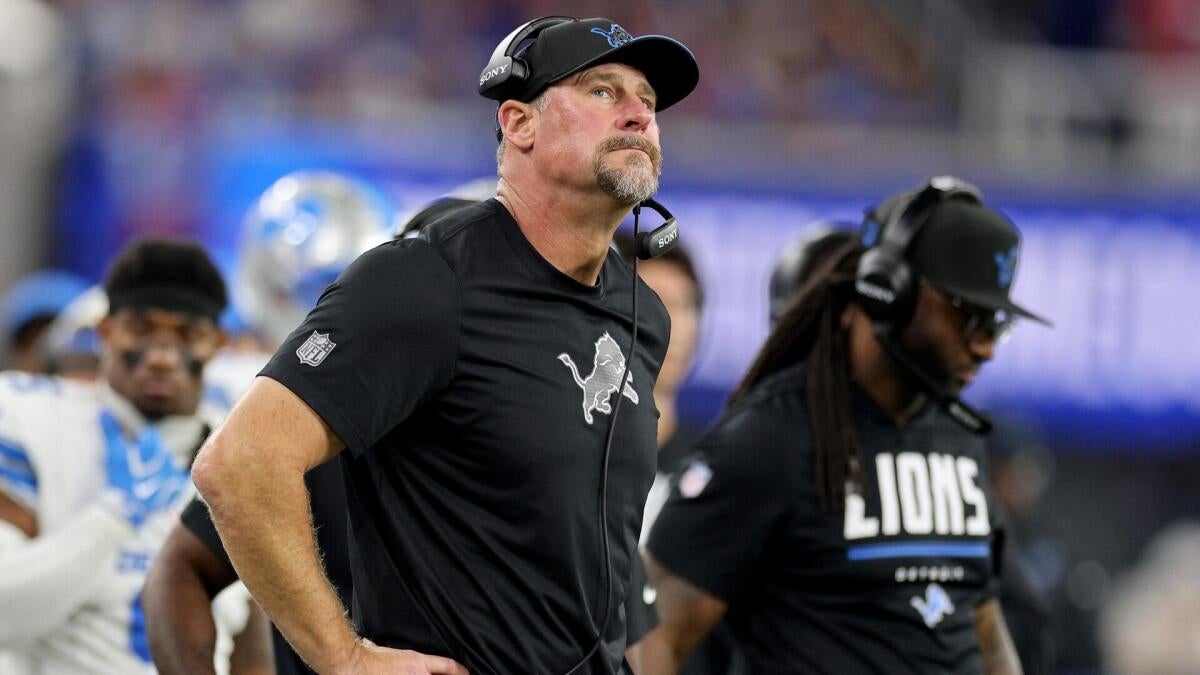
However, the "star-and-scrub" phenomenon is evident in Detroit. The Lions have invested heavily in their offensive skill positions, and while that has made them an offensive juggernaut, the defensive depth chart is alarmingly thin. The secondary, in particular, lacks the veteran presence required to adjust on the fly against elite play-callers. When an opponent like Buffalo dictates the pace, the Lions’ defensive staff appears to have no "Plan B."
Implications: The Path to November 10
The Lions are at a tipping point. If they continue on this trajectory, the playoffs will be a distant memory before the leaves even turn. The team has five months to prepare for a potential postseason run, but they don’t have five months to fix the defense.
The NFL trade deadline on November 10 is the final window for Brad Holmes to salvage the season. The strategy is clear: the Lions must prioritize a "win-now" acquisition in the secondary.
The Target: Joey Porter Jr.
The most logical and impactful move would be a phone call to Pittsburgh Steelers GM Omar Khan. Cornerback Joey Porter Jr. is currently embroiled in a high-profile contract dispute in Pittsburgh. While reports suggest the Steelers’ asking price is high, Detroit is currently in a position where the cost of doing nothing is far higher than the cost of a draft pick.
Porter is a physical, lockdown corner who is just entering his prime. He possesses the length and the aggression to neutralize the type of receivers who have been torching the Lions’ secondary. Holmes has the draft capital and the cap flexibility to make a splashy move. It is time for the front office to stop waiting for internal development and start looking for external solutions.
Official Outlook and Fan Sentiment
The "long-suffering" nature of the Detroit Lions fan base is well-documented. After decades of disappointment, this current iteration of the team finally provided hope. The offense is a spectacle, a testament to modern coaching and drafting. But the fans, having seen countless seasons derailed by defensive ineptitude, are rightfully restless.
If the Lions miss the playoffs in 2026, it will be viewed not just as a failure of the season, but as a failure of management to capitalize on the prime years of their offensive core. Brad Holmes owes it to his players, his coaches, and the city of Detroit to exhaust every avenue in his pursuit of defensive stability.
The question is no longer whether the Lions can score enough to win; we know they can. The question is whether they can stop anyone when it matters most. As of mid-September, the answer is a resounding "no." Whether that changes by November will define the legacy of this coaching staff and the immediate future of the Detroit Lions franchise. The window for a Super Bowl run is open, but it is closing fast, and the defensive leaks are becoming a flood that no amount of offensive scoring can bail out.