KYIV – The political stability of wartime Ukraine has been thrust into the spotlight this week following the abrupt and contentious dismissal of Defence Minister Mykhailo Fedorov. The move, part of a sweeping government overhaul by President Volodymyr Zelensky, has triggered nationwide protests and exposed a deep, ideological chasm within the highest echelons of the Ukrainian leadership.
The fallout centers on a bitter, public power struggle between the 35-year-old “tech-bro” minister and the nation’s top military commander, General Oleksandr Syrsky. As the war against Russia grinds into its fifth year, the dismissal of a figure as popular as Fedorov has left observers questioning whether Kyiv’s current strategic trajectory is sustainable.
The Breach: A Public Breakup at the Top
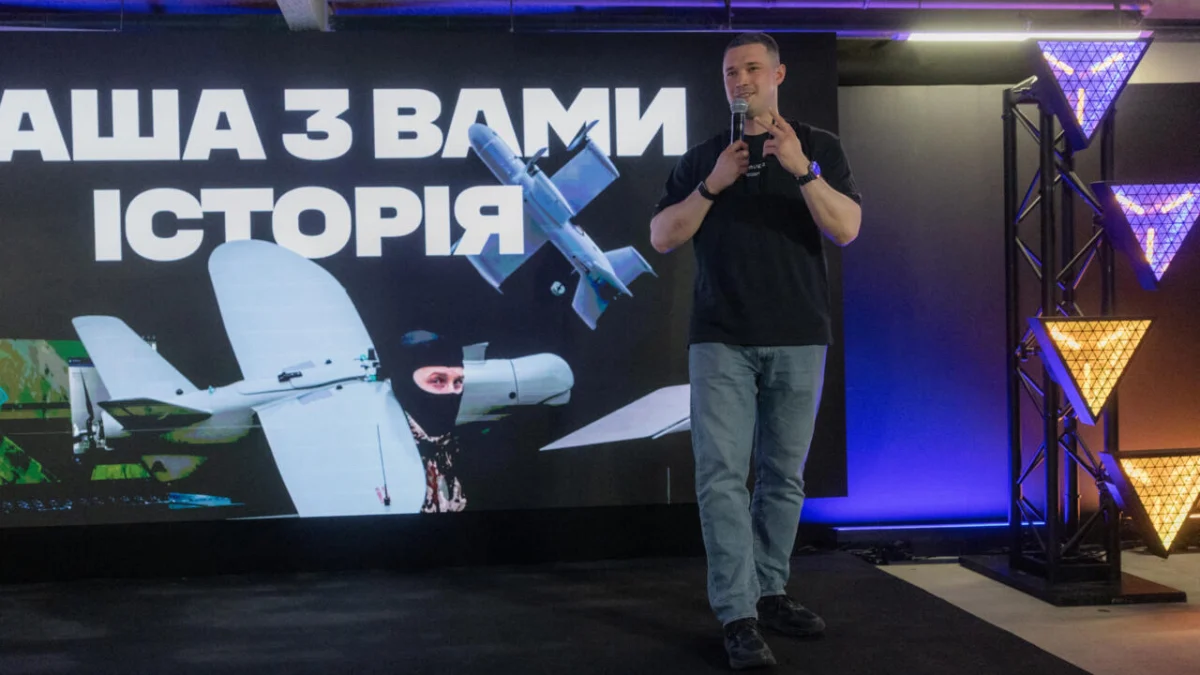
The tension reached a breaking point on Thursday during a high-profile press conference in Kyiv. Standing before a backdrop of sleek, digital slide-decks illustrating the success of Ukrainian drone swarms, a defiant Fedorov launched an unprecedented attack on the military establishment.
“Instead of figuring out how to defeat Russia asymmetrically—which is the commander-in-chief’s task—he figured out how to split the country,” Fedorov told reporters, dressed in his characteristic T-shirt and jeans. “In this configuration, I personally don’t know how to win the war.”
Fedorov’s comments were not merely a resignation speech; they were a direct indictment of General Syrsky’s leadership. The former minister revealed that he had repeatedly urged President Zelensky to replace both Syrsky and the Chief of the General Staff, Andrii Hnatov. According to Fedorov, the military brass delivered an ultimatum to the President: either the Minister of Defence goes, or they do. Zelensky, opting for the continuity of his military command, chose the latter.

Chronology of a Short-Lived Tenure
To understand the gravity of this dismissal, one must look at the six-month tenure of Mykhailo Fedorov as Defence Minister, a position he assumed in January 2026.
- January 2026: Fedorov is appointed Defence Minister, tasked with modernizing the military bureaucracy. Almost immediately, he makes waves by revealing the scale of the manpower crisis: over 200,000 soldiers are absent without leave (AWOL), and an estimated 2 million men are actively evading the draft.
- March–May 2026: Fedorov aggressively pushes for drone-centric warfare, leveraging his background as the Minister of Digital Transformation to forge deeper ties with tech titans like Elon Musk and Palantir’s Alex Karp.
- June 2026: Seeking to stem the tide of desertion, Fedorov announces a comprehensive recruitment reform, promising fixed-term contracts and improved pay, while hinting at the discharge of long-serving combat veterans.
- July 9, 2026: Civil unrest peaks in Lviv as locals physically attack draft officers, highlighting the visceral public frustration with mobilization efforts.
- July 16, 2026: President Zelensky announces a cabinet reshuffle. Fedorov is removed. Thousands take to the streets in protest, while Fedorov holds his blistering press conference.
The "Butcher" vs. The "Tech-Innovator"
The rift between Fedorov and Syrsky is not merely a clash of personalities; it is a fundamental disagreement over the philosophy of war in the 21st century.
General Oleksandr Syrsky, 60, is a product of the Soviet military school. His career has been defined by his experience in the Soviet Artillery Corps and his role in the desperate defense of Kyiv in 2022. However, he is a polarizing figure. Critics point to the devastating nine-month defense of Bakhmut, which resulted in massive casualties and the eventual loss of the city, earning him the grim moniker "the Butcher."
In contrast, Fedorov represents a modern, managerial approach. His supporters see him as the architect of Ukraine’s digital success story—the man who, as Digital Transformation Minister, revolutionized state bureaucracy via a smartphone app. He viewed the military’s problems as organizational inefficiencies that could be solved through data, innovation, and streamlined procurement.
"Fedorov, an effective and highly modern manager, seemed to treat many military challenges as organisational problems that could be solved by changing incentives," explains Lesia Bidochko, a senior lecturer at the Kyiv-Mohyla Academy. "Syrsky, meanwhile, approaches the problem through the lens of operational command and battlefield realities, where immediate military requirements take priority."

The Manpower Crisis: A Reality Check
While the clash between these two visions has dominated the headlines, the underlying cause of the instability remains the same: the crushing reality of a war of attrition.
The numbers are stark. With 200,000 soldiers AWOL and 2 million draft-dodgers, the Ukrainian military is struggling to maintain its frontline strength. The government’s reliance on controversial and often violent mobilization tactics has alienated the public, as seen in the recent Lviv riots, where crowds overturned military vehicles to prevent the detention of men.
Fedorov’s reform package, which aimed to make service more "attractive" and "professional," was dismissed by some members of Zelensky’s own "Servant of the People" party as "more style than substance." One anonymous lawmaker characterized the minister’s efforts as "only an imitation of reforms, just slides."
However, experts argue that the criticism is misplaced. "Any Ukrainian minister of defence who gets this task is bound to hit a brick wall," says Maria Engqvist, an analyst at the Swedish Defence Research Agency. "The political sensitivity of mobilization is so high that no amount of ‘digital innovation’ can fully replace the raw need for infantry, engineers, and logistics personnel."
Implications for the War Effort
The dismissal of Fedorov signals that President Zelensky is doubling down on the current military strategy. By siding with the traditionalist military brass over the digital-first reformer, the President has prioritized operational stability over radical organizational change.

Yet, this carries significant risks. If the military continues to struggle with recruitment and the "human cost" of the war remains high, the public resentment that manifested in the streets this week could harden into broader anti-government sentiment.
Furthermore, the loss of Fedorov creates a potential vacuum in Ukraine’s technological development. His role as the primary liaison between the Ukrainian state and the global tech industry was pivotal. Whether the next minister can maintain those crucial relationships—and whether the military will continue to adopt drone-centric innovations with the same vigor—remains to be seen.
Conclusion: A False Dichotomy?
As the war grinds forward, the debate in Kyiv continues to circle a false choice: that the nation must decide between a "manpower-heavy" strategy and a "technology-led" one.
"In reality, Ukraine needs both," concludes Bidochko. "Technology can increase efficiency and reduce casualties, but it cannot hold ground alone. The mobilization issue is not just a management failure; it is an existential challenge for a nation that has been fighting for five years."
For now, the removal of Mykhailo Fedorov has settled the internal power struggle within the government, but it has done nothing to solve the war’s central, agonizing dilemma. As Russia prepares for an expected new wave of mass mobilization this autumn, Ukraine finds itself not only facing an external enemy but also grappling with the fragile internal consensus required to keep the fight alive. The "tech-bro" minister may have lost his seat, but the questions he raised about how to win a war of attrition will continue to haunt the halls of the presidential administration in Kyiv for months to come.