By Zachary Pereles
September 10, 2026
The highly anticipated dawn of a new era for the New England Patriots, headlined by the arrival of superstar wide receiver A.J. Brown, hit a jarring and painful roadblock during Tuesday night’s season opener. In what was meant to be a showcase for the revamped Patriots offense and the development of second-year quarterback Drake Maye, the evening took a dark turn in the third quarter when Brown was forced to exit the game with a concerning ankle injury.
The injury, which occurred while attempting to secure a low-trajectory pass from Maye, has cast a long shadow over the Patriots’ locker room. As the team pivots toward the remainder of their schedule, the immediate future of their prized acquisition remains shrouded in medical uncertainty, leaving fans and analysts alike to wonder if New England’s bold offseason gamble is already facing a significant setback.
The Incident: A Crushing Turn of Events
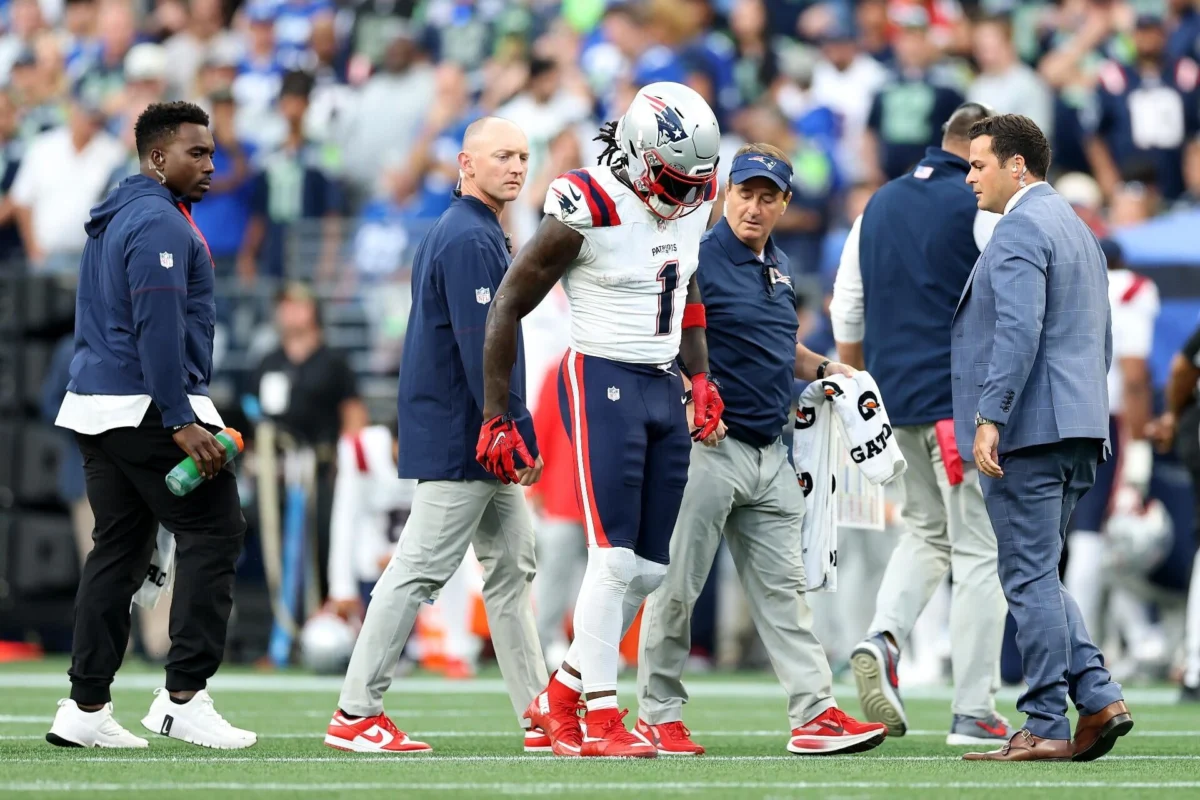
The injury occurred early in the third quarter during a pivotal drive for the New England offense. As quarterback Drake Maye looked to move the chains, he fired a low pass toward Brown. In an effort to secure the ball, Brown dove, but the play resulted in a collision with Seattle Seahawks cornerback Nehemiah Pritchett.
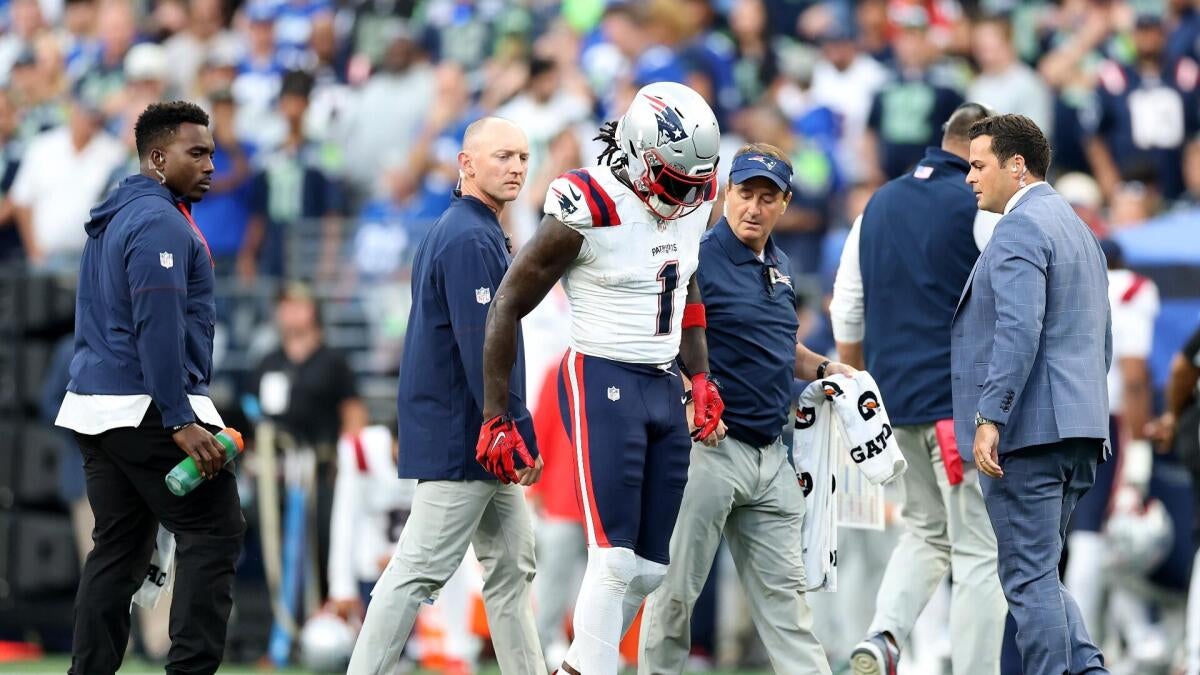
Video replays of the incident provided a wincing look at the mechanics of the injury. As Brown went to the ground, his ankle became trapped awkwardly between his own body weight, the turf, and the momentum of the encroaching Pritchett. The star receiver was visibly pained, remaining on the grass for several moments before trainers arrived to assist him. He was eventually able to limp off the field, though he did so with significant discomfort, heading directly to the locker room for X-rays.
While the Patriots initially listed him as "questionable" to return, that designation was quickly upgraded to "out" for the remainder of the contest, signaling that the medical staff required further testing beyond the initial imaging.
Chronology of a High-Stakes Debut
The narrative of A.J. Brown in New England has been one of the most compelling storylines of the 2026 NFL offseason. The trajectory of this debut can be broken down into three distinct phases:
1. The Long-Awaited Arrival
For months, the rumors of a trade involving Brown and the Philadelphia Eagles dominated the NFL news cycle. Because of complex salary cap maneuvers and financial constraints, the deal was not officially consummated until June 1. To secure the Pro Bowl receiver, New England surrendered a 2028 first-round draft pick—a steep price that underscored the organization’s commitment to providing Drake Maye with an elite weapon.
2. The Build-Up and Offensive Overhaul
Brown was the centerpiece of a massive offensive reconstruction. Alongside the acquisition of Brown, the Patriots front office aggressively pursued veteran talent to protect and support Maye. The signing of offensive lineman Alijah Vera-Tucker and wide receiver Romeo Doubs, combined with the drafting of tackle Caleb Lomu, was designed to transform the Patriots from a struggling unit into a legitimate AFC contender.
3. The Opening Night Reality
At the time of his departure, Brown’s stat line was modest—three receptions for 26 yards—but those numbers failed to reflect his broader influence on the field. Most notably, Brown drew a critical 34-yard defensive pass interference penalty on a flea-flicker play that showcased his ability to manipulate defensive backs, even when the pass from Maye was slightly underthrown. His presence alone forced the Seahawks’ secondary to commit resources to his side of the field, creating potential gaps that the Patriots were unable to fully exploit after his exit.
Supporting Data: Evaluating the Impact of the Loss
To understand the gravity of this injury, one must look at what Brown brings to the Patriots’ ecosystem. In his previous stops, Brown established himself as one of the most physically imposing wideouts in the league, known for his ability to gain yards after contact and his reliability in contested catch situations.
In this specific game, the ripple effect of his injury was palpable. Without Brown drawing double coverage, the Patriots’ offense struggled to find consistent rhythm. A testament to this struggle was a high-profile dropped pass by Romeo Doubs in the fourth quarter. While Doubs is a capable target, he is not the gravity-well that Brown is; the pressure on the supporting cast to elevate their game in Brown’s absence was evident, and ultimately, the unit faltered under that increased burden.
Statistically, the Patriots’ efficiency in the red zone and on third down saw a noticeable decline following the third quarter. Brown’s ability to win one-on-one matchups is a foundational element of the offensive scheme designed by the coaching staff. Losing that baseline of production forces the entire playbook to shrink, making the offense more predictable for opposing defenses.
Official Responses and Medical Outlook
Postgame, the atmosphere in the Patriots’ press room was somber. Head coach Mike Vrabel, known for his pragmatic and often tight-lipped approach to injuries, offered little in the way of optimism or specific detail.
"I don’t have any update yet," Vrabel stated during his postgame availability. "He wasn’t able to return, obviously. We’ll evaluate him further tomorrow."
The "wait-and-see" approach is standard for the NFL, but the silence from the coaching staff suggests that the team is preparing for a range of possibilities, from a minor sprain that could sideline him for a week to something more structural that requires extended rehabilitation. The team is expected to release a more comprehensive medical update following the results of an MRI, which will provide clarity on the integrity of the ligaments in his ankle.

The Strategic and Financial Implications
The Patriots’ decision to trade a future first-round pick for Brown was a "win-now" maneuver. By pairing him with Drake Maye, the organization signaled that it believes the window to compete for a championship is wide open.
The Developmental Toll
The injury is particularly damaging to the growth of Drake Maye. A young quarterback’s development is often tied to the chemistry he builds with his primary receiver. If Brown misses significant time, Maye will be forced to develop rapport with secondary and tertiary options, potentially stalling the progress the coaching staff hoped to see in the early weeks of the season.
Roster Management and Depth
With Brown sidelined, the pressure falls on the remaining wide receiver corps. Romeo Doubs, who joined the team as part of the massive offensive influx, must now prove he can be a reliable WR1 or WR2 in a high-pressure environment. The drop in the fourth quarter will undoubtedly be a point of focus in the film room, but the team cannot afford to let one mistake define the collective effort.
The Patriots front office may also be forced to scan the free agent market or the practice squads of other teams for immediate depth. While elite talent is rarely available in September, the team may need to add a veteran who can act as a "stop-gap" to prevent the offense from stagnating while Brown recovers.
The Psychological Aspect
There is also a psychological component to consider. The excitement surrounding the Patriots’ season opener was built on the arrival of new talent. An injury to the team’s marquee acquisition in the first game of the season can be deflating for a locker room. The leadership of veteran players and the coaching staff will be tested as they attempt to maintain morale while facing the reality of a potentially long road to recovery for their best playmaker.
Conclusion: The Path Forward
As the Patriots look toward their next opponent, the focus will be entirely on the recovery timeline of A.J. Brown. The team’s offensive strategy was built on the assumption that Brown would be the focal point of the passing attack. Without him, the Patriots must quickly pivot to a "next man up" mentality, relying on their strong offensive line and the continued growth of their younger skill players.
While the injury is a significant blow, it does not necessarily derail the season. The NFL is a league of attrition, and teams that succeed are often those that best manage the unexpected. For the Patriots, the challenge is twofold: they must find a way to remain competitive in the short term while ensuring that they do not rush Brown back before he is fully healed.
For now, the Patriots nation waits. The debut that was meant to be a celebration has transformed into a test of resilience. Whether this is a temporary setback or a season-altering event remains to be seen, but one thing is certain: the eyes of New England are fixed on the medical report, hoping for the best for their new superstar.