By John Talty
Adapted from "Lane Being Lane: The Story of Lane Kiffin, College Football’s Agent of Chaos," published by Harper.
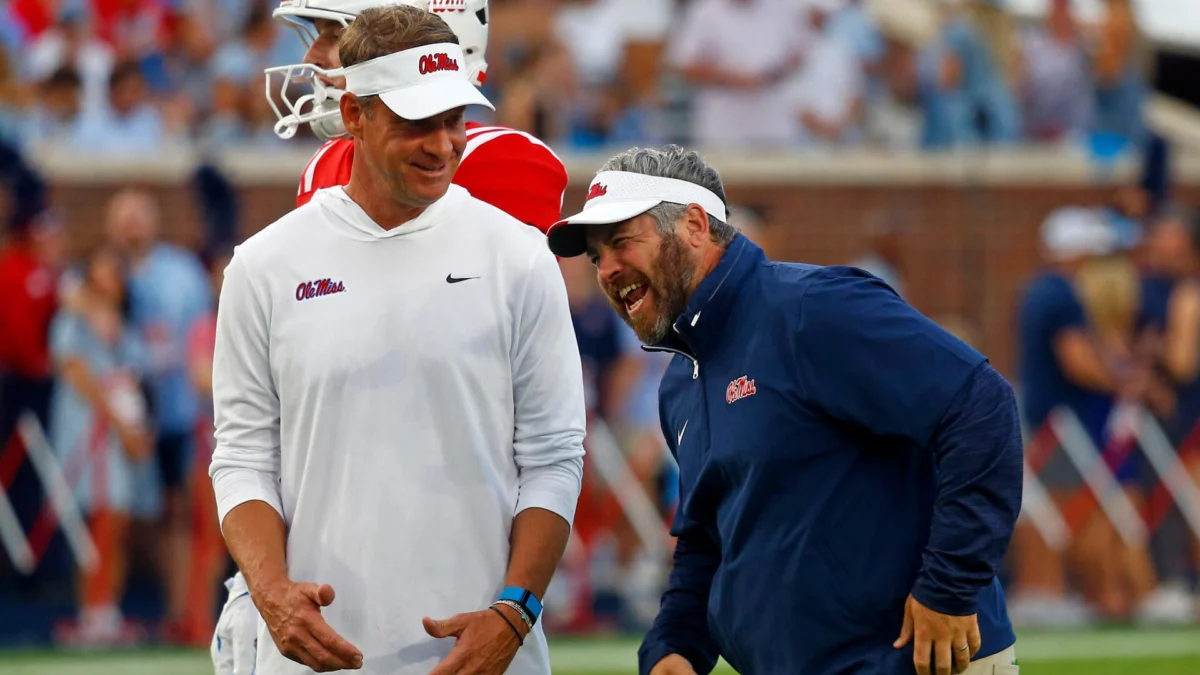
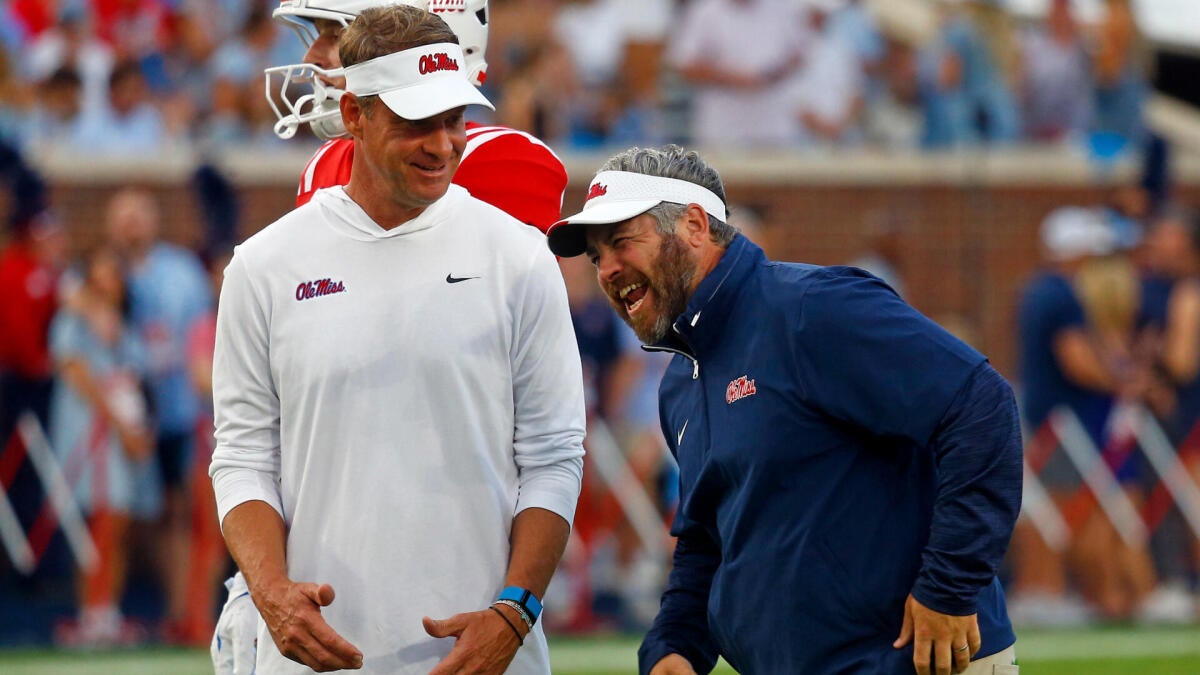
The landscape of modern college football is defined by shifting alliances, nine-figure contracts, and the blurring lines between athletic prestige and political theater. At the epicenter of this hurricane stands Lane Kiffin, the man who has managed to turn his career into a perpetual state of flux. In the fall of 2026, the coach who once wore the "radioactive" label in coaching circles found himself in the most enviable position in the sport: the center of a tug-of-war between three SEC titans.
The Discontent in Oxford
By late 2026, the friction between Kiffin and the Ole Miss administration had reached a breaking point. Despite the Rebels’ on-field success, Kiffin’s internal monologue was dominated by a feeling of stagnation. He viewed Ole Miss not as a final destination, but as a glass ceiling.
Kiffin’s primary grievance centered on resource allocation. He looked at the SEC’s financial hierarchy and saw Ole Miss perpetually tethered to the middle class. He feared the school lacked the booster base to compete with the monstrous NIL budgets of Georgia or Alabama. To Kiffin, Vaught-Hemingway Stadium—with its 64,038 capacity—felt like a cramped venue compared to the cathedrals of the SEC.
"The mistake everyone makes with Lane Kiffin is applying reason and logic to the situation," says Zach Scruggs, a board member of the Grove Collective. Kiffin’s mind, once set on a negative trajectory regarding his surroundings, became a fortress that no amount of local affection could penetrate. As he surveyed the landscape, his eyes turned toward Gainesville, where the lore of the Florida Gators promised the prestige he felt he had outgrown in Oxford.
A Chronology of the Conflict
The tension escalated following a landmark 34–26 victory over No. 13 Oklahoma. While the rest of the college football world saw this as a crowning achievement that would propel Ole Miss to its first College Football Playoff berth, Kiffin saw a springboard.
The conventional wisdom in Oxford was that a playoff run would act as a tether, keeping the coach in town for at least one more season. However, Kiffin’s behavior immediately following the clock hitting zero told a different story. In a moment captured by observers on the field, Kiffin turned to his defensive coordinator, Pete Golding, and asked, "Are you ready to go to Gainesville?"
Within twenty-four hours of that win, the situation shifted from a private flirtation to an all-out SEC bidding war. Enter the State of Louisiana.
The Baton Rouge Intervention
If the Florida interest was a matter of professional ambition, the pursuit by Louisiana State University was a matter of state governance. Enter Governor Jeff Landry, a figure who has redefined the role of a politician in the collegiate sports space.
Landry, a former congressman with a penchant for performative populism, viewed LSU football as the primary lever for his own political approval ratings. The governor had spent the better part of the year waging a public war against the university’s status quo, famously clashing with the school over the return of a live tiger mascot. When the school hesitated, Landry bypassed them, parading a tiger named Omar Bradley through the streets of Baton Rouge to prove a point.
When LSU struggled under Brian Kelly—a coach whose Northern sensibilities never truly aligned with the ethos of the Deep South—Landry saw his opening. The governor pressured the school to fire Kelly, then systematically dismantled the athletic department’s power structure, effectively forcing out Athletic Director Scott Woodward.
Landry’s involvement was a masterclass in institutional interference. He replaced key university leaders with his own loyalists, ensuring that the next head coaching hire would be, in effect, a gubernatorial appointment. As former LSU president F. King Alexander noted, the internal politics at LSU had devolved into a system where academic oversight was relegated to the "unpopular" board members, while the athletic committee became the fiefdom of the most powerful political actors.
Supporting Data: The Stakes of the SEC Arms Race
The stakes for this recruitment war were unprecedented. LSU had already suffered the fallout of a massive buyout following the Brian Kelly era. Initially, Governor Landry had publicly decried the trend of massive, guaranteed contracts. Yet, the moment the prospect of signing Kiffin became a reality, the fiscal conservatism vanished.
A single phone call between the Governor and the coach was all it took to realign the state’s financial priorities. The message was clear: if it takes $100 million to win, the state would find it.
This environment created a trifecta of chaos. Florida was selling the promise of history; Ole Miss was banking on the momentum of a playoff run; and LSU was offering the absolute, unrestrained power of the state government. For Jimmy Sexton, Kiffin’s agent, the scenario was a dream. His client, once considered a pariah, was now the most sought-after asset in the nation.
Official Responses and the "Power Vacuum"
The power vacuum at LSU, created by the ousting of Scott Woodward, left the program in a state of suspended animation. With the Governor calling the shots, the traditional search committee process was rendered obsolete.
"It’s the SEC, baby—it just means more," became the unofficial mantra of the transition. The university’s administration, pressured by the Board of Trustees and the Governor’s office, moved toward an inevitable consensus: Lane Kiffin was the only candidate with the brand, the offensive ingenuity, and the "agent of chaos" persona necessary to restore the luster to Tiger Stadium.
Implications for the Future of College Football
The battle for Kiffin is more than a coaching search; it is a referendum on the future of the sport. We are witnessing the end of the university as an independent academic institution and the beginning of the "State-Owned Football Franchise" model.
When a Governor feels empowered to fire an Athletic Director and hand-pick a head coach, the separation between the university and the state government dissolves. The implications are profound:
- The Erosion of Due Process: Athletic hires are now subject to political election cycles rather than institutional needs.
- Fiscal Instability: The cycle of buyouts and massive new contracts is being fueled by political vanity, not just athletic competition.
- The Rise of the "Super-Agent": Figures like Jimmy Sexton now wield more power than university presidents, effectively playing states and boosters against one another to drive up prices.
As the 2026 season hurtled toward its conclusion, Kiffin sat at the center of the storm. He held the keys to the future of three massive programs. He wanted the prestige of Florida, the resources of the LSU machine, and the playoff path he had built at Ole Miss.
For a man who has spent his career avoiding the status quo, the ultimate irony was that he had become the very thing the system was designed to protect: the most valuable, and most polarizing, commodity in the SEC. Whether he stays in the Grove or descends upon Baton Rouge, one thing is certain: Lane Kiffin’s journey is far from over, and the chaos is just beginning.